
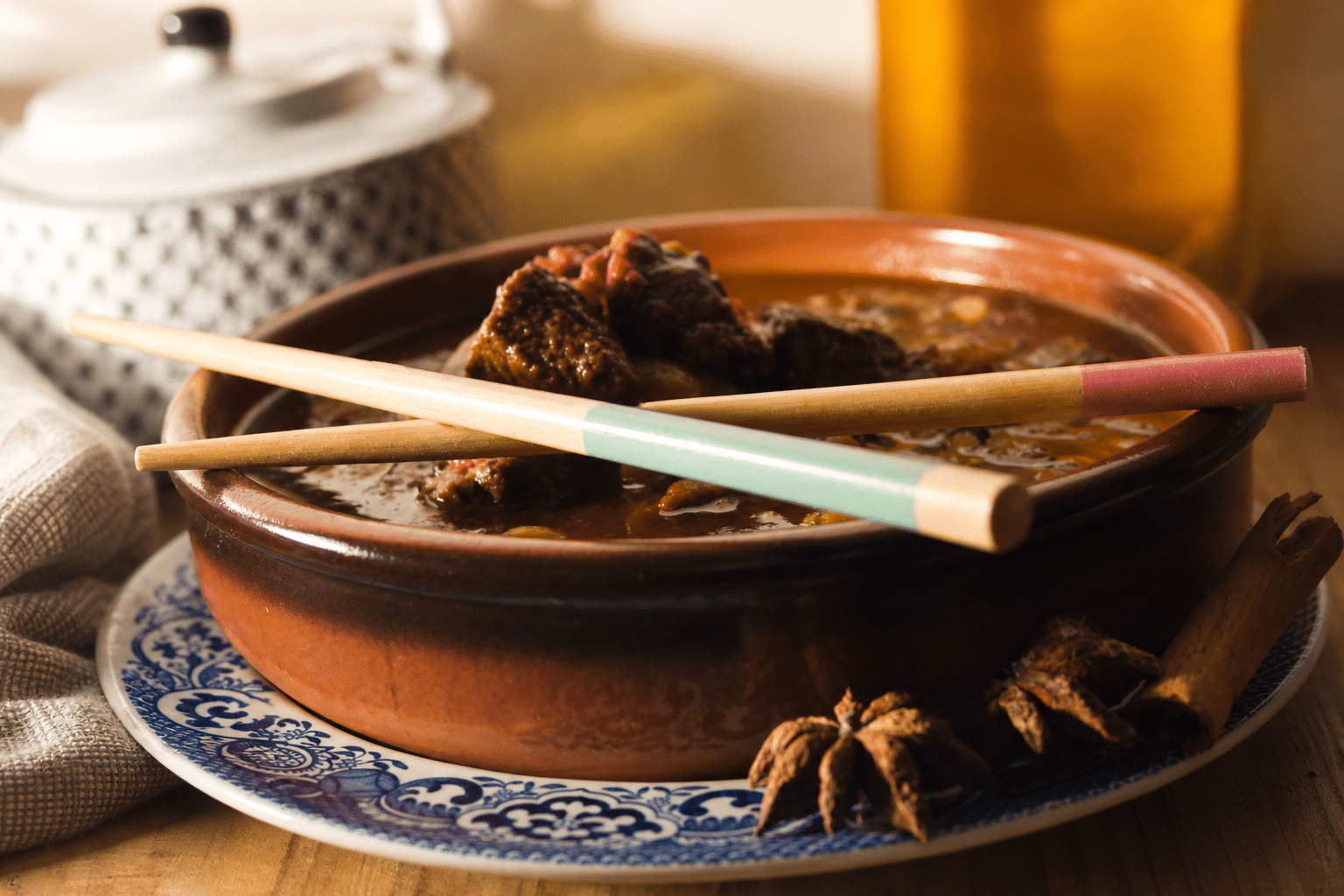

Chinese cooking honestly doesn’t get enough attention, which is a shame, because there is so much genuinely delicious food to discover. Hong shao rou is a great place to start. It is a classic braised pork dish built around a glossy sauce of soy sauce, Shaoxing rice wine, and melted rock sugar, perfumed with star anise, cassia cinnamon, and Sichuan peppercorns. This version also adds potatoes, which soak up the sauce and become incredibly flavorful.
Traditionally, hong shao rou takes a couple of hours of slow braising. This recipe gets you there in 20 minutes using a pressure cooker, so you can have it on a weeknight without any heroics. There are many variations of the dish, and this particular one has a bit of heat from fresh chili alongside the warm Sichuan spices.
Why this recipe works
The first move is caramelizing the sugar before anything else goes in. You let the rock sugar melt and darken to a deep amber in the hot oil, building a base of bittersweet caramel. The pork goes in next and gets coated in that caramel before any liquid is added, which is what gives each piece its lacquered look and depth of flavor.
Pork neck holds up beautifully under pressure. It has enough fat to stay moist and tender without making the sauce greasy. The potatoes are what set this version apart from simpler renditions: they absorb the braising liquid and turn silky and deeply savory.
Ingredients
Serves 4
Ingredient | US | Metric |
|---|---|---|
Pork neck fillet, cut into 1½-inch cubes | 2.2 lbs | 1 kg |
Potatoes, peeled and cut into large cubes | 14 oz | 400g |
Fresh ginger, peeled and sliced | 1½ oz (a 2-inch piece) | 40g |
Red chili, sliced | 1 | 1 |
Green onions | 6 | 6 |
Neutral oil | 3 tablespoons | 40g |
Chinese rock sugar (or packed brown sugar) | 2 oz | 60g |
Soy sauce | ⅔ cup | 150g |
Shaoxing rice wine (or dry sherry) | scant ½ cup | 100g |
Sichuan peppercorns | 1 teaspoon | 4g |
Star anise | 2 | 2 |
Cassia cinnamon stick | one 2-inch piece | 5 cm |
Bay leaves | 2 | 2 |
Water | 2 cups | 500g |
To serve: jasmine rice and bok choy or steamed cabbage
Instructions
1. Prep everything before you heat the pot. Peel the potatoes and cut them into large cubes. Peel the ginger and slice it. Slice the chili. Trim the green onions, remove the roots, cut off the top inch, and cut them into 3-inch pieces. Cut the pork into 1½-inch (4×4 cm) cubes.
Read more: Firecracker chicken: the sticky, spicy Asian-fusion dish done in one wok in under 30 minutes
2. Heat the oil in your pressure cooker over medium-high heat. Add the rock sugar and let it melt completely, stirring now and then, until it reaches a deep amber color. This is the most important step, so watch it closely. You want dark caramel, not scorched sugar.
3. Add the pork and stir to coat it in the caramel. If the pork releases a lot of liquid, let that reduce before moving on so the meat can sear rather than steam.
4. Add the ginger, green onions, chili, bay leaves, Sichuan peppercorns, star anise, and cinnamon stick. Stir everything together.
5. Pour in the soy sauce, Shaoxing rice wine, and water. Add the potatoes and stir well so everything is coated in the liquid.
6. Close the lid and cook at high pressure for 20 minutes.
7. Let the pressure release naturally, about 10 minutes. Remove the lid. If the sauce looks thin, set the pot to simmer and let it reduce for a few minutes, stirring gently, until it thickens to a glossy, lacquered consistency.
8. Serve over jasmine rice with bok choy or steamed cabbage.
Tips and variations
Shaoxing rice wine is the soul of the sauce. You can find it at any Asian grocery store, usually in the cooking wine section. Dry sherry is the best substitute; a dry white wine will also work but gives a lighter flavor.
Read more: Homemade naan without a tandoor: soft, blistered flatbread made on any stovetop pan
Rock sugar (found at Asian grocery stores, usually in a solid block you crack into pieces) gives a rounded, clean sweetness that works particularly well here. Brown sugar is a perfectly fine substitute.
The caramel step: Don’t rush it. If the sugar doesn’t darken enough, the sauce will taste flat and one-dimensional rather than complex. If it starts smoking, pull the pot off the heat for a few seconds, then continue.
Pork cut: Pork belly is the most traditional cut for hong shao rou and will give a richer, more unctuous result. Pork neck is excellent here and easier to find at most US supermarkets.
Food safety: The USDA recommends a minimum safe internal temperature of 145°F (63°C) for whole cuts of pork. Pork braised under pressure for 20 minutes will far exceed that temperature.
Leftovers: This reheats very well the next day. The sauce thickens further in the fridge, which only makes it better.