
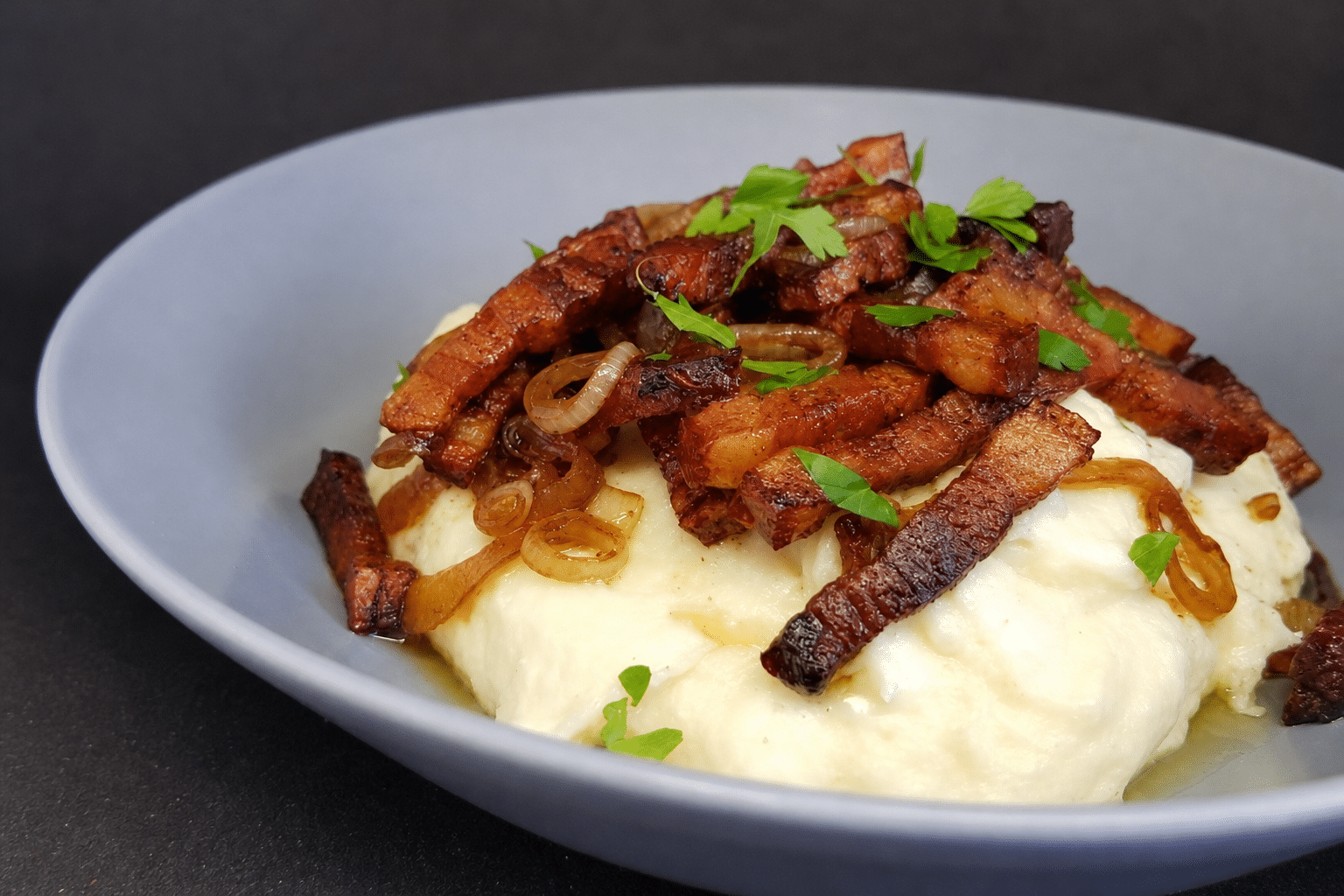

It is mashed potatoes with crispy bacon and slow-cooked onions, and it is ridiculously good. The dish is a genuine Danish classic – the kind of thing almost every Dane grows up eating. Minimal ingredients, serious comfort, and a name that sounds like it belongs in a love song.
Danes call this “mormormad” – grandmother food – and they mean it as the highest compliment. It is the dish that feels special even though it asks almost nothing of you: no advanced techniques, no unusual ingredients. The whole secret is in how you treat those few components.
One rule going in: do not be afraid of the fat. The butter in the mash and the rendered bacon fat in the pan are what make this taste the way it does. That fat is the flavor.
Why this recipe works
The move that separates good brændende kærlighed from great brændende kærlighed is what you do after the bacon comes out of the pan. You do not drain the fat. You do not wipe the pan. You add the sliced onions directly into all that rendered bacon fat and cook them low and slow until they go golden, soft, and gently sweet.
The onions absorb everything the bacon left behind. They become deeply savory with a caramelized sweetness, and that balance – fat, salty, sweet – is what the whole dish rests on. Skip this step, or rush it with high heat, and you lose the whole point.
Read more: Homemade naan without a tandoor: soft, blistered flatbread made on any stovetop pan
The other trick is nutmeg in the mash. A small grating sounds old-fashioned, but it cuts through the richness and rounds out the plate. Try it once and you will not leave it out again.
Ingredients
Serves 4 | Prep: 20 minutes | Cook: 20 minutes
For the bacon and onions:
- 14 oz (400 g) thick-cut bacon, cut into small pieces or cubes
- 3 medium yellow onions, peeled, halved, and thinly sliced
- A small pat of butter, if needed
For the mashed potatoes:
- 3¼ lbs (1.5 kg) starchy potatoes (Russet work well), peeled and cut into chunks
- 5 tablespoons (75 g) unsalted butter, cut into small pieces
- Scant ½ cup (100 ml) whole milk, warmed (or use reserved potato cooking water)
- Salt and black pepper to taste
- Freshly grated nutmeg (optional but recommended)
To serve:
- A large handful of flat-leaf parsley, roughly chopped
Instructions
1. Start the potatoes. Place the peeled potato chunks in a pot and cover with cold water. Do not add salt to the water yet. Bring to a boil and cook until completely tender, about 20 minutes. A knife tip should slide through with no resistance.
2. Fry the bacon. While the potatoes cook, heat a large skillet over medium-high heat. Add the bacon and cook, stirring occasionally, until golden and crispy, 8-10 minutes. Transfer to a plate with a slotted spoon. Leave every bit of fat in the pan.
Read more: Oven-baked fried chicken that is crispy, juicy, and skips the deep fryer
3. Cook the onions low and slow. Turn the heat down to medium-low. Add the sliced onions to the pan with the bacon fat. Cook gently, stirring now and then, until completely soft, golden, and lightly caramelized, about 15 minutes. If the pan looks dry at any point, add that small pat of butter. You want them sweet and collapsed, not browned and frizzled.
4. Mash the potatoes. Drain the potatoes well and return them to the pot. Add the butter pieces and begin mashing with a potato masher or ricer. Add the warm milk gradually, mashing as you go, until the mash is smooth, creamy, and spoonable. Season well with salt, pepper, and a small grating of nutmeg.
5. Serve immediately. Spoon the mash onto plates or into a wide serving bowl. Top with the caramelized onions, then pile the crispy bacon on top. Scatter the parsley over everything and bring it straight to the table.
Tips and variations
Get the consistency right. The mash should be soft and creamy, not stiff or gluey. If it tightens as you season, stir in a little more warm milk. Add the liquid slowly – a mash that is too loose cannot be fixed.
Read more: Oven spareribs with dry rub, beer steam, and a hot finish: no grill required
Use the best bacon you can find. With so few ingredients, quality shows. A good thick-cut bacon gives both better flavor and a satisfying crispy texture that holds its own under the onions.
Do not skip the parsley. This dish is rich and filling. Fresh chopped parsley on top is not just decoration – it cuts through the heaviness and brightens every bite.
No bacon? The classic flavor really does come from the bacon fat, so any swap changes the character of the dish. Smoked pork is the most traditional substitute. A plant-based version works logistically, but you will need to add butter or oil to the pan to cook the onions properly.
Leftovers. Store the components separately if possible. Reheat the mash gently with a splash of milk stirred back in. It is good the next day, but it is best the moment it comes off the stove.