
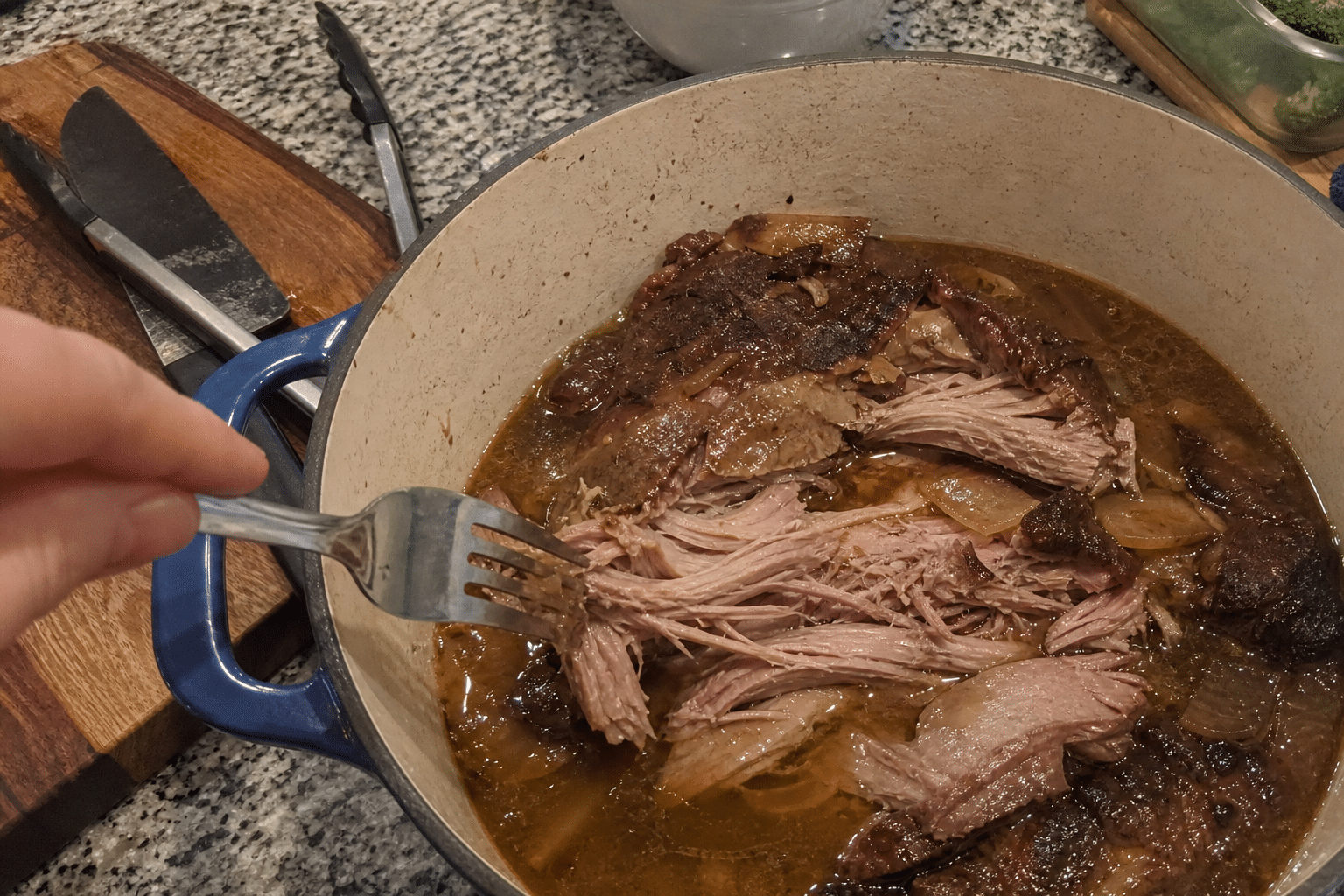

A pork shoulder braised in fresh apple cider is what November cooking looks like at its best: inexpensive, nearly unattended after the first 20 minutes, and finished with a glossy braising jus that takes about 12 minutes to reduce on the stove while the meat rests. The window for good fresh-pressed cider is closing, apples in Washington state peak September through November, and what’s on the shelf right now is worth using.
This recipe is built on three decisions that actually matter: a hard sear before the lid goes on, fresh cider instead of hard or vinegared, and a low oven with enough time for the shoulder’s collagen to dissolve. Get those right and the rest takes care of itself.
Why this recipe works
The sear is not optional. Browning the pork deeply on all sides in a hot Dutch oven creates the fond that gives the final jus its depth and color. A pale, unbrowned piece of pork going into the braising liquid produces a pale, flat-tasting result.
Fresh apple cider, not vinegar. Apple cider vinegar is an entirely different product, with an acidity that concentrates as it reduces and can turn sharp and medicinal. Fresh-pressed apple cider is lightly sweet and subtly tannic, and it balances the fat in the pork shoulder instead of competing with it.
Low heat and time. At 325°F (163°C) covered, the pork sits in gentle, moist heat long enough for the collagen-rich connective tissue in the shoulder to break down into gelatin. That gelatin is what makes the meat silky rather than stringy, and it gives the reduced jus its body.
Ingredients
Serves 6-8
For the braise:
- 1 bone-in pork shoulder (about 4 to 5 lbs / 1.8 to 2.3 kg), or boneless pork butt
- 2 teaspoons kosher salt
- 1 teaspoon freshly ground black pepper
- 2 tablespoons neutral oil (canola or vegetable)
- 2 medium yellow onions, halved and thinly sliced
- 4 garlic cloves, smashed
- 2 cups (480 ml) fresh apple cider (not hard cider, not apple cider vinegar)
- 1 cup (240 ml) low-sodium chicken stock
- 4 sprigs fresh thyme
- 2 sprigs fresh rosemary
- 2 bay leaves
For finishing the jus:
- 1 tablespoon unsalted butter
- 1 tablespoon whole-grain mustard (optional)
- Salt to taste
Instructions
1. Remove the pork from the refrigerator 30 to 45 minutes before cooking. Preheat the oven to 325°F (163°C). Pat the pork completely dry on all sides with paper towels, surface moisture prevents browning. Season generously with salt and pepper, pressing it in.
Read more: Beef stroganoff from scratch: silky sauce, done in 30 minutes
2. Heat the oil in a large Dutch oven (at least 5-quart) over medium-high heat until shimmering. Add the pork and sear without moving it until each surface is deeply golden brown, about 4 minutes per side. Work through every face, including the ends. The goal is real color, not a light tan. Transfer to a plate.
3. Pour off all but about 1 tablespoon of fat from the pot. Add the onions and cook over medium heat, stirring occasionally, until softened and golden at the edges, about 5 minutes. Add the garlic and cook 1 minute more.
4. Pour in the cider, scraping up every browned bit from the bottom of the pot. Add the stock, thyme, rosemary, and bay leaves. Nestle the pork back in fat side up. The liquid should come about one-third of the way up the sides of the meat, not submerging it, but enough to create a steamy, cider-scented environment.
5. Cover tightly and braise in the oven for 3 to 4 hours, checking at the 3-hour mark. The pork is done when a fork slides into the thickest part with no resistance. Use an instant-read thermometer to verify doneness: the USDA requires a minimum internal temperature of 145°F (63°C) with a 3-minute rest for whole pork cuts. After 3 to 4 hours of braising, the shoulder will far exceed that threshold and will be fully fork-tender.
Read more: Hot Duck: the duck confit hotdog with sriracha mayo that is the best use of holiday leftovers
6. Transfer the pork to a cutting board and tent loosely with foil. Rest for at least 10 minutes while you make the jus.
7. Strain the braising liquid through a fine-mesh strainer into a medium saucepan, pressing the solids to extract all the liquid. Discard the herbs and onions. Skim the visible fat from the surface. Bring to a boil over medium-high heat, then reduce until the jus is glossy, slightly thickened, and coats a spoon, about 10 to 15 minutes. Stir in the butter. Add the mustard if using. Taste for salt.
8. Slice the pork against the grain or pull it apart with two forks, depending on how tender it is. Arrange on a platter and pour the jus over, or serve it on the side for the table to pour themselves.
Tips and variations
Bone-in vs. boneless. Bone-in shoulder contributes more flavor as collagen near the bone enriches the braising liquid. Boneless pork butt is easier to carve and more uniform, both work at the same temperature and timing.
Read more: How to get perfectly creamy mushroom risotto, using hot stock and cold butter
Make it ahead. This braise improves overnight. Braise completely, cool to room temperature, and refrigerate in the covered pot. The fat solidifies on the surface and lifts off cleanly. Reheat covered at 300°F (150°C) for about 45 minutes, then reduce the jus fresh on the stove.
Add fall vegetables. Wedges of fennel, halved shallots, or chunks of peeled celery root added to the braising liquid in the final 90 minutes absorb the cider and round out the dish with almost no extra work.
Check the cider label. For this recipe, fresh-pressed or unfiltered apple cider from the refrigerated section is the right product, sweet, cloudy, and seasonal. Shelf-stable apple juice is a distant second. Hard cider introduces alcohol that concentrates into bitterness as the liquid reduces; skip it here.
Storage. Leftovers hold well refrigerated for up to 4 days. Pulled pork reheated in the jus with a split roll on top makes a strong weeknight sandwich.