
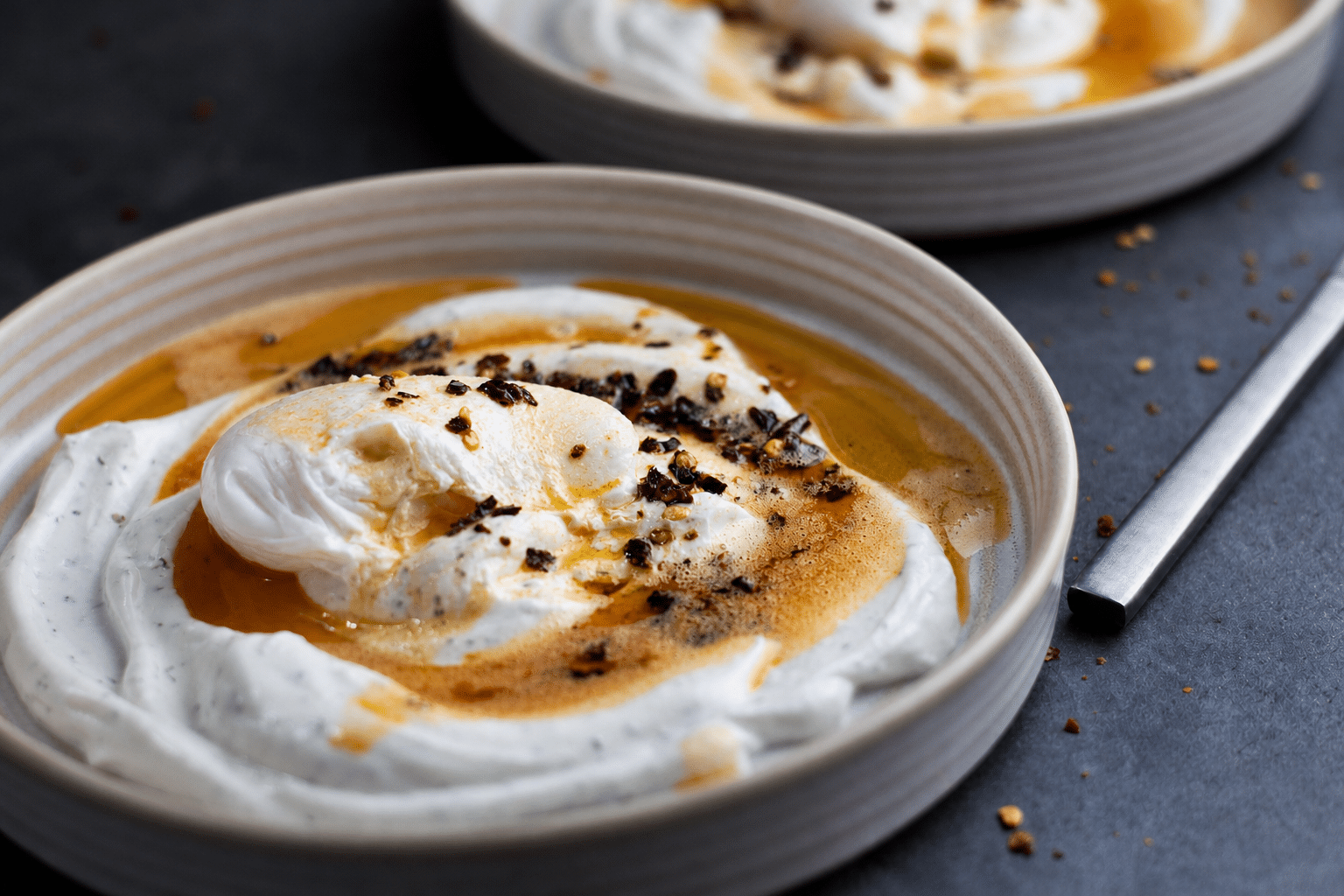

If you’ve seen the photos – poached eggs perched on thick, garlicky yogurt, drenched in a glossy, brick-red butter – you’ve seen cilbir. It’s a traditional Turkish breakfast, and once you know how to make it, you’ll wonder why you ever ate eggs any other way.
What makes it sing is this butter. A knob of butter, melted slowly with pul biber and sweet paprika until it turns the color of sunset and smells like a spice market. Three ingredients. Five minutes. And suddenly a plain egg on yogurt becomes something you’d pay restaurant prices for.
What pul biber is and where to find it
Pul biber is a Turkish chili flake – coarser and oilier than the crushed red pepper you shake on pizza, with a moderate heat and a fruity, almost sun-dried quality. It’s the backbone of this butter and the main reason it looks as good as it tastes.
You can find it at most Middle Eastern grocery stores, Turkish markets, or on Amazon. If you’re stuck, Aleppo pepper is the closest substitute – same mild-to-medium heat, similar fruity depth. Standard crushed red pepper works in a pinch, but it’s hotter and less nuanced.
Read more: Homemade ranch dressing: better than the bottle and ready in 10 minutes
Why low heat is the whole technique
The one thing to get right is temperature. Put the butter and spices in a small saucepan over low to medium-low heat and let it warm slowly. You’re not frying the spices – you’re coaxing their color and flavor out into the fat.
When I rush it over high heat, the paprika scorches in seconds and turns bitter. At low heat, the butter takes on a deep, coppery-red color and fills the kitchen with something warm and round. That’s the moment. As soon as the butter is gently bubbling and richly colored, it’s done.
Read more: Karbonader: the crispy breaded pork patty Denmark has eaten every week for generations
The whole thing takes about five minutes.
Ingredients
- 3.5 tablespoons (50 g) unsalted butter
- 1.5 teaspoons (4 g) pul biber (Turkish chili flakes)
- Scant 1/4 teaspoon (1 g) sweet paprika
- Optional: a small pinch of ground cumin, for extra warmth
Instructions
- Add the butter, pul biber, and paprika to a small saucepan.
- Place over low to medium-low heat. Let the butter melt slowly – do not rush this.
- Stir occasionally as the butter melts and the color deepens to a rich copper-red.
- Once fully melted and gently bubbling, with the spices fully released into the fat – about 5 minutes – remove from heat.
- Pour immediately over your dish while hot.
What to put it on
The classic use is cilbir: a bowl of thick, plain yogurt (whole-milk Greek yogurt works perfectly) with a poached egg nestled in the center, this butter poured over the top right before serving. The contrast between the hot butter and the cool, creamy yogurt is the whole point – keep the yogurt at room temperature, not fridge-cold, so the temperatures play well together.
Read more: Chimichurri chipotle smash burgers with two homemade sauces and crispy bacon
It’s also excellent on hummus. If you’re putting together a spread of dips and flatbreads, drizzle this over the hummus just before bringing it to the table. It delivers fat, heat, color, and aroma all at once – and it brings the dish together in a way that’s hard to explain until you’ve tried it.
Tips
- Pour it hot. The butter needs to go on just before serving. It loses both its visual appeal and its temperature contrast the longer it sits.
- Use unsalted butter so you can control the salt level in the finished dish.
- Try urfa biber. This dark, smoky Turkish chili can replace or partly replace the pul biber for a deeper, more mysterious flavor. It’s available at Middle Eastern grocers and specialty spice shops.