
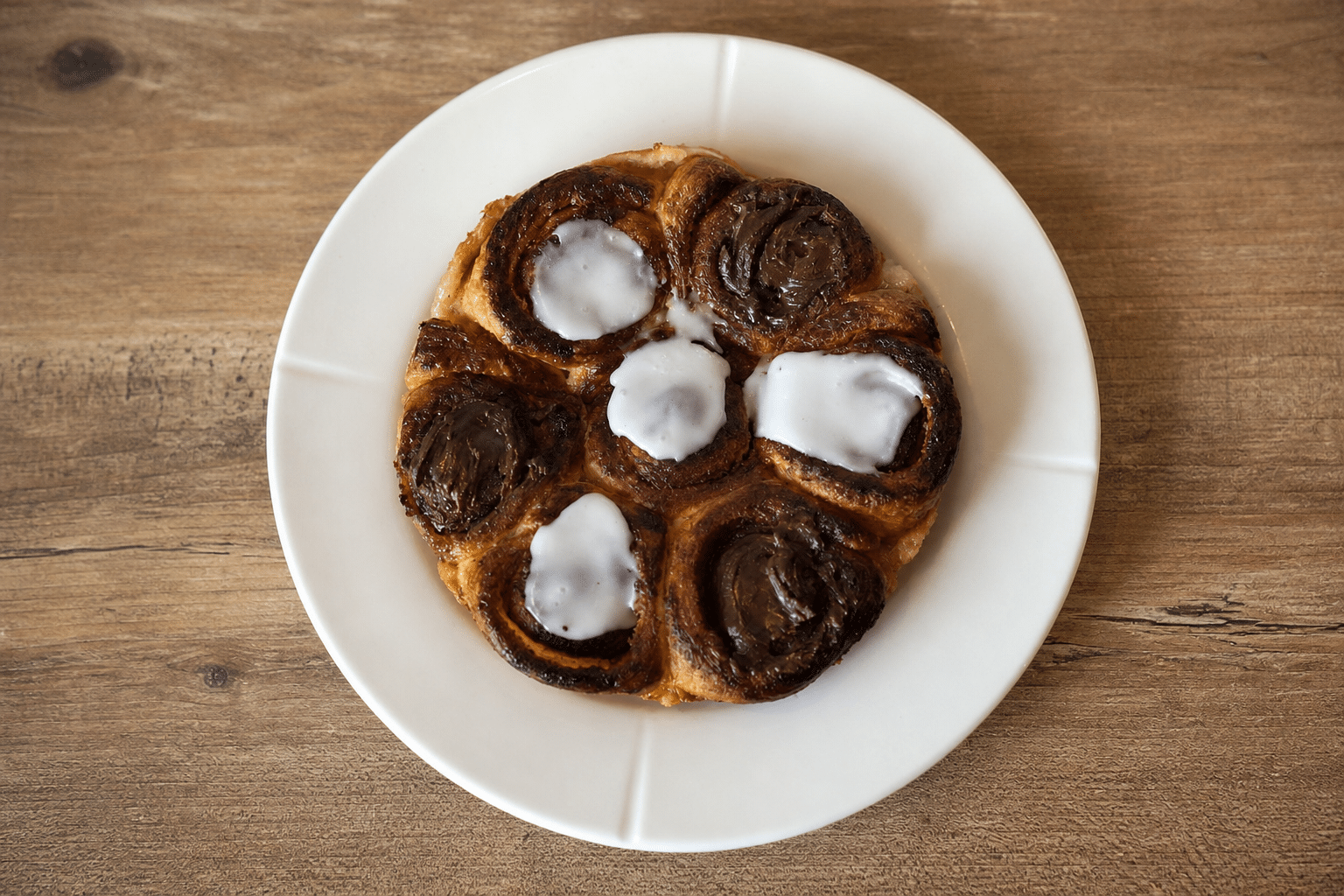

A Dagmar cake is not just a coffee cake. By Danish law, a true Dagmar must be made from pure Vienna dough, the same laminated, butter-folded dough used for croissants and classic Danish pastries. That legal distinction matters enormously in the pan: Vienna dough bakes into something crispy, flaky, and airy rather than soft and bready. It shatters a little when you cut it and tastes like the inside of a very good Danish from your best local bakery.
Most home bakers reach for ordinary sweet yeast dough when they attempt a Dagmar, and the result is decent, but it is not the real thing. Vienna dough is the whole point. I have made this cake both ways, and there is no comparison.
Why Vienna dough changes everything
Laminated dough is made by folding cold butter into a yeast dough repeatedly, creating thin alternating layers of dough and fat. Here, the dough is folded three times to build up 27 layers. When those layers hit a hot oven, they puff and crisp into a structure no ordinary soft dough can replicate.
The critical rule, and I cannot stress this enough: the butter must not melt while you work. The moment it does, the layers fuse and the texture is gone. Keep the dough cold, work quickly, and return it to the refrigerator between folds. Everything in this recipe, the flour, the water, the eggs, starts ice cold.
Read more: Homemade grainy mustard is easier than you think, and it only needs four days
What goes inside
The filling is built from two components made separately, then combined.
The first is vanilla cream, a simple cooked custard of milk, egg yolks, cornstarch, and vanilla, chilled until firm. The second is remonce, a Scandinavian spread made from cocoa paste (100% cacao, no added sugar), powdered sugar, and margarine. You beat the remonce until smooth, then fold in the cold vanilla cream to make a lush, creamy filling. A pinch of cardamom over the filling layers deepens the whole thing.
Read more: 15-minute salmon and spinach pasta: the pasta water trick that makes the sauce silky without cream
Ingredients
Makes 2 cakes
Vanilla cream:
- 1 cup + 1 tablespoon (260 ml) whole milk
- 2½ tablespoons (20 g) cornstarch
- ¼ cup (30 g) powdered sugar
- About 2 egg yolks (30 g)
- Vanilla sugar or vanilla extract, to taste
Vienna (laminated) dough:
- ¾ oz (20 g) fresh yeast (see tips for active dry yeast substitute)
- 1 tablespoon (12 g) sugar
- ¼ teaspoon (1 g) salt
- 1¼ teaspoons (6 g) milk
- 1 large egg (60 g), cold
- 2 cups (250 g) all-purpose flour, ice cold
- ⅓ cup (80 ml) water, ice cold
- 9 oz (250 g) cold unsalted butter, for laminating
Remonce filling:
- 2 oz (60 g) unsweetened cocoa paste (100% cacao chocolate or cocoa mass)
- 1½ cups (170 g) powdered sugar
- ¾ cup (170 g) margarine
Instructions
Make the vanilla cream first:
- Combine the milk, powdered sugar, and vanilla in a saucepan. Bring to a simmer over medium heat, stirring constantly.
- Whisk the egg yolks and cornstarch together in a bowl until completely smooth and lump-free.
- Pour the hot milk slowly into the yolk mixture while whisking, then return everything to the saucepan. Stir over medium heat until thickened.
- Transfer to a bowl and refrigerate until fully cold.
Make the Vienna dough:
- Combine the ice-cold water, cold egg, and cold milk in a mixing bowl. Crumble or sprinkle in the yeast and stir to dissolve.
- Add the flour, sugar, and salt on top of the liquid. Knead very briefly, just until everything comes together into a cohesive dough. Do not over-mix.
- Flatten the dough into a square, wrap, and refrigerate.
- Flatten the cold butter into a smaller square. Lay the butter diagonally on the dough and fold the four dough flaps over it, enclosing the butter completely like wrapping a gift.
- On a lightly floured surface, roll the dough out lengthwise and fold it in thirds. Turn 90 degrees, roll out again, fold in thirds again. Rotate and fold once more for a total of three folds. Work quickly.
- Rest the laminated dough on a cutting board or plate and refrigerate until cold and firm.
Make the remonce:
- Beat the cocoa paste, powdered sugar, and a small portion of the margarine together in a stand mixer until completely smooth with no lumps.
- Add the remaining margarine gradually and mix until fully combined.
- Add the cold vanilla cream and mix gently until everything comes together into a creamy, spreadable filling.
Assemble:
- On a lightly floured surface, roll the chilled dough out to about ⅛ inch (3-5 mm) thick.
- Cut a piece to fit the base of a cake pan or tart pan. Press it in and spread a generous layer of remonce over the dough.
- Spread a thick layer of remonce over the remaining sheet of rolled dough. Scatter a pinch of cinnamon or cardamom over the top if you like.
- Roll the dough tightly into a log and cut it into about 14 equal rounds (7 per cake).
- Place one spiral in the center of each cake and arrange six spirals in a ring around it, pressing them gently so they sit firmly.
- Let the cakes rise until noticeably puffy. For an oven-assisted rise: heat the oven to 390°F (200°C), turn it off, and let it cool down. Place the pans inside when the temperature reaches around 120-140°F (50-60°C), with the door slightly propped open (a folded dish towel works), until the interior settles to around 95-100°F (36-38°C).
- Brush the risen cakes with beaten egg and a pinch of salt. Bake at 390°F (200°C) with the convection setting for 25-35 minutes, until deep golden brown.
- Glaze while still warm.
Tips and variations
Start the day before. Both the vanilla cream and the remonce keep well in the refrigerator. The fully assembled, unrisen cakes can also be built the night before and left to rise slowly in the fridge overnight, ready to bake in the morning.
The glaze. A simple powdered sugar glaze works beautifully on the warm cakes. For decoration, whisk a small spoonful of cocoa powder into a second batch for a brown glaze alongside the white.
Read more: The Hot Brown: the open-faced turkey and bacon sandwich from Louisville that deserves a comeback
Fresh vs. active dry yeast. Fresh yeast is traditional and common in Scandinavian bakeries. If you can only find active dry yeast, use 2¼ teaspoons and dissolve it in the cold water before adding the other ingredients.
Keep everything cold. If your kitchen is warm, chill the dough in the freezer for 15 minutes between each fold. Any sign of butter smearing or oozing through the dough means it has gotten too soft: stop and refrigerate before continuing.
Allergen note. This recipe contains gluten, dairy, and eggs. The remonce uses margarine, which is traditional in this Scandinavian filling; unsalted butter works as a substitute.