
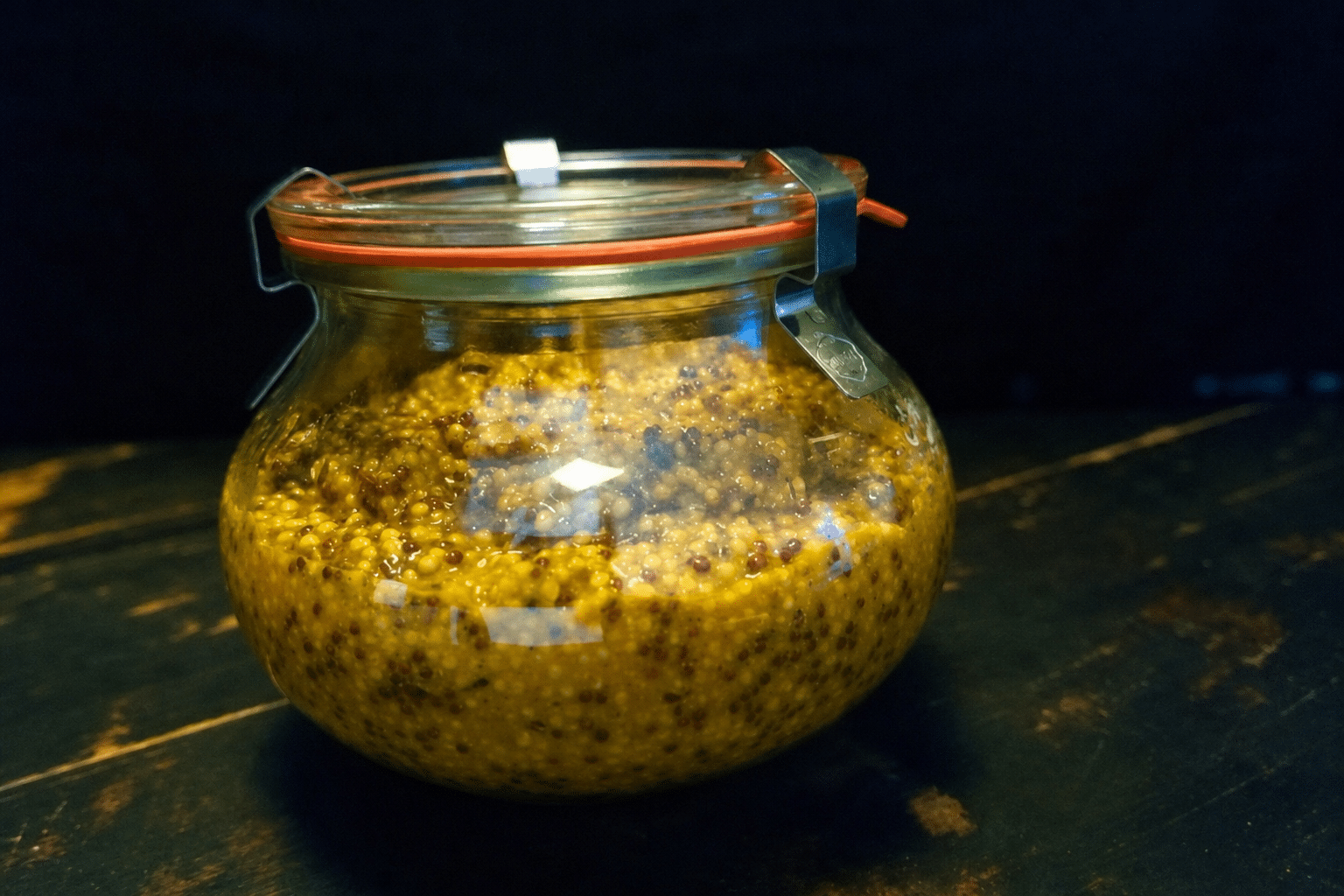

Homemade mustard has a reputation for being fussy. It is completely undeserved. The hands-on time here is roughly ten minutes. Everything after that is the mustard doing its own thing in the fridge, the seeds slowly swelling and mellowing as they soak up the vinegar. By day four, you have something warm, complex, and deeply savory in a way that is genuinely hard to describe until you taste it.
The timing for a mid-November batch is perfect. This mustard is ready well before Thanksgiving, and it carries straight through December on every cheese board, charcuterie platter, and holiday roast you put it near.
Why the two-seed mix matters
The recipe uses both yellow and brown mustard seeds, and the split is not arbitrary. Yellow seeds are milder and give the mustard its body. Brown seeds bring the heat and sharpness. Together, the result is warm without being aggressive.
The other flavors layer in quietly. Allspice and anise seeds go in with the seeds for a faint spiced background. Turmeric gives the mustard its golden color and a slight earthiness. Fresh tarragon, stirred in and cooked with the mixture, rounds everything out.
The staged vinegar method
This is the one technique worth understanding before you start. You do not add all the vinegar at once.
Read more: 15-minute salmon and spinach pasta: the pasta water trick that makes the sauce silky without cream
The first batch goes in when you cook the mustard. The second, slightly smaller batch is stirred in gradually over the next three to four days as the seeds absorb liquid and swell. The reason: seeds need time to hydrate, and adding vinegar in stages lets you stop at exactly the consistency you want. If you add everything upfront, you lose that control.
Ingredients
Makes 1 jar
- 1/2 cup (90 g) yellow mustard seeds
- 1/4 cup (45 g) brown mustard seeds
- 2 1/2 teaspoons dry mustard powder (such as Coleman’s)
- 5 whole allspice berries
- 1 1/2 teaspoons anise seeds
- 3 sprigs fresh tarragon, chopped
- 1 teaspoon salt
- 2 teaspoons ground turmeric
- 2 tablespoons sugar
- 7 tablespoons honey
- Just under 1 cup (200 ml) apple cider vinegar
- 2/3 cup (150 ml) apple cider vinegar, reserved for days 2-4
Instructions
1. Pound the seeds. Add the yellow and brown mustard seeds, allspice berries, and anise seeds to a mortar. Pound until cracked and roughly broken – not a powder, just open. Transfer to a small saucepan.
2. Cook the base. Add the mustard powder, turmeric, sugar, honey, the just under 1 cup (200 ml) of apple cider vinegar, salt, and chopped tarragon. Bring to a boil over medium heat, stirring as the honey dissolves.
3. Jar it. Pour the hot mustard into a sterilized glass jar. Seal the lid, let it cool to room temperature, then refrigerate.
Read more: The Hot Brown: the open-faced turkey and bacon sandwich from Louisville that deserves a comeback
4. Add vinegar over the next 3-4 days. Each day, open the jar and stir in a small pour from the reserved 2/3 cup of apple cider vinegar. The seeds will swell visibly. Watch the texture and stop adding when it looks right to you – you do not have to use all of it.
5. Blend. Once the seeds are swollen and the texture has settled, blend briefly with a stick blender for a coarser result with intact seeds, or blend longer for a smoother, creamier mustard. Most people land somewhere in the middle.
To sterilize the jar: Wash in hot soapy water, rinse well, then set upside-down in a 300°F (150°C) oven for 10 minutes. Let it cool completely before filling.
Adjusting heat and texture
Heat comes from the ratio of yellow to brown seeds. Shift toward more brown seeds for a sharper, hotter mustard. More yellow seeds makes it milder. The recipe as written is well-balanced and approachable.
Read more: Chocolate coconut granola that tastes like a candy bar, done in 30 minutes
Texture is entirely your call. A quick five-second blend leaves most seeds whole, giving you that coarse, poppy texture. Blend for 30 seconds and it turns almost smooth. If you want to skip blending entirely and eat it straight from the jar after day four, that works too.
Storage
Properly sterilized and kept refrigerated, the mustard holds for several weeks. The vinegar is doing real preservation work here, so as long as the jar was clean going in and you keep it cold, you are in good shape.
What to serve it with
It belongs anywhere you would reach for a sharp, complex condiment. An aged cheddar and salami board is the obvious one. Brush it on the outside of a chicken thigh or a pork tenderloin in the last ten minutes in the oven. Stir a spoonful into a vinaigrette. And the cold turkey or ham sandwich the day after a big roast is significantly better with this spread on it.
The recipe makes one jar. If you want some for the table and some to give away, double everything.