
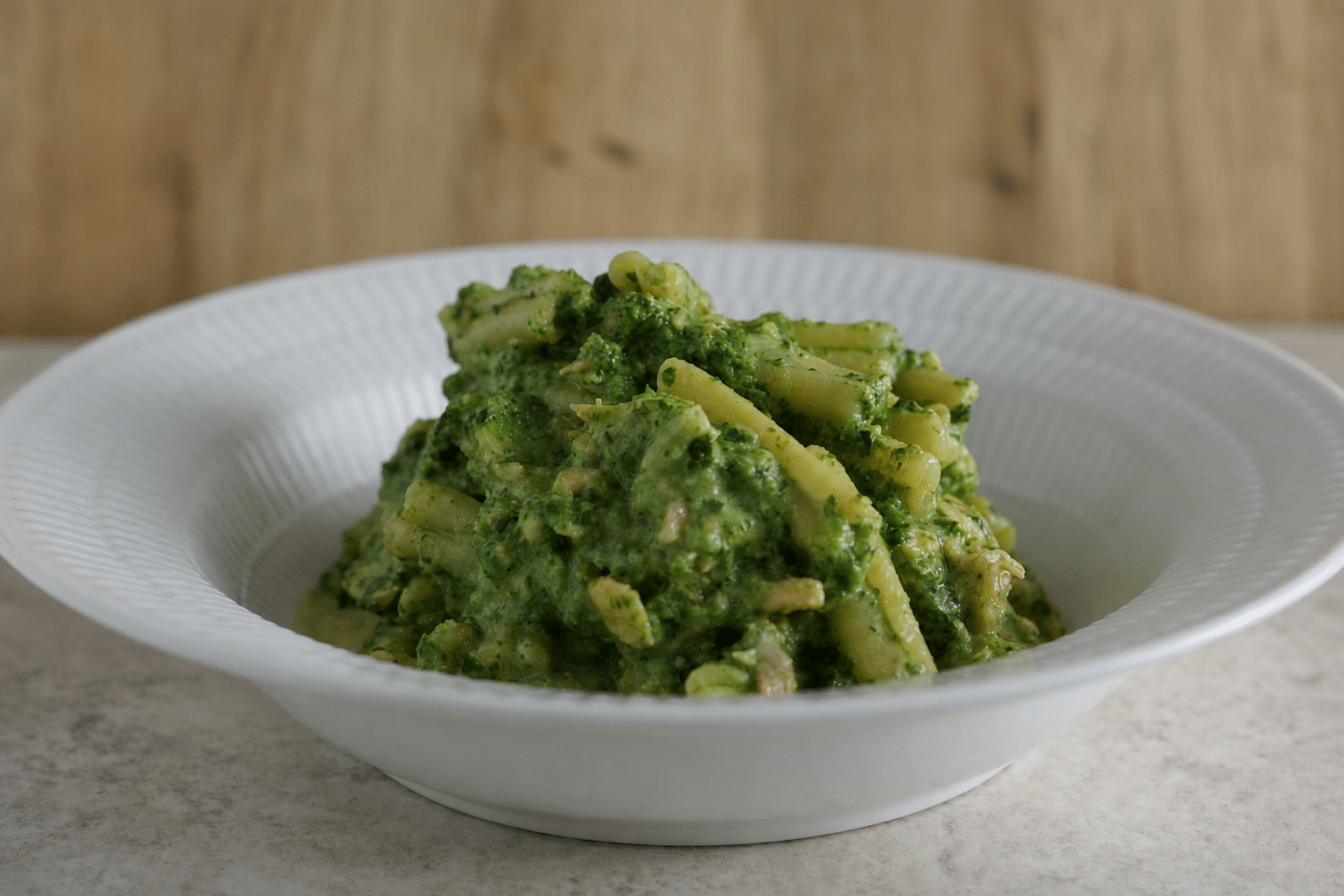

Sometimes the simplest things really are the best. This pasta brings together salmon, wilted spinach, Parmesan, a splash of white wine, and a squeeze of lemon – nothing more. What makes it work is a technique straight out of Italian cooking: the pasta goes straight from the pot to the pan, starchy water and all, and that liquid is what turns everything into a silky, cohesive sauce. No cream, no extra thickener.
The whole thing takes about 5 minutes of prep and 10 minutes on the stove. That is it.
Why this recipe works
The pasta cooking water is the secret. As pasta boils, it releases starch into the water. When you scoop the pasta directly into the pan without draining, that cloudy, starchy liquid goes with it. It coats every ingredient and binds the sauce together around the pasta, giving you a creamy result without adding a drop of cream.
The timing matters: move the pasta to the pan as soon as it is done. If it sits and drains completely, you lose the effect.
Ingredients
Serves 3
For the pasta:
- 3 quarts (3 liters) water
- 2 tablespoons (30g) salt
- 10.5 oz (300g) pasta – penne, fusilli, or spaghetti all work
For the sauce:
- 2 teaspoons (10g) unsalted butter
- 1 small onion, finely chopped
- 1/4 cup (60ml) dry white wine
- 5 oz (140g) frozen chopped spinach
- 18 oz (500g) salmon fillets, skin removed
- 1/2 cup (50g) freshly grated Parmesan
- Juice of half a lemon, plus zest if you like
- Salt and black pepper
Instructions
1. Bring the water to a rolling boil in a large pot. Add the salt and cook the pasta according to the package directions.
2. While the pasta cooks, melt the butter in a large skillet over medium-high heat.
Read more: The Hot Brown: the open-faced turkey and bacon sandwich from Louisville that deserves a comeback
3. Add the onion and cook, stirring occasionally, until softened and translucent, about 3 minutes. Turn the heat down if the pan is getting too hot – you want the onion softened but not browned.
4. Pour in the white wine and let it simmer for 1-2 minutes until most of the liquid has cooked off.
5. Add the frozen spinach and stir until it has fully wilted into the pan.
6. As soon as the pasta is done, ladle out about 1/2 cup of the cooking water and set it aside as a backup, then use tongs or a large spoon to scoop the pasta directly into the skillet – do not drain it first. The starchy cooking water the pasta carries into the pan is what builds the sauce.
Read more: Chocolate coconut granola that tastes like a candy bar, done in 30 minutes
7. Break the salmon into bite-size pieces by hand or cut it into chunks, and add it to the pan.
8. Grate the Parmesan over the top and let everything cook together on low heat for 2-3 minutes, until the salmon is opaque throughout and flakes easily when pressed.
9. Season with salt, pepper, and a good squeeze of lemon juice. Stir in a little lemon zest too if you want more brightness. Serve straight from the pan.
Tips and variations
Don’t drain the pasta. This is the one step not to skip. If you accidentally drain it completely, add a splash of the reserved pasta water back to the pan before the Parmesan goes in.
Read more: The holiday prime rib roast every home cook can nail, with one simple low-and-slow method
Fresh spinach: Swap the frozen spinach for a large handful of fresh baby spinach. Add it to the pan and let it wilt for about a minute before adding the pasta.
Pasta shape: Short pasta (penne, rigatoni, fusilli) holds the sauce in its curves. Spaghetti or linguine works fine too.
Spring option: In spring, stir wild garlic (ramps) in alongside the spinach – it is very good.
More Parmesan or lemon: Taste once everything is in the pan and adjust freely. Extra Parmesan richens the sauce; extra lemon cuts through the richness of the salmon.