
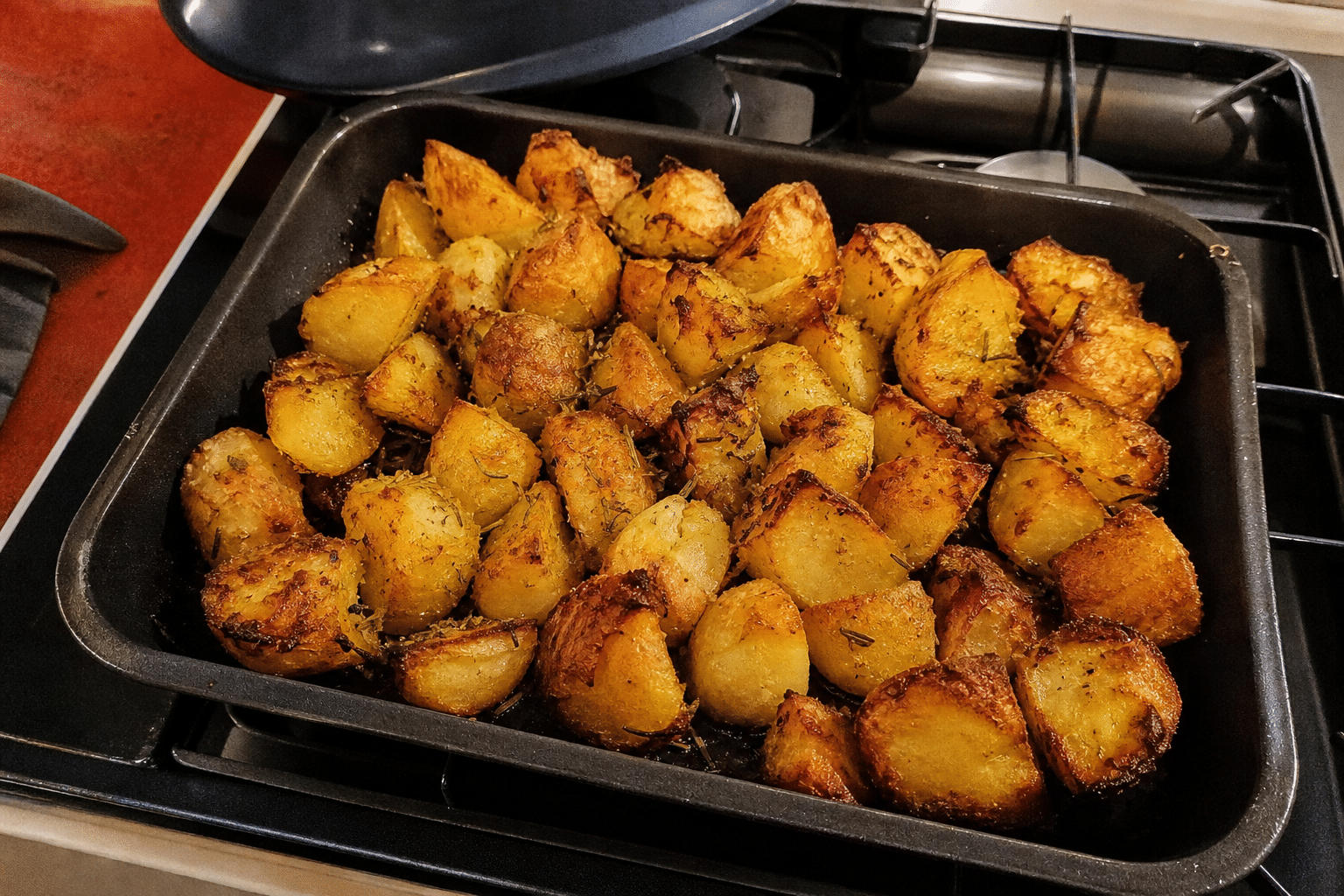

Soft, pale roast potatoes almost always trace back to two fixable mistakes. The first is skipping the parboil, which leaves the surface too smooth to brown. The second is parboiling in plain water, which keeps the potato’s outer layer intact even as it softens.
The fix for that second problem is a tablespoon of baking soda. Add it to the boiling water and it changes what happens at the surface of every piece before the oven even comes into play.
Why baking soda turns soft potatoes crispy
Baking soda is alkaline. When it dissolves in boiling water, it raises the pH, and that alkaline environment speeds up the breakdown of pectin, the compound that holds potato cells together. As The Daily Meal explains, once the pectin breaks down, starch from inside the potato leaches to the surface and combines with the loosened pectin, forming a thick, starchy coating on the outside of each piece. That coating is where crispiness lives.
Once those coated potatoes hit a 425°F (220°C) oven, the rough, starchy surface undergoes the Maillard reaction, the same browning process behind a good sear or a toasted crust. The rougher the surface, the more area exposed to heat, and the more aggressive the browning.
Read more: Why US eggs must stay refrigerated – the washing process changes everything
Rough up the surface before they go in
Parboiling with baking soda softens the edges. The next step is to take advantage of that. Drain the potatoes, let them sit in the colander for a minute or two until the steam clears, then return them to the empty pot and shake. Anna Reed writes on Hello Potatoes that “the rough exterior will capture some of that oil, helping the exposed starch brown as the potatoes roast.” Those jagged, cratered edges are what brown so dramatically in the oven.
Preheat the pan
One more step that makes a real difference: put the roasting pan in the oven while it preheats. When potatoes land on a cold pan, moisture pools underneath them. On a hot pan, that moisture evaporates immediately on contact, and crisping starts before the oven heat even has a chance to do its work. Hello Potatoes lists a cold pan as one of the most common reasons potatoes come out pale even after a proper parboil.
Read more: The crispiest potato latkes for Hanukkah, with the one trick that keeps them from going soggy
Space them out in a single layer with room between each piece. Crowded potatoes trap steam and stew rather than roast.
Crispy roast potatoes
Makes: 4 servings
Ingredients
- 2 pounds (900 g) Yukon Gold or russet potatoes
- 1 tablespoon baking soda
- 3 tablespoons (45 ml) neutral oil (canola, vegetable, or avocado oil work well; olive oil is fine too)
- 1 teaspoon kosher salt, plus more for the water
- Optional: fresh rosemary, garlic powder, smoked paprika
Instructions
- Place a roasting pan in the oven and preheat to 425°F (220°C).
- Peel the potatoes and cut into even chunks, roughly 2 inches (5 cm) across. Even sizing matters for uniform cooking.
- Bring a large pot of water to a boil. Add the baking soda and a generous pinch of salt.
- Add the potatoes and cook for 7-10 minutes after the water returns to a boil, until the edges are soft but the centers still hold when pressed.
- Drain thoroughly. Let them sit in the colander for 1-2 minutes so steam escapes and the surface dries slightly.
- Return the potatoes to the empty pot and shake gently until the edges are visibly rough and crumbly.
- Drizzle the oil over the potatoes, add salt, and toss until every piece is lightly coated.
- Remove the hot pan carefully. Spread the potatoes in a single layer with space between each piece.
- Roast until deeply golden, turning once at the 30-minute mark. Total roasting time is about 45 minutes.
- Serve immediately while the crust is at its best.
When things go wrong
Still pale after roasting: The pan was cold when you added the potatoes, or they were still wet from draining. Let them steam off fully in the colander before tossing with oil.
Read more: Rich homemade eggnog that is actually safe to make, with real eggs and no guesswork
Soft outside, fine inside: The rough-up step was too gentle or skipped entirely. You need visibly jagged, crumbly edges before they go in the oven. The rougher, the better.
Falling apart when shaken: The parboil ran too long. Pull them when the outside is soft but the center still resists a knife.
Greasy finish: Too much oil, or the pieces were too close together in the pan. The coating should be light, just enough to glisten.