

A Methodical and Thorough Approach Creates Sous Vide Magic
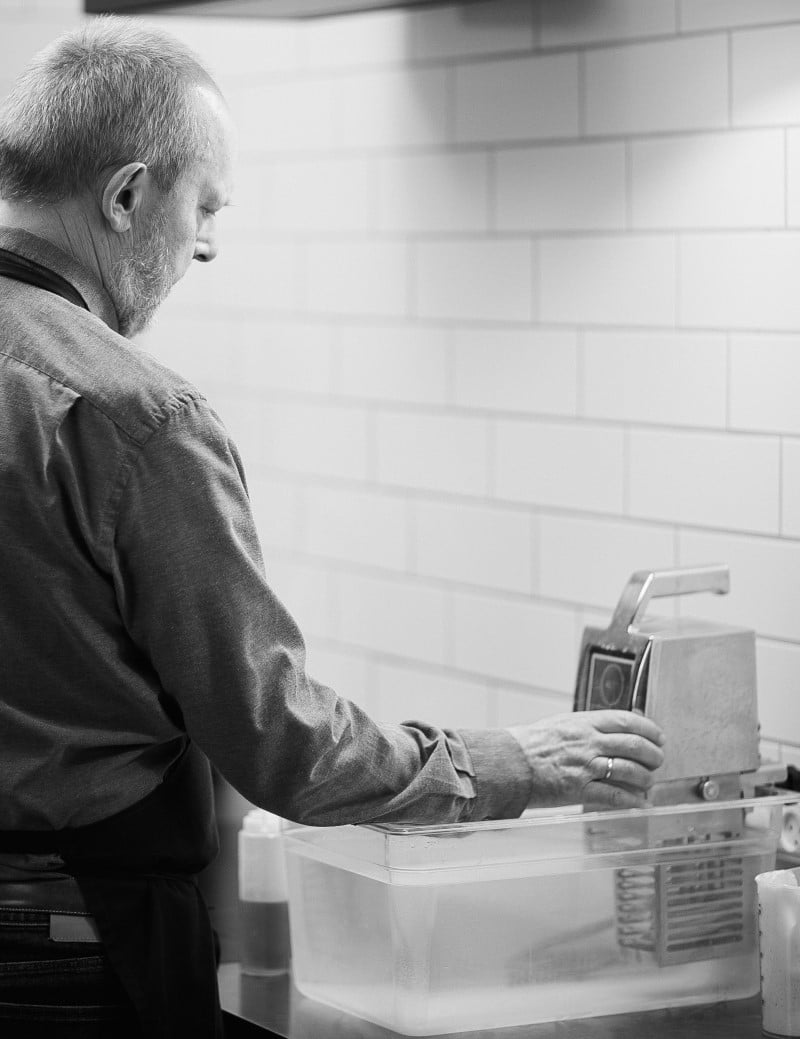
Karsten Tanggaard is undeniably Denmark’s leading sous vide expert, and it’s not without reason. For years, he has experimented and refined the culinary art of sous vide and has previously published two books on the subject. This year, he is relevant with his brand new book ‘The Sous Vide Handbook,’ but it was actually a bit of a coincidence that he ended up devoting his passion to sous vide.
“My very good friend Niels, who is also a food nerd, served something wild for me 10 years ago, and I was surprised by how juicy and tender it was. I often thought that when I made it, it just turned hard and dry. It turned out he had acquired a ‘Storm P-machine’ from Australia. His machine was equipped with a PID controller, which can measure the temperature with a small probe that should sit in a rice cooker. The controller could turn the rice cooker on and off, so when the temperature got too high, it turned off, and when it got too low, it turned on again. In this way, you could very primitively control the temperature, so I got myself one, played with it, and got a lot of aha experiences. The fun part was discovering that if you use the same raw material, you get the same result every time,” he explains.
Before devoting his full focus to sous vide, Karsten worked for many years as a music teacher in high school and at the Danish Broadcasting Corporation. He has a university degree in music and played double bass on the side. After that, he worked as an information manager for Roland Scandinavia, where he was, among other things, the architect behind Roland’s first global website. After that, he worked in IT for 10 years as a usability and chief consultant. Therefore, he does not have a culinary technical education, but he could use his methodical and creative skills in his work with sous vide. Writing books isn’t new to him.
“I have written many books before. I’ve written 20 books for education, and I think it’s fun to communicate different things. I also think I’ve gotten good at getting an overview of a large area and communicating it in a way that people can understand and want to read. So, 6 years ago, I decided to leave my regular job and write books about things that excite me in cooking, particularly with a focus on sous vide. I decided to make a book about sous vide, and now I’ve published my third,” he says.
He considers himself engaged and curious about sous vide, especially good at delving into details. And with his technical background, he’s good at systematizing and communicating it so others can benefit from it.
Therefore, it’s not unfounded that Karsten Tanggaard is the person to know if you want to excel at sous vide. With his comprehensive overview, unparalleled dedication, and passion, he has created a series of books that can turn anyone into their own sous vide experts. With a clear focus on communication, he has managed to convey a topic to ordinary Danes that can even make professional chefs scratch their heads. The most important thing for him is that you get the same great result every time you use sous vide.
We Ask – Karsten Answers
Get to know Denmark’s leading sous vide expert better as we ask him a series of personal questions. You can read about what equipment to choose and his best advice on where to start if you want to become a sous vide expert yourself.
What is your best memory with sous vide?
I have made thousands of sous vide preparations over the last 10 years and have often been surprised by how good something turns out. I’ve had many moments where I’ve thought, “Wow, that turned out great. So good that I couldn’t make it like that before!”
There are so many good memories, which is natural when I’ve made so many things. Recently, I’ve been very surprised at how good fish can taste when cooked the right way with sous vide. The same goes for vegetables, where you don’t just grill or boil them to bits.
I feel like vegetables in sous vide is a somewhat overlooked topic?
Yes, meat is still the most popular for many. I would like people to have more good experiences with greens in sous vide, but I don’t think it’s my job to teach others what to eat. My job, with the books I’ve made, is more about helping people ensure that whatever they eat is maximally good. So I’m happy when people are satisfied with my recipes and cooking methods and say that it works every time.
Which dish do you most like to make and why?
I have many favorites, but in my previous book, I have a chapter called ‘10 Sure Hits‘, which is also on my website. I’ve worked on it further in my new book, where I’ve placed some stars next to dishes I recommend trying first to get off to a good start. It could be, for example, chicken breast, ham, spinach, carrots, corn, and rhubarb. Just to name a few things that I wouldn’t make any other way than with sous vide. At home, we don’t eat chicken breast unless it’s cooked sous vide, because once we got used to it being juicy and tender, we didn’t want the dry and stringy chicken breast anymore.
I didn’t expect you could make spinach in sous vide?
It’s absolutely fantastic, and if you flip through my book, spinach is one of those highlighted as extra good. Many think: How hard can it be to make spinach? But often it becomes mushy, loses color, and gets a metallic aftertaste. In sous vide, it turns silky smooth and gets a deep spinach flavor. The same goes for rhubarb. If you haven’t tried rhubarb in sous vide, you haven’t tasted the full potential of rhubarb. It simply brings out more flavor and a consistency that still has a good bite.
What is your go-to dish for impressing with sous vide?
It depends on the audience because if they like beef, I’ll make that. Similarly, if they like lamb, I’ll make lamb culotte. If it’s pork, I’ll make a thick neck chop. Right now, I really like to make hanger steak or outside skirt.
Is there anything you haven’t been able to succeed with using sous vide?
There are some things I don’t think make sense, which can be fruit and vegetables, but that’s not sous vide’s fault. It’s mostly because I often want to eat berries and fruit fresh. But I made blackberries last season, which taste good when fully ripe, but they taste really good in sous vide too, once they’ve just lost their hard edge. I often test different ingredients and spend a lot of time finding the best preparation, which is also why it takes me a long time to write a book. I can certainly be wrong, but my goal is always to get the best out of the ingredients. I write for people who don’t have a professional culinary education, ensuring them reliability every time.
Do you have a favorite cuisine concerning sous vide?
My books aren’t cookbooks, so when you talk about a specific world cuisine, it’s often because you end up with a specific dish consisting of many different elements. That’s not my table because I’m not a chef – but my task is more about taking an ingredient and showing how to prepare it best in sous vide, and then I give some suggestions for what will pair well with it. Additionally, I refer to my sauce guide, where you can get inspiration for the ingredient you’re working with. So if you’ve made a T-bone steak, I have a suggestion – and recipes – for different sauces that pair well.
My personal favorite is probably Italian cuisine. It’s just something completely different, and often sous vide doesn’t suit it at all!
What do you most like to sous vide?
I’ll mention outside skirt, hanger steak, rump, Spanish pork, long-aged pork, or lamb shank. Otherwise, I’ve been very surprised by guinea fowl, which I think tastes incredibly good. Then there’s all the vegetables like carrots, celery, spinach, or pickled beets. Especially the last one is really good!
How does it feel that your book has been translated into other languages?
I’m so proud of it! It’s incredibly inspiring, and I’m proud that a good French publisher chose to translate my book. It’s a bit quirky that a Danish sous vide book is sold to a French publisher. And as a small country bumpkin, I can be quite proud of that.
Do you have a favorite dish when it comes to cooking with sous vide?
There are certainly many, but it would probably be chicken breast served with various things. If I had to mention one dish this season, it would be with new potatoes and a green salad, with grated lemon zest over the chicken breast. If it were 4 months ago, I would have made mushrooms in sous vide, which I then mixed with pasta and chicken breast. Mushrooms in sous vide get a slightly pickled but good mushroom flavor.
When was the last time you were impressed by sous vide?
I’ve often made something based on what others have made for me, where I’ve thought it was really delicious. It has, for example, been a veal tongue. Sometimes I’ve had dishes at top restaurants where they themselves say they wouldn’t be able to achieve the result any other way. I’ve had exceptionally good game, like pigeon, quail, or pheasant, but also perfect pieces of fish. I think that’s the most impressive thing I’ve tasted.
What can sous vide do that other cooking methods can’t?
It can achieve a specific temperature and maintain it for a set period, and it can do so every time. An additional benefit – if you’re a bit nerdy and curious – is that you learn a lot about cooking in general. Because if you’ve pan-fried your whole life, you’ve experienced it going wrong now and then. But precisely what goes wrong is hard to know. You learn that by using sous vide because you learn to understand the different mechanics with temperature and time around an ingredient when it’s cooked in precisely the same way every time.
I can clearly feel that a lot of my sous vide experiences I also use when, for example, I cook over an open fire, on the grill, or in the oven. Solely because I’ve learned something about how time and temperature work together and what it does to both meat and vegetables.
What equipment is best for sous vide?
It depends on how much space you have, how often you use the equipment, and how much you actually need. I think it’s a great idea to start with a stick and a pot, then use it for a while until you find out that you might use it all the time and want something with more space. I have several guides on just that, for example, one called ‘Stick or Bath – What Should I Choose?‘ The most important thing is often the temperature accuracy of the equipment; you can also experiment with the noise level. Some of them sound like a jet engine, which is something people rarely think about.
Many chefs I’ve talked to aren’t fond of sous vide. Why do you think they hold that opinion?
I think there are several reasons. It might be partly because professional chefs have spent many years perfecting cooking methods, for example, grilling meat. And I think they feel it’s a bit unfair that people can now look up my book and be sure of a result that’s close to what the chef can achieve using other methods.
But if I were to be a bit provocative, I’d say that I haven’t written a book to entertain chefs, as they’re not my audience. The people I write for are ordinary folks who cook at home, where I think they often have more success following my recipe than following a recipe from a professional chef.
Of course, a professional chef can also make something extra good with sous vide that the rest of us can’t, but I think they might feel it’s a bit of a shortcut for people to make good food. Additionally, I think there are many who have misused sous vide, thinking you can put a boot in and a tenderloin will come out. It’s also about using the right and good ingredients. I can understand why chefs might get a bit frustrated.
How does one become good at sous vide?
I would, of course, recommend buying my book, as it guides you through learning sous vide the right way. Additionally, you should buy quality ingredients, follow a good recipe, and make 10-20 different things to gain some confidence. At that point, you might want to delve a bit deeper to understand what’s happening, and in my previous book, I have a super nerdy section where I explain what’s happening concerning enzymes, temperatures, and everything else.
But the first step is about making something that tastes good and discovering that it does so every time.
Which cuts are best to start with?
You can look in my book, where in the table of contents, some places are marked with stars, indicating where you should start to ensure success. These are, for example, chicken breast, ham, chicken thighs, or turkey breast – which is a disaster if not cooked properly. I have a guide called ‘The 10 Sure Hits’ as a good place to start.
Fact Box
Name: Karsten Tanggaard
Age: 66
Residence/City: Copenhagen
Occupation: Sous Vide Expert, Instructor, and Author
You can follow Karsten and his work on his website: https://www.sousvide20.dk/
/Photo:/ Chris Tonnesen