

The Prices You Need to Experience
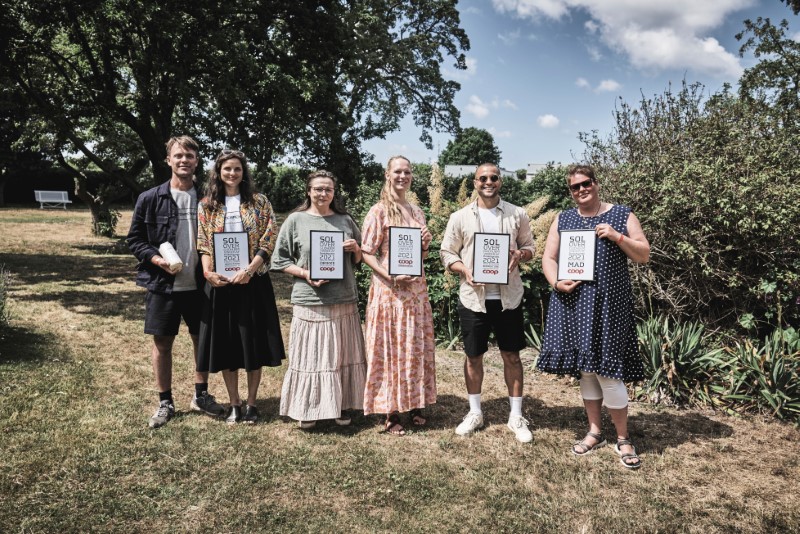
Although the Sol over Gudhjem competition mainly focuses on the 4 participants in the chef competition, a completely different competition also took place. The product awards were also distributed, offering the audience a unique experience regarding which products are currently the hottest on the market. While you may not get the chance to taste the 4 finalist dishes from the chef competition, here’s an opportunity to sample the finest that the Danish culinary scene has to offer right now.
There were 5 categories in the competition, which were:
- Food
- Beverages
- Confectionery
- Innovation
- Audience Award
The judging panel this year consisted of Hanna Schaldemose, Local Product Manager at Coop Denmark, Chef Francis Cardenau from ‘Sane Foods’, Chef Jesper Koch from ‘Steigenberger Alsik Hotel & Spa’, Chef Mads Battefeld from ‘Sushi Anaba’, Chef and Sommelier Simon Olesen from ‘Møntergade’, and Chef Mikkel Maarbjerg from ‘KIRK+MAARBJERG’, all of whom have Denmark’s most advanced taste buds, with an outstanding understanding of quality, vision, and flavor.
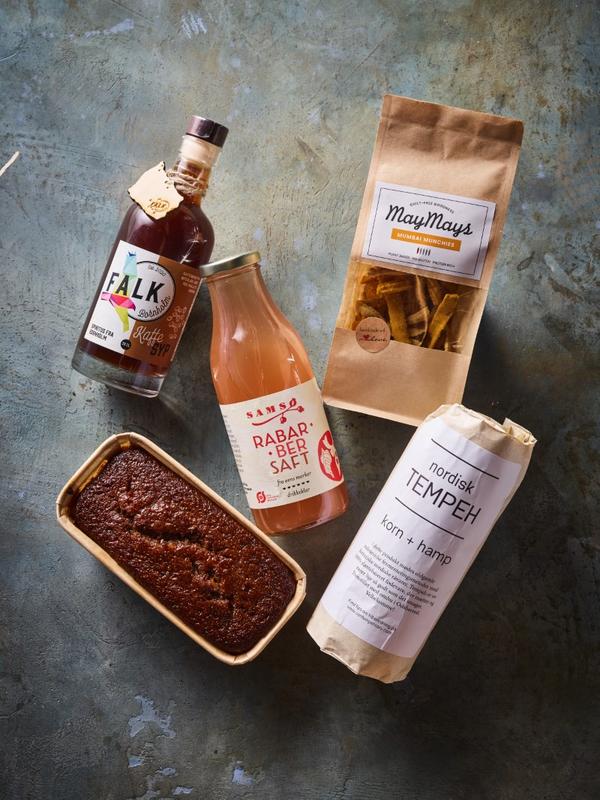
Here you have the opportunity to meet the 5 winners, where they will present their product and explain why you should keep an eye on their award-winning products. They represent the new frontier in Danish culinary taste experiences, and some of the answers will certainly surprise you.
Gastrofun.dk had the unique opportunity to taste the products, and we couldn’t agree more with the judges regarding who won.
The 5 Winners
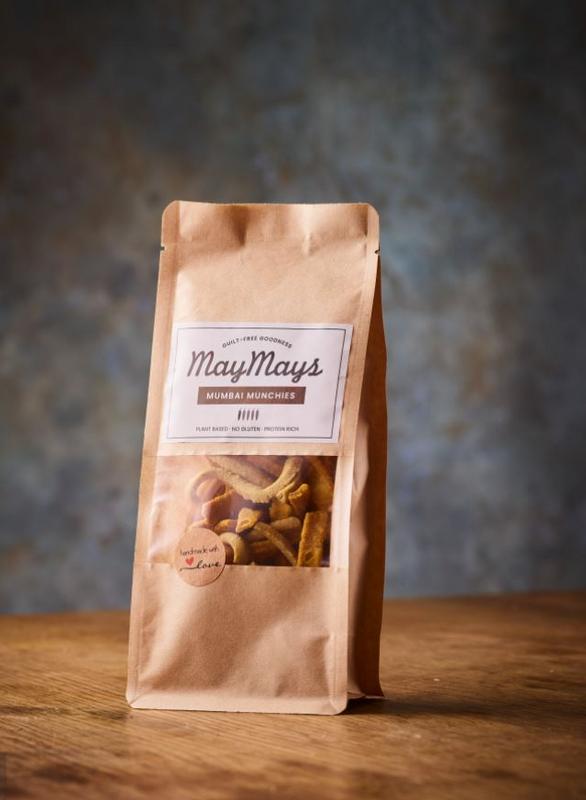
FOOD – Mumbai Munchies from MayMays
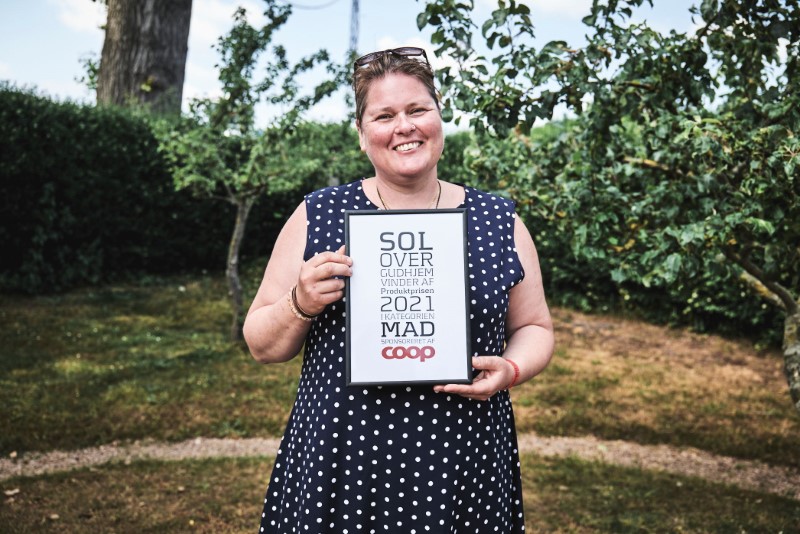
‘MayMays’ won in the ‘Food’ category with their product ‘Mumbai Munchies’. We had a chat with Maybritt Beutnagel, the creator of the product.
What exactly is your product?
It is ‘Mumbai Munchies’, which are snacks made from chickpeas and rice, seasoned with spices inspired by those used in India. Each bag contains 3 different varieties, each with its own shape and taste.
What is the idea behind the product?
The idea is for you to have different experiences when eating them. The thought is that you can open something, and it’s like being transported somewhere else. So it should be authentic in a way that when you open them, it’s like taking a trip to India.
How did the idea of traveling somewhere else through a taste experience come about?
It came about during the Corona period when we couldn’t work on what we normally did. And since people couldn’t travel, we wanted to give them an opportunity to travel abroad in another way.
What did you usually work on before Corona?
My husband is a pilot, and I had just opened a travel agency, so that was put on hold, and we had to do something else.
How did you come up with the idea for the product, and how has the development been from when you started to now?
It’s actually something I’ve been experimenting with for a long time, making snacks and food. I enjoy playing with flavors and getting the ultimate taste experience from different things. At the same time, friends and family who visit us are disappointed if they don’t get Indian food. So, I had made some different snacks and thought it might be interesting to work further on it. Therefore, I made some different tests and asked friends and neighbors if they would be a test panel, and they gave feedback on what they liked and their thoughts. It was also to find out if Danes would eat snacks with unfamiliar spices. We got very positive feedback, and that’s where it started.
Why did you enter this competition?
I thought it was a fantastic opportunity to get feedback from people who know about food and are part of the food market. Even if you don’t advance to the final competition after entering, you still get feedback on the product you’ve made. And that’s a fantastic opportunity. The judges are also very competent individuals, and the fact that they take the time to taste and provide feedback is a wonderful opportunity. I was also incredibly proud and happy when we were selected for the final competition, and it was also a great validation of my product.
When you were waiting for the winner to be announced, were you nervous, or did you think it was in the bag?
I had no idea what criteria they were voting on. I had a sense that they were likely focusing on flavor, but also whether the product could be sold. Several of them said to me afterward that I won because my product is something that doesn’t exist and is not a copy of something else. It’s its own thing.
What do you hope the future holds for your product after winning the award?
I’m really looking forward to collaborating with all these professional people who know about it, but also to selling it in more places. It’s a product people need to taste because it’s unfamiliar. Therefore, you also need to try it to decide if it’s a product you like or not.
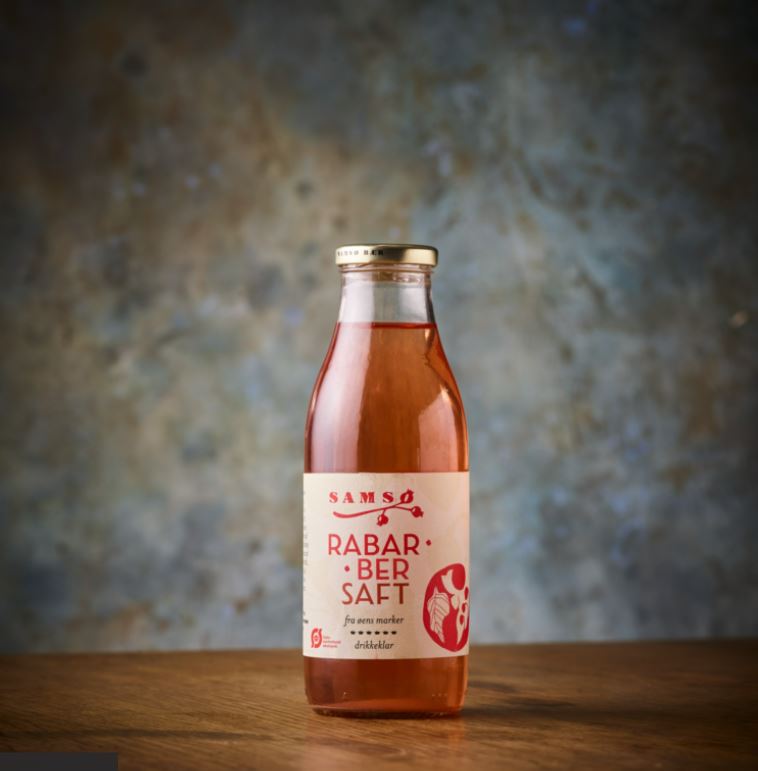
BEVERAGES – Organic Rhubarb Juice from Samsø Bær
In the ‘Beverages’ category, ‘Samsø Bær’ won with their organic rhubarb juice, where we subsequently spoke with Lone Hundevad, their representative at the competition.
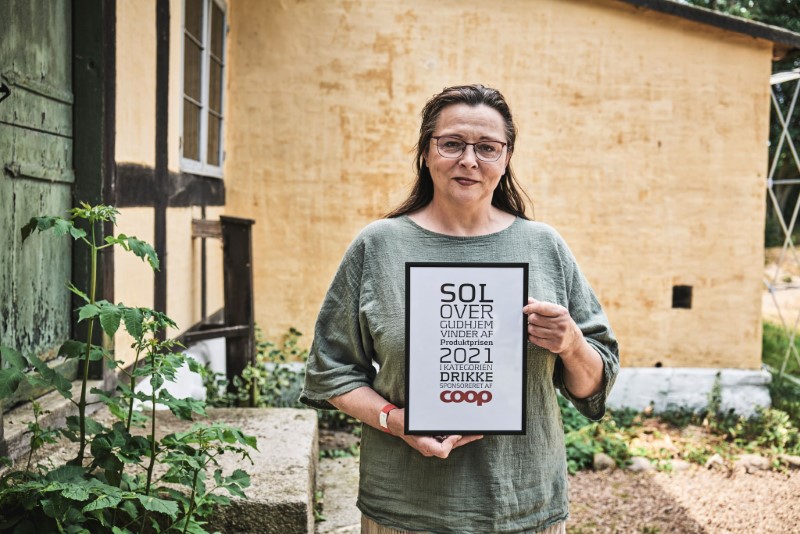
What product did you win with?
It is an organic ready-to-drink rhubarb juice.
What is so special about it that made you win the award?
We have been making a non-organic rhubarb juice for a long time, and now that we are organically certified, we thought we would make an organic version of it. We already have the rhubarb, but we wanted to make one that isn’t too sweet. Therefore, we were advised to remove some of the sugar and also took out the vanilla to give it a more characteristic rhubarb flavor. It tingles in the cheeks and has a purer rhubarb taste (She laughs, ed.). Therefore, there is also a lot of rhubarb in it. Many others mix it with apple juice, but ours is more of pure rhubarb. We prefer pure flavors, and we don’t skimp on anything.
When did you start developing this product?
We started a year and a half ago.
How has the process been from the day you started to now standing here and winning the product award?
I think the process has been really good, and my focus has always been that we should participate in this competition. I was absolutely sure that this product had something that none of the other products had. I’m really proud of that.
What is Samsø Bær as a company, and how long have you existed?
We are celebrating our 20th anniversary this year, and it’s three berry growers and a chef who started the company. It was originally with the idea of doing more than just picking berries, so we started by making two different jams from our own raw materials. Everything we make is our own production, so it’s berries from our own growers on Samsø. From there, it has developed, and today we have 6 different jams and a wide range of juices, both conventional and organic, but the trend is moving more towards organic. We also make cold-pressed rapeseed oil and a large amount of different types of schnapps.
When you were waiting for the winner to be announced, were you nervous, or did you think it was in the bag?
I was excited, but I had a good feeling in my stomach, and we’ve had that feeling throughout because I know that some of the judges have tasted it and are crazy about it. Even Simon (Simon Olesen from ‘Møntergade’, ed.) said he wasn’t impressed with the bottle but was crazy about the content.
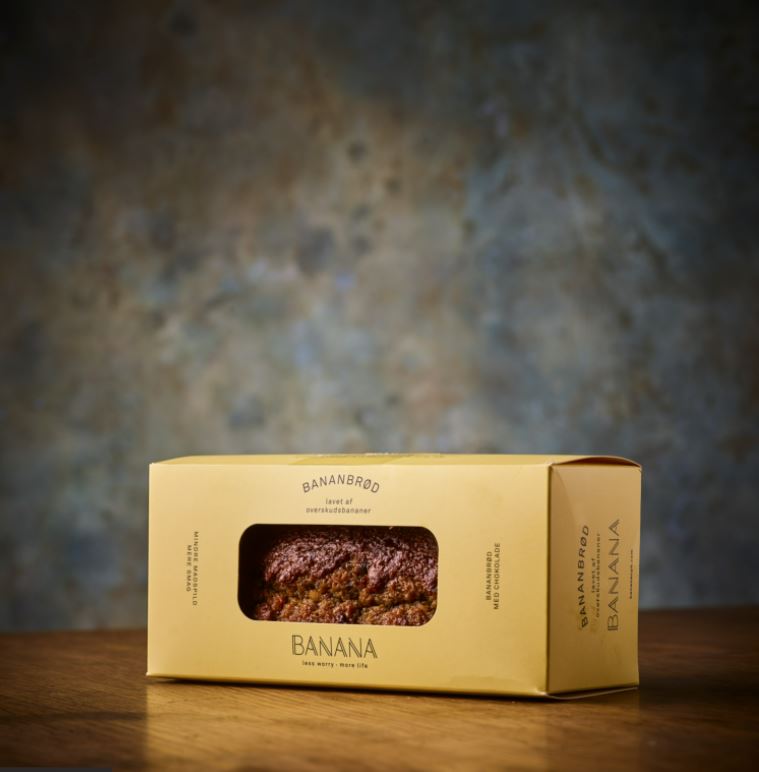
CONFECTIONERY – Banana Bread from Bananacph
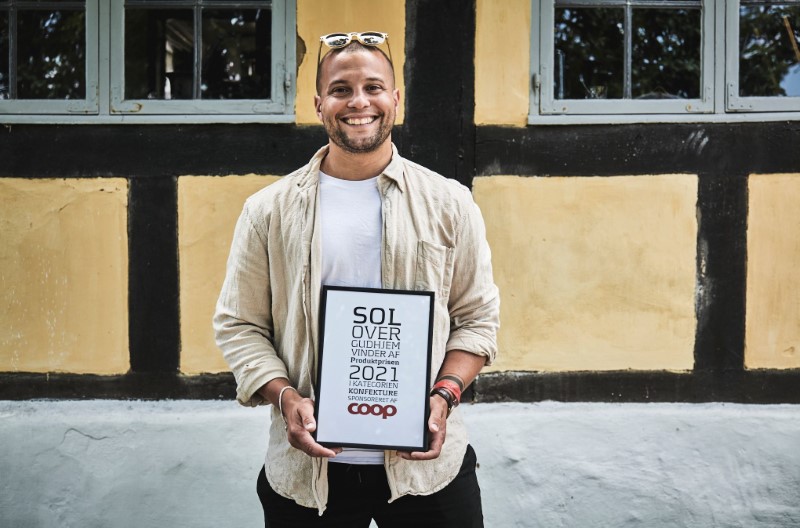
In the third category ‘Confectionery’, it was Christian Cordius, who owns the company ‘Bananacph’, that won with his take on a delicious banana bread. We sat down with him to ask a few questions about his product.
What exactly is your product?
It’s a banana bread made in collaboration with ‘Nordens Brød’ and COOP, as we cooperate with them in obtaining their surplus bananas. It’s completely new, and that’s why it’s really cool to make it to the finals with this product.
When did you start developing this product?
We started last winter, where we made some tests of the banana bread, which were three different versions that we sold in my stores in Copenhagen. After the corona closed us down, we began last year to make banana bread and launched it in January this year. From there, we had a good dialogue with Irma, where we conducted a test phase for 3 months. It was the best-selling product in terms of small businesses for 3 months in a row. Now we have entered the central warehouse and their permanent assortment, so it is also sold in Kvickly and SuperBrugsen. Therefore, winning this award means a lot to us.
How has product development been for you? Has it been hectic, or have you always had a plan?
It has been a bit hectic. We started last year with 3 different products, where we had to test them in the stores. So it was very sporadic concerning what worked and what didn’t. My company primarily makes ice cream, so it’s a side product compared to what we usually do. When we were hit by corona, we started a dialogue with COOP and ‘Nordens Brød’ and tried to make a product together, focusing on sustainability and upcycling, and it was actually quite straightforward. We finished producing it at the end of last year, and then it was just a matter of lining it up and pressing the button. So the whole process was pretty easy, also because we have partners who are really good at baking. The hardest part has been logistics in finding enough bananas.
How did the idea of banana bread come about?
The whole idea actually started in Hawaii when I was on holiday there in 2018, and there were some companies making products without using sugar and dairy products. So, long story short, I came back to Denmark and wanted to do the same thing, just using surplus bananas. Alongside, we had the ice cream going, but the problem is that ice cream in Denmark is very seasonal concerning stores. Therefore, we also had to consider how we secure ourselves concerning the cold months. So, already back then, I thought about how we could do it, and I had seen that they use a lot of banana bread in Hawaii as a form of local food. So it started there, where I thought it could be interesting to have in Denmark. So in 2019, I tested it in my own store, where we could see that the product with chocolate and nuts was the one that sold best. The whole thing was probably a bit accelerated by corona.
What do you hope the future will bring now that you have won this prestigious award?
Personally, I hope we can get some experience, advice, and expertise involved so that we can streamline the process, sales, and communication much better. Objectively, I think it’s great that this product’s features and visions have won. It means a lot also concerning future products. I’m really proud of that.
Do you have new projects in the pipeline after winning?
I have a lot of new projects going on, and we have a new ice cream coming next year. Additionally, we have a rum ball right now, which is our take on a rum ball, just without rum, consisting of coconut and dates. So I have a feeling that the market is ready to receive our products, and I’m really looking forward to it.
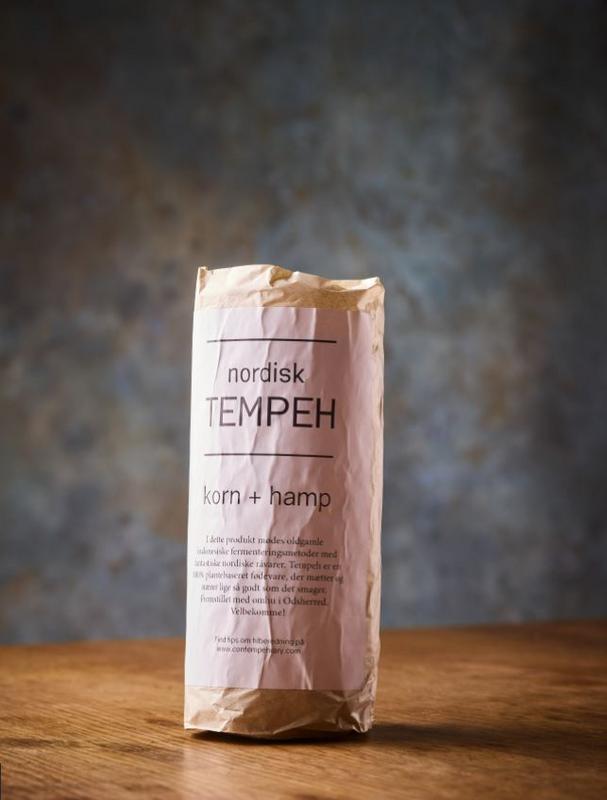
INNOVATION Nordic Tempeh from CONTEMPEHRARY
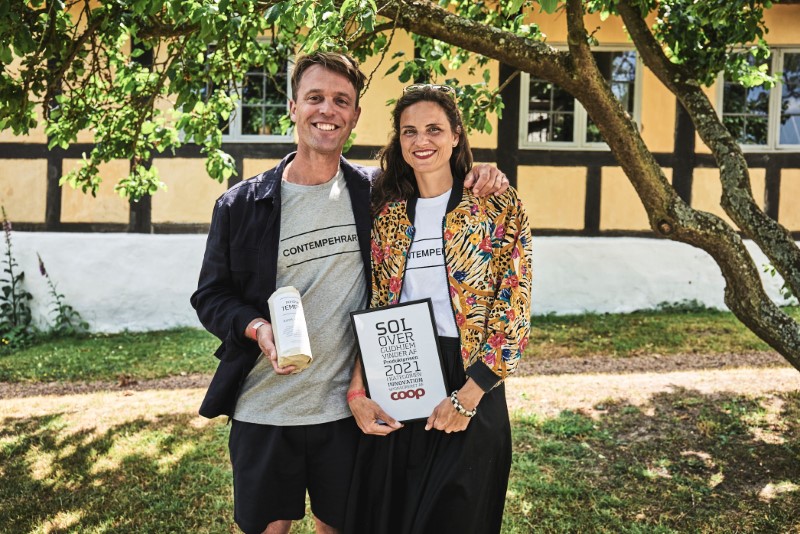
In the category ‘Innovation’, it was CONTEMPEHRARY that won with their Nordic version of tempeh, which traditionally is a product from Bali. We spoke with the company’s owners, Sabine Franciska Harboe and Tobias Noe Harboe, to find out what exactly tempeh is and why it is innovative.
You won in the ‘Innovation’ category, but what does that mean? Have you invented something completely new?
The category is about being innovative, and what we have created is something that is traditionally Indonesian, where tempeh is fermented, and we have created a Nordic version. In Indonesia, tempeh consists of fermented soybeans, while our variant is based on Nordic protein crops like grains, legumes, and seeds. The one we brought today is very special, as it is made from grains and hemp.
How did you come up with the idea for such a product?
A few years ago, we moved as a family to Bali. We are originally from the fashion industry, so I (Tobias Noe Harboe, ed.) got a job in a lifestyle company in Bali, and we started eating local food, and tempeh in Indonesia is everyday food. We didn’t know tempeh but became completely fascinated by it. Additionally, we are quite food enthusiasts and thought it tasted amazing, and we thought we could make it ourselves. So we found some locals and got them to introduce us to making it. Then we started experimenting in our kitchen with things we could get hold of.
How long ago did you start that process?
That was 4 years ago. We returned to Denmark 2 years ago. So when you came back to Denmark, you thought that Danes should also know about it? We already thought that back then, and we also thought it would be exciting to make. It tasted good, and it fitted with the green wave, where everyone focuses on eating more plant-based foods.
How has the development of the product been?
We have experimented a lot and spent 4 years mastering how to make tempeh. We came back with clear ideas about what we wanted to make and have developed the product a lot. But from there, it took some time to hit the product we wanted, and from there, we worked a lot on the launch and suppliers, as we only use Nordic-grown raw materials. So in that way, we set ourselves some challenges along the way, but that also helps to create a good product. We started last fall with the intention of producing for, e.g., restaurants. A large part of it is about educating people about tempeh because it’s not something people know.
Now that you have won this award, what do you think it can do for the future of your product?
First and foremost, it is a huge recognition to win this award, but also an understanding that tempeh is a fairly new product in the Danish market. It is also nice to get recognition from professionals, and it is also a sign that tempeh is a product that is missing in the Danish market, and it is something Danes want to eat. Furthermore, it is just a fantastic way to introduce the product to Danes. It is the top chefs who give recognition to tempeh, and in that way, it reaches out to the Danes.
When you were waiting for the winner to be announced, were you nervous, or did you think it was in the bag?
We were very excited and really hoped because we think tempeh is a great product that will play a big role in the green kitchen. It’s not an alternative to meat, but it’s a raw material that can supplement, both with protein, umami, and texture.
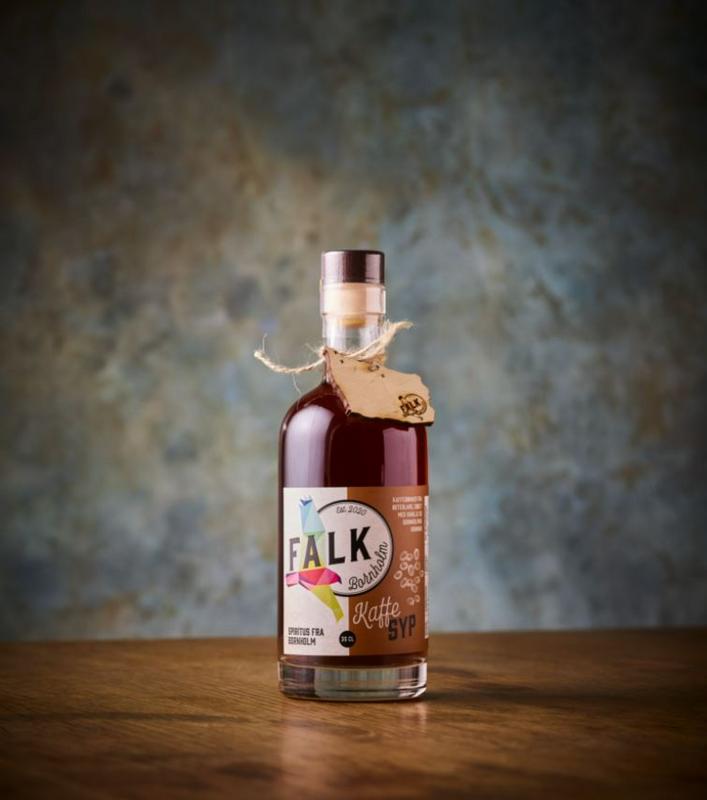
AUDIENCE AWARD – Kaffesyp from FALK Bornholm
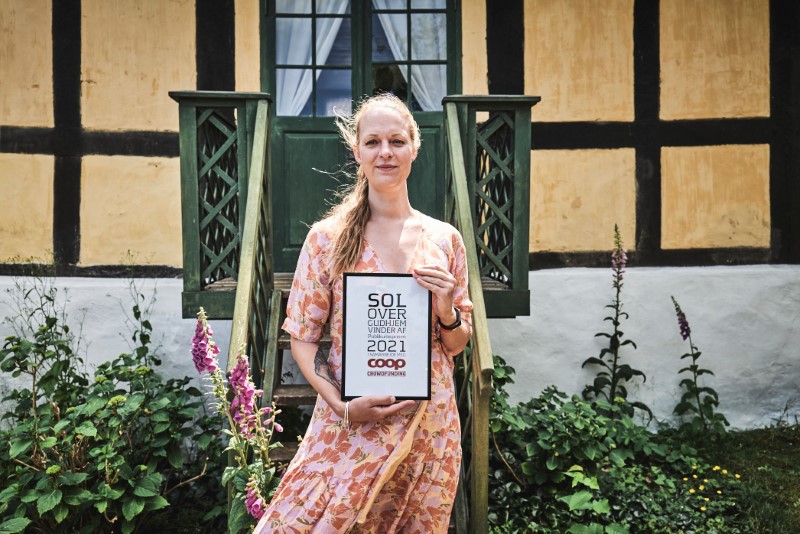
In the ‘Audience Award’ category, it was Line Falk who won with her version of a kaffesyp. And you might wonder: What is a kaffesyp? We also sat down with her to find out.
You won the audience award, but what exactly is your product?
It is kaffesyp, a Bornholm schnapps stirred with honey and mixed with freshly roasted coffee beans, vanilla, and, of course, honey. All ingredients are from Bornholm, so I buy the vanilla, for example, at a chocolate shop in Allinge. It’s all very local.
Is it like a coffee liqueur, or when do you drink syp?
It’s something you drink at Christmas and Easter lunches, for example, so it’s instead of drinking the frozen aquavit.
How did you get the idea for the product?
I grew up in a family where everything is made from scratch, including schnapps, so I’ve been making it for many years. I then moved to Bornholm with my husband, who is a local, and he wanted me to stir honey into my schnapps. We’ve had a long discussion about it because I thought it sounded a bit odd.
When did you start producing this product?
I started on it during the first lockdown in the corona times, so it’s quite new, as production only began in August last year. It has actually been challenging because I have always made my products based on gut feeling, but when this product had to go into production, it suddenly became important to have a fixed recipe with precise measurements.
How has the development of the product been? It must have been a bit hectic since you only started in August and now have the audience award?
I make a lot of micro-batches, so at Christmas, I released my first assortment, but it was only 40 liters in total. Subsequently, I scaled up to double for Easter, and my newest batch is 140-160 per batch. I sold out before Christmas, and the same when we hit Easter. So now I have divided it into the 3 seasons we have on Bornholm, which is very much influenced by the tourist season. I have further divided it so that I now have 4 different syp’s and two more coming in July.
Where do you produce it?
I have premises in the old cannery in Nexø. I actually started in the basement of a café but was quickly evicted because there were some issues between the two owners, so we suddenly found ourselves without premises. We were notified on a Friday and found ourselves without premises by the following Monday. It’s quite challenging to move a spirit production elsewhere because it has to be food-approved, and you also need agreements with the municipality and the fire department. So my husband went down and spoke with Daniel Barslund, who owns Ocean Prawns A/S, where I then came into an old cannery that was shut down. There was ice on the walls, and I’ve been bottling with gloves and ski clothes on, and when I need water, I have to use spring water because there isn’t any usable running water. But they are now renovating and building completely new premises for me, where everything is new.
Now that you have already won the hearts of the audience and have a collaboration with COOP, what do you think it means for your further development?
First of all, I am really happy that it is the audience award I have won because it means I already have contact with the customers. Before I started producing this product, I wrote a lot about it on social media, sharing ideas and development, so I have been very inclusive and open about my production. I also share schnapps recipes, so I am really happy that people have embraced it. Furthermore, I am really looking forward to getting some sparring on production and working on contacting retailers. And, of course, to get some input from professional chefs about flavors, so I know when I have a good idea and when I should scrap it. Especially because I can sometimes become so enthusiastic about the different essences I can use, but I probably also need to know whether what I make will be good or bad. I have a hard time limiting myself.