

Passion and Dedication Can Make Dreams Come True
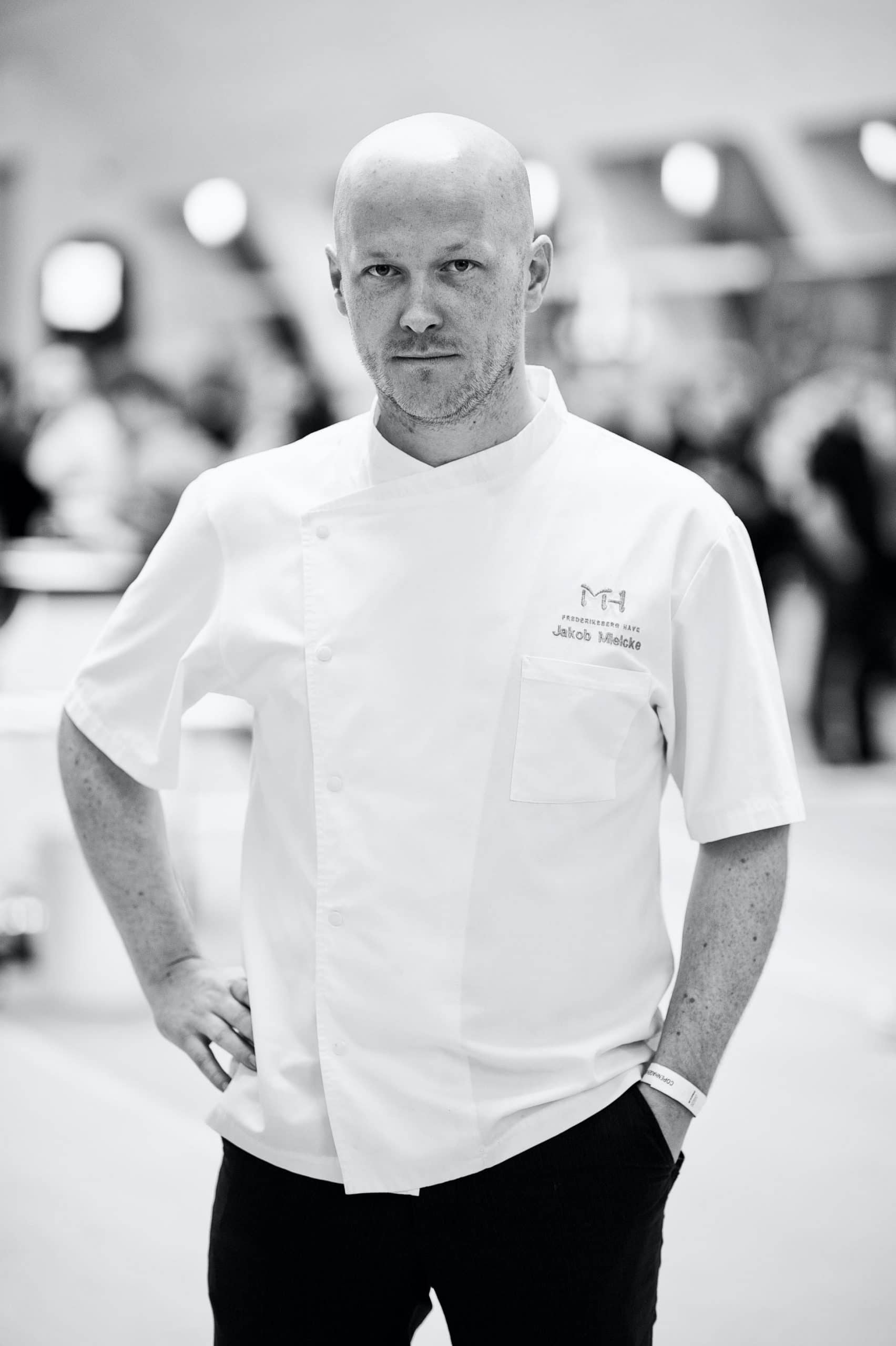
Most people probably know Jakob Mielcke from TV, where he is one of the judges on Masterchef. Additionally, he is also best known as the esteemed and commendable chef who hasn’t taken a culinary education but is actually self-taught.
“When I was in high school, I had the opportunity to support myself by working in restaurants and going out to make dinners. I actually stepped off the student wagon, after we had driven around, to head down to the restaurant I worked at, which was in Holstebro and called ‘Under Klippen’, where I had a chef position. I got in there after having worked for a very skilled chef. So, I kind of got in that way, and then it became a way to pursue further into the culinary arts, where I probably had an idea at the time that I should continue my studies. After a few years of working in Paris, I suddenly found myself looking up at the Parisian night sky, and it dawned on me that ‘now you’re on a certain path’,” he recalls.
Becoming a chef was therefore not a conscious choice on his part. He comes from a family with long educations, and he believes he may have fallen a bit outside the nest. Nonetheless, he has an impressive CV that has brought him to the top of Danish gastronomy. This is despite the fact that it all may have been somewhat influenced by coincidences.
“The reason I ended up in Paris was somewhat because one thing led to another. I started in Holstebro and moved on to Aarhus, from where I then went to Copenhagen. Here, a chef told me he knew someone in Paris and that I could probably get a job with him. So, I wrote to him, after which I went there and worked. The biggest change was probably after I had lived in Paris for about a year, where I applied to ‘Pierre Gagnaire‘, a 3-star Michelin restaurant, which is very profiled. I knew well that I would get questions about a journeyman’s certificate (as a chef, ed.), so I had to come up with a way where I could get a chef position without taking a degree through the Danish route. I was there for two years, after which I went to London and stayed for a year, where I averaged 80-100 working hours a week,” he says.
From there, he went all out and constantly had a thought that now it must either break or bear. Despite this, it has been a world he feels he has been drawn into.
“I have always loved food, and throughout my upbringing, I have remembered tastes and smells, so it was probably a hobby that began to fill more and more as I got older. It’s not in that way a path I have chosen, but I have been more sucked into it. It also coincided with my enormous passion for food, and one day it dawned on me that now I was probably a chef,” he says.
Today, he is a restaurateur at ‘Mielcke og Hurtigkarl‘ while also being a judge on Masterchef. He attributes all his success to his curiosity, diligence, and creative mind. Where others see challenges, he sees opportunities. He has a clear ambition for the restaurant he runs today.
“My ambitions with the restaurant are that what we do should be an experience and be world-class. So we are not striving for recognition. The ambition has been more to create an independent restaurant where there is room for other chefs and students to come in and leave their mark on the menu. It’s important that the business is unique and not to be measured in a competition. Therefore, the guests and their experiences are also at the forefront, as it should be something unique when you come in and dine with us. It also gives us room to challenge and explore gastronomy,” he says.
We Ask – Jakob Answers
Get to know one of Denmark’s best chefs better as we ask him a series of personal questions. You can read about which equipment he uses, as well as which techniques can improve your cooking in your own kitchen.
How did you end up as a judge on Masterchef?
At that time, I had an opinion that I didn’t want to show that I was selling out. So I was very careful not to appear in promotional videos or as a spokesperson for frozen food. But I was persuaded to make a guest appearance when Thomas Herman was a judge. However, I found that it was really fun to participate, and they respected one’s reputation.
Subsequently, I received a call where they told me they would like me to become a permanent judge, where I feared I would be exploited and people would feel that I was selling out. So I ended up, somewhat reluctantly, saying yes, and all my prejudices were completely refuted. It was an enormously exciting experience and very challenging. Suddenly, I had the opportunity to do something completely different and improve my skills within it. I had the opportunity to use and develop my skills to become a TV host. And today, I am incredibly happy and grateful that I got the opportunity.
In my restaurant, I am the owner, chef, and have many employees under me, which can be a burdensome responsibility, whereas in the TV world, I experience it completely differently. Here I am employed, and everyone around me takes the time to make sure I am well and perform in the best possible way. It has been very beneficial for me. Both have helped to boost me and my skills. So when I return to the restaurant, I often see things in a completely new way. I really enjoy being a part of Masterchef.
What is the worst and best dish you have had on Masterchef?
At one point, I had some half-raw sheep testicles, which I found quite unpleasant. Among the best dishes, I would mention the dishes that Karoline Trier made. She made some absolutely fantastic dishes, and in a way, there are just some who impress throughout an entire season. Where you can feel that the food just lives between their fingers, where it just shines out of them how skilled they are at cooking.
Do you have a best memory from Masterchef?
No, not as such, because I actually have a lot of good experiences. For a food-loving person like me, I can remember the dishes better than the people behind them, but sometimes those two things blend together. In that way, it doesn’t become a single highlight in a dish that I remember, but more the development that the person has had throughout the season. It becomes those things that leave more of an impression than just a single dish.
What does hunting mean to you?
I hunt a lot, and I might wish it was just leisure, but it has also become a bit of a job. It is both work and leisure, and that’s how it is with many of the things I do. We use a lot of game on the menu, where we use game from the places I hunt, and we age all the meat we serve ourselves. I can’t mention a favorite game. I would say that fallow deer tastes absolutely fantastic. But it’s hard to choose between, because a woodcock is also absolutely fantastic. It’s difficult to make but incredibly good when it succeeds.
Is there an ingredient you have a hard time with?
I definitely do, and it must probably be kiwi. I don’t get it! I like all other ingredients if they are good, but a kiwi I can’t imagine has a gastronomic contribution. It’s just a helpless fruit.
What dish do you make most often in your own kitchen?
It would probably be better to ask my wife about that, but I often make pasta dishes. My kitchen has taken a bit of a hard hit after I’ve had two children. Many of the things I try to dish up get pushed aside. I’m not afraid of food critics and the like, but making my children happy can be a bit of a tough challenge. Yesterday, I got them to eat something that was a bit outside their gastronomic map, so when I manage to succeed with them, it’s a huge victory for me. My daughter is gradually becoming more interested in cooking, but it’s often in the sweet kitchen.
Do you have a favorite cuisine?
I have been enormously influenced by Asian cuisine for many years, especially Japanese. But also South Asian, like Vietnamese and Chinese food. China is such a huge country that has enormously many regional cuisines. Gradually, I have also started to be inspired by Mexican cuisine, which can do a bit of the same in terms of the use of herbs, spices, and acid, which is probably something we need a bit more of at our latitudes. Despite this, it’s probably Japanese cuisine that has influenced my professional work the most.
What is your favorite ingredient?
It would be game in all its forms.
Do you have a favorite dish?
No, because it would be 100 different ones. When you are as engaged in food as I am, it will depend on a certain context. Some days – in certain periods – it’s one dish, while in another period, it’s a completely different dish. For example, right now, I want to teach my children to eat medister, but it’s not as such a favorite dish. It’s more of a trip I’m on right now.
Where and when were you last impressed?
Now it might be a bit of an insider story, but the last time I was impressed was when I went down to visit Jesper Koch at his new restaurant ‘Syttende‘. He has been in the industry for many years but still manages to constantly reinvent himself. With all love and respect, I must say that it was annoyingly impressive that he managed to do it once again. He has long been a trendsetter, but I got a dish there that I thought was extraordinarily good. It was a huge experience, but it’s a bit annoying when you know the man so well (he laughs, ed.).
Do you have a favorite restaurant?
I have many, so it depends on the city we are in. So if I were in Paris right now, I would have lunch at ‘Alain Passard‘. He was a bit of a rival to the place I worked in Paris, and I regret a bit not having worked for him while I was there. He works a lot with vegetables and has a very minimalist approach with a huge knowledge of ingredients. If I were to eat in Spain, I would go far up in the Basque Country around San Sebastian, where there is a place called ‘Etxebarri‘, which has a self-taught chef who many consider one of the best chefs in the world. He has his own kitchen garden and makes his own cheese, and everything is grilled, no matter what it is. If I were to eat in Japan, it would be at a restaurant in Kyoto called ‘Nakahigashi‘, which isn’t really a well-known restaurant, but they make absolutely fantastic mountain dishes, which often consist of small servings.
Do you have a guilty pleasure?
I really like a good shawarma, but I find it difficult to find one in Copenhagen. I would like to make one myself someday. Otherwise, it’s my wife’s burger buns, where we sometimes make them with game meat. It’s the best way to get my children to eat game, but when we make it and grill everything out on the terrace, it’s almost heavenly.
What type of knife do you use the most?
I mostly use Japanese knives, and the one I use the most is a standard knife from the brand ‘Misono’. It’s a brand that I really like to use, but the one I am most fond of – and use the least – is a sashimi knife. It needs constant sharpening, and if you have knives in soft steel, it requires a tremendous amount of maintenance.
What brand are your knives?
The ones I am happiest with and use the most are from ‘Nenox’. They are some super good knives that are just mega versatile in relation to the needs one has.
What equipment and kitchen appliances are your favorites?
It must be a mandoline slicer. With a small investment, you can make enormously exciting and good dishes. But my best advice for success in the kitchen must be to have a good stand mixer. Being able to make your own bread in a good way, I think, provides a huge input in relation to one’s own cooking. I myself have a stand mixer from the brand ‘Bjørn’. It’s what can make the difference in relation to one’s own kitchen and one’s own cooking.
What kitchen appliance do you have a strained relationship with?
It must be a home sous vide; I can have a somewhat strained relationship with it. It’s actually designed for putting your ingredient in a bag, vacuuming all air out, and putting it in the machine, but I often find that there is still air in the bag. At the same time, it’s a way for people to cheat if they can’t figure out how to cook meat. If, for example, you need to make many dishes for a dinner party, it’s an easy way to avoid good preparation. It means that there are many – who actually care about cooking – who can’t figure out how to cook meat because they don’t have it in their fingers.
It’s a bit of a contrast to the mandoline slicer, which improves one’s skills, whereas a sous vide is a way to cut corners. When we use it professionally, we use many other skills to preserve the juice and flavor, whereas in a home sous vide, it seems a bit half-baked. So you have to be a bit careful about how you use it.
Do you have three techniques you use that others could benefit from knowing about?
Somewhat broadly speaking, most can benefit from getting an understanding of the dessert kitchen. Here it often comes down to textures, and your techniques need to be completely correct, or you’ll get it wrong. So working with eggs, for example, I think can give people an aha experience in terms of how it all works together. If you understand how to make a good pastry cream, you can develop the technique to go in many different directions. One must trust one’s intuition in relation to the recipe being used, so you need to know when the recipe makes sense, but also when you should feel your way more. The recipe is very general, but the product of the food you make depends on the equipment you have. You need to be present in the things you make, and you need to have the backbone to trust your own skills. If you think the meat should come off the pan now, even though the recipe says otherwise, then you’re probably right that the meat should come off the pan and rest. The last thing, which I use a lot in my own kitchen, is to have a small arsenal of, for example, Japanese sauces, which are very flavorful and provide a good umami so you can make a fantastic dish just before serving it.
Facts
Name: Jakob Mielcke
Age: 43
Residence: Copenhagen
Job: Restaurateur and head chef.
Company: Mielcke og Hurtigkarl
You can follow Jakob Mielcke and his work on Instagram at @mielcke., as well as the restaurant ‘Mielcke og Hurtigkarl’ at @mielckehurtigkarl.