
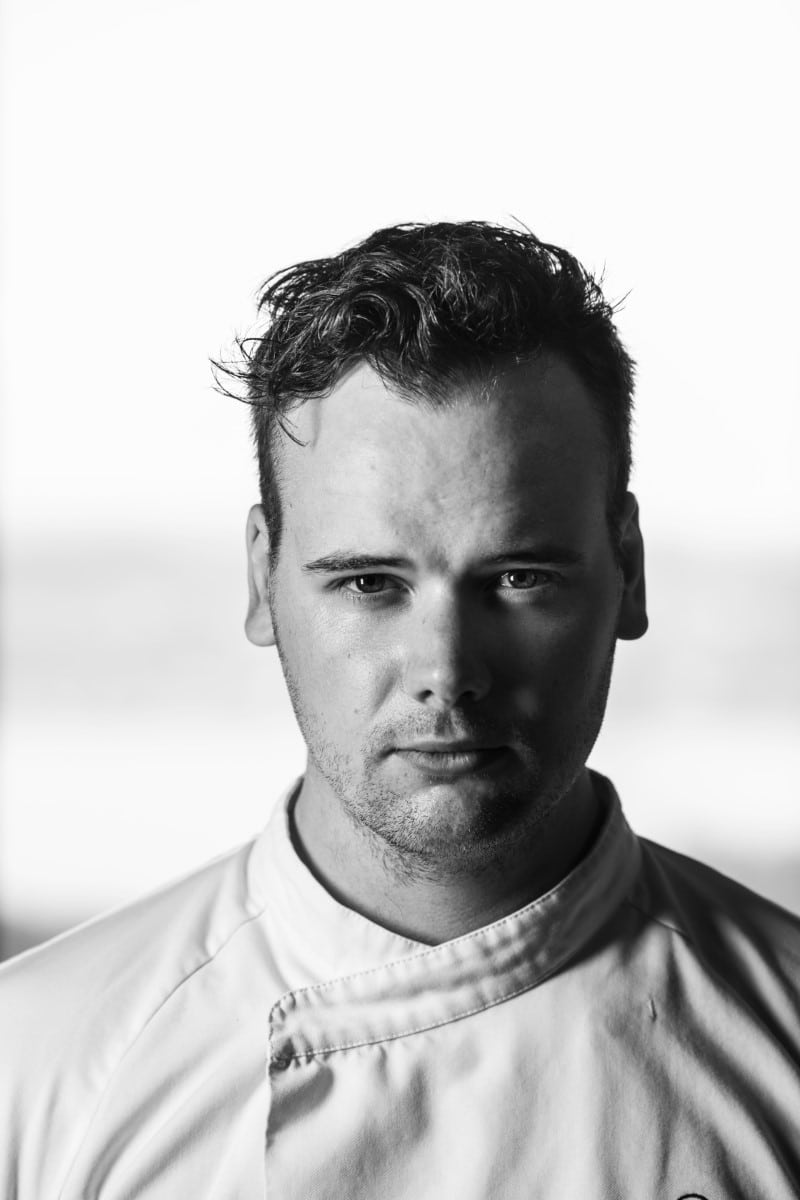

Interview: Chef Nicolaj Møller from Treetop
When Cozy Atmosphere and Passion Become One
Nicolaj Møller is the head chef at restaurant Treetop in Vejle, where he has worked for several years. His cooking has garnered a lot of praise over the years due to his approach to the culinary field, driven by his great passion for food.
“I’ve always liked the creative part of it. The creativity in cooking. I’ve always enjoyed cooking. Not that I’ve stood with my grandmother cooking and all those nice stories, but I’ve always thought it was fun,” he says.
Nicolaj was only 19 years old when he became a trained chef, which he himself mentions is very young in the eyes of many. He was also an apprentice at Schackenborg Castle Inn.
“I thought about whether I should try the education but was advised against it. Instead of all my other friends who chose to go to high school, I decided to try something different and take the chef’s education. But there are many prejudices about the field, but it’s what you make of it. There was something about it that I found exciting,” he says.
For him, it’s about balancing private life with the late working hours.
“I’ve tried to see if I could change the perception of the field and the more negative aspects by doing it my own way, which might also be a slightly healthier approach to the profession,” he says.
Nicolaj would therefore also describe himself as a very happy and smiling person who focuses on being approachable. Additionally, he is someone who isn’t afraid to pitch in where extra effort is needed.
“I’m a bit of a jack-of-all-trades, everywhere. If I’m needed in the dishwashing area, I’m there. If I’m needed among the guests or in the kitchen, I’m there. I’m where I’m needed,” he says.
Furthermore, he emphasizes the importance of enjoying what you do and finding value in it every day. If he hadn’t chosen the culinary path, he believes he might have become a salesperson.
“I’ve always liked talking to people. I think I would have used my openness. Otherwise, I might have become an entrepreneur because I like being creative and creating something,” he says.
This openness also means he often goes out among the guests to talk to them and hear about their experiences with the food or wine.
“I spend a lot of time getting out to the guests and talking to them, and feeling them along the way. Whether they like the food or the wine. I spend a lot of time analyzing them, whether something is wrong or if the guest praises a particular dish. You wouldn’t catch that if you weren’t present. Otherwise, the workday just becomes monotonous, where you make one dish and then the next. You create some back-and-forth, and therefore it’s important to be a sort of host,” he explains.
He also believes it is important to give his employees room to express themselves and think creatively.
“My employees need to be fed with ideas, and that’s what makes us lift together. That’s the most important part. My employees get to express themselves,” he explains.
We Ask – Nicolaj Answers
Get to know him here as we ask him some personal questions and find out why dry-aged meat is better than the meat you find in the supermarket’s cooling section.
What is your best memory from the kitchen?
Oh, I don’t think I have one best memory, but I found an interest in food through food magazines, and then I started as a dishwasher in various places. It was fine being in the dishwashing area, but it was more fun to see what the chefs were doing. There was something I found exciting about it. So it must be way back when I experienced the kitchen as an orchestra.
Which dish do you like to cook the most?
I’m a huge fan of fish and shellfish, and everything that comes from the sea. It doesn’t have to be fine dining, but it just needs to be fresh. So a plaice or turbot on the grill, with really fresh herbs and vegetables, is truly delicious! The spice mix should be simple, so salt, lemon, and maybe some beach herbs, but really it’s about letting the ingredients speak for themselves. You should make something where you can put your own signature on it. That’s where it becomes magical.
What can dry-aged meat do in comparison to other meat?
Since the meat is allowed to hang, and the enzymes are allowed to work, you just get more flavor in the meat. Especially the longer it hangs. So when we have meat at my restaurant, it’s something that’s been processed in some way but is first and foremost organic. It’s important that it’s quality meat. It’s about making guests see that there’s a difference in the meat you buy and how it’s been processed. So when you taste a good piece of meat, you can taste that it has been aged for X number of months, but that it’s worth it. Everything comes together perfectly. You can taste the difference between well-aged meat and meat in the traditional sense.
What is your show-off dish?
We just won the award for ‘Cheese of the Year’ in ‘The Danish Dining Guide,’ and it’s one of the dishes that defines me and my skills. It’s a cheese serving with comté and truffles. But for me, it’s about constantly getting better at utilizing the ingredients we use. It was an alternative thing to venture into, but that was the plan behind the dish. We made an assessment where we asked: “What can we do differently?” So we thought it could be fun to make something with cheese. Again, it’s about finding your own identity. You can get something surprising out of everything by thinking creatively.
Which dish do you make most often in your own kitchen?
I’m totally into the bowls (an Asian-inspired dish, ed.) you can make, and it’s a good way to empty the fridge. Some cooked rice at the bottom of a bowl, and then you can basically put on top whatever you like. A little bit of cashew nuts, some cabbage, some avocado, pine nuts, onions, and red cabbage. Just different, creative things you put on top. And then peanut butter dressing to top it all off, and maybe a little sour cream on the side to balance it all. A good way to get something delicious.
Which 3 ingredients do you always have in your fridge?
White wine, eggs, and milk. Eggs can be used for everything! They can add creaminess, different textures, and can be used in both savory and sweet dishes. I love eggs!
What is your favorite ingredient?
Oysters, and particularly South French oysters. There’s so much flavor in them, but I love all kinds of oysters.
What is your favorite dish?
I love it when my girlfriend makes an Indian dish called dhal. She made it the other day when I had a friend over. Lots of warm spices, with lentils and sour cream. There’s really a lot of power in the flavor of that dish.
Do you have a favorite restaurant?
I have several favorite restaurants, but I’m a big fan of the work they do at ‘Jordnær’ in Gentofte. If I go a bit beyond the country’s borders, there’s a 3-star Michelin restaurant in Norway called ‘Maaemo’. It’s especially their form of perfection that appeals to me, along with their French, deep flavors, while it’s also visually stunning.
What type of knife do you use the most?
I use Japanese knives, which I order through Steffen Bach in Japan, who is learning and mastering the art of making his own knives. They are easy to handle and maintain, and they just feel good in the hand. Otherwise, I would say ‘Early Nature’ in Vejle, because I think what they do is very sharp, both expression-wise and craftsmanship-wise.
Which kitchen appliance is your favorite?
It’s of course a Thermomixer, you just can’t avoid it. It’s a great tool for making sauces, porridges, or purées. It can do a lot.
If you only had 5 ingredients in your kitchen, what would you make?
Then I would make a fantastic delicious pizza. I’m really into preventing food waste, so I hate throwing things in the trash. So a delicious pizza crust, with mozzarella, salami, a bit of olive oil, and then there are no leftovers.
What are the three most important cookbooks to have on the shelf?
The book from Maaemo, the book from Søllerød Kro, and the book by Wassim Hallal. Those are the ones I seek inspiration from.
Can you mention the three most important techniques chefs use that most ordinary people don’t know?
When preparing fish, it’s a good sign if you can remove the skin after cooking. If you can’t get the skin off, it’s a sign that it’s not fully cooked. When frying meat, many tend to put butter on the pan and then turn up the heat completely, but that makes it taste like burnt butter. So if it’s, for example, a ribeye, I always start by frying it on the fat side, so the fat melts onto the pan. Then I flip it onto the meat side so it fries in its own fat. If I add butter, I turn down the heat and let the steak fry in it the last minute. And then you can add, for example, garlic. A last tip is, when people cook at home, many throw something into a pot and then “full throttle” on the heat. I think the ingredients deserve the respect they deserve, so I usually let the food simmer, slowly. Here you can choose to add butter, a little extra salt, and herbs in the water. Then you get much more flavor in it, and it cooks more perfectly. I don’t understand why people boil food vigorously.
Fact
Name: Nicolaj Møller
Age: 27 years
Residence: Vejle
Job: Head chef at restaurant Treetop in Vejle.
He is currently book relevant with his cookbook ‘My Kitchen’, which particularly focuses on exclusive ingredients and exciting new sensory impressions.
/Photo: Jesper Rais