

A Love for Seasonal Ingredients
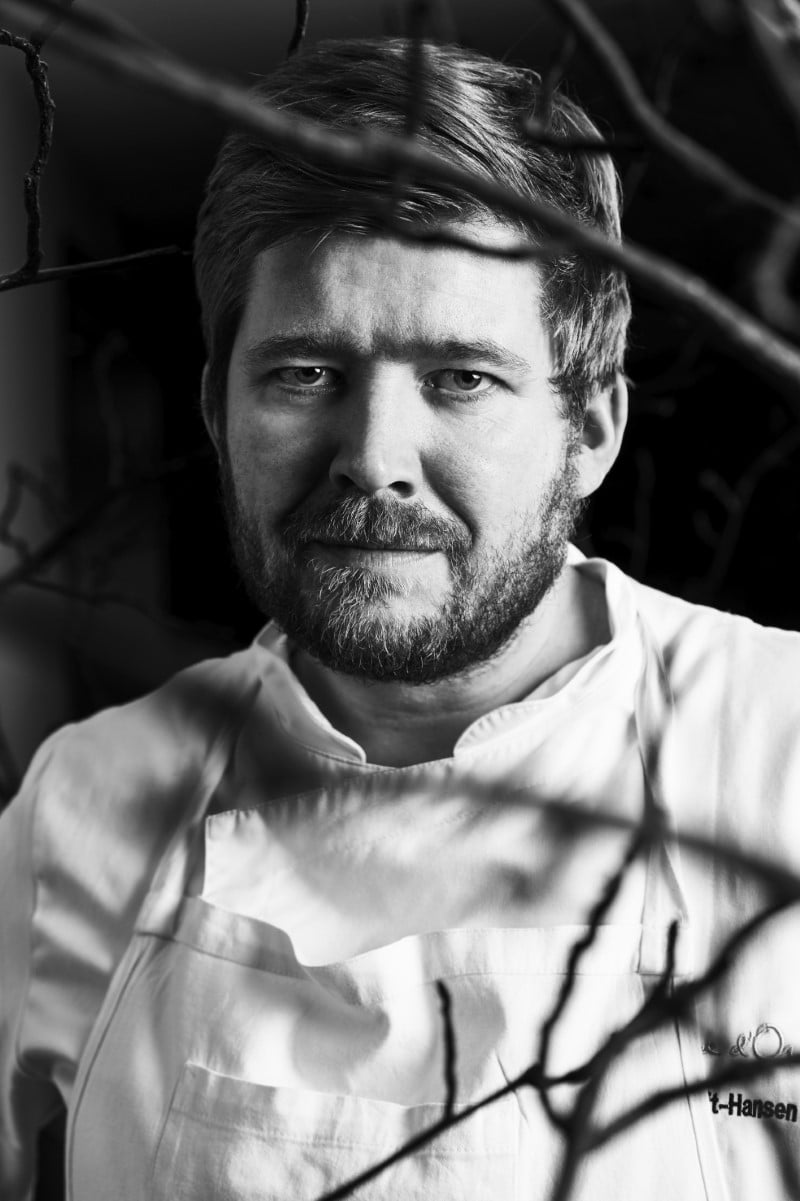
For Kenneth Toft-Hansen, co-manager of Svinkløv Badehotel and former winner of Bocuse d’Or, nature and quality ingredients are paramount. This applies both in his private life and in his work at Svinkløv Badehotel.
“I live right by the sea and the forest, and we experience the seasons in a very visual way. We can see when the first leaves wither, we can see when everything starts to sprout in spring, and when the first snow falls. Right now, the first crocuses and snowdrops are peeking through. There are many stories that tell you about the season,” he says.
Therefore, it is also vital for Kenneth Toft-Hansen to focus on the ingredients that are in season.
“Nature itself tells you what makes sense to eat right now. There are raspberries and strawberries in supermarkets all year round, and it loses some authenticity. Ingredients are best when they are in season,” he says.
For Svinkløv Badehotel, the vision is simple: it’s about the guests and their happiness. And in line with the above, it’s about maintaining a high standard of all ingredients used in the kitchen.
“I feel good knowing the process from start to finish. We know where our ingredients come from, who produced them, and how they are produced,” says Kenneth Toft-Hansen.
Just over two years ago, he stood atop the podium as the winner of Bocuse d’Or, the unofficial world championship for chefs. That feeling was pure euphoria, he says, but the journey there was long.
“I’ve probably spent around 8,000 hours preparing,” he says.
Ending up there was not something Kenneth Toft-Hansen had envisioned when he was a young boy.
“I certainly wasn’t always interested in cooking. I was much more fascinated by the atmosphere in a kitchen and the rush of running service than the food. The interest in food came later,” he says.
In his childhood home, it was mainly meatballs and dumplings in curry that were served, and it was a whole new world that opened up for Kenneth Toft-Hansen when he started his apprenticeship at the French restaurant from which he graduated.
“I suddenly became familiar with chicken rillettes, arugula, and balsamic vinegar. For example, something like balsamic, I had no idea what it was. We also had fish at home, but it certainly wasn’t turbot or halibut. It was truly a brave new world,” he says.
We Ask – Kenneth Answers
We asked Kenneth Toft-Hansen a series of questions so you can get to know him better. Find out, for example, which dish he cooks most often at home and which ingredient is his favorite.
Education?
I am a trained chef and completed my training in the early spring of 2004.
Why did you become a chef?
I started as a dishwasher in a small restaurant when I was young. I was captivated by the atmosphere and the team spirit in the kitchen. Meeting and working together, feeling the rush of service.
It was actually later that the joy of ingredients and cooking came. I became aware of ingredients, quality, and the like. I certainly wasn’t always interested in cooking. I was more into the atmosphere in the kitchen.
If you look back, what do you see as the highlight of your career?
It was when I won the Bocuse d’Or, the unofficial world championship for chefs, in 2019. It was a long, hard fight to get there. I probably spent around 8,000 hours preparing. But it succeeded, and it was amazing.
a cookbook together, and I said we could, but she shouldn’t count on me being there the following year. That’s when she asked if I could see myself taking over the hotel. I was 26 years old, and I had more envisioned myself growing old in New York or something, so I wasn’t very optimistic about it.
She insisted that I give it time, and we did. It was a long six-seven-year lead-up, but by then, several things had fallen into place, and I had achieved several things on the side – including major competitions, while I also wanted to do well at Svinkløv. So, in that way, it all came together.
What are you looking forward to at Svinkløv in the coming year?
We have a different annual cycle than many others. When we close in the fall, we have a pickling season where we gather all the vegetables that are in the ground at that time. This can include celeriac, beets, squash, peas, and yellow beets. We ferment or pickle them. When we’re done with that, we start the production of dried and salted products. We make our own bacon and lardo, air-dried hams, and cold cuts that we use for breakfast.
After that, citrus fruits come, which we also salt, pickle, or enhance in other ways. We are very much looking forward to opening up and serving some of what we’ve prepared.
We are very much looking forward to having guests again. We’ve also spent time freshening up, painting walls and floors. Hopefully, our guests will say that everything looks the same.
What is your best memory from the kitchen?
It’s centered around the word ‘family’. That gathering power that food has. It’s especially the good moments with family during holidays or a special occasion to be celebrated. It’s from when you’re a child, eagerly anticipating a birthday cake, but it’s generally all the memories with family.
What dish do you enjoy making the most?
We mainly eat vegetarian at home. Right now, it’s a lot of oven-roasted cauliflower with curry and lime that’s on the menu. I also often make wood-fired pizza in the garden.
I am very fascinated by vegetables and their diversity. They can be simple – like onions, which are initially pungent and make you tear up. But if you cook onions long enough, they become almost sweet enough to use as jam. I’m fascinated by how vegetables change when you do something with them.
What is your show-off dish?
I would make a whole roasted fish. Putting something ‘whole’ in the oven, and then sitting and sharing it at the table like a Sunday roast. I like that.
Which dish do you most often make in your own kitchen?
Something we eat almost every week right now is “beetroot salad.” I bake the beetroots for two hours and let them cool. Then I peel and grate them. I marinate them – it can be with cumin, lemon, or lime, but I typically have a thousand different variations to do it in – and serve them with sour cream, goat cheese, or similar. There are many variations, and it has a unique taste.
Do you have a favorite cuisine?
I have a great love for many cuisines. I like the diversity, and I think it depends on what mood you are in.
What is your favorite dish?
I’ve never had one. I’m much more of a feeling person, it’s like ‘everything in its time’.
What are your favorite ingredients?
Beetroot, horseradish, tarragon, turbot, and langoustine. These are all power items that taste amazing!
For example, beetroot, which is great from the first tender ones you can slice and use raw to the large ones that can be juicy and meaty. You can pickle, ferment, eat raw. Beetroots can do so much.
Turbot is the king of the sea, and you can use it in a thousand ways. It always tastes fantastic no matter what.
One thing you always have in the fridge?
I always have a variety of mixed spices, lemon, garlic, olive oil, and butter. Additionally, I have a lot of seasonal vegetables.
You can go a long way with lemon, garlic, onions, and herbs in a basic kitchen. It’s obviously difficult in the winter with fresh herbs, but you can influence a dish a lot with herbs and spices, and it can give character to things. It can also be nuts and seeds that can help change the texture of some things.
At my place, it’s very much the vegetables that drive everyday life, so I like to have seeds and such that can season and change texture.
Where were you last impressed by a dining experience outside?
The last time I dined out and had a fantastic experience was at D’Angleterre before it closed down back in December. We had æbleskiver and drank mulled wine and had dinner. The dishes were just incredible. I had sole for the main course with cabbage sprouts and a sauce with tonka beans. It was a great experience.
Do you have a favorite restaurant?
I’m definitely fond of Geranium, but I also really enjoy more informal places like Bæst, restaurant 108, and Barr. I like that more informal meal.
Which machine or equipment is your favorite?
A knife! In recent years there’s been a trend towards having a lot of machines, but a knife has to be the basic tool.
When I graduated as a chef, I was very fascinated by the craft. In my view, being a chef means learning to use a knife. For example, looking at the East, you can see they’re incredibly skilled at cutting and filleting.
At Svinkløv, we probably receive between 5 and 700 kilos of fish a week. I’m fascinated by cutting fish, ensuring you get everything, and making use of the different cuts on a fish. Most people only know the fish fillet, but there’s also the tongue, head, jaw, and a lot of other good things you can use.
Everything starts with a knife. No matter what you’re going to make, it’s the knife you start with.
Which kitchen appliance do you have a strained relationship with?
It must be a Thermomix. I feel it’s become a solution for everything; you can just put everything in it, and it solves it. I think it’s misunderstood what that machine can do.
Facts
Name: Kenneth Toft-Hansen
Age: 39 years
Region: North Jutland
Kenneth Toft-Hansen manages Svinkløv Badehotel with his wife, Louise.
Trained at Munkebo Kro and has since worked at, among others, Henne Kirkeby Kro and Molskroen. He has participated in European and World Championships several times and won silver at the European Championship in 2014. Won gold at Bocuse d’Or in 2019.
Learn more about Svinkløv Badehotel on their website or on Instagram at @svinkloevbadehotel.