


Parsnip and parsley root. Yes, they look quite similar, at least at first glance. However, they differ in both taste and texture. Fortunately, it’s not too difficult to tell them apart – you just need to know the trick.
Read on to learn more about these two fantastic but very different root vegetables and what each can do for your cooking.
Danish Parsnips and Parsley Roots
Parsnip
The parsnip is a so-called taproot that originally hails from Central and Southern Europe. It has been cultivated here for several thousand years, although it still grows wild in nature. In the “old” days, parsnip was much more prevalent in European kitchens than it is today, but when we were introduced to the potato, it quickly took over parsnip’s otherwise dominant place.
Parsnip thrives in Denmark because frost is essential for it to develop its characteristic taste. And the taste, we’ll get back to that.
You can find Danish parsnips in supermarkets from around August to April.
Parsley Root

It’s not without reason that the parsley root got its name. It indeed comes from the parsley plant. Like parsnip, parsley root has its “roots” in the Mediterranean countries and thrives very well in our Danish climate.
The Danish season for parsley roots is only slightly offset from parsnip, namely from September to March.
Plenty of Good Nutrition
Root vegetables are very nutritious and provide lots of flavor, vitamins, and satiety to a meal. Parsnip and parsley root are certainly no exception.
Parsnip is packed with dietary fiber, B, C, and E vitamins, as well as calcium, iron, and zinc.
Parsley root also has plenty of dietary fiber to offer and is a particularly good source of B vitamin folate, also called folic acid. This is especially beneficial if you are pregnant. Folate is also important for cell division and protein synthesis. Parsley root is also rich in C and E vitamins, as well as iron and potassium.
Two Very Different Root Vegetables
We’ve already touched on it a bit, but the similarities between parsnip and parsley root, aside from appearance, are not many.
Both with and without peel, they have certain similarities, but in taste and texture, they do not resemble each other at all.
Raw parsnip has a slightly sharp and “rough” taste, but when cooked, it becomes round, mild, and nutty. Parsnip is sweeter and spicier than parsley root and perhaps a bit reminiscent of celery. Parsley root, on the other hand, has a strong parsley aroma, and while parsnip becomes significantly softer after cooking, parsley root largely retains a firm, crisp texture.
The Taste
Parsley Root has a distinct taste of parsley, both in raw and cooked form. When cooked, the taste becomes a bit sweeter.
Parsnip in its raw form has a slightly sharp and “rough” taste reminiscent of celery. When cooked, it becomes significantly rounder, milder, and nuttier in taste.
The Texture
Parsley Root retains its firm texture and crispness. Good bite.
Parsnip becomes softer when cooked. Lovely “round” and soft mouthfeel.
Learn to Tell the Difference
It’s easy to confuse parsnip and parsley root, especially for the untrained eye. Once you’ve learned the trick, though, it seems as easy as pie!
Just remember the mnemonic, “Parsnip points down.” Parsnip curves down/inward at the top, while parsley root curves outward. A good tip is to choose parsnips that haven’t grown too large. These are often a bit tough in the middle.
Parsnip in Cooking
Parsnip varies a lot, depending on whether it is served raw or cooked. It can be eaten raw, baked, or boiled.
You might try grating parsnip and adding it to the meat sauce for spaghetti Bolognese. Parsnip breaks down quite easily, so it can be easily camouflaged in the meat sauce. It’s a clever way to sneak some vegetables into dinner while adding a great flavor. It’s also a trick you can use for lasagna! We almost guarantee the kids will never notice.
You can also use parsnip in mashed potatoes, for example, served with a classic boeuf bourguignon, ragout or mock hare. And of course, it’s also great mixed in with other baked root vegetables.
Parsley Root in Cooking
Parsley root can be eaten both raw and cooked. It is typically used as a soup herb. You can also try marinating it raw and/or serving it fried, baked, steamed, or deep-fried.
Baked parsley root is really delicious served with hearts in cream sauce, and just like with parsnip, you can also mix it with other root vegetables in the oven and, for example, serve it with a really good piece of meat with red wine sauce.
If you’re like us and have a “soft spot” for the classic burning love with mashed potatoes, next time try making the mash with a mix of potatoes and parsley root, as it is done here. This way, the mash gets a completely different depth.
Parsley root is also great for purée. Make it, for example, with a mix of parsley root, leek, and celeriac, served with chops or other meat.
The green top of parsley root is perfect for soup bouquets, but can also be used instead of parsley in various contexts.
Recipes with Parsnip
Burning Love with Root Vegetable Mash

Duck Breast with Root Vegetables Cooked in Duck Fat


Parsnip Sous Vide
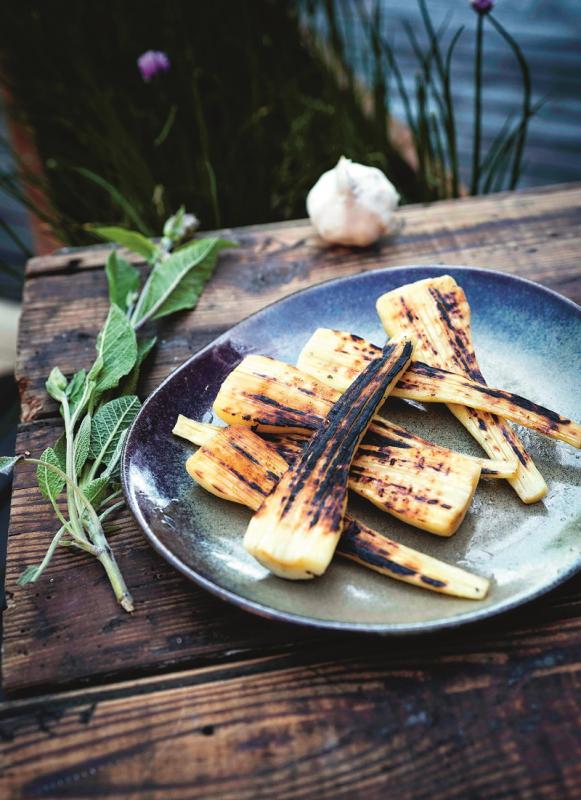
Recipes with Parsley Root
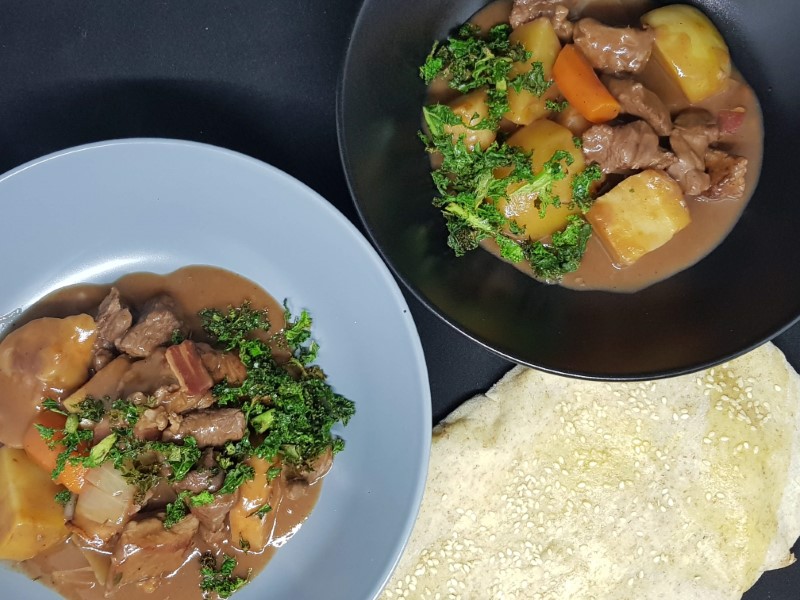
Sous Vide Chops with Root Vegetable Purée and Potatoes
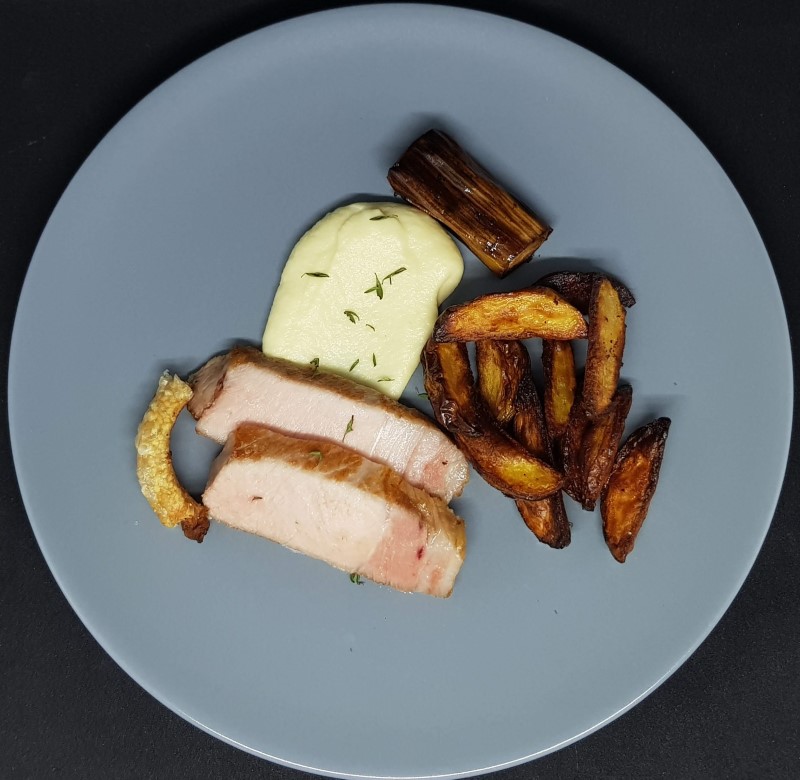
Burning Love with Chorizo and Root Vegetables
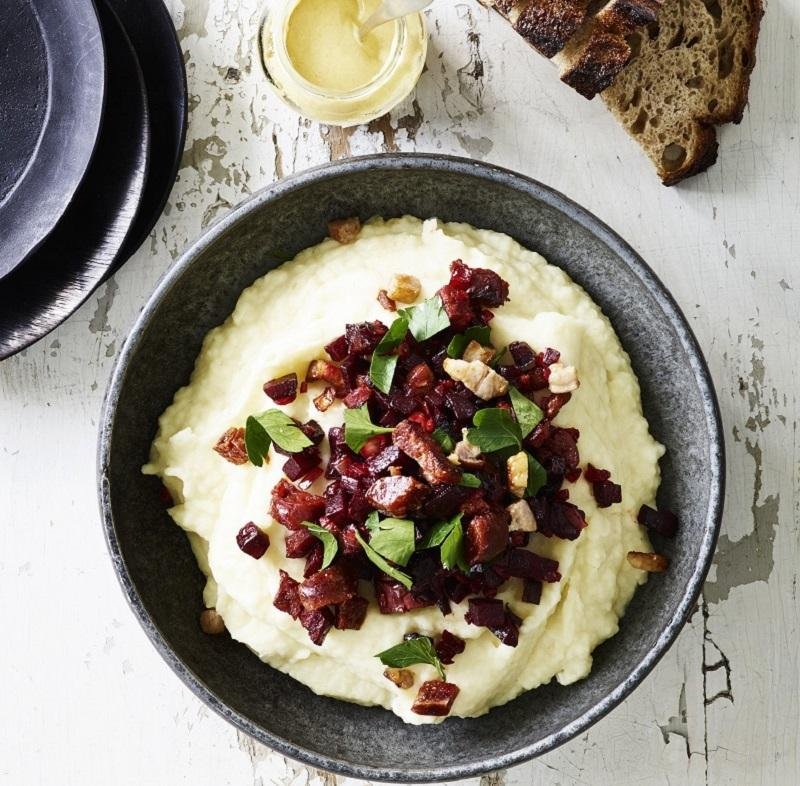
Hearts in Cream Sauce with Root Vegetables
