
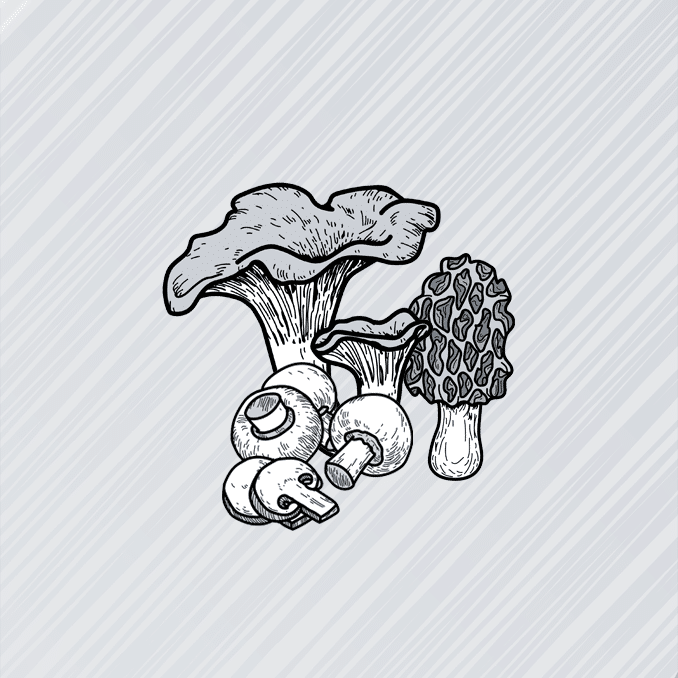

There are so many delicious edible mushrooms and even more ways to use them in the kitchen.
Below, we will take a closer look at some of the most popular ones, both within and outside Danish borders. Some are rarer here than others, but most can be found in a Danish supermarket. What they have in common is that they are incredibly flavorful and fantastic in their own unique way.
Mushrooms are generally very rich in dietary fiber and vitamins; they are extremely versatile and a great source of protein, for example, for vegetarians and vegans. They are a good way to add lots of umami to your dishes.
In this article, we will explain how each edible mushroom is best utilized so you can better navigate the selection.
Mushroom Hunting
Mushroom hunting should always be approached with caution. Therefore, it is important to always proceed methodically and familiarize yourself with the characteristics of individual mushrooms before you put on your rubber boots.
This article is not a comprehensive guide to finding mushrooms in the wild on your own. However, we can offer you a few general tips:
- Only pick mushrooms you recognize.
- Collect the mushrooms in a basket or similar container where they can breathe. Leave the plastic bag at home.
- Only use the mushrooms when they are completely fresh.
- Always cook the mushrooms thoroughly before serving.
- Seek medical attention immediately if you suspect mushroom poisoning, and always bring the mushroom or remaining food with you for analysis.
Button Mushrooms
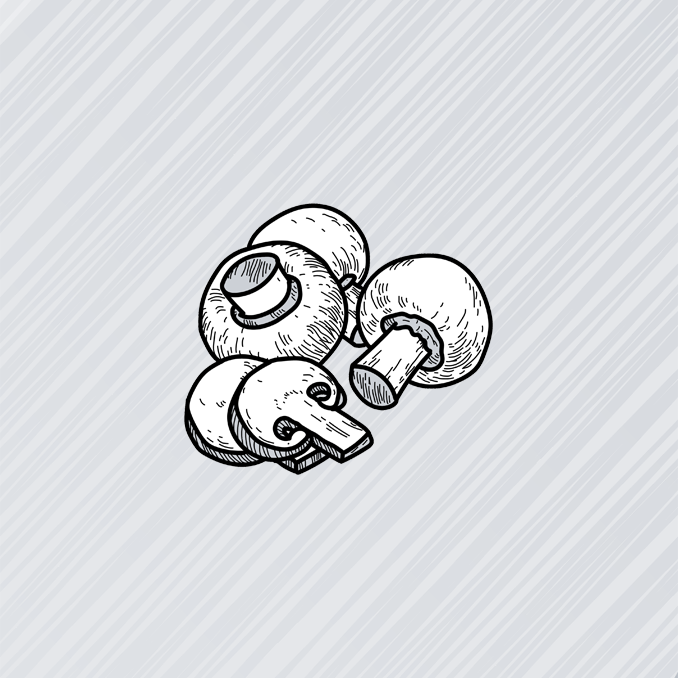
Button mushrooms are the most common edible mushroom here. They typically grow near compost heaps and similar places, and they have the mildest flavor.
Button mushrooms are immature portobello mushrooms, and they come in two different colors while they are in their immature stage—white and brown—depending on where they are in the ripening process.
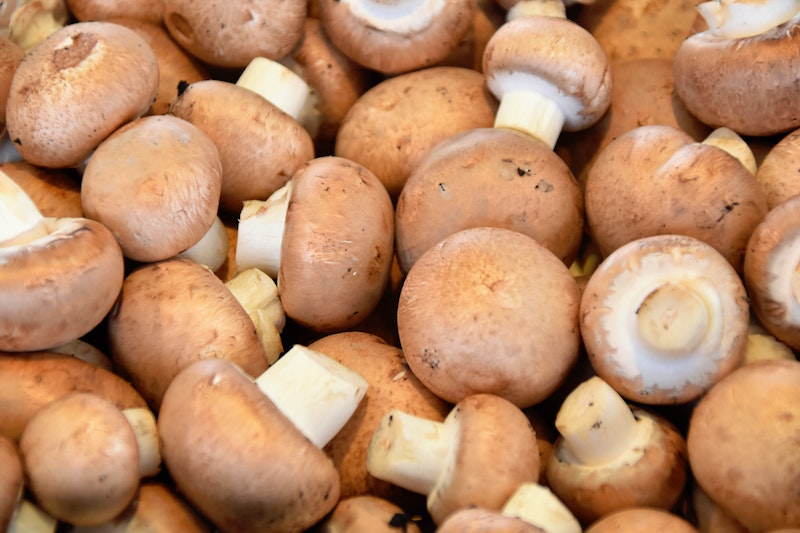
The mild flavor of button mushrooms makes them very versatile, and they can be used in most contexts, either raw or cooked, and are well-suited for soup, stews, salads, and pizza.
You can find button mushrooms from June to October.
Field Mushrooms
Field mushrooms closely resemble the white button mushroom and are yet another good and common edible mushroom here. Their taste and smell are mild and pleasant.
While button mushrooms grow near compost heaps and manure piles, field mushrooms only grow on lawns, fields, and meadows. They should never be confused with the very poisonous Death Cap mushroom. The Death Cap grows near living trees and also has white gills. You should always avoid mushrooms with white gills.
Field mushrooms, like button mushrooms, are very versatile and can be used in the same way as button mushrooms and are particularly suitable for soups and stews.
You can find field mushrooms from June to October.
Portobello
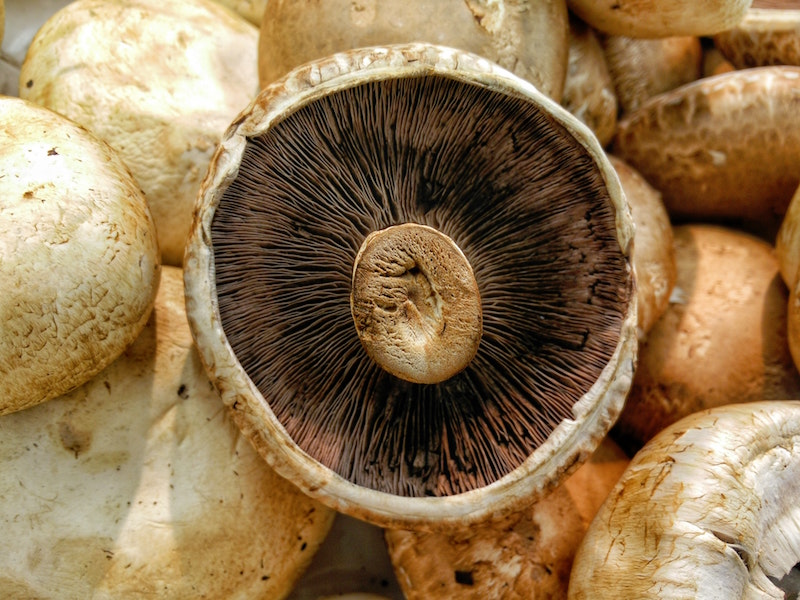
Portobello mushrooms are, as mentioned, mature button mushrooms. They are large and brown with caps measuring 10-15 centimeters in diameter. They are very popular, especially on meat-free days. The flavor is strong and delicious, and they are a very meaty edible mushroom.
Portobello mushrooms truly shine when heated, either on the grill or in the oven. It is very common to use portobellos as an alternative to regular burger buns. You can also remove the stem and stuff them, for example, with feta and herbs, and bake them in the oven.
It is best to avoid rinsing portobellos. Instead, you can simply brush off any dirt.
You can find Danish portobello mushrooms from around May to November.
Truffles

Truffles are a collective term for a range of knobby mushrooms, with summer truffle, white truffle, and black truffle being the primary ones. The white truffle is the rarest and therefore also the most expensive.
Truffles have a very distinctive and unique aroma best described as peppery and garlicky. The flavor itself is quite understated compared to the aroma, and therefore the truffle is best enjoyed when not overwhelmed by too many other flavor components.
Truffles generally pair very well with the mild, round richness of eggs as well as potatoes, pasta, asparagus, and risotto. And they are absolutely wonderful on top of pizza.
Truffles should not be cooked. They should just be cleaned with a very soft brush. You can optionally peel off the outer layer if there is some sand in the nubby surface. Grate or shave the truffle ultra-fine when serving, as this is when the aromas are released, which is a big part of the flavor experience.
Truffles are primarily found in Southern France and Italy. You can buy truffles in several specialty stores as well as online. The season for white truffles runs from around September/October to January/February. Black truffle is in season from December to March, and the summer truffle from May to December.
Morels
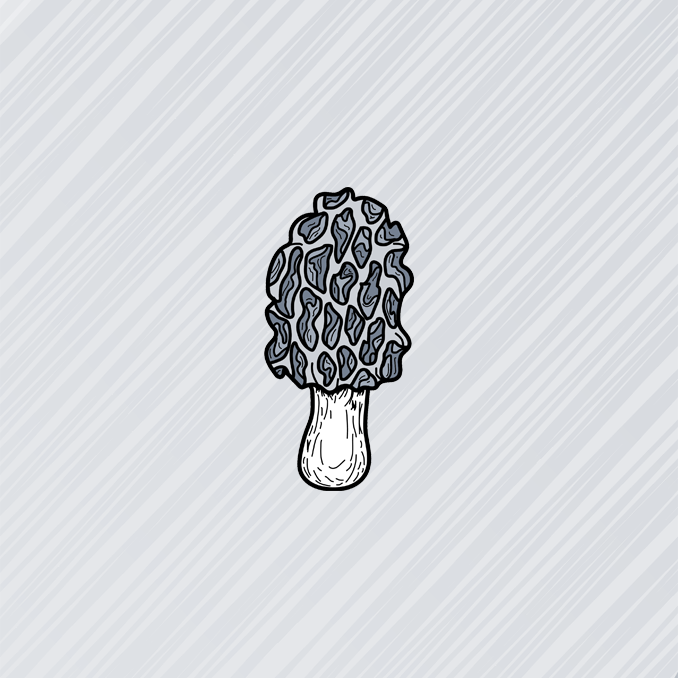
Morels look like natural sponges you use in the shower, but don’t be fooled. Morels are absolutely fantastic delicacies and are also one of the most expensive mushrooms, only surpassed by truffles.
Morels are very firm in texture, have a pleasant aroma, and a flavor all their own.
When you find morels in the supermarket, they are usually dried. If you have been lucky enough to find them in nature, remember to clean them thoroughly, as there can be quite a few small critters hiding in the mushroom’s knobby cap.
Morels are usually used in stews and sauces, but you can also fry them or use them in a savory pie.
The morel season runs from April to June, with the peak in April and May.
Chanterelles
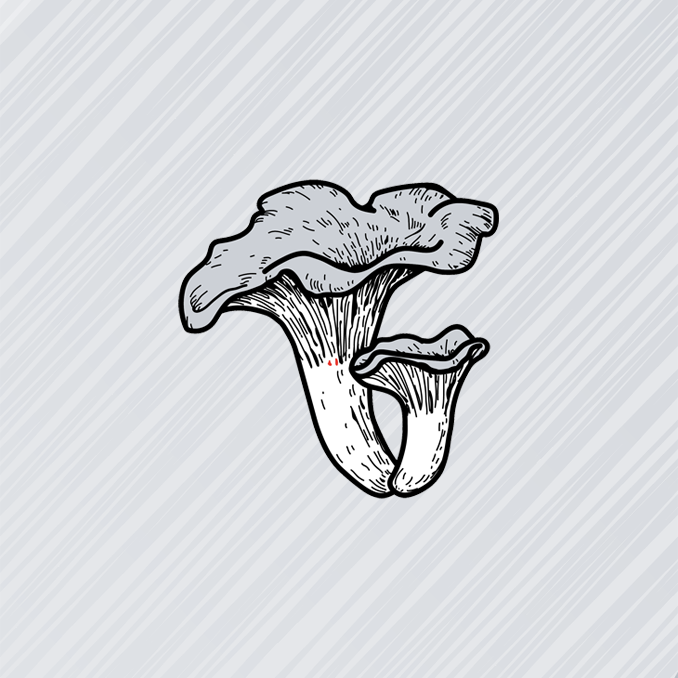
Chanterelles are one of the best edible mushrooms here. They are relatively expensive in the supermarket, and the reason is that chanterelles have proven almost impossible to cultivate commercially. This means they must be collected in nature.
Fortunately, there is ample opportunity to find chanterelles in Danish nature yourself, and they are almost unmistakable. Chanterelle hunting is therefore one of the relatively safe forms of mushroom hunting.
Raw chanterelles have a sharp and bitter taste that keeps pests away, so you always cook the mushroom before serving. Afterward, they have a rich, wonderful, and slightly nutty flavor.
Sauté them, for example, in a bit of fat on the pan and serve them with pasta or on top of a Jerusalem artichoke soup. Chanterelles are also very well suited to being creamed.
The chanterelle season runs from July to October/November.
Oyster Mushrooms

The oyster mushroom is one of the few mushrooms that can be found in Danish nature during the winter months. Supermarkets have oyster mushrooms year-round, but these are usually imported from Poland. The Danish ones have a slightly more intense flavor, but both are very delicate and relatively mild.
Oyster mushrooms are very tasty. Young oyster mushrooms, which are also the ones you find in the supermarket, have very soft and delicious flesh. You can use oyster mushrooms instead of button mushrooms in virtually any context. Oyster mushrooms are usually always cooked, as they otherwise have a bitter taste.
The season for Danish oyster mushrooms runs from October to around April, although the peak season is in November/December and March/April.
Porcini

The porcini is part of the bolete family. It is also called the edible bolete. It primarily grows near beech trees and is found almost everywhere in Denmark.
Porcini mushrooms, like portobello mushrooms, are very meaty edible mushrooms. The flavor is nutty and filled with umami, the aroma is reminiscent of a good sourdough, and the texture is soft and delightful.
Porcini can be used in the same way as most other mushrooms in this article, i.e., in sauces, pasta dishes, etc. You can also try deep-frying them. Sauté them in butter and toss them in fresh pasta or serve them on top of soup or risotto.
Porcini mushrooms are ready for picking from July/August until October/early November. The peak season is typically in September.
Shimeji
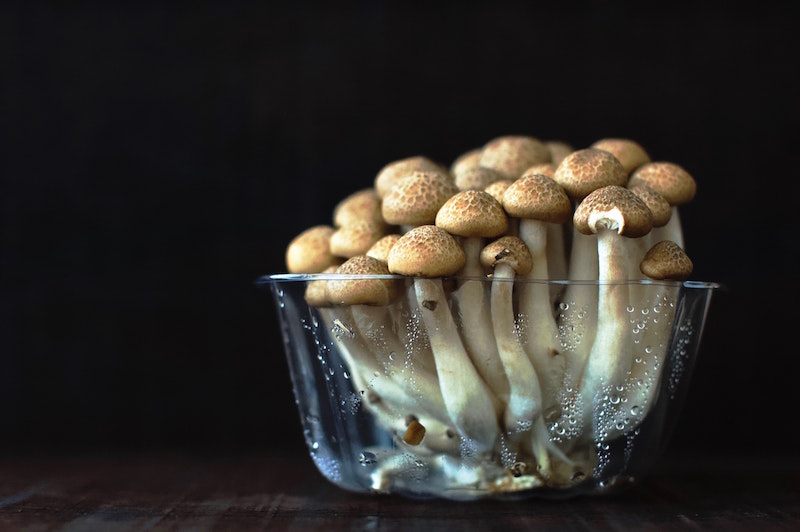
Shimeji originates from East Asia, where it is extremely popular. Both the stem and the cap are consumed.
Shimeji does not grow wild in Danish nature and is therefore only found in retail here. Since they are grown in greenhouses, they are available year-round.
Shimeji must always be cooked. In its raw form, the mushroom has a very sharp taste, which becomes mild and nutty after cooking. The texture is firm, and even after cooking, the mushroom retains a good, crispy bite. Shimeji is one of the edible mushrooms that is particularly suited for stir-fry dishes, soups, stews, and sauces.
Enoki
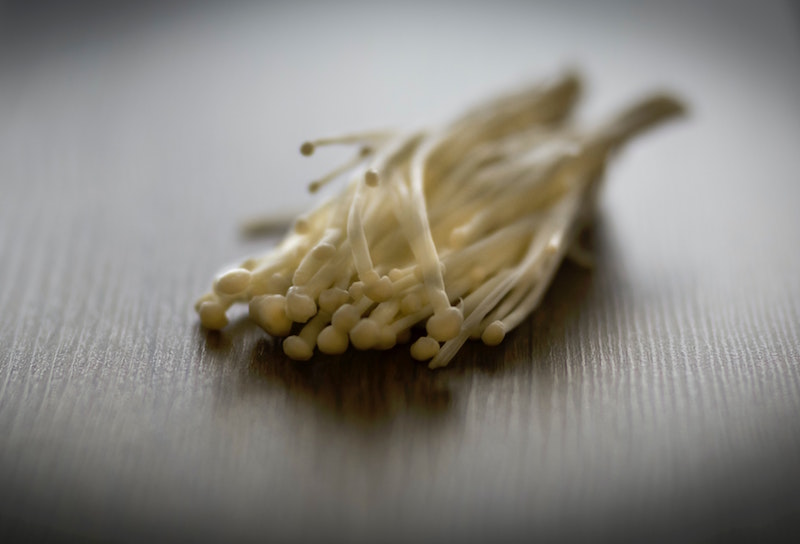
Enoki is another Asian edible mushroom. In fact, it is the Japanese favorite. The flavor is mild, and they should not be rinsed as it will affect their very unique aroma.
Like shimeji, both the stem and the cap are eaten. Just cut off the roots.
Enoki can be eaten raw in salads and should otherwise only be cooked very lightly. Therefore, it is a good idea to add them to the pot just before serving.
You can place raw enoki on top of both cold and hot dishes, and you can also try deep-frying them for a crispy snack.
You can get enoki mushrooms year-round—both Danish and imported. Danish enoki mushrooms are exclusively grown in greenhouses and are not found in Danish nature.
Recipes with Mushrooms
Beef Patties with Mushroom Sauce



Truffle Pasta with Poached Egg

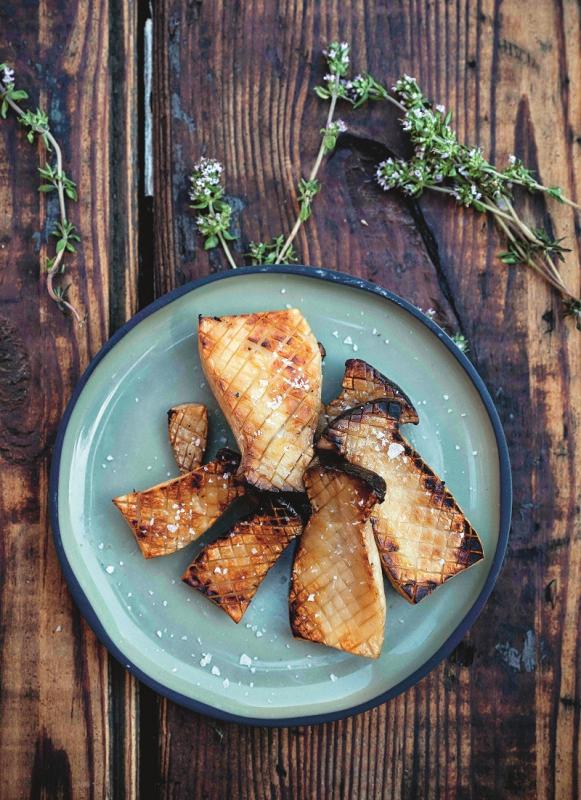
King Oyster Mushroom Sous Vide


Creamy Baked Pasta with Mushrooms and Spinach


Herregård Cutlet King Christian

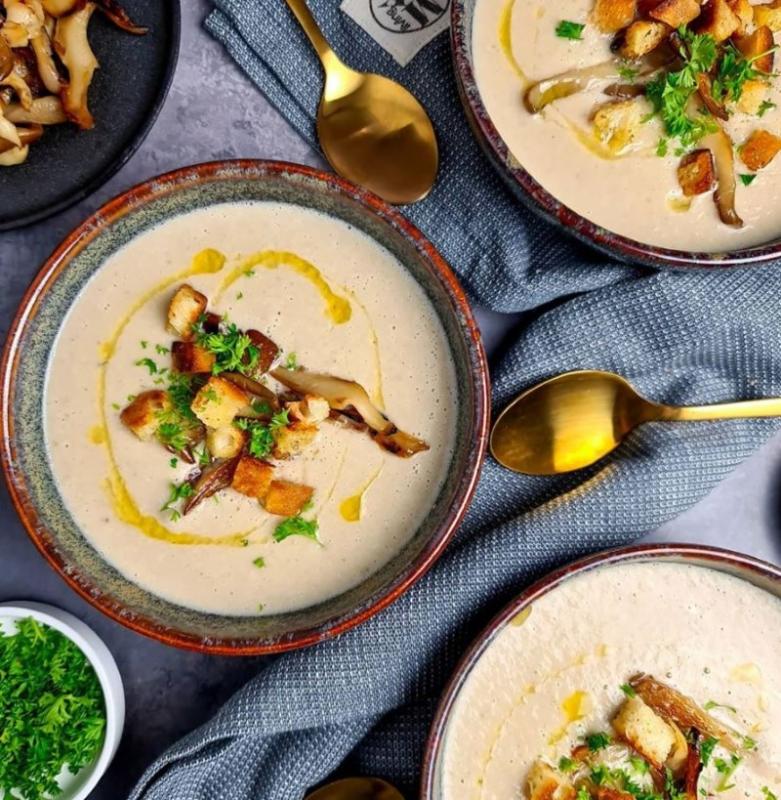
Jerusalem Artichoke Soup with Roasted Mushrooms

Crawfish in Creamy Mushroom Sauce

Venison Fillet with Berries, Mushrooms, and Jerusalem Artichokes

Vegetarian Burger with Portobello and Chickpea Patty


Fried Scallops with Crisp Apple and Chanterelles

Miso Soup with Mushrooms and Soba Noodles

Mushroom and Potato Ragout with Buckwheat

Late Summer Salad with Popcorn


