Why Dry-Age Beef?
In essence, it’s about getting the best result from the animal. Beef needs to hang because it gets affected by rigor mortis upon slaughter.
Lactic acid is formed, which causes the meat protein to stiffen. When you age the meat, the lactic acid and the enzymes in the meat will soften the connective tissue – making it tender.
If you are a loyal reader here at gastrofun.dk, you know that I experiment with dry aging and tend to give the meat a bit more time in the aging cabinet than most.
But it is a matter of taste whether you want to age the meat or start the fermentation process and get new flavor experiences. I’m a nerd, so I’m definitely for the latter, even though sometimes it results in inedible or oddly tasting meat.
One of my bigger aha moments in terms of meat was when I visited Guldrummet, where the chef Rone explained a lot about their approach and how fat is crucial in determining the flavor experience.
What is Good Quality Ground Beef?
For many years, Danes have been advised to go for fat-free cuts, which is probably why the tenderloin has become the most popular cut by now!?
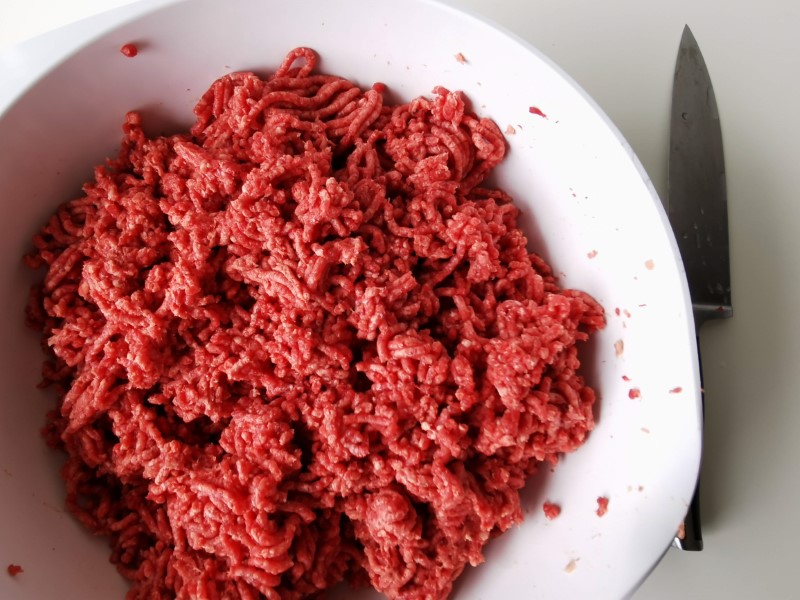
However, tenderloin is almost impossible to work with in my aging cabinet because it easily gets ruined. Therefore, I always go for the fatty cuts, and luckily, I have a butcher willing to order fresh and fatty meat for me. I got an entire top round of about 5.5 kg that went into the cabinet. The reason I use top round is that it typically has a fat percentage of 10-12%, which I find ideal for my ground beef.
I’ve previously experimented with making ground beef from veal top round, where the meat was tested after 35 and 70 days.
Here, the meat was from beef top round, and I intended for it to spend 30 days in the cabinet. There was a bit of COVID-19 chaos at home, and it ended up being in the cabinet for 45 days.
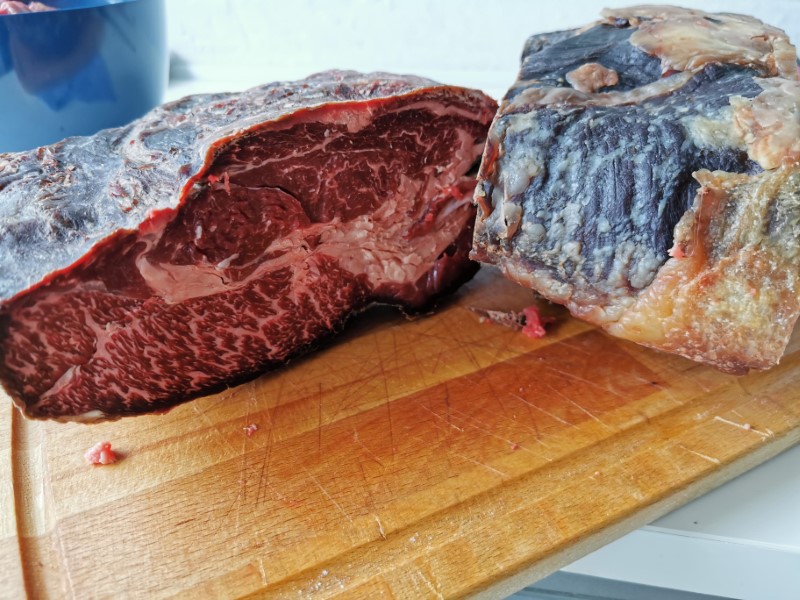
The crust became rock hard and filled with mold, so it was actually discarded. Normally, I make stock or oil from the crust, but it was unusable. I don’t actually know why – that usually doesn’t happen to me. The top round was somewhat thinner than usual, so maybe that was the reason.
What About Bacteria?
When you talk about dry-aged ground beef, it’s important to point out that it is not ground meat that is aged. Generally, surfaces are your worst enemy when it comes to aging, so if you use ground beef, it will spoil quickly as there are too many surfaces. So, of course, we’re talking about using whole cuts for this.
Some people use the crust/rind of the meat in their ground beef, but I’ve never ventured into that. If there is anything resembling green mold, I discard the entire crust and ensure that the meat right under the mold is not used.
The Result
The meat turned out phenomenal and tasted great.
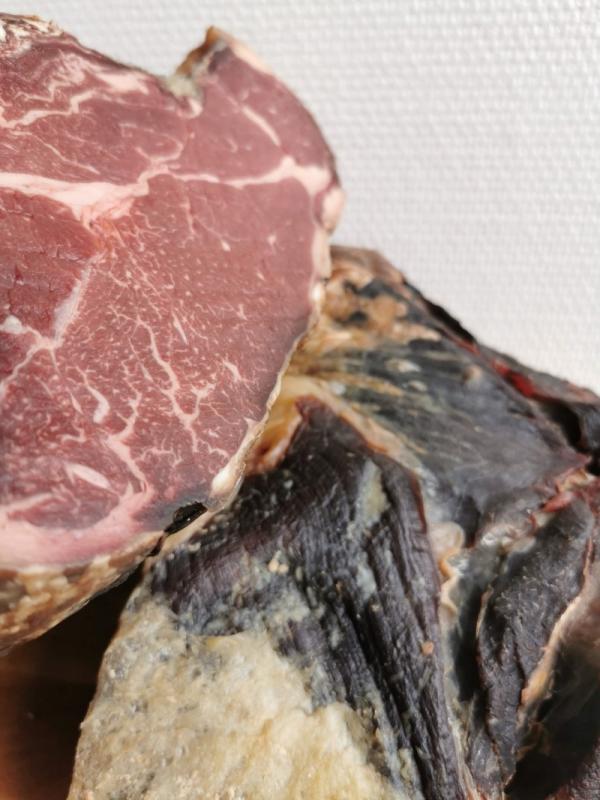
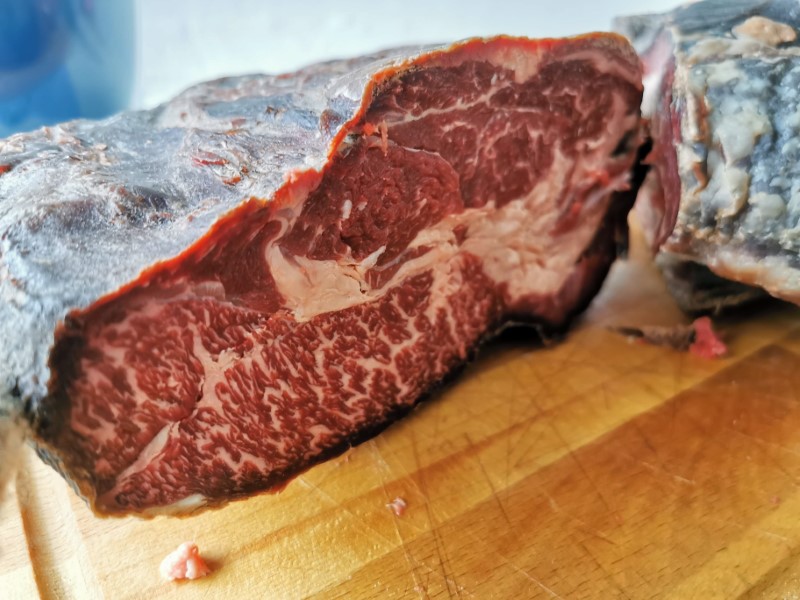
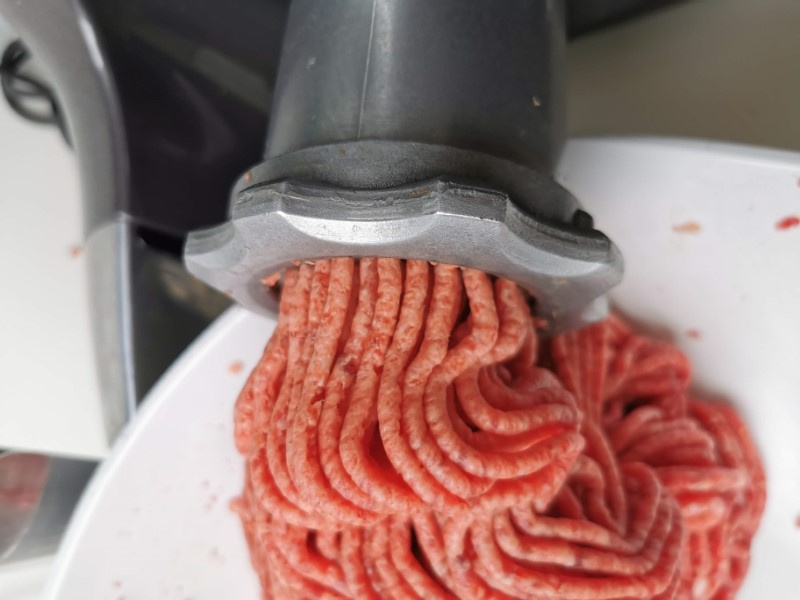
As you can see in the pictures below, the fat marbling was so beautifully high that I had to cut the nicest pieces and prepare them separately without passing them through my grinder.
However, this meant that the fat percentage was on the very high side, but the flavor was still top-notch.