

May month. Named after the Roman goddess Maia and known in ancient times as the “Flower Month.” Goddess Maia was tasked with ensuring that everything in nature thrived so that growth and prosperity were assured. She apparently did a pretty good job, as today in our latitudes, we enjoy apples, pears, plums, peas, and other Danish delicacies.
In general, many fantastic things happen in nature in May. Wildlife, both large and small, begins to reveal itself to us. The forests have suddenly become significantly greener, the birch trees have bloomed, and various flowers have appeared, with the dandelion being the most dominant among them all.
And of course, May is also a month that brings a bounty of new Danish ingredients. These are what we’ll now take a closer look at.
What Do You Gain by Eating Seasonally?

Whether it’s already a well-ingrained habit or a completely new concept for you, you likely know that there are many good reasons to eat ingredients that are in season locally.
One thing is that seasonal ingredients are usually cheaper. It’s all about supply and demand, and it’s clear that when nature suddenly overflows with asparagus or fjord shrimp, prices drop accordingly. At least, that’s usually the case.
Another thing entirely is that ingredients are just tastier when they’re in season. They peak in flavor, nutritional value, and of course, freshness. You can get Danish apples year-round, but when a particular variety is out of season, they are stored in the so-called apple hotels under low oxygen levels and at low temperatures. When apples come almost directly from the producer, the taste experience is completely different.
You also do something good for the environment by eating more locally and seasonally, as transportation weighs heavily on the CO2 budget, whether by plane, truck, or ship.
What’s in Season in May?

A plethora of herbs are currently sprouting from Danish soil, including thyme, sage, chives, mint, and lovage. You may have also noticed that wild garlic is still abundant out there, and it hasn’t been that long since their beautiful white flowers bloomed and now adorn many Danish forest floors.
It’s finally time for Danish tomatoes, cucumbers, carrots, potatoes, radishes, onions, and asparagus. Moreover, you can visit your fishmonger for freshly caught plaice, hake, oysters, flounder, perch, crayfish, langoustines, sea trout, and herring. Not to mention fjord shrimp!
And of course, rhubarb is still in season.
The list goes on, but below we have gathered 10 of the Danish ingredients we have been most looking forward to stocking our kitchen with.
Spinach
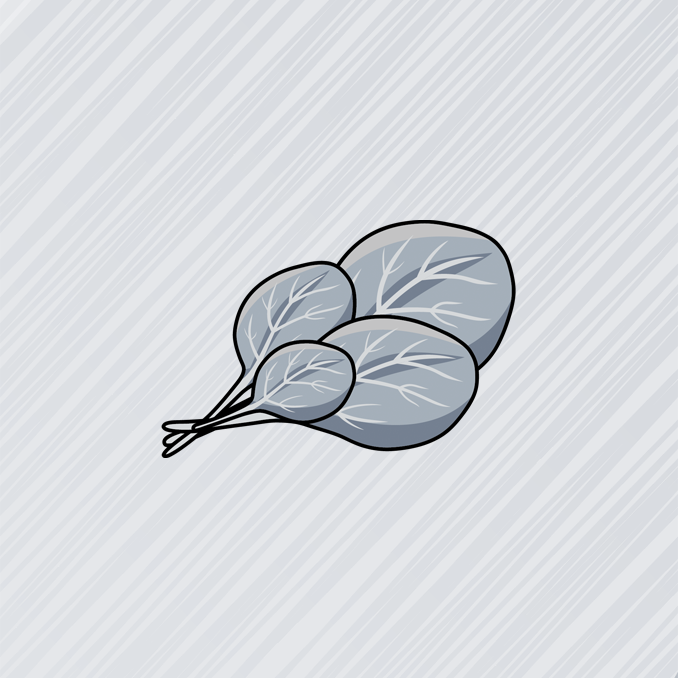
Don’t be fooled by the small, round leaves. They have more to offer than you might initially think.
Fresh spinach is usually sold under the name Baby Spinach. Baby Spinach, as the name somewhat indicates, are the very young shoots of the spinach plant. Spinach leaves can actually grow significantly larger, but as with many other ingredients, they are simply most delicate when they are new and tender.
The spinach plant originates from either Persia, known today as Iran, or Southwest Asia. There is some uncertainty about this, but by the 15th century, the spinach plant was known throughout much of Europe.
In the 1930s, another famous figure embraced spinach, namely Popeye the Sailor Man. And if it was good enough for Popeye, it’s good enough for us! There’s a reason why spinach was Popeye’s go-to.
Spinach is high in protein, which we know is necessary to build and repair our bodies and muscles. Despite this, the calorie content in spinach is incredibly low: only 26 calories per 100 grams. This means you can eat plenty of spinach without worrying about your waistline. Of course, it also means that it takes a lot of spinach to meet your daily protein needs, and we’re sure Popeye had other protein sources besides just spinach.
Have you ever noticed that fresh spinach can give a slightly rough feeling on your teeth? It’s due to the oxalic acid content that reacts with calcium—and thus your teeth. It’s not dangerous and not something to worry about unless you consume absurd amounts of spinach and other foods with oxalic acid, like rhubarb (which is also in season this month—we’ll get back to that). It’s actually the oxalic acid that gives spinach its unique taste, making it so delicious!
How Can You Use Spinach?
Spinach tastes best when fresh, so feel free to use it in a delicious fresh salad. Try, for example, mixing spinach with beetroot, blueberries, and sunflower seeds.
Unless you’ve bought pre-washed spinach, fresh spinach usually contains a lot of soil particles/sand. You must therefore rinse the leaves very thoroughly first. A very effective method is to put them in a bucket or basin of water. Taste them to ensure they’re completely clean or if they still “crunch” a bit against your teeth.
Although the fresh spinach leaves are delicious as they are, you can also use them in cream sauce or a nice spinach pie with salmon. Spinach and salmon generally pair very well together.
Could we tempt you with homemade spinach waffles? If so, we have a few different recipes, both here and here. In one of the recipes, the waffles are completely green, which is incredibly decorative on any breakfast or lunch table.
Spinach and cream also go very well together. Spinach is great to add to a cream sauce, for example, if you’re making a really creamy pasta with chicken. Try also wrapping cream-steamed spinach in fresh pasta with a piece of lean fish and then bake it in the oven with white wine sauce. Doesn’t that sound very spring-like? We thought so! We have a recipe for that right here.
Spinach can last from a few days to up to a week in the refrigerator. If you want the spinach to last longer, blanch the leaves and freeze them. They are then best suited for stews.
More Recipes with Spinach
Lovage

Lovage is also known as Maggi herb. It’s one of the stronger herbs in the kitchen garden. It resembles celery in both appearance and taste. The scent and taste are very strong and piquant and are best described as a mixture of celery, leek, parsnip, and parsley root.
There was a period when lovage fell somewhat into obscurity, probably because Danes preferred to use bouillon cubes. Fortunately, we are slowly returning to our roots and the good traditional flavorings, such as lovage.
With lovage in the kitchen, you can safely forgo the bouillon cubes!
Lovage is a plant that grows rapidly and can become several meters tall. The leaves are large and dark green on the upper side and light green on the underside.
It is reportedly one of the many herbs brought here thanks to the Romans. Some believe, however, that it was Persian monks who brought it to Europe. Others think it originates from Asia. You can see that there is some uncertainty about its true place of origin, but today it grows wild in parts of both England and the USA. Additionally, it is cultivated.
How Can You Use Lovage?
Are you a little tired of the cat using the sandbox? It’s a good old housewife trick to water the sandbox with water containing lovage. It will keep the cat away.
The plant was once considered an aphrodisiac and a potency enhancer, and it was said that a woman only needed to put a bit of lovage root in the bathtub for her husband. Today, lovage root is used in the pharmaceutical industry, among other things, as it counteracts cramps, fluid retention, and bloating.
With that said, we also have various suggestions for incorporating the plant into your cooking.
Generally, you should be cautious with lovage, as its flavor is quite strong. Its penetrating taste makes it particularly suitable for various marinades and soups. It can easily serve as the sole soup bouquet and is particularly suitable for soups, as it is one of the few herbs that do not lose its flavor when boiled. You can also add a stalk to the boiling water for potatoes.
A little chopped lovage sprinkled on top of meat or vegetables is also very tasty. Or you can mix a little into meatball mixture.
We have a wonderful recipe for lovage hollandaise, which can be served with white asparagus, and it’s a beautiful and highly flavorful dish. Asparagus is also in season this month, so it would be perfect to combine the two. Don’t worry, we’ll come back to asparagus.
Here at home, it is most often the leaves of lovage that we use in cooking, but the root and seeds can also be eaten. The root has a strong, sharp, and sweet taste. Peel it and use it like any other vegetable. Italians often use the seeds for dishes with game, potatoes, and cabbage.
Lovage should be stored in the refrigerator for about 4 days. You can store it in the freezer, but remember to wrap it well if you don’t want the other frozen items to smell of lovage.
More Recipes with Lovage
Radishes

Radishes aren’t for everyone. Many will describe the taste as quite sharp and slightly sweet, but the flavor can vary a lot and range from quite mild and delicate to more bitter.
The bitter taste comes from the mustard oil content, and as is generally the case with sharp flavors and bitter substances, it’s something that may require some getting used to.
If you’re one of those who prefer radishes with as mild a taste as possible, look for the elongated kind: This is the variety known as French Breakfast. The smaller they are, the milder the flavor will generally be.
If you’re after a bit more “kick,” aim for the round, red radishes known as Cherry Bell. They have a significantly stronger aftertaste.
In general, radishes shouldn’t be larger than 2 centimeters in diameter, as they otherwise develop an unpleasant flavor.
Are you up for growing your own radishes? Radishes are a very grateful project to embark on. The plant thrives in ordinary garden soil, which can be both moist and cool. The plant will sprout at temperatures as low as 5 degrees Celsius.
How Can You Use Radishes?
Typically, both the leaves and root tips are removed from radishes, but the entire plant is actually edible. You can certainly use the leaves for a salad. Just remember to remove the leaves/tops from the radishes immediately so that the leaves don’t draw nutrients from the radishes while they are stored.
Radishes are usually eaten raw in salads or on top of open sandwiches. Generally, radishes go well with smoked cheese, potatoes, and chives. They also make a great little snack in lunchboxes.
If you’re not too fond of the slightly bitter taste of radishes, you might want to try pickling them. It removes the characteristic sharp taste while preserving the radishes’ wonderful crunchiness. Pickled radishes taste lovely and are a delicious accompaniment to dinner, salads, or tapas/charcuterie. Since radishes aren’t suitable for freezing, pickling is a great way to preserve them.
As mentioned, it’s a good idea to immediately remove the leaves/tops from the radishes before everything is placed in the refrigerator. This way, the leaves won’t draw nutrients from the bulbs, and the radishes can easily last a week or more.
More Recipes with Radishes
Asparagus
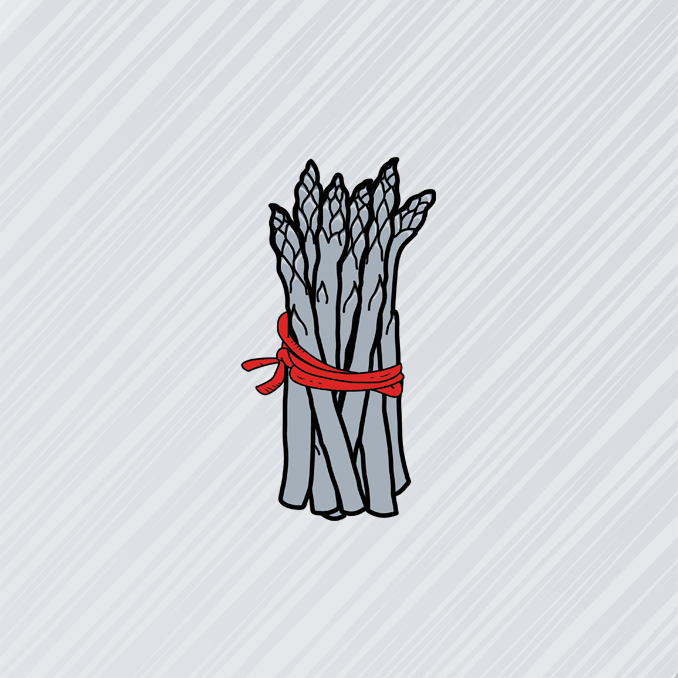
Spring is asparagus season! You know them as either green or white, and it’s safe to say that most people find them extremely delightful.
The delightful Danish spring herald has been ready for harvest since around April, and we can enjoy them until about June. It’s no wonder that to many of us, asparagus is a sign of brighter and warmer times.
Green and white asparagus are the same plant: An asparagus turns from white to green when exposed to sunlight during cultivation, whereas it continues to remain white when covered with soil until it’s harvested.
Both types have a relatively mild taste, reminiscent of peas. However, white asparagus is even milder in flavor than green asparagus and is often considered the most delicate. White asparagus is also more expensive than green, as they require significantly more work in terms of both harvesting and cultivation: White asparagus needs to be grown in soil mounds that have to be leveled out after each and every harvest, only to be established again when the time comes for the next batch of white asparagus.
Besides tasting fantastically delicious, asparagus also comes with several health benefits. They are good for digestion, as the good bacteria in the gut love to feast on the many fibers that asparagus contains. Additionally, asparagus contains antioxidants, which reportedly prevent cancer cells from developing. As if that wasn’t enough, there’s also both calcium and vitamin K to gain from eating a serving of asparagus.
How Can You Use Asparagus?
How you handle asparagus depends on whether it’s green or white. White asparagus should always be cooked before serving, whereas green asparagus can be eaten raw.
White asparagus has a tough and fibrous peel that needs to be removed first. It’s better to peel too much than too little, as the fibers aren’t particularly pleasant to consume. Use them, for example, for the classic tartlets with chicken and asparagus. You can also give them a more “prominent” role by giving them a turn in your sous vide and serving them as a beautiful and simple appetizer or main course along with shrimp and hollandaise sauce—we’ve tried it ourselves here.
Green asparagus can be eaten pretty much as they are. You just need to remember to snap off the bottom part first, as it’s too tough and hard to chew: Hold the asparagus with your fingers on each end and let it snap where it naturally gives way.
Fresh green asparagus adds a great crunch and sweetness to, for example, salads, but they are also delicious prepared al dente, whether steamed, boiled, baked, or grilled. They can, of course, also go into your sous vide.
Because both white and green asparagus are mild and delicate in flavor, they pair best with elements that don’t overpower them too much. Both eggs and light sauces are therefore ideal for asparagus. With its salty flavor, bacon can also provide a lovely and interesting contrast to sweet green asparagus on the grill.
More Recipes with Asparagus
Flounder
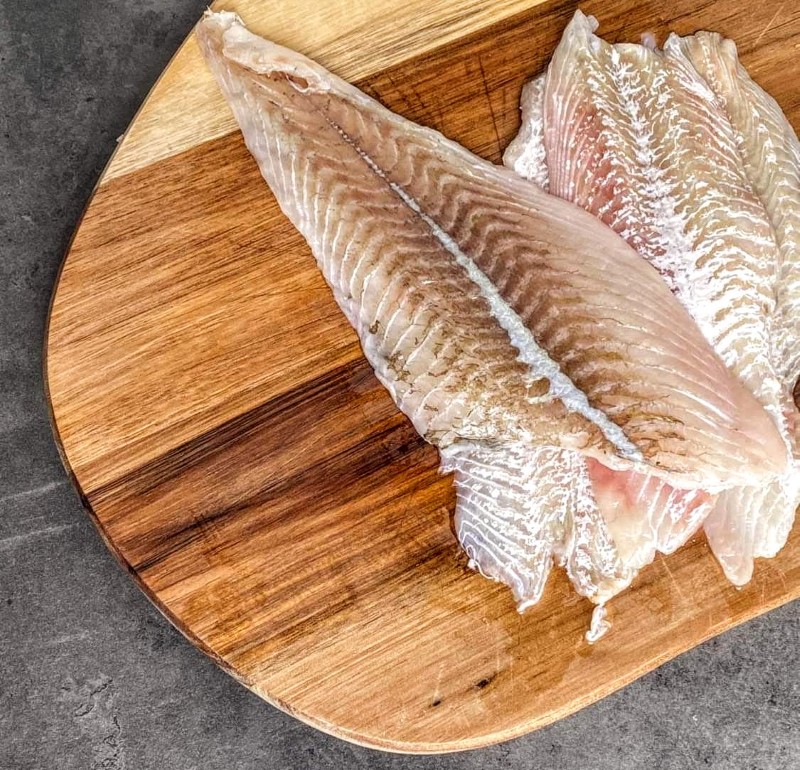
You can now “flounder” over to your fishmonger – he’s ready with something delicious, freshly caught from the Danish seas: Flounder!
Flounder is a truly delightful eating fish that is in season from around May until about November and December. The high season is from around July and continues through late summer. The stock decreases in late autumn. It is said that the eating quality is at its best then, but you can already get your hands on delicious Danish flounders.
The flounder is a primarily right-sided flatfish, meaning that both of its eyes are on the right side of the fish’s body. We say “primarily” because about a third of flounders are actually left-sided. Along with, for example, plaice, cod, hake, and haddock, flounder belongs to the group of lean fish.
It’s a bit of a quirky fellow because it thrives in both saltwater and freshwater. However, it is happiest in water with a lower salt content than, for example, the North Sea, where it is rarely found. It thrives throughout the inner Danish waters.
You can recognize it by its rough surface, which is slightly speckled with red, though the red spots are not as pronounced as on the plaice. Flounder’s flesh has even more flavor than plaice’s, and it’s both coarser and looser in texture.
Flounder is rich in B12, selenium, and iodine, making it a super healthy fish to place on the dinner table.
How Can You Use Flounder?
Flounder can be used in much the same way as you would normally use plaice. Breaded plaice fillets, for example, are a real Danish classic, and you can easily swap the plaice for flounder here.
Serve it also steamed with new potatoes, peas, and fresh parsley on top. Tarragon also pairs very well with flounder, especially when the fish is baked or grilled. Here you can find an overview of which herbs generally go well with lean fish.
Although flounder is more flavorful than plaice, it’s still a relatively mild fish that takes very well to other flavors such as herbs.
Fresh flounder should be stored as cool as possible and cooked the same day it is bought. You can also store it in the freezer until it is needed.
More Recipes with Flounder
Fjord Shrimp

Fjord shrimp, peel-yourself shrimp, Roskilde shrimp – as we know, a beloved child has many names.
It’s probably few countries that understand our fascination with peel-yourself shrimp: All that work for so little! But for us Danes, it’s synonymous with high summer, coziness, and vacation, and the peeling work is absolutely part of the charm. And then there’s the whole “anticipation” thing: We know what a delicacy awaits us!
The shrimp here in Denmark are among the best in the world. The salt level in the Danish fjords gives them a better texture, and right now, the sea is teeming with shrimp just waiting to be caught. The shrimp have been ready since around April when the warmer temperatures make them more active. This means they begin to make their way up from the depths towards the sea surface.
Fjord shrimp are usually alive when you buy them. This way, you’re also sure that they’re completely fresh. Naturally, they are grayish and somewhat translucent, but they turn pink when cooked.
How Can You Use Fjord Shrimp?
You prepare the live fjord shrimp by putting them in boiling water with added salt and sugar. This enhances the shrimp’s flavor and natural sweetness. You can also add fresh dill to the boiling water.
As soon as the shrimp change color, remove the pot from the heat and let them sit for about 5 – 10 minutes to finish cooking. Then they’re perfect. Pour them into a colander to cool a bit. They’re easiest to peel while still a bit warm.
There are several different peeling methods, but one you can use is as follows:
- Start by twisting the head off.
- Turn the shrimp so the legs face up. You’ll see that the shrimp have two rows of legs.
- Twist the two rows of legs in opposite directions towards the back. Now the body is free.
- Finally, it’s easy to pull the tail off.
And since we’re big advocates for reducing food waste, we must remind you to save all the shells afterward. You can make an amazing bisque with them – see instructions here and here.
Once you’ve peeled the shrimp, you can enjoy them on a slice of French bread (ideally freshly baked, of course) or on a delicious risotto. They can also be mixed into a delicious salad with spinach and new potatoes.
Shrimp are perishable and should be eaten quickly.
More Recipes with Fjord Shrimp

Onions
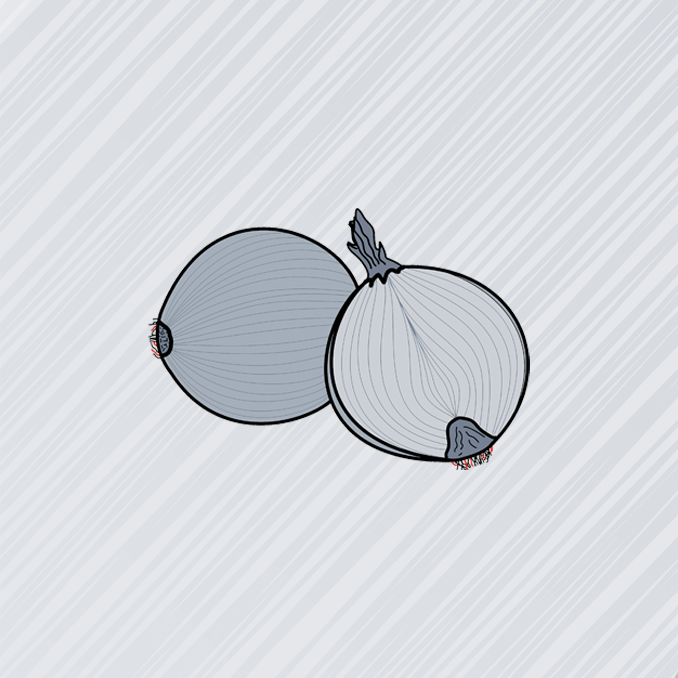
There’s not a dry eye when it comes to onions. It’s not the onion’s fantastic properties in the kitchen and cooking that make us teary-eyed, but rather the sulfur-containing compounds that are released as soon as we start peeling and cutting the onion.
The ancient Egyptians were also aware of the onion’s tear-inducing properties. They even believed that onions were so powerful that they could bring the dead back to life. That’s why they often buried their loved ones with onions.
In Sweden, they must have been of the same belief at some point. In any case, an old Swedish proverb says that you should bring an onion to a funeral.
For now, we’ll leave the onions in our kitchens, where we feel they belong.
Onions have been a part of the kitchen and cooking for thousands of years, but besides being a perfect flavor enhancer in almost all contexts, there are also certain health benefits to eating lots of onions. Onions are anti-inflammatory, and thanks to their manganese content, they also have an antioxidant effect. Onions are good for the immune system, and they are packed with lots of vitamins C and B6.
How Can You Use Onions?
Onions are wonderfully versatile. In their raw form, they add a good crunch and sharpness to dishes, while they become softer and sweeter the more they are cooked. Just look at the classic burger with soft onions. They are also a great flavor booster in stews.
Finely chopped fresh onions can add zing to a raw salad, and you can also pickle them. Pickled red onions are always good to have in the fridge. They can be used in many ways, for example, in a crispy cabbage salad or on a slice of toasted bread with duck rillettes.
Or how about baking a whole onion in the oven at 200 degrees for an hour? It’s really delicious as a side dish to, for example, meat.
You should definitely try making onion marmalade. It may sound a bit controversial, but it is an absolutely fabulous accompaniment to everything from burgers and pizza to game, lamb, and beef.
Onion compote is brilliant for spreading in sandwiches, whether it’s the “ordinary” kind with chicken and curry dressing or with pulled pork—or if it’s the luxury version with entrecote and cold béarnaise dressing.
Have you ever tasted homemade crispy onions? If not, it’s about time! They have a much rounder flavor and taste generally different from store-bought ones. Put them in a luxury burger or on top of the classic “roasted with everything”.
French onion soup may not sound like the most exciting dish, but it’s a classic in French cuisine, and it’s actually quite tasty. If you even serve it in a delightful bread bowl, it might seem a bit less dull.
You can read much more about onions and their many uses in this article.
More Recipes with Onions

Rhubarb
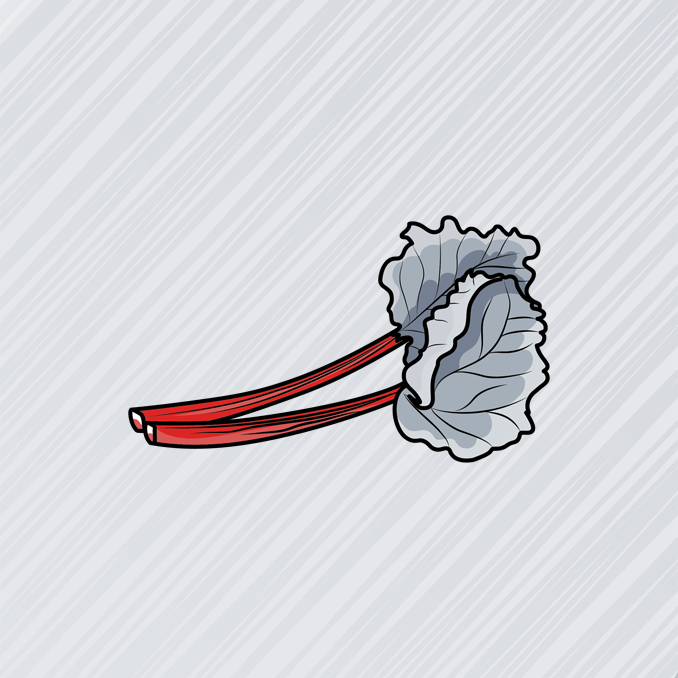
It isn’t really Danish spring until you’ve had the season’s first serving of red berry pudding with cream. And it should preferably contain rhubarb. Rhubarb has actually been in season since April, and it’s still around. However, it won’t be long before the season draws to a close, and then we’ll have to wait until late summer—namely, August and September—before it’s time for Danish rhubarb again.
And you know what that means: It’s time to head to the supermarket—unless you’re lucky enough to have them in your own garden.
Many of us can probably agree that there’s almost nothing as Danish as rhubarb. Therefore, it may come as a surprise that the rhubarb genus actually originates from Asia. Here, it was used in medicine. There are around 20 different rhubarb varieties, each with its own special properties: In Asia, rhubarb was used as a remedy for edema and constipation, and it was also believed to counteract both scurvy and palpitations.
It wasn’t until the early 17th century that rhubarb was introduced to Europe and attempted to be cultivated in Italy. Unfortunately, they weren’t successful. Rhubarb simply didn’t thrive under the warmer skies.
However, it was a completely different story when rhubarb finally came to Denmark. It took about 225 years, but it didn’t take long before Danes began making sweet rhubarb compote and our beloved red berry pudding with cream.
We typically use rhubarb as a fruit—which means in sweet contexts—but the plant is actually a vegetable. It isn’t particularly sweet by nature. In fact, quite the opposite! Rhubarb has a very sour taste, which comes from the content of oxalic acid, among other things. Oxalic acid inhibits the body’s absorption of calcium, which is the mineral we have the most of in our bodies. Calcium is vital for bone formation and normal muscle function.
Before you discard rhubarb entirely, hold on. It’s actually quite safe to eat rhubarb, and we’ll explain why.
How Can You Use Rhubarb?
As mentioned, rhubarb is quite a sour affair to bite into if you haven’t done something about it first. “Taking the bitter with the sweet” is indeed very applicable here.
It takes a lot of sugar to balance the sour taste, so if that doesn’t deter you, you have many wonderful things to anticipate: both pudding, pie, cake, ice cream, jam, soup, juice, and even alcohol. Rhubarb compote can, for example, be placed on your morning porridge or yogurt, and it can also be served with meat and poultry or used for a delightful rhubarb trifle.