
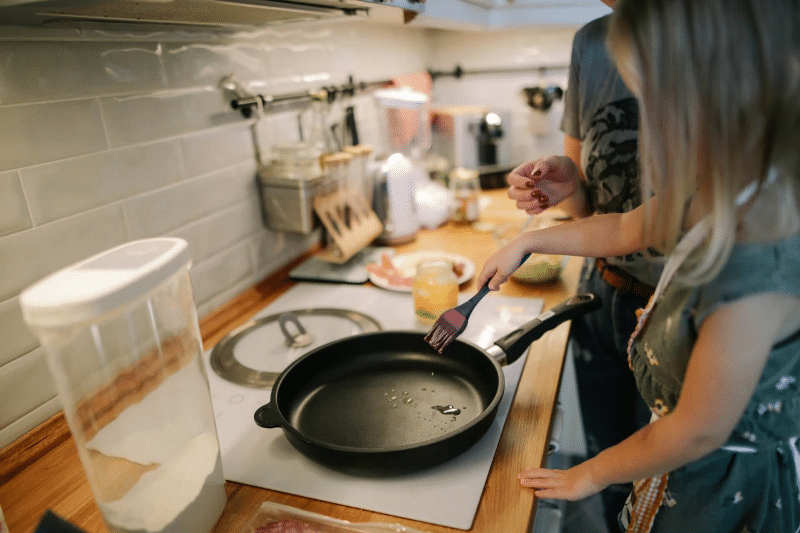

As a parent, you know how excited the little ones are to be involved in the kitchen. They just need to be allowed. As a child, there’s certainly a sense of empowerment associated with being entrusted with a task during cooking – regardless of the task’s size. That’s why, with great enthusiasm and pride, kids take on both large and small kitchen tasks.
Healthy eating habits should be taught
There are plenty of benefits to remembering to involve children in cooking. Involvement helps make the kitchen and cooking a natural part of children’s everyday life. Positive kitchen experiences create a good foundation for good habits later in adult life, and adults who grew up being involved in the kitchen have a naturally greater interest in healthy, homemade food. Additionally, you sneak even more quality time into your daily routine.
Child-friendly kitchen tasks
We know how a busy and hectic daily life can drain your energy. And it’s easy to forget to involve the kids in the kitchen. Fortunately, it rarely requires much planning. A simple and spontaneous task like grating carrots can be fine one day, while another day the task could be marinating the chicken.
If you have older children, they can have their own cooking day, where they are in charge of the menu and cooking. This also makes the children more independent and boosts their self-esteem.
If you have younger children, you naturally need to start off softer. Initially, you should ensure that time in the kitchen is associated with play and camaraderie. The basic idea is that the tasks should create a foundation for cozy, fun, and educational experiences.
Cozy and play
Here, salt dough is a really good place to start. You can make cute and fun figures to hang in the window or on the Christmas tree. Let the children weigh out the ingredients themselves and show them how you add the water gradually while they stir in the bowl. The children can cut out the figures, and then there’s plenty of fun in decorating them together afterward.
Baking
If you’re going to bake – for example, sweet bear buns or fun Kaj buns – this is also a good opportunity to teach children a bit about yeast and water temperature. Explain to them how yeast is actually a little wondrous “factory” of living organisms that, like you and me, can’t stand being in too hot water.
Flatbread is also an easy place to start. Here, children can see that it’s not always necessary to use the oven when delicious warm bread is needed for the dinner table.
Cakes and other sweets
Pancakes are something we all love. It can be a bit of a slow process to get through the entire bowl of pancake batter, but it’s good that the waiting time can be turned into a cozy moment with the little ones. Take the kids into the kitchen, let them pour the batter onto the pan, and teach them how the pancake is ready to be flipped when they see the first bubbles in the batter.
Chocolate-covered marshmallow treats are a fun and interesting thing to embark on, as there are several steps and components that need to come together. You can make completely traditional chocolate-covered marshmallow treats, or you can make small quirky LEGO-shaped chocolate-covered marshmallow treats. The children can easily pipe the meringue into the chocolate shells and assemble the treats.
Dinner
When there’s pizza on the menu, the children can be set to roll out the dough, for example, in small portions. They can add their own toppings, and this way, they can also control what they want on their pizza.
Gradually, you can let the children try out a bit more special techniques. They can, for example, help roll the pasta when making homemade pasta. Exciting techniques – and ingredients for that matter – all help to strengthen children’s natural curiosity, and again, it’s something they carry into adulthood.