


Why Eat Seasonal Produce?
The calendar shows November. Although November is often associated with gray and rainy weather for many Danes, it is also a month that invites many cozy indoor moments.
Hygge, as you know, is almost synonymous with food, and November is a month full of delicious Danish ingredients just waiting to be enjoyed.
All ingredients, seasonal or not, inherently provide important vitamins and minerals, but when produce is in season, it is packed with even more beneficial nutrients. And they taste even better.
Additionally, we humans are creatures of habit, and we tend to stick to what we know, even when it comes to the food we put in our shopping basket.
However, eating a varied diet is a necessity for maintaining a healthy and strong body that can carry you through life’s challenges day after day. By choosing seasonal produce, you’ll naturally experience a rotation in the contents of your refrigerator.
Moreover, the fact that ingredients are cheaper when they are in season is just a bonus.
So, you’re doing both your body, your taste buds, and your wallet a favor, while also consciously or unconsciously helping the environment and our shared planet.
What’s in Season in November?

November is a true “fish month.” But more than anything, it’s a month filled with an abundance of delightful, fresh greens.
You can look forward to sinking your teeth into the so-called “superfood” kale, which was also among our October favorites, and crispy carrots, which we also enjoyed in July.
In the fruit and vegetable section, you will also encounter celery, white cabbage, kohlrabi (which we really took notice of during our evening at Gastronomisk Undergrund), broccoli, mushrooms, parsley root, apples, pears, and cranberries.
In the fish section, you’ll find herring, cod, haddock, oysters, and hake, among others.
You can also advantageously put game on the menu, as November offers freshly caught hare.
Below, you’ll find inspiration on how to incorporate a selection of our November favorites into your own cooking.
Herring

“We have traveled, but now we are back.
There was something we missed that could drive a Dane wild.
It’s not beer, pork roast, or cake.
It’s simply the Danish herring.”
So goes the song by Shu-bi-dua, and although they may not be referring to the kind of herring most of us would serve our guests, fish is actually not a bad thing – especially if you ask the beloved Minna and Gunnar, who took over Danish TV screens back in 1997.
Minna and Gunnar not only taught us that fish isn’t bad at all. They also claimed that “it’s a piece of cake” – but there are bones!
Possibly one of the reasons we Danes are hesitant to incorporate more fish into our everyday meals.
But that’s a shame.
Fish is indeed a fantastic food. Moreover, Denmark is one of Europe’s largest fishing nations. Eating from our own underwater pantry helps support Danish fishermen, producers, and suppliers.
Herring is found in the Baltic Sea, the North Sea, and the northern part of the Atlantic Ocean, and with a high herring stock in these waters, we certainly shouldn’t hold back.
Herring is packed with vitamin D, which our bodies crave during the dark months. Additionally, herring is among the fatty fish with a high content of beneficial omega-3 fatty acids.
If you want to know more about fish in general and see even more delicious fish recipes, you can find more here.
How to Prepare Herring?
When you hear the word herring, it’s hard not to think of either the smoked, Bornholm specialty, Sol Over Gudhjem, or the marinated or fried version on the Christmas lunch table.
However, this wonderful fish can be enjoyed in many other ways than just on the sunny island or during the Christmas month.
Herring is also delicious when grilled, steamed, or oven-baked. Try putting it in the oven, wrapped in parchment paper with dill and lemon.
Serve the herring with potatoes, some baked tomatoes, and a fresh green salad. Egg yolks, for example dried or both smoked and salt-dried, also provide a fantastic contrast to the mild, fatty herring.
You can also prepare herring using sous vide and serve it on a slice of homemade rye bread with a fried egg yolk and some curry dressing. Check out this recipe.
The high-fat content in herring means that fresh herring spoils quickly. Depending on the freshness of the herring, fresh herring has a relatively short shelf life.
Ensure that the herring’s scales are fresh and shiny, the gills are dark red, and the fish smells fresh like the sea. If you find the herring filleted, also ensure that they have no discoloration, are uniformly colored, and have a good smell.
We generally recommend that herring is prepared on the same day it is purchased.
You can also choose to freeze it immediately after purchase. In the freezer, herring can be kept for 2 – 3 months.
More Recipes with Herring
Cabbage

Cabbage is just super cool, and this month, several varieties are on our favorites list.
The term “cabbage” encompasses a wide range of both original species and hybrids, including certain weed species.
Almost all parts of the cabbage plants, from the roots to the flowers, have been cultivated for use in the food and feed industries: Just look at the turnip, which, like the beetroot, is an “overdeveloped” or swollen root, kohlrabi stems, head and Brussels sprouts, which are both leaves, and broccoli and cauliflower, which are both composed of several small flower buds.
Rapeseed, whose oil-rich seeds we use for rapeseed oil, is also closely related to cabbage. The residual product after oil pressing is used for livestock feed due to its high protein content.
Compared to other genera within the plant world, cabbage is nothing short of what has the most crops in horticulture and agriculture.
There is also plenty of taste and health benefits when we talk about cabbage in general.
Several types of cabbage have an anti-inflammatory effect that has cancer-preventive properties, and there’s plenty of B, C, and K vitamins to be gained by eating more cabbage daily.
Additionally, feel free to buy large quantities when you find cheap cabbage. While a typical lettuce head doesn’t last more than a few days in the refrigerator, much cabbage can last for weeks – some types even for months if stored correctly.
The benefits of eating cabbage are even more. See more here.
Have you ever heard of the beautiful Italian cabbage variety, romanesco? It resembles something a mad scientist might have created in an underground laboratory, yet it is one of Mother Nature’s very own wonders.
You can see the very decorative romanesco and learn a bit more about this cabbage here.
How Can You Prepare Cabbage?
If you have more bad than good memories associated with cabbage, it is likely solely due to improper preparation.
The best preparation depends on the particular type of cabbage, but overall, cabbage can be prepared in almost all conceivable ways – just with different cooking times.
For example, both white and red cabbage can withstand being cooked for a long time without becoming too “sulfuric” in taste, whereas Brussels sprouts should be cooked very lightly to maintain their crunch.
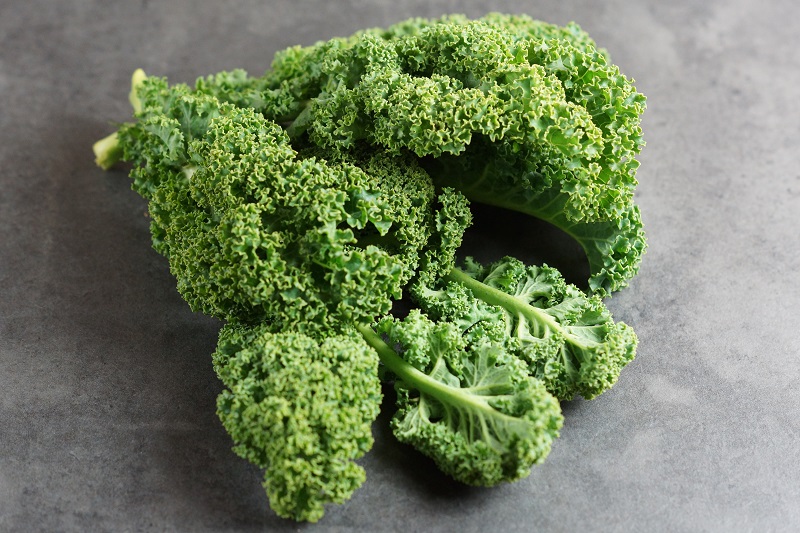
Kale, on the other hand, retains its crispness more easily during cooking and can be finely chopped if used raw.
Cauliflower achieves a delicious caramelization when fried. See here!
The mild pointed cabbage is delightful raw, finely chopped. Try mixing it with pickled red onions. Also see this recipe, where lime is among the ingredients that give a fresh and tangy salad with both pointed cabbage and pickled red onions.
Instead of discarding the dark leaves of the pointed cabbage, you can mix them into your coleslaw, as we have done here, to make the coleslaw even more beautiful and presentable.
If you also tend to discard the broccoli stalk, hopefully you’ll refrain from doing so next time broccoli is on the menu.
The stalk has an amazing taste of freshly picked Danish peas! Use the broccoli stalk raw, for example finely chopped, or quickly fry it in larger pieces along with the other broccoli florets. You’ll likely thank us.
If you’re of the patient type, you can also make your own pickled and spiced broccoli stalks and serve them with, for example, liver pâté, rolled sausage, or salami.
More Recipes with Cabbage
Brussels Sprouts

Oh dear. Brussels sprouts are one of those little guys that truly divide opinions.
The Brussels sprout is somewhat of a grandmother’s classic, but unfortunately, it has a reputation for either tasting like, well, farts or being overcooked and mushy.
Although Brussels sprouts may (yet) not be a beloved vegetable among most of us, there are many good reasons to incorporate them into your cooking.
One of these is that Brussels sprouts are bursting with plenty of dietary fiber and good nutrition: B, C, and E vitamins, potassium, folate, and antioxidants.
If you want more reasons to eat more cabbage in general, you should read here.
Brussels sprouts also come in very winter-hardy varieties, so even in the winter months, you have the opportunity to harvest fresh Brussels sprouts directly from the garden if you plant them yourself.
The bitter compounds in Brussels sprouts may not appeal to everyone, but when prepared correctly, they can become a truly delightful side dish on the dining table – for both big and small.
Did you know, by the way, that Brussels sprouts were grown extensively in Brussels in the 16th century? The Dutch name for Brussels is Brussel, which has given the English word for Brussels sprouts: Brussels sprout.

How Can You Prepare Brussels Sprouts?
Whether you want to enjoy Brussels sprouts raw or cooked, start by cutting off the stem and removing the outer leaves.
And yes, Brussels sprouts can indeed be enjoyed raw. You can try shredding them finely and tossing them with some fresh orange, toasted hazelnuts, and a bit of onion. If you’re having a dressing, a strong one is the best choice.
A mixture of vinegar, oil, mustard, and a little salt and pepper makes a delightful, robust dressing for a Brussels sprout salad with, for example, lentils, spring onions, and hazelnuts – just check out this recipe.
If cooking Brussels sprouts, blanching them in lightly salted water is beneficial, so they still have a bite. Use the tip of a paring knife to check if they are ready. Then toss the Brussels sprouts in some lovely olive oil, a bit of salt and pepper, and finish with a splash of lemon juice.
You can also grate some fresh parmesan over them.
Try also cutting them into quarters and toasting them in a pan with butter, followed by a sprinkle of sea salt – or fry them in a bit of soy sauce, as in this recipe, where they are part of a beautiful beetroot-colored pasta salad.
If you want to start the day with a real health boost, the raw Brussels sprouts can be added to your morning smoothie with, for example, strawberries and almond milk or oranges and apples.
In an airtight container, you can store Brussels sprouts in the refrigerator for weeks.
More Recipes with Brussels Sprouts
White Cabbage
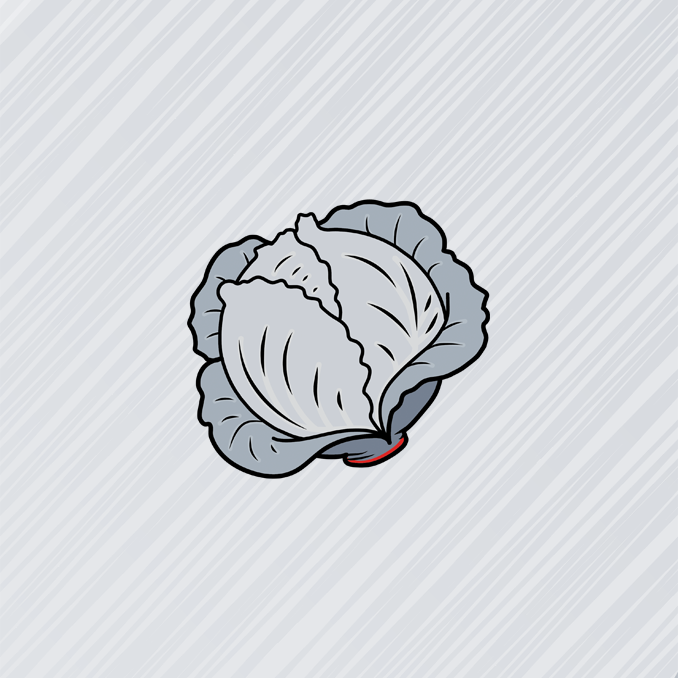
Many early memories of white cabbage revolve around the good old South Jutland classic: Creamed White Cabbage.
It is still a cherished staple, just like both brown cabbage and the good old German regional dish, Sauerkraut, persist with tenacity.
And slow cooking is indeed a commonly used method of preparing white cabbage.
Unlike, for example, broccoli, white cabbage does not lose its flavor through long-term boiling. White cabbage merely becomes soft and delicious in texture and wonderfully rounded and mild in taste.
White cabbage is actually one of the oldest, wild-growing vegetables in Europe, and its ancestor is no less than a 2,000-year-old mustard plant from the Mediterranean region.
Until just 200 years ago, white cabbage only grew wild in nature, although we have used white cabbage in the kitchen since the 17th century.
White cabbage has not always had a reputation for being the most extravagant food – quite the contrary. “In the old days,” cabbage was reserved for farmers and the poor, and thus it was not considered “fancy” to eat cabbage.
Cabbage underwent a kind of renaissance during the great vegetarian wave of the seventies, resulting in white cabbage becoming something many of us grew up with.
The nutritional advantages of eating white cabbage are many.
White cabbage is rich in fiber and both vitamins C and K. With just 150 grams of white cabbage, you have met your daily need for vitamin C.
And like apples, it is actually possible to get your hands on Danish white cabbage, even when they are out of season, as they are stored – but only until around April.
How Can You Prepare White Cabbage?
Besides stewing, white cabbage can also be enjoyed sautéed, fermented, stir-fried, boiled, steamed, or raw.
In its raw form, white cabbage is strong in taste but super crunchy in texture, making it ideal to be finely shredded and added to delicious, fresh salads. See this white cabbage salad with crispy walnuts and creamy hard-boiled eggs.
A classic coleslaw is also made with finely shredded white cabbage. A coleslaw can also be varied and made with pointed cabbage, as we have done in this very easy and creamy version.
If you want to reap the most nutritional benefits of white cabbage, it should be eaten raw – or just lightly steamed or stir-fried.
If you enjoy stir-fry dishes, finely shredded white cabbage fits well into such contexts.
The prepared white cabbage’s mild flavor is excellently accompanied by acidic components, such as pickled red onions, but also dressings with vinegar or lemon.
Furthermore, savory pancakes are an excellent way to use white cabbage, especially if you prefer the cabbage soft, mild, and rounded.
Here, white cabbage can provide good fullness and satiation, particularly if the dish is more or less meat-free, as in these vegetarian savory pancakes with white cabbage filling.
You can easily add bacon or other meat to the savory pancakes if you wish.
Creamed white cabbage and brown cabbage are grandmother’s classics that can’t be ignored – especially at this time of year when you might need ideas for the upcoming Christmas lunch season or just nice warming dishes.
And for the Christmas lunch, the creamy white cabbage with sausage is a true classic.
If you’re looking for a greener alternative to regular tortilla breads or savory pancakes, white cabbage rolls – or cabbage dolmas – are also a popular dish.
You can either use the white cabbage as the wrapping itself or as a filling – or both!
If you’re seeking inspiration for delicious, flavorful cabbage dolmas that can serve as a lovely lunch, snack, or appetizer, you can see our recipe for these green beauties, made with blanched savoy cabbage and a delicious filling of white cabbage and lamb.
Here, you can also easily replace the savoy cabbage with white cabbage.
A white cabbage can easily keep for up to 2 – 3 weeks in the refrigerator. You can optionally cut the head into quarters and remove the stalk.
This way, it takes up less space in the refrigerator, and it’s easier to pack in plastic bags or cling film.
If you want to freeze white cabbage, we have good news: it can stay in the freezer for up to eight months.
Simply slice the white cabbage finely, blanch it for two minutes, and place it in cold water before putting it in the freezer in freezer bags.
More Recipes with White Cabbage
Pears

Should they be so sweet and soft that the juice runs down your hands as soon as you bite into them – or should they be mild and crunchy crisp?
Opinions are divided, but in any case, you can enjoy delicious, fresh, and Danish pears in November.
Maybe you didn’t know, but pears are always picked before they are fully ripe. The reason for this is that a fully ripe pear is not only extremely sensitive to pressure and bruising but also has a very short shelf life.
And they are not suitable for refrigeration.
Even if you may prefer your pears sweet, soft, and juicy, it is wise to buy pears that are still hard if you don’t want to overeat on all the purchased pears on the very same day.
Here in Denmark, we have access to Danish apples year-round because they are stored in “apple hotels” outside the season.
Since pears are not suitable for refrigeration, we Danes have to import them if we want pears outside the Danish season.
And the imported pears are nearly tasteless.
November is therefore the month when you have the opportunity to experience the full flavor potential of pears!
How Can You Prepare Pears?
Pears are perfect to put in fresh green salads for both lunch and dinner. Use them while they remain crisp and delicate, or wait until they’re juicy and sweet – it’s purely a matter of temperament.
Moreover, pears can be baked, boiled, or quickly sautéed, and they are excellent in both savory and sweet kitchens.
You can add them to your oatmeal in the morning – or enjoy them as a late-night snack or dessert: Grate the crisp pears coarsely and add a dollop of Greek yogurt, a little honey, and a sprinkle of cinnamon, and finish with grated chocolate on top. Preferably of the very dark kind.
Now that we are in the category of delicious, sweet treats, neither pear tart nor pear cake are to be missed.
If you want to limit gluten – or avoid it completely – we also have a recipe for a gluten-free pear cake that you’ll be very happy to have in your repertoire.
Do not store pears together with other fruits unless you want to speed up pear ripening. However, if you can’t wait for your newly bought pears to ripen and become juicy, you can put them in a fruit bowl together with, for example, apples.
Finally, cider is naturally also an option – especially if your own pear harvest has been overwhelming. If this is the case, you can also “extend” the pear season by stocking your kitchen cupboards with homemade pear chutney and placing it on the cheese board for the Christmas lunch.
More Recipes with Pears
Parsley Root
“Parsley helps the man on the horse and the woman into the grave,” it is said.
“But parsley,” you’re thinking, “isn’t it parsley root we’re supposed to talk about?”
And yes, indeed, but parsley root has its “roots” in the parsley plant.
Parsley root, originally from the Mediterranean region, has been ready for harvest here since September, and there are still plenty of delicious, fresh parsley roots to come by.
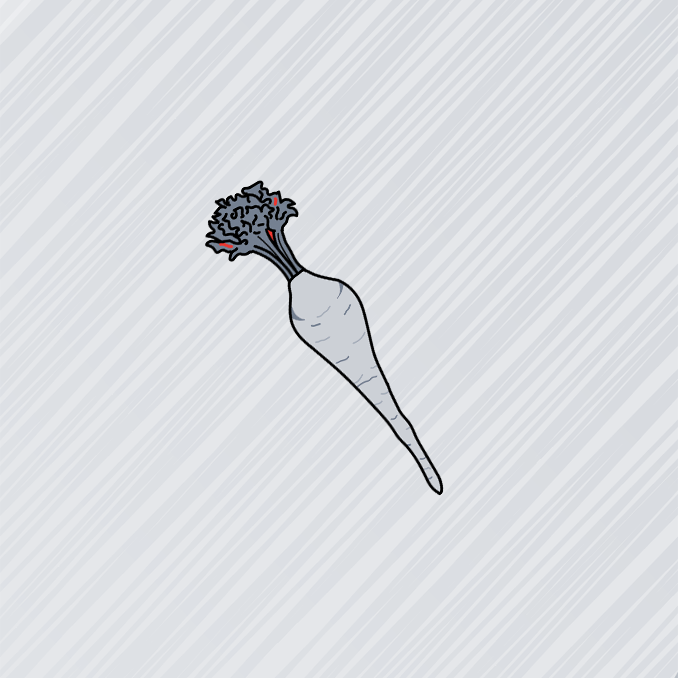
For the untrained eye, it can initially be challenging to distinguish parsley root from parsnip. However, where the parsnip curves inward at the top, the parsley root curves outward.
That the parsley plant is the ancestor of the parsley root is very evident in the parsley root’s distinct parsley aroma, and the parsley root is also firmer and crisper and not as sweet as parsnip. Parsnip becomes both softer and more “meaty” when cooked.
Parsley root is rich in both vitamins C and E and folate, a form of B vitamin. The latter is particularly beneficial for red blood cells and protein formation. Folate is also important if you are pregnant.
How Can You Prepare Parsley Root?
Parsley root is often relegated to the soup pot, where it acts as a lovely soup herb. However, it is at least just as delightful in either its raw form or when baked, fried, deep-fried, steamed, or marinated.
The raw parsley root can be finely sliced and be really delicious in a fresh salad.
Parsley root as baked root vegetables is probably not new to you, but it is still a both beautiful and flavorful side dish to many meals. Serve the baked root vegetables with a good piece of meat and a fine homemade red wine sauce, and you have a lovely autumn meal to warm yourself and your family with.
You can also bake the parsley roots with parsnip and toss the root vegetables in the pot with the Danish classic, hearts in cream sauce, as done in this delightful recipe. It’s a lovely dish for the colder, darker months.
Use the baked parsley root along with other baked root vegetables to spice up the classic burning love, as done here.
Have you ever tried making your own root vegetable puree? If not, it’s another fantastic way to serve parsley root: Make a puree of, among other things, parsley root, celeriac, and leek. You can find an easy recipe here.
If you have parsley root with tops, you can also save the delicious, aromatic tops as an alternative to flat-leaf parsley.
Parsley roots can keep for up to 3 weeks in the refrigerator.
More Recipes with Parsley Root
Haddock

Better to have haddock on the plate than be bothered by the cold, right?
Okay, that was a homemade pun. But if you find the autumn months a bit hard to get through and are already looking forward to warmer times, maybe you can warm yourself with a good portion of freshly caught Danish fish for dinner.
What was once considered “poor man’s food” has now become an expensive pleasure, so you can advantageously go for the fresh Danish fish that are in season.
And the delicious haddock, with its white, firm flesh, is on the menu in November.
Haddock is an excellent eating fish and belongs to the lean varieties. And it is rich in selenium.
Selenium is good for the immune system and can act as an antioxidant in the body. Additionally, selenium is essential for maintaining normal metabolism in the body.
Haddock is related to cod, and the two are quite similar. However, haddock is more flavorful and has a finer and firmer texture.
It is also not as juicy as cod but can nicely replace cod in many contexts.
How Can You Prepare Haddock?
You can use haddock in cooking in the same way you would use cod. That is, haddock, like cod, works well being served with other mild elements and flavorings.
Here, a puree made from our other November favorite, parsley root, can be ideal.
Pan-sear the haddock and serve it with the puree, some baked root vegetables, and/or something crisp and green. Serve with a delightful classic Sauce Mousseline, which, with its acidity from lemon and light richness from whipped cream, will be sublime in this context and not overpower the mild fish.
Haddock also works well in a delightful warm soup.
You can find many more delightful soup recipes here, which will be perfect in the coming time.
If you want to really impress someone, consider trying a beautiful but challenging ballotine made with haddock and langoustine farce, wrapped in crispy chicken skin.
It is suitable as both an appetizer and a main course, and you can find a recipe right here.
If you need a good, crunchy snack for a party, a recipe for haddock with beer batter and cornflakes might be something you’ll find interesting.
Get a lot of inspiration for exciting fish recipes right here.
More Recipes with Haddock
Black Salsify

Perhaps you’ve seen them in the supermarket, looked at them a bit, and put them back: black salsify roots. The long brown roots with their slightly unusual appearance.
Black salsify roots – or black salsify – are also known as “poor man’s asparagus” because they somewhat resemble asparagus in both taste and appearance, at least when peeled. While the season for Danish asparagus typically runs from May to July, Danish black salsify is in season right now.
Despite their nickname, they are not cheap. In fact, they are considered a gourmet vegetable, particularly loved and frequently used in the restaurant industry. It’s usually not a vegetable you’ll come across at your local store, but when the opportunity arises, don’t hold back.
When they are completely fresh, they have a lovely, firm structure reminiscent of other root vegetables.
The cultivation of black salsify began in France and Italy in the 17th century, where it was used to treat ailments such as bubonic plague and snakebites.
Additionally, it was also used in cooking.
And even though the largest producers of the plant today are France, Holland, and Belgium, it’s easy to grow it at home yourself.
Black salsify can grow up to 1 meter long, although they are typically seen in sizes of 20 – 25 centimeters.
Besides being a delicacy in the kitchen, black salsify is also rich in inulin, which, among other things, helps stabilize blood sugar and reduce blood fat content.
How Can You Prepare Black Salsify?
Black salsify is considered by many to be a vegetable that is tricky to tackle.
One thing is that black salsify is filled with sand and dirt, making the preparation a bit messy.
The easiest way is to scrub them while holding them under running water in the sink. Afterward, you can peel them while they lie on the cutting board.
Peeled black salsify turns brown on the surface very quickly. You can avoid this by placing them in a bowl of water with either lemon or vinegar added.
Another thing is that the white, sticky sap of black salsify stains fingers brown – just like dandelions.
You can avoid this by preparing the vegetable with the peel on. Afterward, the skin can be easily peeled off.
Black salsify can replace asparagus in all contexts, but like white asparagus, black salsify should not be eaten raw.
In this recipe with freshly grated truffle, butter-fried hazelnuts, and Sauce Hollandaise, you can, for example, replace asparagus with black salsify.
Black salsify can also be served for breakfast alongside a classic egg benedict.
Use it also in salads, stews, soups, and as an accompaniment to many dishes, for example with meat.
Black salsify is a perfect side dish for a good steak bearnaise – if you need good tips for making a good homemade bearnaise, we recommend reading this article, which solves many of the classic “bearnaise problems.”
Black salsify should be stored in a dark and cool place. Do not clean them before use, but let them lie with sand/dirt in an airtight container. They will keep well for 2 – 3 weeks.
Recipes with Black Salsi