

Asian cuisine is rising in popularity in Europe, and Denmark is no exception. Which region of Asia one prefers in terms of food is very individual. Here, we provide you with an overview of what characterizes the various Asian cuisines and which dishes are most popular in the respective countries.
What Can You Expect from Asian Cuisine?
Asia is a very large continent, and although several Asian dishes have certain similarities, there are also clear differences and characteristics.
Asian food is generally characterized by dishes that are often very rich in vegetables, which act as flavor enhancers. Additionally, this part of the world’s population is particularly fond of spices, and it isn’t just the hot ones – seaweed, sesame seeds, and honey are also frequently used.
What Do They Eat in India and Pakistan?
India and Pakistan are known for their rich, highly spiced dishes such as Tikka Masala and Butter Chicken. In Indian cuisine, samosas are also popular—fried pastries filled with meat and vegetables, typically eaten as a snack or side dish.
Curry dishes are generally popular and possibly what the two countries are most known for. They are typically simmered, stewed dishes containing a protein, a carbohydrate, and lots of vegetables in a thick, flavorful sauce. Indian dishes are often eaten with rice and naan bread.
In India and Pakistan, beef is not consumed, as the cow is considered sacred. The vegetarian lifestyle is widespread, though both chicken and lamb are used in many dishes.
Both countries often use potatoes and various legumes and beans. Additionally, pearl millet, known as bajra in India, pigeon peas, and red lentils are common ingredients in many stews.
Common spices include cardamom, coriander, mint, and bay leaves.
Our Indian/Pakistani Inspired Recipes:


Pakistani Spiced Potato Patties


What Do They Eat in Southeast Asia?
Southeast Asia includes countries like Thailand, Vietnam, and Malaysia. These countries’ eating habits also resemble each other. Large amounts of fish, chicken, and shrimp are consumed. Southeast Asia is known for its many fresh herbs and spices, including coriander, parsley, basil, chili, garlic, and red, yellow, and green curry.
Vietnamese cuisine is known for being fresh and fat-free, with many fresh herbs and vegetables. Bao, Banh Mi, and fresh spring rolls are well-known and popular dishes.
In Malaysia, Nasi Lemak is an incredibly popular dish, consisting of rice, peanuts, chili, a boiled egg, and dried anchovies served in a banana leaf.
In Thailand, various versions of Pad Thai are popular, and most dishes are served with noodles or rice. Thai curries based on coconut milk, often with fish or chicken, are common.
Salads and fresh side dishes with fruit are generally very popular in both Thailand, Vietnam, and Malaysia. Fruit is not only eaten raw but can also be grilled or fried.
Our Southeast Asian Inspired Recipes:
Tom Yum Goong (Thailand)

Thai Soup with Shrimp (Thailand)

Pad Thai (Thailand)

Pad Krapow Gai (Thailand)

Thai Curry (Thailand)

Thai Chicken Potato Curry (Thailand)

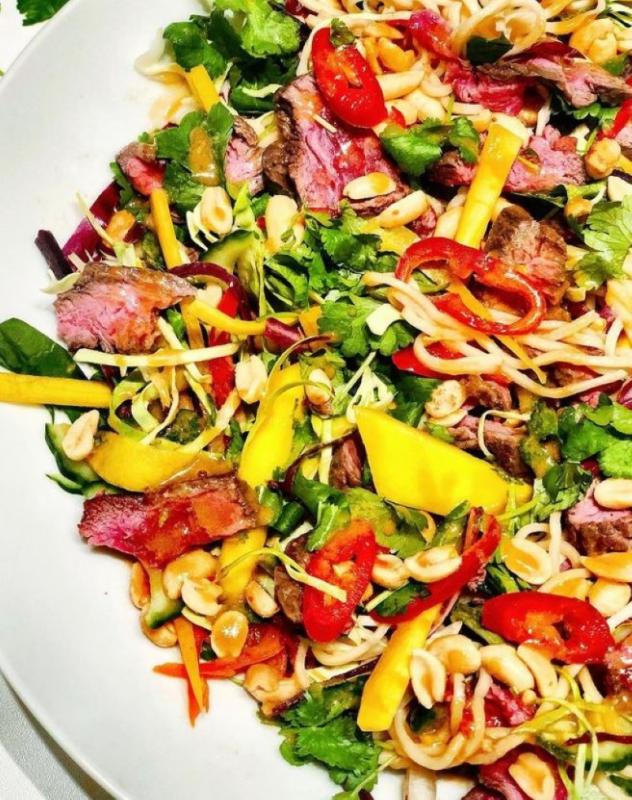
Thai Beef Salad (Thailand)
Satay Sauce (Thailand)

Tagine with Glass Noodles (Vietnam)

Crispy Spring Rolls (Vietnam)

Baguette (Vietnam)

Bao (Vietnam)

Spring Rolls (Vietnam)

Bao with Duck (Vietnam)

What Do They Eat in Japan?
The traditional Japanese culinary art is called Washoku and is largely based on rice and dashi. Dashi is a soup made from dried and smoked tuna, to which noodles and vegetables are typically added. Miso soup is also based on dashi and is a common dish in Japan, as it is inexpensive and can be tailored to all taste preferences.
When it comes to Japan, we naturally cannot overlook sushi and sashimi. In fact, fish in all forms is very popular in Japan since the country is surrounded by water. Regarding sushi, wasabi should not be forgotten either. Here, we use colored horseradish flavored with mustard, among other things, but in Japan, wasabi is made from the real wasabi root.
Most dishes in Japan are eaten with a wide range of different condiments and seeds, including sesame seeds. In Japanese cuisine, the spice blend Shichimi Togarashi is also used for many dishes. Shichimi Togarashi is a mixture of red chili, sesame seeds, orange peel, ginger, and seaweed.
Japanese people rarely season their food with salt and instead use a good soy sauce. If salt is used, it is typically Moshio salt, the world’s oldest known sea salt. The seaweed, Hon’dara, gives the Moshio salt its flavor.
Our Japanese Inspired Recipes:


What Do They Eat in Korea?
If you have a taste for the sour, the Korean kitchen is definitely for you. Almost everything is pickled. Most popular is kimchi, which is fermented vegetables, and kimchi is also Korea’s national dish.
Bibimbap and Bulgogi are also popular dishes that are served in many countries outside Korea. Both dishes are hearty meals based on rice, meat, and soy sauce, accompanied by a selection of vegetables.
The fermented drink, kombucha, is also widely consumed with many meals. It is said to have a healing effect on the immune system.
You are probably already familiar with the Japanese classic, sushi, but have you heard of the Korean version, Kimbap? The concept is almost the same, though without fish and instead with various pieces of grilled meat.
In Korea, they don’t shy away from bold flavors like ginger, garlic, soybeans, and the famous solar salt, which has been aged for several years.
Our Korean Inspired Recipes:

What Do They Eat in China?
In China, they eat dogs – but also quite a few other things. The Chinese kitchen is world-renowned!
Stir-fried dishes are Chinese and can be made in countless ways. The Chinese eat a lot of rice and not as many noodles as the other Asian countries. However, China is vast, and its cuisine is divided by provinces: Anhui, Hunan, Szechuan, and Shandong, to name a few of the most popular.
The Chinese love spring rolls, but they’re equally fond of wontons and dumplings, both consumed as soup accompaniments.
Additionally, sweet and sour pork is popular, as is Peking duck and tofu in various stews.
You probably associate Chinese food with relatively fatty dishes with fried noodles, battered chicken, and shrimp, as these have become popular outside China’s borders. However, Chinese food is actually known for being low in fat: most traditional Chinese dishes are either dry-fried or steamed, meaning fat is rarely used.
The Chinese are fond of using many and strong spices, and especially the Szechuan province is known for its extremely spicy chili sauces. The whole country uses a lot of ginger, garlic, star anise, spring onions, Chinese cinnamon, and sesame and sesame oil as flavor enhancers.
Our Chinese Inspired Recipes:


Other Asian Inspired Recipes:


Noodles with Hearty Vegetables

