

The Benefits of Eating Seasonal Produce
The days continue to grow shorter and colder, and we have now reached the year’s second autumn month: October.
The darker days ahead are largely balanced by the produce that marks the continuous change of seasons.
And the list of benefits of eating fresh, Danish seasonal produce is long: They are fresher and therefore packed with all the good vitamins and minerals, and they taste better.
In addition, they become cheaper in supermarkets and provide a natural variety in your diet, which benefits both taste buds and health – the latter because a healthy and varied diet is essential for a healthy body, full of energy and resilience to handle the many challenges of everyday life.
All produce contributes important nutrients year-round, but fresh, newly harvested produce will be even more packed with good nutrition and flavor.
When you eat according to the season, you are doing good for your overall health, taste buds, wallet – and not least the environment.
October’s Produce
In October, you can look forward to finding fresh Danish kale, beets, pumpkins, as well as autumn apples, parsley root, and horseradish on supermarket shelves.
If you head to the meat section, October is also the season for hare, roe deer, wild ducks, fallow deer, and pheasants.
You can go on an exciting exploration in the beautiful Danish nature and forests and pick chestnuts, quince, elderberries, lingonberries, and mushrooms.
Pumpkin, apple, beetroot, and mushrooms were also on the list of our Danish September favorites. If you want to know more about these ingredients, you can read more here.
Below, we have gathered all our favorites for October’s produce. You can add these to your shopping list to prepare for your next visit to the supermarket.
Pears

“He who has no pear, babbles.”
Whether you prefer your pears sweet, aromatic, and juicy or mild, delicate, and crisp, October is fortunately the perfect time to sink your teeth into this wonderful fruit.
Did you know that pears are always harvested while they are still unripe, then left to ripen for 3-4 days at room temperature?
Once the pear fully ripens, it has a short shelf life and becomes very sensitive to bruising.
Therefore, you should select the pears in the supermarket that are still hard and unripe.
Because pears have a short shelf life and are not suitable for cold storage, they cannot be picked and stored for subsequent months, as we do with apples and so-called apple hotels.
When pears are not in season here, we have to import them from abroad, and these pears are comparatively more or less tasteless.
How can you prepare pears?
Pears can of course be enjoyed raw, either on their own, in fruit salads or green salads, and it’s up to you whether you eat them before or after they are fully ripe.
Use them in a lovely, crisp salad with chickpeas and nuts or make a delicious relish with pear and beetroot, which is also in season this month.
Additionally, pears become quite excellent when cooked, for example baked, boiled, or quickly fried, and they can be used in both sweet and savory dishes.
Use them in your morning porridge, either as a topping before serving or let them cook with the oatmeal.
Of course, the pear is not to be overlooked in the dessert genre, and here can be mentioned pear cake and pear tart.
If you’re looking for a good, gluten-free basic recipe for a pear cake, we have a really lovely one right here.
You can also make a quick and easy dessert or evening snack by grating a little raw pear coarsely before the fruit becomes too ripe and soft, and serve it with a good dollop of Greek yogurt, syrup, cinnamon, and grated dark chocolate on top.
If you’re up for it, you can try making your own homemade pear cider, which can be a smart way to use up a large pear harvest.
Pears should not be stored with other fruits unless you want to speed up the ripening process: Here you can advantageously place your pears and apples in the same fruit bowl.
More recipes with pears
Radicchio Salad with Baked Pear and Goat Cheese Bruschetta


Beets

In the cool, dark autumn months, you might yearn for warm, sunny days – or you can be grateful for the season of delicious Danish beets!
Most of us know them as elongated and deep violet, but beets actually come in a variety of forms, including round, conical, striped, black, yellow, and white beets.
The swollen, edible roots of the beet plant, which we know as beets, are the result of the cultivation of the plant’s ancestor, the sea beet. Cultivation involves breeding and improving plants through continuous and artificial selection.
The beet plant is best known for its roots – the beets – that are a common companion on liver pâté sandwiches.
However, the beet plant has much more to offer.
If you’ve ever encountered baby leaves, such as those found in several salad mixes, we can tell you that these green/purple leaves with matching stems come from the beet plant.
In Denmark, beets are mostly used as side dishes, while in Russia, they form the basis of the country’s national dish: Beet soup “borscht.”
Here, the beet plant has also been cultivated to treat iron deficiency and infections, thanks to the plant’s content of highly absorbable iron.
Because beets are packed with dietary fiber that satisfies hunger and provide plenty of good nutrition, they can play a larger role in various dishes, not just in pickled form and modest amounts on rye bread.
If you’ve worked with beets, you know how much color they can stain both cutting boards and hands.
This is due to the beet’s abundance of the coloring agent, betamin. In combination with the beet’s very unstable cells, it results in significant color transfer when the cells are destroyed – that is, when you cut into the beet.

How can you prepare beets?
Enjoy beets raw, pickled, baked, or steamed – or use beet juice as a natural dye, as is done in the food industry.
Use beet juice to color cake icing, the foam for homemade cream puffs – or use it to dye pasta, giving a beautiful visual expression on the plate.
The vibrant color of beets can elevate most dishes, just look at these beet-pickled eggs with charred leeks and mayo. And the deep purple color can make even a simple coleslaw look beautiful and decorative.
Use beet leaves in a mixed salad for a round and nutty aroma.
If you’re inspired by the Russians’ use of beets, you can serve this fantastic beet soup with serrano and horseradish – the latter is also in season in October.
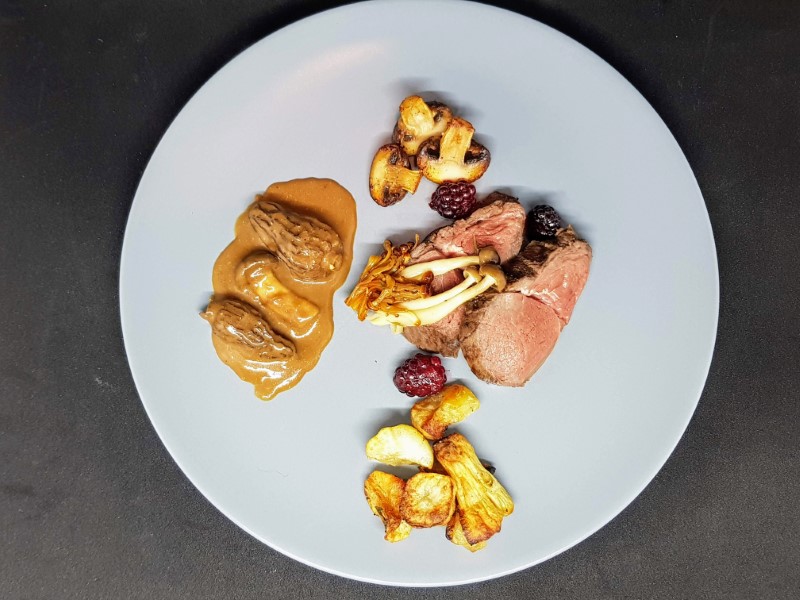
It’s also a great idea to pickle your own beets, primarily because they taste better than the supermarket varieties.
You can use your homemade pickled beets as a tangy accompaniment to a Parisian steak, million steak, burning love, fried pork with parsley sauce or skipper labskovs – or the good old classic, hash.
Avoid beet-stained hands by rubbing them with a slice of lemon or simply wearing a pair of gloves.
More recipes with beets



Beet Pasta with Fried Hake and Poached Quail Eggs


Fallow Deer

October is a “wild” month for various hoofed game: both fallow deer, roe deer, bird game, and hare meat.
Game meat is considered something special, often associated with festive meals and special occasions.
– but what’s the difference between fallow deer and roe deer? Both are two species of deer, often confused with each other by us Danes, especially city dwellers. The names are therefore used interchangeably.
The fallow deer is significantly larger than the roe deer and is also characterized by a shovel-shaped antler when fully developed. Additionally, the fallow deer is recognizable by its “license plate”: The deer has a white rump with three black, vertical stripes, so if it says “111” on the license plate, you know it’s a fallow deer you’ve spotted.
Fallow deer meat generally has a milder taste than roe deer, and the meat is coarser in its fibers.
The meat from farmed fallow deer is more tender than the meat from wild fallow deer. Additionally, farmed fallow deer have less game flavor than wild ones.
What all venison has in common is that it is lean. This means that the meat can easily become dry if not closely monitored during cooking.
How can you prepare fallow deer?
Fallow deer should not be cooked for too long, as the meat risks becoming dry.
Venison leg is the cut best known on the fallow deer, and it is common to cook it whole, either in the oven or over indirect heat on the grill.
You can also relatively easily debone and cut the venison leg into, among other things, inner and outer thighs, thigh tongue, shank, and thick steak.
For this, you’ll find a very detailed guide right here.
The advantage of cutting the whole venison leg is that the cooking time is faster, and some of the leg’s muscles are not overcooked.
Venison back – and venison filet in the back – is incredibly tender. It’s important not to overcook the meat, but to keep it pink. Venison back can also be used for steaks or chops. Cook them briefly over either the grill or pan.
The fallow deer’s tenderloin is significantly smaller than, for example, veal’s. However, it is full of flavor and easy to prepare. Let it reach a core temperature of 60 degrees for a very tender and delicious piece of meat.
Overall, it can be a good idea to add fattier elements to dishes with fallow deer to compensate for the lean meat. For example, you can consider making fallow deer medallions by wrapping slices of tenderloin in strips of bacon, and it’s also a good idea to balance the game flavor with other strong flavors from seasonal fruits and berries, as well as spices.
Serve the venison with Danish apples and wild lingonberries, both of which can be found in the Danish nature in October.
Homemade red currant jelly and fried mushrooms with garlic are also perfect companions to the game flavor. Additionally, make a rich red wine glaze or morel sauce for a beautifully balanced dish with fallow deer.
More recipes with fallow deer
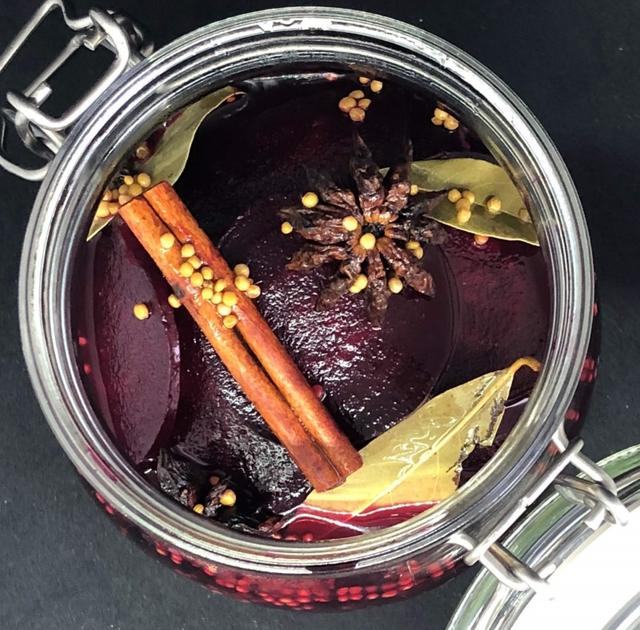
Venison filet with berries, mushrooms, and Jerusalem artichokes


Celeriac
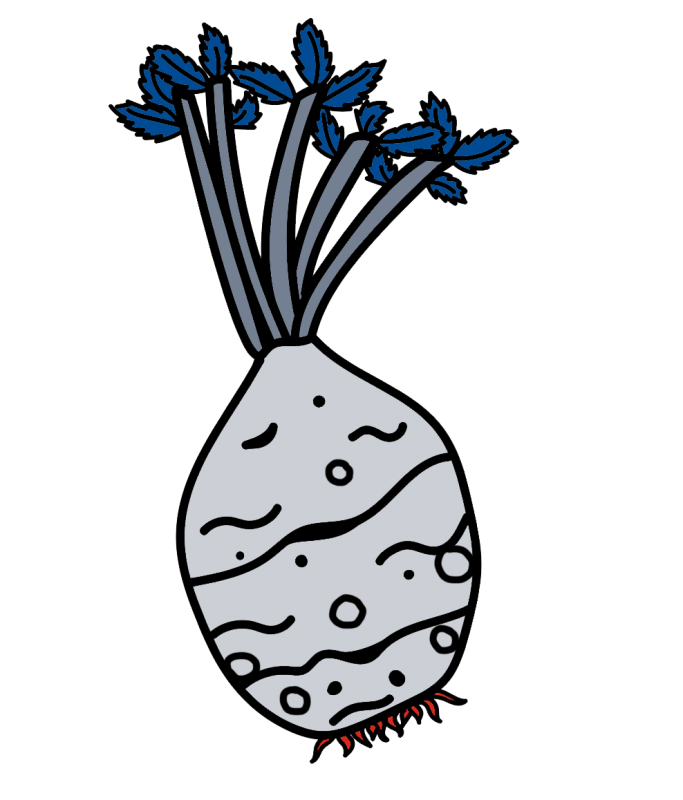
Celeriac can divide opinions: Is it your number one kitchen enemy or a beloved classic that you gladly include in your cooking?
Celeriac can have a somewhat tarnished reputation, as it is perceived by some as both boring and bland in taste.
If you also hold this opinion, the reason might be that you’ve previously gone for the largest celeriac you could get your hands on.
Several studies have shown that celeriac, regardless of size, has the same dry matter content.
What does this mean for you? It means that a large celeriac simply contains more water than a smaller celeriac. The smaller celeriac is therefore stronger in flavor.
So, it’s worth going for the smaller ones at the supermarket if you want a stronger and more pronounced flavor in the root vegetable.
The taste of celeriac is distinctive, and unlike both beets and carrots, which are best described as sweet, celeriac contains not only sweetness but also bitterness, sharpness, and umami.
Celeriac can help lower cholesterol, and its magnesium content, known for being muscle-relaxing, can improve your sleep quality.
The manganese content also counteracts osteoporosis, and potassium is also found in the root vegetable.
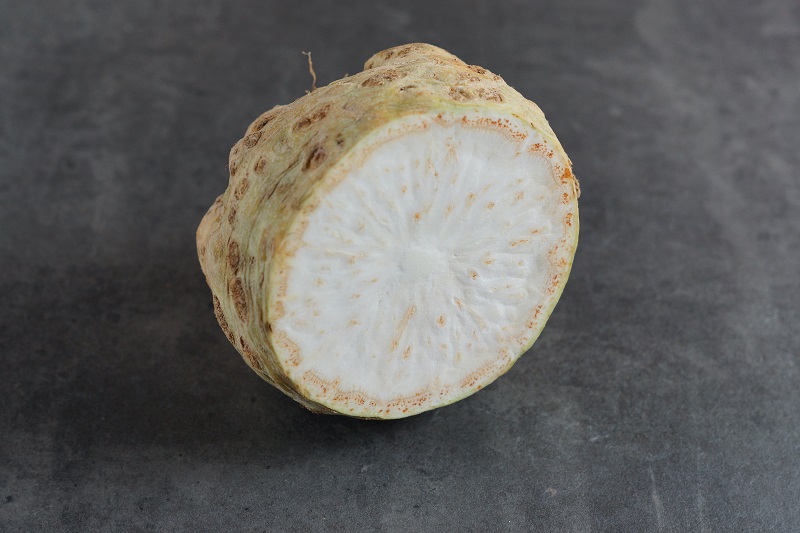
How can you prepare celeriac?
Both leaves and stalks can serve as wonderful flavor enhancers in various dishes. The stalks, better known as celery, can be sliced and included in a crisp salad with apple and finely shredded cabbage. Toss everything together in a mormor dressing, and it becomes a delicious, sweet, and crunchy side dish.
The bitter and sharp taste of celeriac is most pronounced when enjoyed raw, while the umami flavor and sweetness come into their own during cooking.
The root or bulb is peeled with either a vegetable peeler or a knife and can be baked, fried, pickled, or prepared in sous vide.
Celeriac can also be enjoyed raw. Try slicing it into paper-thin slices on a mandoline and marinating it in lemon juice. It tastes absolutely delicious and is a delightful, crunchy side dish to many dishes.
You can also try cutting the celeriac into thicker slices. Bake them soft as butter in the oven with a generous layer of salt on top, or dip the raw slices in egg and breadcrumbs before frying them.
Both celery puree and celery puree are another way to use this knobby root vegetable, and homemade chicken soup is naturally a must-have when talking about celeriac.
If you’re interested in reducing your meat consumption, it’s also ideal for lovely breaded celery steaks. Serve the “steaks” with hasselback apples and a pesto made from kale. The latter is also one of our October favorites.
If you want celeriac to play a less prominent role in a dish, it can also be used as a flavor enhancer in spaghetti bolognese or risotto. For example, you can choose to add it in a blended form.
More recipes with celeriac

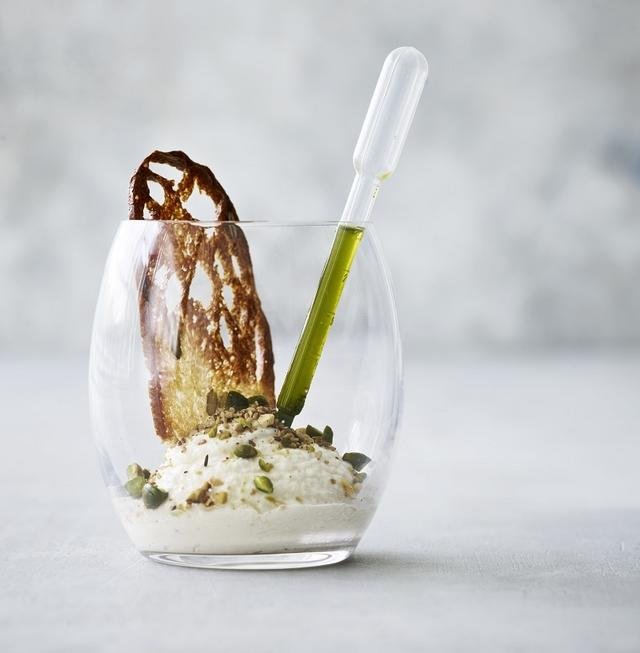
Cream of Salt-Baked Celeriac with Pistachio-Dukkah


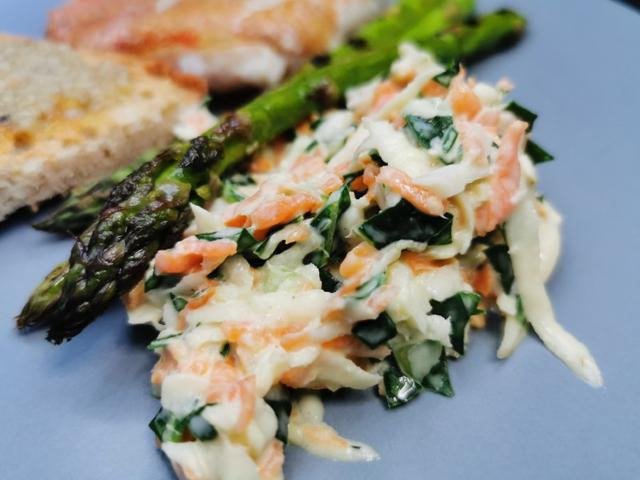
Coleslaw with Pointed Cabbage and Celery
Pigeon with Grapes and Celeriac (Pigeonneaux aux raisins et céleri save)

Pheasant

We love game, and pheasants are nothing less than a princely dish. In the mid-17th century, this medium-sized fowl was highly cherished among princes and large landowners.
The pheasant originally hails from Asia, but after more than 200 years as part of the Danish ecosystem, it has, with some goodwill, gained “citizenship.”
Every year, a large number of pheasants are hunted in Denmark, making this small fowl the most significant game bird here, as it is an essential source of hunting tourism and income for many Danish estate owners.
Pheasant can therefore be found relatively easily at butchers, supermarkets, or game dealers.
Pheasant meat is full of flavor and contains more protein and less fat than, for example, chicken – and it’s often cheaper.
How can you prepare pheasant?
Like with any lean meat, pheasant should be cooked with care to avoid it becoming too dry.
The whole pheasant is particularly suitable for being pot roasted, and if you cut it into pieces, the pheasant breast is well-suited for quick frying or baking in the oven with a couple of strips of bacon around it.
If you need guidance on cutting your pheasant, you’ll find a detailed guide here. It’s easy and straightforward.
The pheasant is relatively small, and depending on the amount of accompaniments, you should plan on about half to a whole bird per person.
Serve pheasant meat accompanied by a fatty element and some of the many beautiful colors you can harvest in Danish nature right now: Berries, nuts, fruits, and leafy greens.
Most of the bird can – and should – be used, and you can make fantastic meatballs and delicious pâtés from the minced pheasant meat. Additionally, use the legs in delightful braised dishes and the carcass to make soup and stock.
More recipes with pheasant
Baked Pheasant with Jerusalem Artichokes, Blackberries, and Morel Sauce

Kale
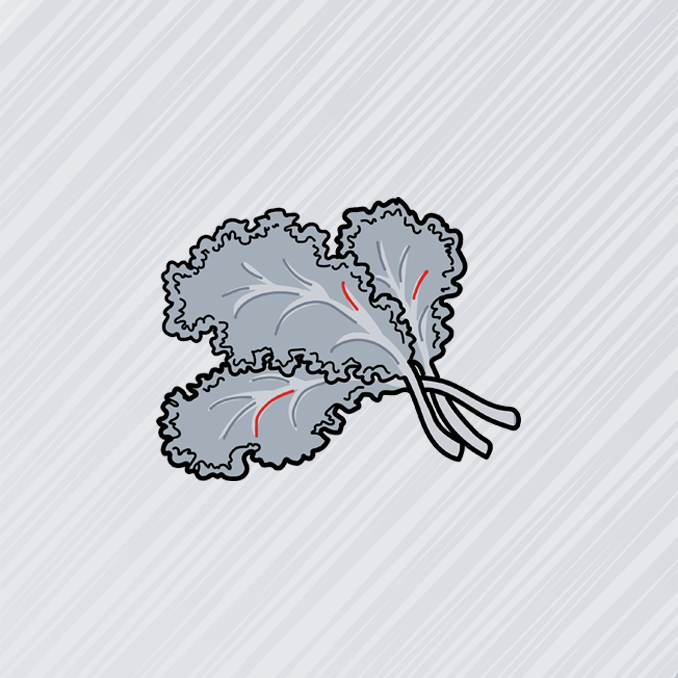
In October, it’s time to (kale it up) with some wonderful salads and other delicious, crunchy accompaniments!
Kale consists of large, curly green leaves and is a type of cabbage that does not form “heads” like cauliflower, for example.
If you haven’t yet made a deeper acquaintance with kale, or truly fallen in love with it, now’s the time to seize the opportunity.
There’s a burst of both flavor and nutritional value when we talk kale: The curly, robust leaves have a strong cabbage flavor that becomes sweeter and more aromatic when exposed to frost.
In addition, vitamins A and C make kale a super nutritious ingredient, rich in minerals and dietary fiber, while being remarkably low in calories.
Thanks to its high fiber content, kale satisfies hunger exceptionally well.
So, you can safely set aside any preconceptions about non-filling salad leaves.
The list of benefits of eating cabbage is long. Read more here.
How can you prepare kale?
Kale is much more than a greenish stew on the Christmas table.
Raw, kale is a leafy cabbage with a good bite. When enjoyed raw, it should therefore be finely chopped.
If you then massage the cabbage between your hands, it becomes even more delicate and easier to eat, and sweet, creamy dressings go beautifully with kale’s slightly bitter aroma.
Also, use the whole leaves as decorative garnish on a platter as a substitute for the classic iceberg salad leaf.
If you’re looking for ideas for fresh, delicious salads, you’ll surely find something exciting right here.
If you want a tasty health boost for your smoothie, you can add fresh kale to the blender: That way, you get a real power smoothie.
In meatballs, kale can also give a little extra on the health front. Just look at these healthy, green patties!
If you’re looking for inspiration for a healthy alternative to potato chips for Friday night relaxation, we strongly recommend making super crispy and thin kale chips. It may sound too good to be true, but we promise they can satisfy your snack craving!
Crisp roasted kale is really delicious as a side dish, for example in a luxury pita bread or with chicken in paper-thin filo pastry.
Store kale in a plastic bag in the refrigerator: First rinse it, then let it dry completely before wrapping it and refrigerating. It can then keep for up to three weeks.
More recipes with kale

Mushrooms
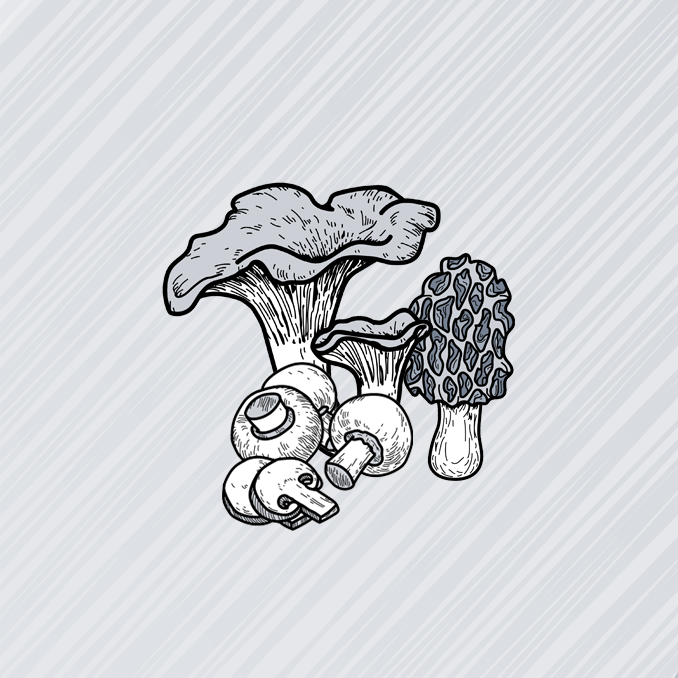
The Danish nature is one big pantry, and right now it is teeming with many flavorful edible mushrooms.
This includes field mushrooms, oyster mushrooms, chanterelles, trumpet chanterelles, porcini mushrooms, Judas ear, and bay bolete.
Mushrooms have a delightful umami flavor and can be a great supplement in many vegetarian or vegan contexts, where something might be missing in terms of depth and flavor.
If you’re a bit unsure about the different mushroom types, you’re safest sticking to those you find in the supermarket.
However, mushroom hunting is an exciting and adventurous activity, whether with family and friends or on your own.
We must emphasize that you should do your homework thoroughly before going mushroom hunting: Always familiarize yourself with the different mushroom groups and their distinctive characteristics. It’s important to approach this cautiously, critically, and systematically to ensure all the mushroom’s traits match.
Finally, we want to add that although we recommend caution, mushroom hunting is nothing to be feared.
When embarking on mushroom hunting, there are a few good tips worth considering:
- Pick only the mushrooms you recognize.
- Do not collect mushrooms in a plastic bag, as they can become moist and rot. Instead, use a basket where the mushrooms can breathe.
- Avoid picking mushrooms near busy roads: Mushrooms easily absorb harmful heavy metals from car exhaust.
- Use only fresh mushrooms in your cooking.
- Do not soak mushrooms in water, as some risk losing their flavor.
- Always cook wild mushrooms before eating: They must be thoroughly boiled or fried.
- If you suspect mushroom poisoning, seek medical advice and bring the rest of the prepared dish or the mushroom for analysis.
How can you prepare mushrooms?
There’s almost nothing mushrooms can’t do.
They can be eaten raw, but their full flavor potential is unlocked when cooked.
Mushrooms can either play a major or minor role in a dish: Either a fundamental one, like in this champignon a la creme, mushroom tart or inspired by these fried mushrooms with garlic – or camouflaged in a winter hit, pork tenderloin stew, in a chicken salad, in a classic risotto or in a leek tart.
A ragout made from mushrooms and potatoes is also a delightful autumn dish – see a delicious recipe here.
If you haven’t tried pickling your own mushrooms, you’ll be surprised at how delicious a side dish it can be. For this, you can follow this recipe.
Speaking of side dishes, a chanterelle stew is a great companion to pork tenderloin. See the recipe here.
If you’re in an experimental mood, try serving a mushroom dashi the next time you’re in charge of the appetizer.
More recipes with mushrooms
Crawfish in Creamy Mushroom Sauce


Creamy Baked Pasta with Mushrooms and Spinach
