

Hunting: Becoming One with Nature
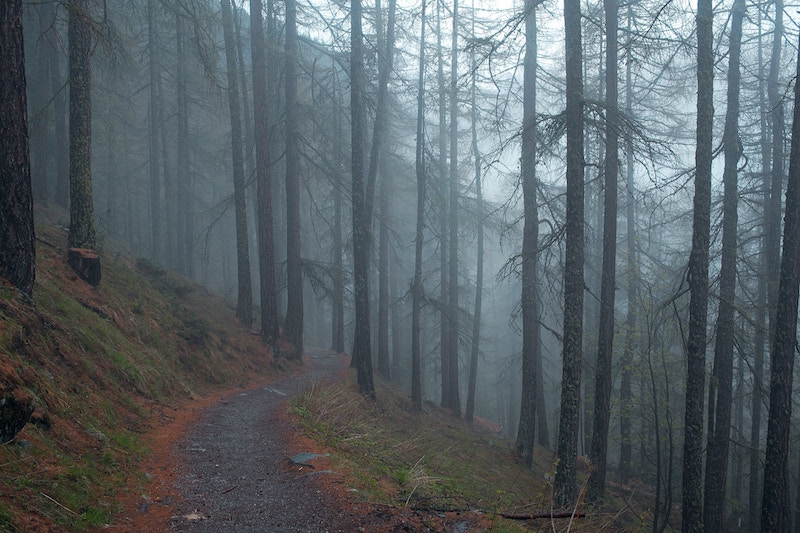
What was once essential for human survival has today become a beloved hobby, if not a lifestyle, for many.
There are many proud traditions associated with hunting. Becoming one with nature, feeling the surroundings, and sharpening all your senses is just one of the many beautiful aspects of venturing out to hunt in the Danish meadows.
In addition to the magnificent experience that hunting can offer, the hobby can also serve as a means for us to regulate and maintain the population of certain animal species. This helps manage hunger and disease risks that can arise if an animal population becomes too dense in a given area.
Adherence to hunting legislation, good hunting morals, and respect for hunting ethics are, of course, prerequisites for the continued acceptance of hunting wild animals in the Danish countryside.
The Origin of the Pheasant
The pheasant, considered the most significant game bird in Denmark, originates from Asia but has been introduced to Europe over centuries. Therefore, the pheasant is not a natural part of the Danish ecosystem, although its nearly 200-year history here has given it a sort of naturalization.
Hunting Season
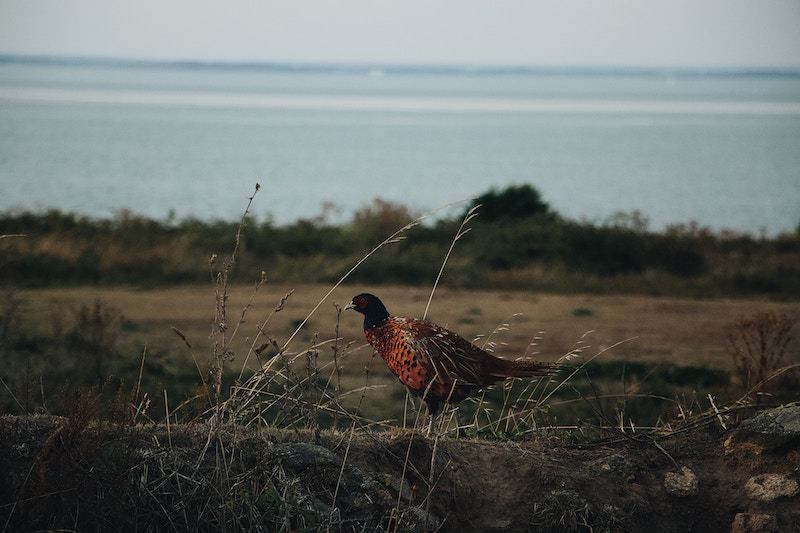
The pheasant hunting season runs from October 1st to January 31st, but you should always check local hunting times, as revisions occur frequently.
Carving / Butchering
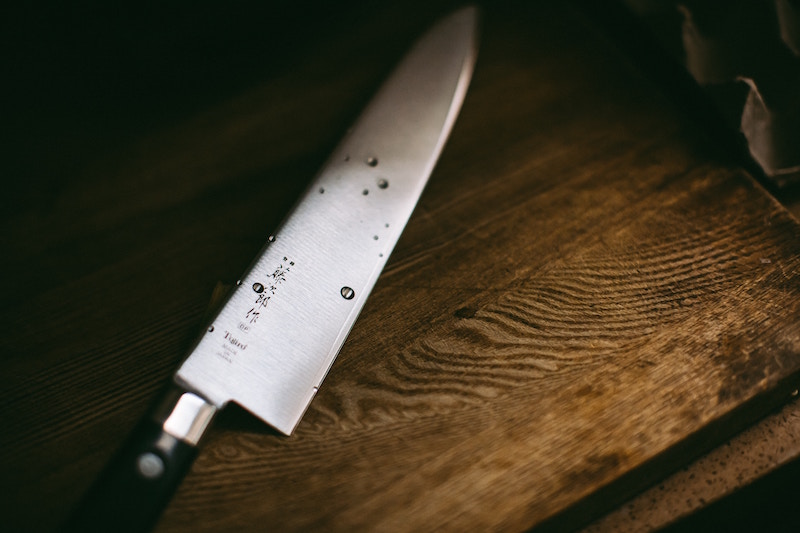
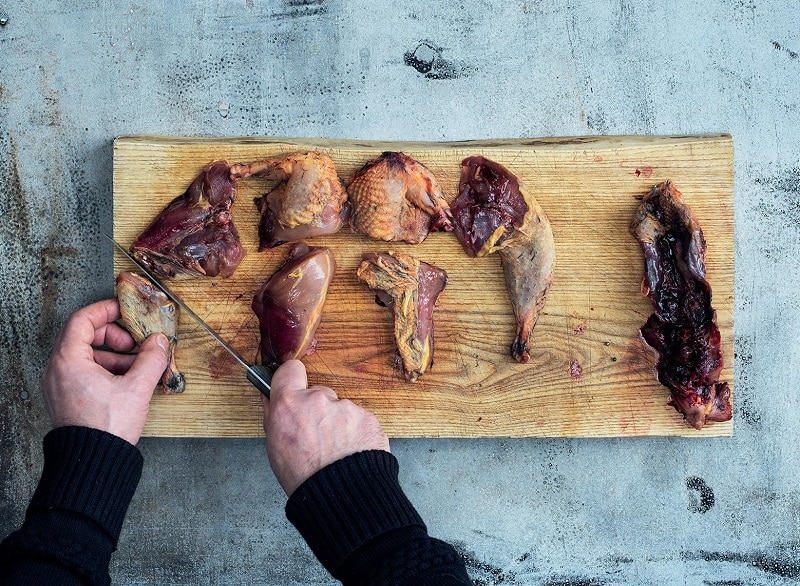
No matter how new you are to the Danish “hunting grounds” and meadows, the hunting experience is naturally completed by being able to butcher and prepare your own catch.
Butchering a pheasant is, in fact, considerably less cumbersome than butchering deer, and we would go so far as to call it one of the basic skills you should acquire as a hunter: Poultry carving.
Not every bird you hunt will be suitable for roasting whole, which could be due to the bird being slightly too lean, a bit too old, or some other reason.
Almost all parts of the bird can and should be used: The legs and breasts can, for example, be grilled or roasted or used in various stews or simmering dishes, while you can make soup and stock from the carcass.
We will guide you through the process of carving the pheasant below.
Carving Instructions
- Place the plucked pheasant on its back on the cutting board.
- Make a cut on the inside of one thigh. Use your fingers to push the skin aside so you can see what you’re doing and where you’re cutting.
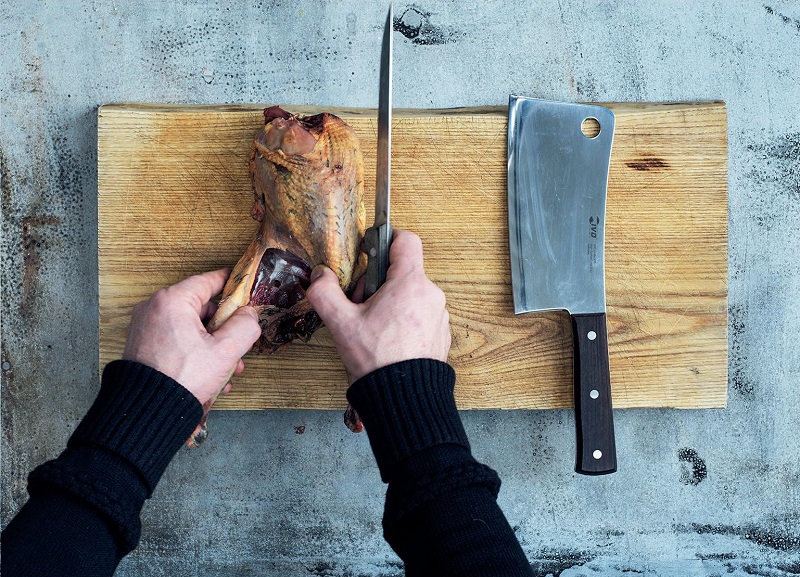
- Continue cutting until the thigh is separated from the body.
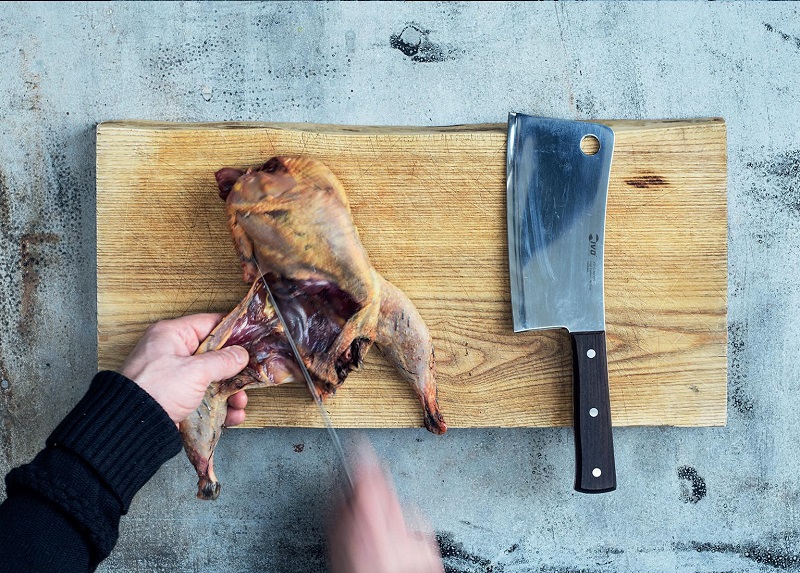
- Repeat the process on the opposite thigh, leaving you with three parts: Body and two thighs.
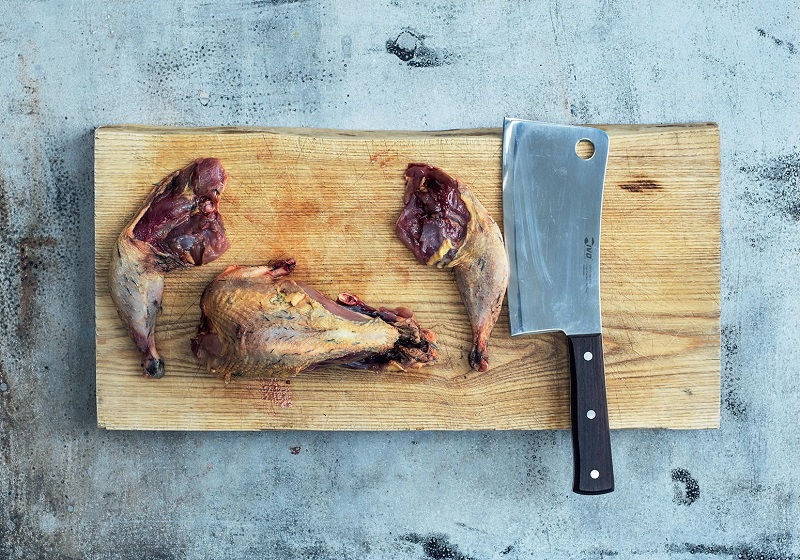
- Now cut the backbone from the breast piece.
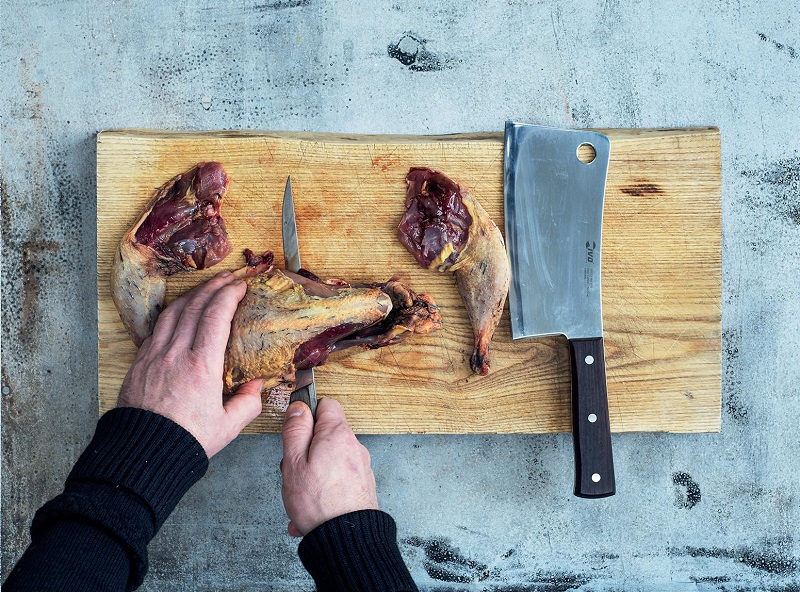
- Set the backbone aside. Besides the backbone, you now have a breast piece and two thighs.
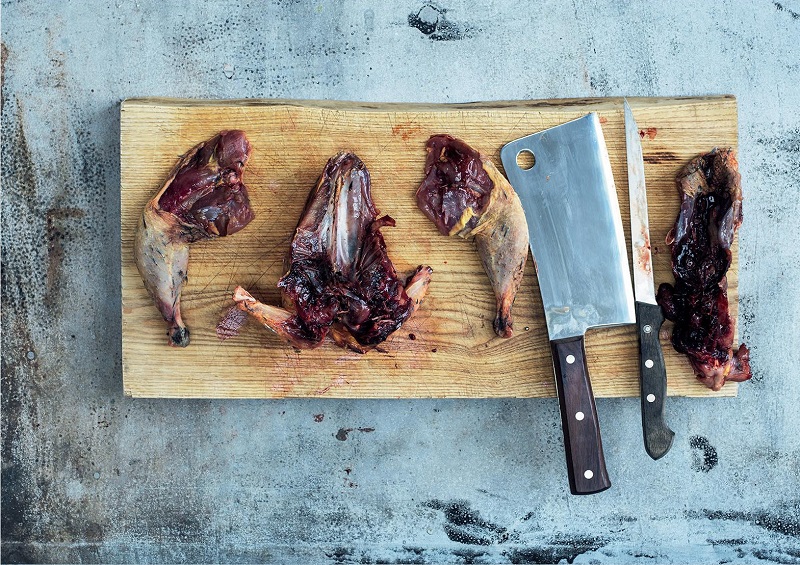
- Divide the breast piece in two lengthwise.
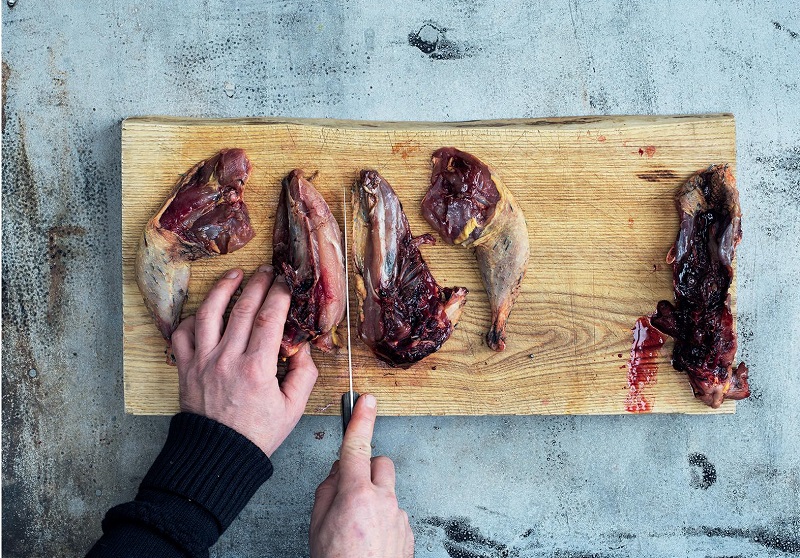
- Cut each of the two breast pieces in half.
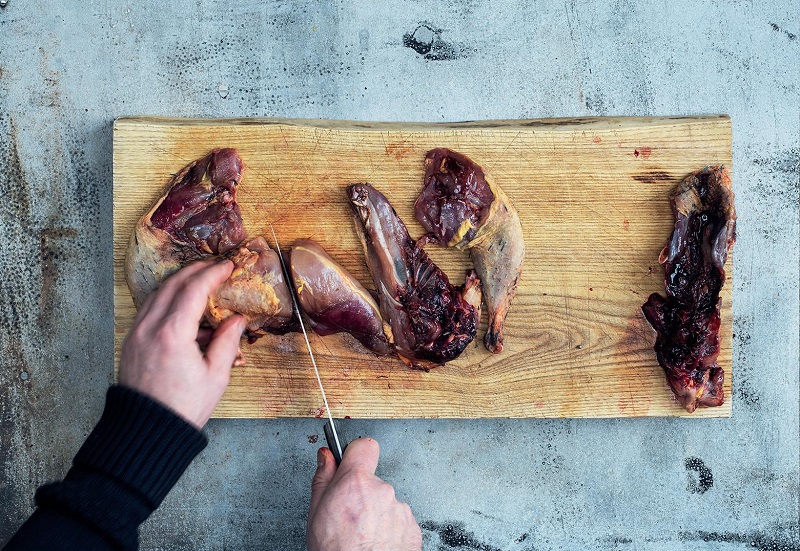
- Divide both thigh pieces in two. Cut across right at the fat line.
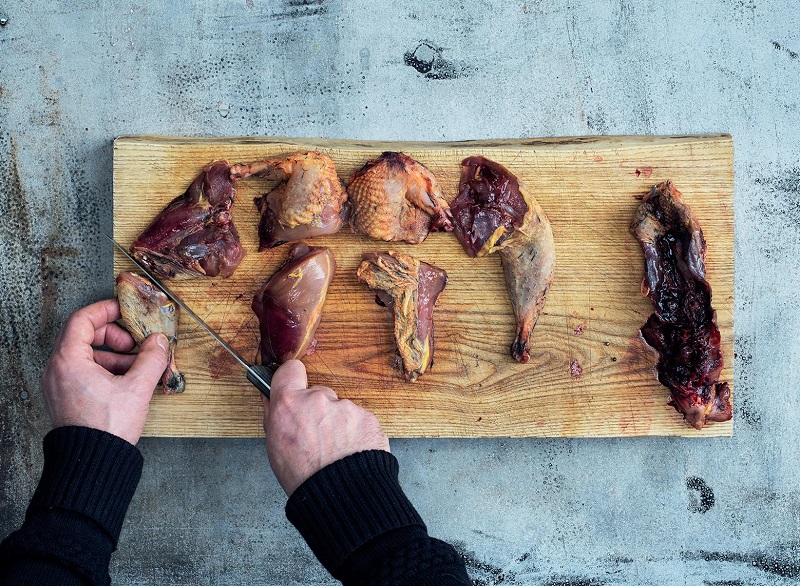
- You have now butchered your – possibly first – pheasant, and it is ready for preparation. Well done – and bon appétit!

The images are from the book: “Walk on the Wild Side“.