

We receive numerous questions regarding the advantages and disadvantages of using sous vide. Therefore, we have teamed up with a supplier of sous vide equipment: Foodfreaks.dk, who will share their insights on the technique here.
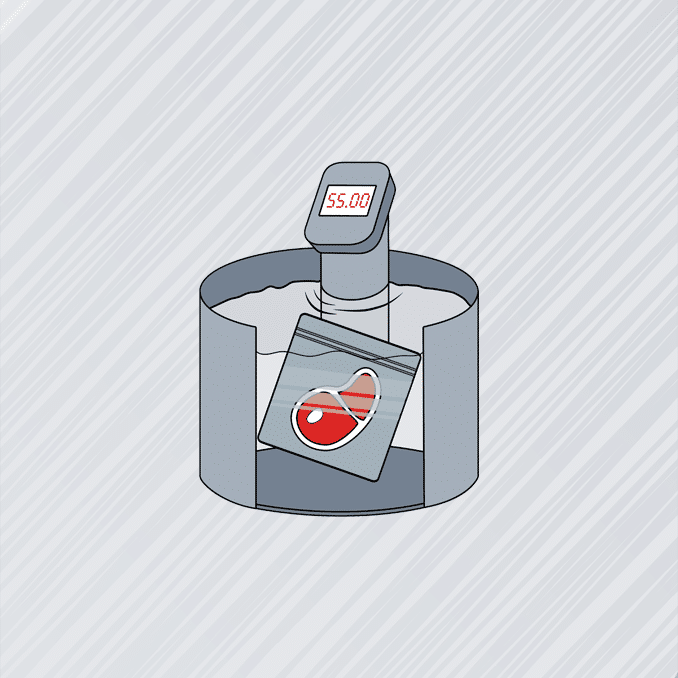
Sous vide (pronounced ‘soo veed’) is French for ‘under vacuum’. The method involves cooking food over a long period at a precise and low temperature. The food is sealed in a vacuum bag and placed in a water bath set to the desired temperature and time. The water in the sous vide container should be at the temperature you want the food to have.
Sous vide has long been recognized as a cooking method in the butcher and chef world. More and more home cooks are also trying their hand at the technique. Here you can find answers to frequently asked questions about sous vide.
Why use the sous vide method?
Cooking food using the sous vide method is simpler and less stressful than traditional cooking methods. You don’t have to constantly worry about achieving the perfect temperature, as the food essentially cooks itself. This makes sous vide different from using a pan, pot, or oven. Using vacuum bags in a water bath also means you don’t need to eat the food as soon as it’s done; it can stay in the water until you’re ready to serve.
Which foods are suitable for sous vide?
Virtually all types of foods that require heat cooking can be sous vide-cooked. This includes meat, vegetables, eggs, and fish. However, bacon strips and other thin items that don’t need to be tenderized are exceptions.
When should food be salted and seasoned?
You can advantageously salt and season your meat before sous vide cooking to enhance its flavor and tenderness. If the meat needs more salt or freshly ground pepper after serving, it can be added then.
How and when should meat be seared?
Meat should be seared at high heat to achieve a uniform and crispy crust. This can be done in various ways, such as using a pan, grill, or blowtorch. The meat can be seared either before or after sous vide cooking, depending on your preference.
What temperature should the water bath have from the beginning?
You can use either cold or hot tap water in the sous vide container. Hot tap water typically contains more bacteria than cold water, but this isn’t significant here since the food and water don’t come into direct contact.
Can the water in the sous vide container be reused?
Due to potential bacterial contamination, it’s advised against reusing the water in the sous vide container. Changing the water also ensures it doesn’t retain odors from previous sous vide cooking.
Can frozen meat be sous vide cooked?
If you’ve forgotten to thaw meat before cooking, it’s not an issue. You just need to sous vide cook the meat for a little longer than originally planned. Depending on the type of meat, you can add between 20 and 30 minutes to the cooking time.
Can sous vide leftovers be reheated?
All kinds of sous vide leftovers can be reheated the day after serving. This can be done by vacuum-sealing the leftovers and placing them in a container with warm tap water for about fifteen minutes or a bit longer.
How to remove limescale from sous vide equipment?
You can often find answers to this question in the user manual provided with your sous vide equipment. Demineralized water, descaling agents, or vinegar are useful substances for the sous vide container.
Is the risk of bacteria higher with sous vide than traditional cooking?
Foods are cooked at lower temperatures in sous vide than in traditional methods like using a pot or oven. However, since sous vide is a slow cooking method, bacteria cannot survive. Therefore, the risk is not higher if you cook your food sous vide instead of using more traditional methods.
Why are some vacuum bags ribbed and others smooth?
Different vacuum machines require different bags. Smooth vacuum bags are suitable for a chamber vacuum sealer, where the bag is placed in the vacuum chamber. Ribbed vacuum bags are suitable for more common vacuum sealers, typically used at home.
Sous vide is a technique that may require some practice. But once you’ve tried sous vide a few times and gained basic knowledge of the method, you can achieve both an efficient and delicious cooking of the respective food.