

Bread Techniques
I have always been fascinated by how bread works.
For instance, I am impressed by how a simple folding technique can make your French bread more airy and stable:
At the same time, you can make a sandwich bread easier to spread by making it more resistant to the butter knife by turning it 90 degrees and allowing it to rise in that direction:
When I was first introduced to the fascinating world of molecular gastronomy in my private kitchen in 2017, the thought of how it could help me with bread has been something in the back of my mind.
When I heard about the product Xanthan gum for the first time, I had no doubt that it needed to be tested in our baking.
Xanthan gum falls under the E-number E415 and can, among other places, be purchased at Molekymi.dk.
According to Wikipedia: “It can be produced from simple sugars using a fermentation process, and the name is derived from the bacteria used, Xanthomonas campestris.”
The best way to explain what it can do is to describe it as an emulsifier/stabilizer that is good for thickening something with. It is often used in gluten-free bread as it can bind the various ingredients together, which is something gluten typically does.
The product does not change the taste or color of your products, so it is super easy to add,
We generally bake a lot at home and often face the problem that some bread becomes too dry before we get to eat it. Of course, we turn some of it into homemade breadcrumbs, but we would prefer to eat it as bread.
In bread, the product is brilliant as it binds the oil (fat) and water in the dough together. It is typically when the liquid in your bread evaporates that it becomes dry. Xanthan gum delays that process and keeps it juicier inside while the crust remains crispy for longer.
Experiments with Xanthan Gum in French Bread
The best way to compare bread with and without Xanthan gum is to test it simultaneously.
What we did was divide this French bread recipe in two and add 1 tsp. Xanthan gum to one half:
Recipe 1:
- 1/2 tbsp. dry yeast
- 1/2 tbsp. sugar
- 1/2 tbsp. coarse salt
- 325 grams wheat flour
- 2.5 dl lukewarm water
Recipe 2:
- 1/2 tbsp. dry yeast
- 1/2 tbsp. sugar
- 1/2 tbsp. coarse salt
- 325 grams wheat flour
- 2.5 dl lukewarm water
- 1 tsp. Xanthan gum
Mix yeast, sugar, coarse salt (also Xanthan gum in recipe 2), oil, and water in a bowl – for example, using a stand mixer.
Add the flour gradually until the dough is smooth and elastic.
Let the dough rise for 30 minutes under a shower cap or cloth.
Flatten the dough on a floured surface into a large rectangle.
Fold the ends towards the middle and press the folds together.
Roll the dough into a loaf, roll from the top down.
Now place both doughs in a lined baking pan, seam side down – they should be next to each other.
Let the bread rise for 30 minutes.
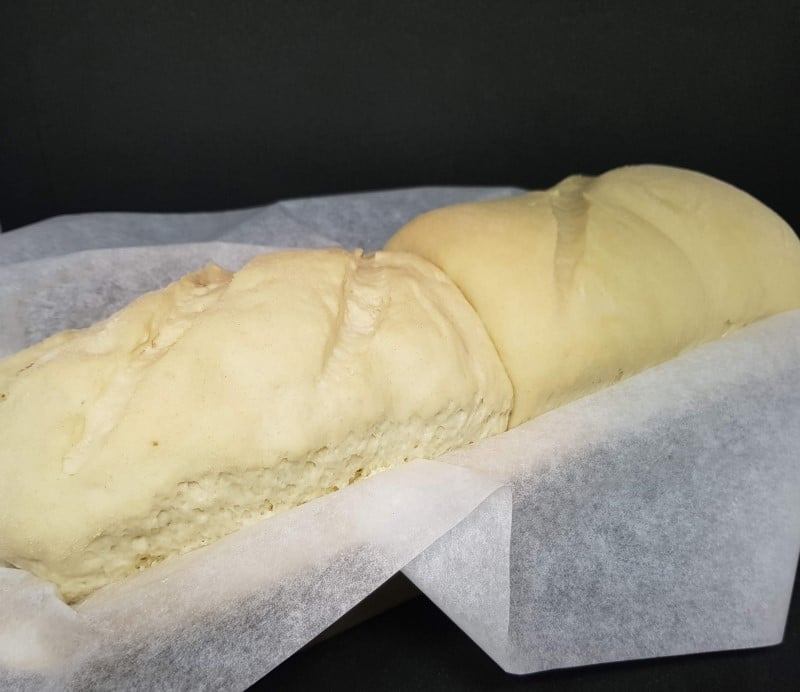
Already now you can see the huge difference in the two doughs:
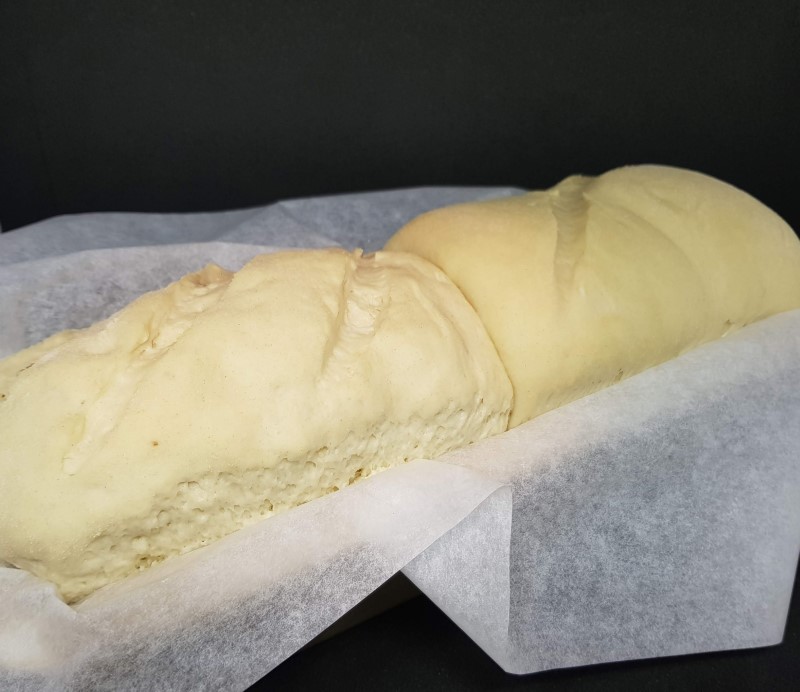
The dough with Xanthan gum is more elastic and pliable while its surface is smooth and glossy.
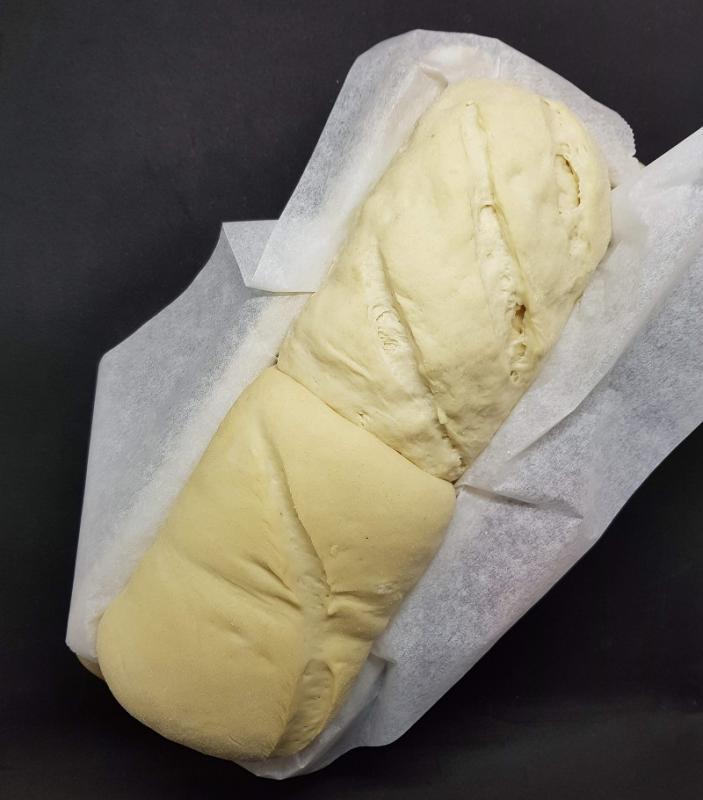
Score the bread and sprinkle it with plenty of flour so the crust becomes crisp and doesn’t burn.
Baking time: 10 minutes at 250 degrees Celsius with fan. Turn down to 200 degrees Celsius with fan and bake for 20 more minutes.
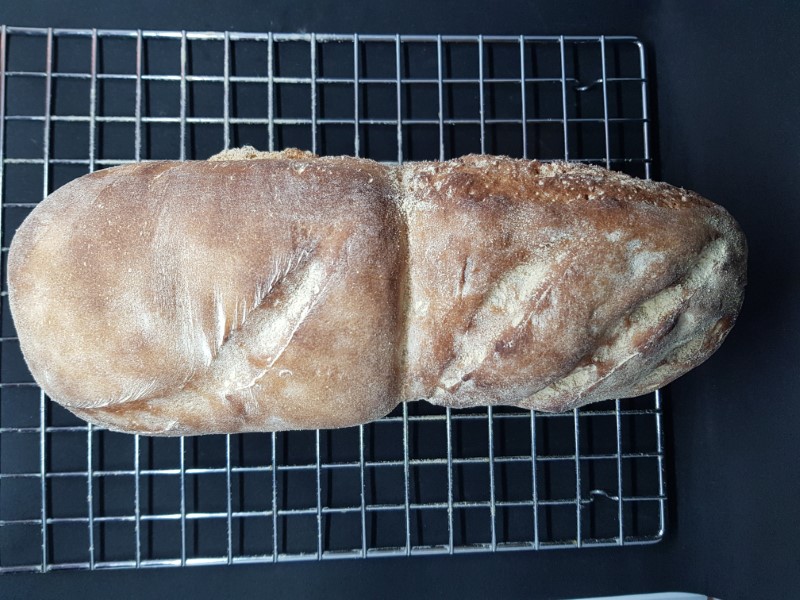
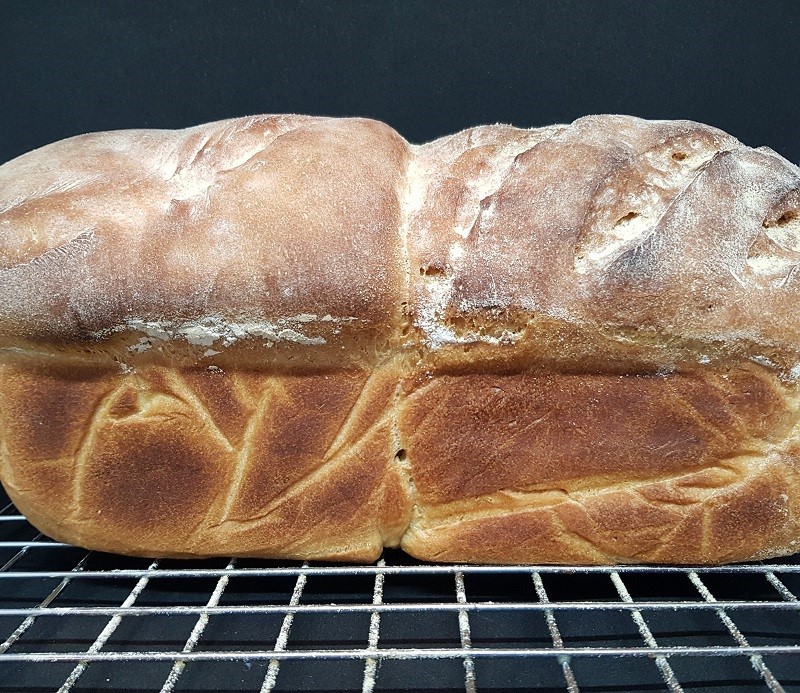
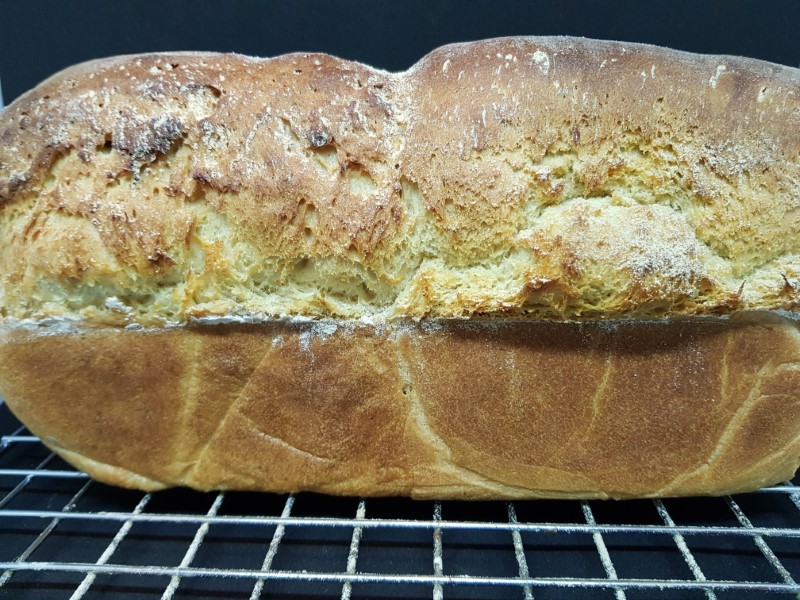
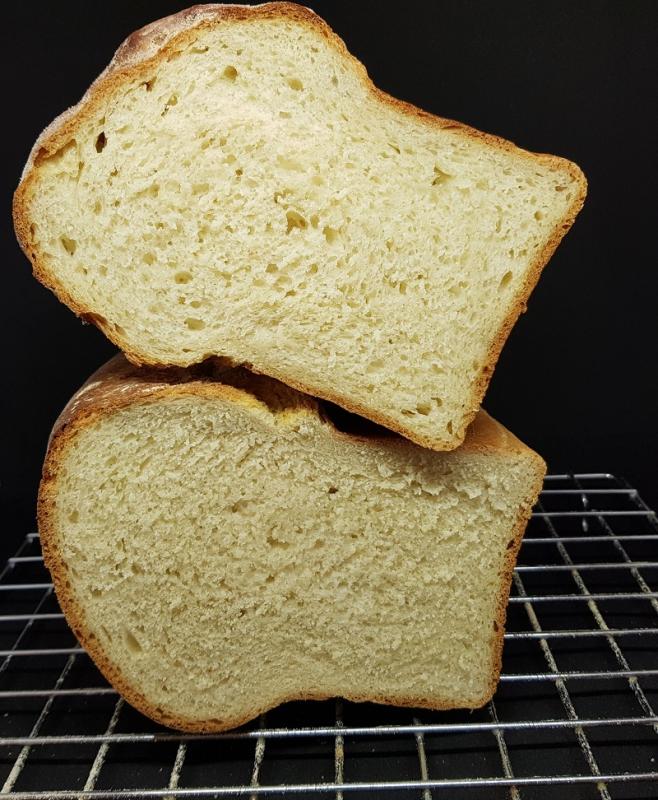
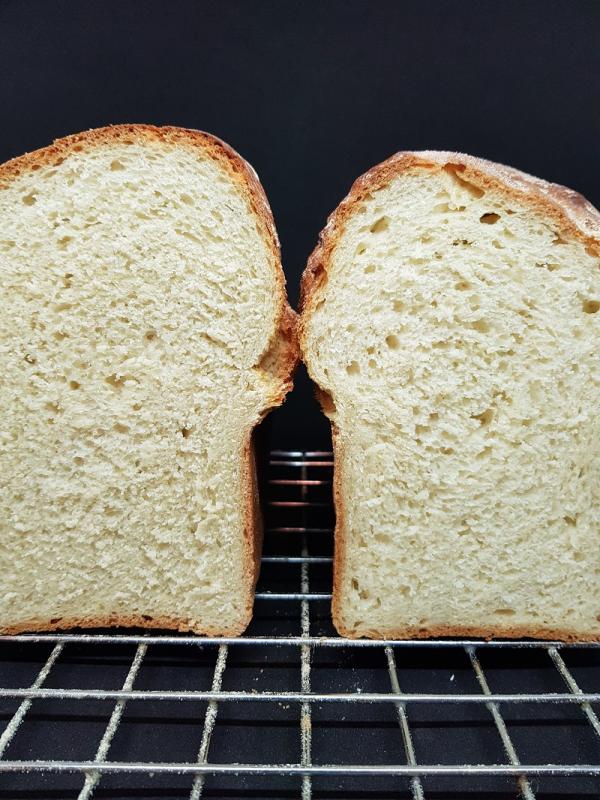
The difference between the two bread types was significant.
The bread with Xanthan gum had risen slightly more and the tasting of the bread on the day it was freshly baked was the same.
On the next day, there was a noticeable change. Xanthan gum bread was just as delicious and fresh as the first day.
On the third day, the difference was enormous. The “regular” French bread had become boring and dry, whereas Xanthan gum French bread tasted like it was baked the day before.
This is a huge recommendation from us if you know you won’t finish your bread on the day of baking without the additive.
We have also made moist buns using it. You can read that recipe here.