


Most food items can be frozen, and if you have plenty of freezer space, it can become your best trick to save money. At the same time, you avoid throwing away a lot of food just because it’s a few days away from expiring. This way, you can shop for a long period and avoid filling up the trash bin just because you consume less than expected at the dinner table.
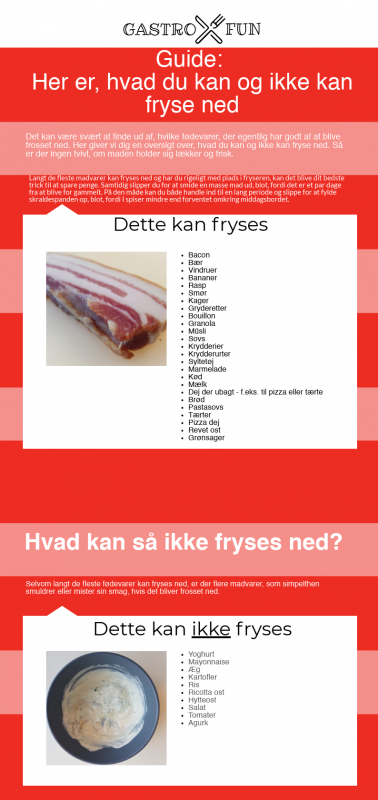
These foods can be frozen
There are incredibly many different types of food that can be frozen, and some of them might surprise you. For example, you can easily freeze berries, bananas, and grapes! It can even be really nice to have them in the freezer, ready for making smoothies or ice cream. You can even freeze jam, jelly, and preserves!
Another common misconception is that cake and unbaked dough cannot be frozen. They certainly can! It can be really convenient to have pizza or pie dough ready for making a quick dinner. You can also easily freeze bread and prevent it from becoming moldy. A good trick is to take half of the bread package and put it in the freezer right after purchasing it.
The list of foods that can be frozen is so long that it’s easier to mention what cannot be frozen. For example, stews, sauces, and all kinds of meat can also be frozen.
These foods cannot be frozen
Although most foods can be frozen, there are several food items that simply crumble or lose their flavor when frozen. This is especially true for soft cheeses like Ricotta, cottage cheese, and cream cheese, as they have a high water content. Yogurt also doesn’t fare well when frozen. However, you can freely freeze other dairy products like butter, shredded cheese, or even milk. Vegetables like cucumber, lettuce, and tomato are also not suitable for freezing. It’s better to stick to frozen vegetables, which are already purchased frozen. Except for spinach, these can be refrozen.
Rice loses its texture and crumbles when frozen. So if you don’t want rice with a porridge-like consistency, they should not be frozen. Fortunately, rice is one of those foods that keep relatively long in the kitchen pantry.
Also, remember that fish and shellfish are extra sensitive to freezing. These should not be refrozen, as it can lead to a lot of bacteria and significantly degrade the quality of the food. Eggs should also not be frozen and must always be eaten fresh. Conversely, if your cake, bread, or tart contains eggs, they can still be frozen.
In general, there are more foods that can be frozen than those that cannot, so think twice before just tossing the food into the trash bin. This way, you can save money in the household and significantly reduce your food waste.
Source: https://kalynbrooke.com/frugal-foodie/list-of-foods-you-can-and-cannot-freeze/