


Meat – Iberico French Rack
GastroNerds appreciate high-quality food. Normally, we associate caviar, foie gras, Kobe/Wagyu, truffles, and oysters with the most luxurious and delectable foods one can eat. In our world, the Iberico pig is in the same caliber, and we have found one of the most exquisite cuts for you:
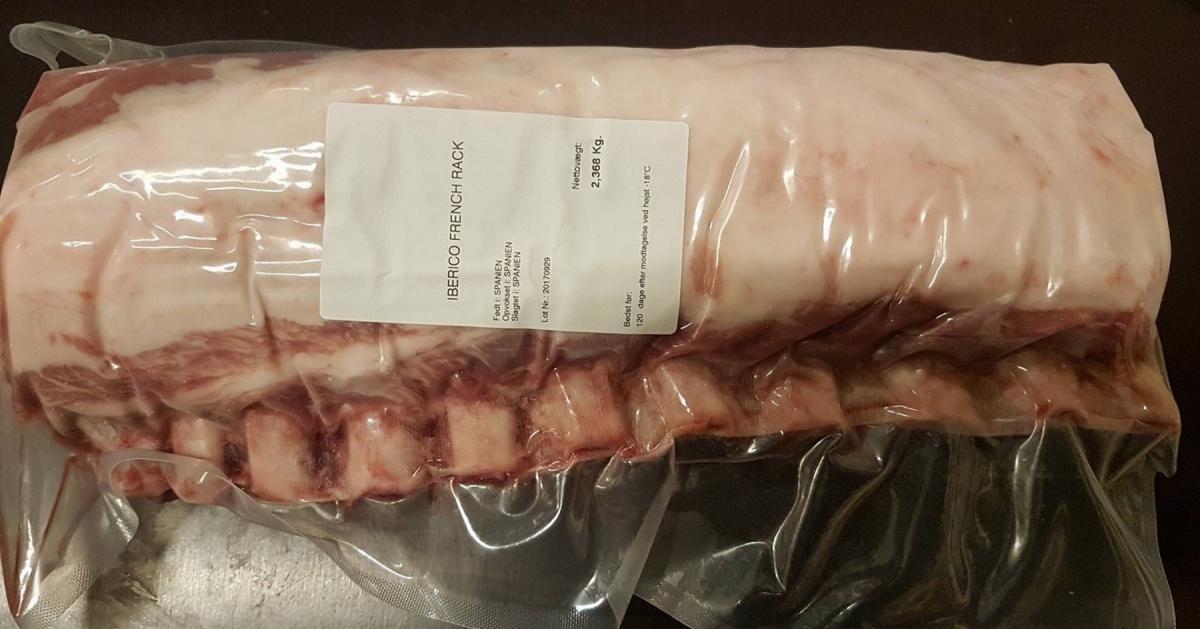
Iberico French Rack. This cut resembles a rack of lamb, and we can’t think of anything more grandiose to serve than an incredibly delicious, tender, and juicy piece of meat that still has a bone attached.
Iberico pigs – where have you heard about them before?
Most people are familiar with either Iberico ham or black-footed ham, which is extremely delicate. The pig has many names, also known as Pata Negra (Spanish for black foot) or Iberico bellota. Iberico means “Spanish” and refers to where the pig comes from, while bellota means “acorn” and refers to the pig’s diet. The pig’s “nickname” comes because the breed (most often) has black hooves and dark skin.
The breed has specifically evolved to the conditions in the southwestern part of the Iberian Peninsula, especially in the area around the border between Spain and Portugal. Its dark skin and limited hair make it better able to withstand the often extreme temperatures of summer. For eating quality, it is particularly the breed’s tendency to store fat within the muscles that gives its meat particularly high quality. A fine Ibérico ham can, among other things, be recognized by the white stripes of fat within the meat. This contributes to the meat’s tenderness and juiciness, but especially to the complexity of its flavor.
The breed eats many acorns, which means their fat contains a high amount of monounsaturated fatty acid oleic acid (the main component in olive oil), considered to be particularly healthy. In Spain, you can actually buy ibérico pig fat in supermarkets for cooking purposes.
The acorns, called bellota in Spanish, are an important part of the story of the Ibérico pig. They are its ideal food because the breed concentrates all the aromatic substances from the feed it eats. The free-range upbringing contributes to the formation of fat marbling in the pig’s muscle mass, which gives the meat a fatty, nutty umami flavor.
Preparation
We recommend cutting the French rack into “steaks,” vacuum-sealing them, and cooking sous vide/water bath at 58 degrees Celsius for 2.5 hours, followed by browning. The meat is delicious and juicy and can almost stand alone, so here it is served with celeriac puree and a spherification of apple wine and lemon.

The meat is found at Steak-Out, which always has various delicious Iberico pork cuts in stock.