
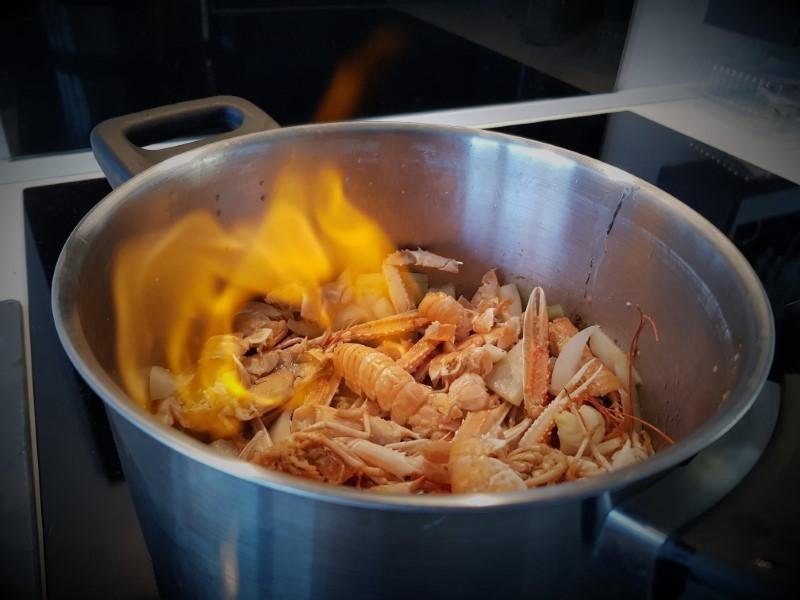

A delicious and simple recipe for a stock made from the shells of langoustines. One of the keys to extracting a lot of good flavor from them is to flambé them at the beginning and then simmer the flavor into the water afterward.
Recipe for langoustine stock
A delicious and simple recipe for a stock made from langoustine shells.
One of the keys to getting a lot of good flavor out of them is to flambé them at the beginning and then boil the flavor into the water afterward.
The langoustine shells can easily be replaced with other shellfish shells, such as shrimp, lobster, crayfish, crab, etc.
Langoustine Stock
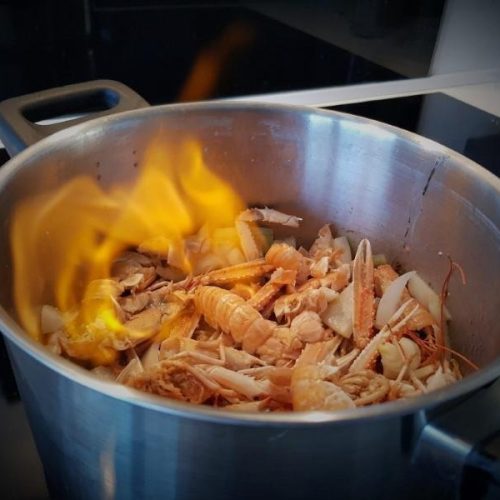
A delicious and simple recipe for a stock made from the shells of langoustines. One of the keys to extracting a lot of good flavor from them is to flambé them at the beginning and then simmer the flavor into the water afterward.
Ingredients
- 9 pcs. Lobster
- 2 pcs. Onion
- 14.2 gram Cognac Can easily be whiskey/rum/sherry
- 1 l Water
Instructions
- Start by removing the tails of the langoustines and set them aside for separate preparation.
- Cut the onion into four pieces and sauté them in a bit of neutral oil over medium-high heat for a short time in a heavy-bottomed pot.
- Take everything that's left from the langoustines (shells, heads, roe, etc.) and place it in the pot. Use a wooden spoon to crush the heads and shells into small pieces to extract all the flavor. Pour in the alcohol and light it on fire, let it flambé for 30-40 seconds. Flambéing helps to bring out the sweetness from the shells into the stock.
- Add the water and let it simmer with the lid on the pot.
- After about half an hour, strain the stock and discard the shells and other solids. Let the stock reduce to half its volume without the lid on.
- Then, the langoustine stock is ready.