
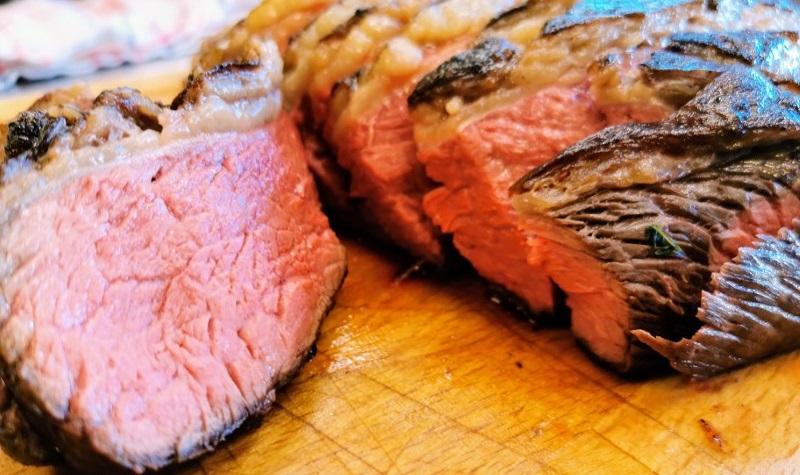


Recipe for culotte sous vide
 Culotte roast is a classic on Danish dining tables. It is the traditional, safe choice when you have guests over for dinner and when it needs to be a bit “fancier.”
The culotte is not exactly cheap, and you obviously want to get the very best out of your culotte. You’ve come to the right place.
I will guide you here, step by step, in the sous vide preparation of the absolute best culotte roast, and the method ensures you the same perfect result every single time.
Among many other things, I will go over times and temperatures, and you’ll also get the guide on how to correctly cut the culotte afterwards – it is done a bit differently than, for example, a tenderloin.
Advertisement: You can buy delicious culotte roasts from our sponsor Mr. Beef here.
The difference between culotte and cuvette
Yes, as they lie there in the refrigerated section, they can indeed look very similar.
Both the culotte and the cuvette have the triangular shape that makes them both so easily recognizable – but difficult to distinguish from each other.
The cuvette is the significantly cheaper “cousin” of the culotte. The cuvette is located at the front of the cow’s leg. The muscles here are used a lot, and the more strain a muscle is subjected to, the more connective tissue will form in the meat. The amount of connective tissue is what makes meat feel more or less tough.
The culotte, which is a lot more expensive than the cuvette, is located at the very back of the cow’s rear above the tail. The culotte is therefore part of some muscles that are not subjected to significant strain. And hence, the culotte is more tender and fine in structure than the cuvette.
Both, however, have in common that the meat fibers run in different directions. While a tenderloin is quite straightforward to cut into slices (it should be cut in the same direction all the way through), both the culotte and cuvette need to be turned during slicing. I’ll show you all of that.
Culotte sous vide
The culotte is one of the very tender cuts of beef. What the sous vide method is particularly good at is tenderizing meat. So one might ask how necessary it is to cook a culotte with sous vide.
There are still advantages to sous vide cooking a culotte roast: you can get an even more tender culotte with sous vide than with traditional cooking methods like in the oven, and you don’t have to keep an eye on a thermometer to monitor the core temperature.
Your sous vide machine is already set to the desired temperature. You just need to keep an eye on the time.
Thanks to the long, gentle cooking, it’s also not crucial if you accidentally give the culotte 20 minutes “too long.”
Once you’ve hit the time and temperature you think are perfect, you’ll be guaranteed the same perfect result EVERY time from then on.
Culotte sous vide time and temperature
Time and temperature. That’s all we need to have in mind when we talk about sous vide. The rest of the work, you can – somewhat rudely put – say is left to your sous vide machine.
How long your culotte roast should be in your sous vide depends on the quality and thickness of the meat, which can vary from time to time.
The better quality you’ve bought, the shorter time you can “allow” yourself to give the culotte in the water bath.
Personally, I always go to the butcher and buy good quality meat. The culotte I’m using here, for example, is bought from Kødbilen and comes from organic Danish beef cattle.
If you’re unsure about the quality of your particular culotte roast – if, for example, you found it in the refrigerated section at the supermarket or if it was bought as “last sale date” – it’s better to go up in time.
That was the cooking time.
When it comes to the temperature, it primarily depends on how you prefer your meat. If you like it well done, you need to go all the way up to 60 – 64 degrees Celsius. If you prefer it medium, you should go down to 56 – 59 degrees Celsius, and for medium rare it should be 53 – 55 degrees Celsius. For rare, you need to stay within the range of 49 – 52 degrees Celsius.
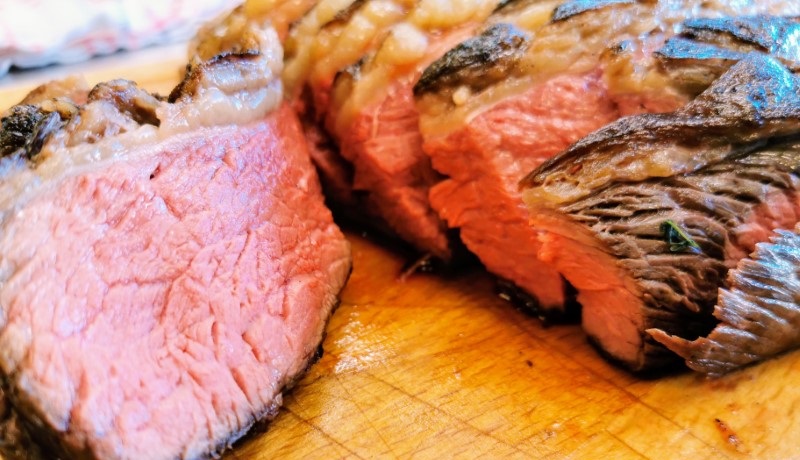
I always cook my culotte medium rare, and I think that’s where the roast is perfectly tender and juicy.
If you want to learn more about the ideal water temperatures for different beef cuts, you can find a table here.
Culotte sous vide sear and rest time
First and foremost: Rest time is not necessary when we cook with sous vide. So that’s clear.
When you take the culotte out of its water bath, it is essentially cooked and can be sliced and eaten immediately.
But wait a minute: now the culotte needs a delicious sear!
You can give it this in various ways.
Here, your regular frying pan or grill pan is your friend, but you could also choose to throw it on the grill or give it a go with a blowtorch.
It’s more or less irrelevant which method you choose. The most important thing is that the stove/grill should be at full blast.
I usually use the frying pan, where I throw some ghee on. However, the blowtorch is actually ideal in this case because it’s great for cuts that don’t have a uniform surface.
Just remember, the culotte is already cooked, so it should only touch the pan for a few seconds.
And again, you don’t need to let the culotte rest afterwards. It’s now ready to be sliced into pieces.
Cutting the culotte
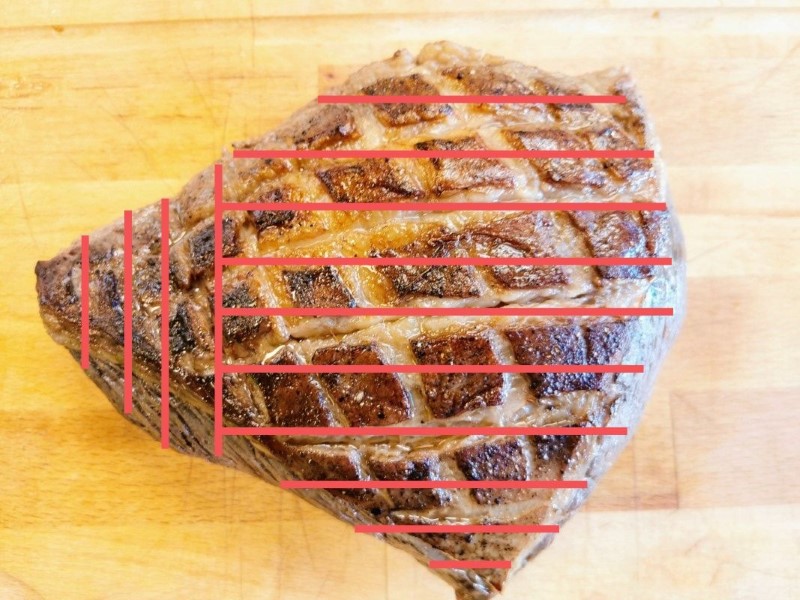
Unlike, for instance, the tenderloin, the fibers in the culotte do not run in just one direction. The same is actually true for a cuvette.
As you probably know, meat should be sliced across the grain. So far, so good. And because the fibers in a culotte run in different directions, you need to turn your culotte along the way.
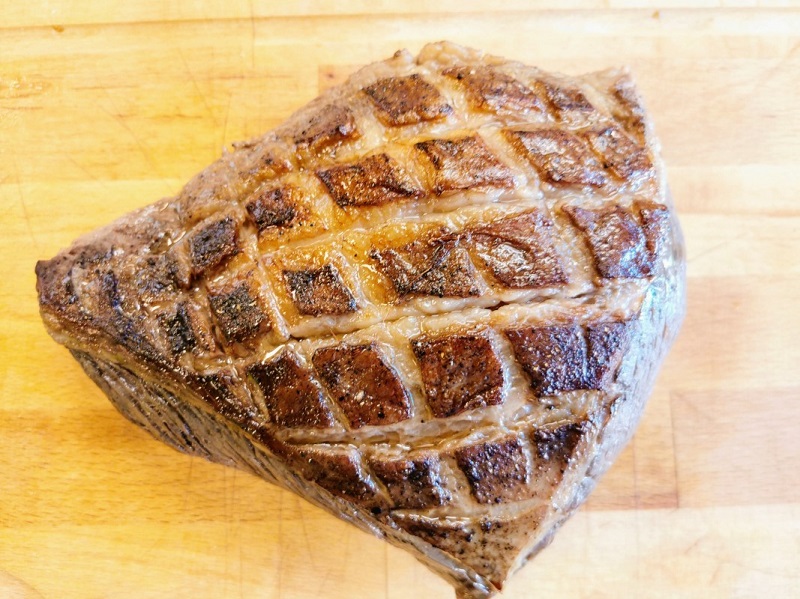
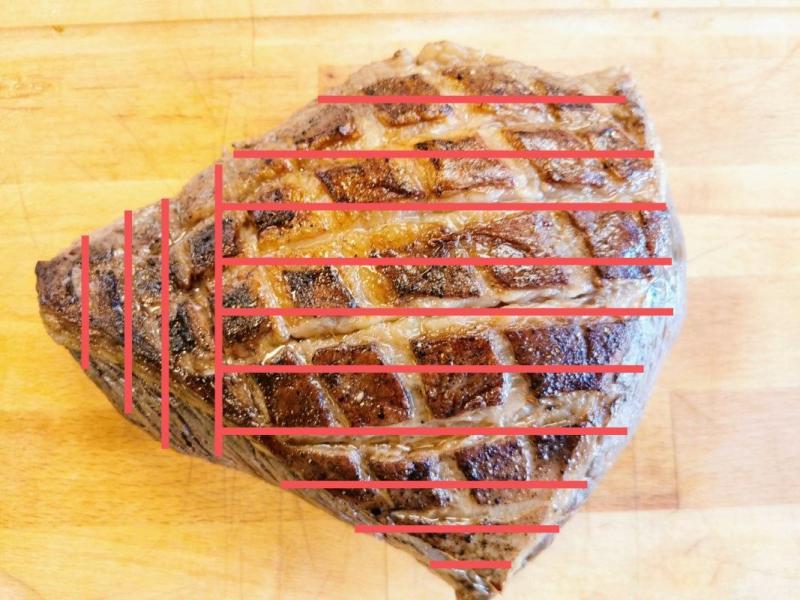
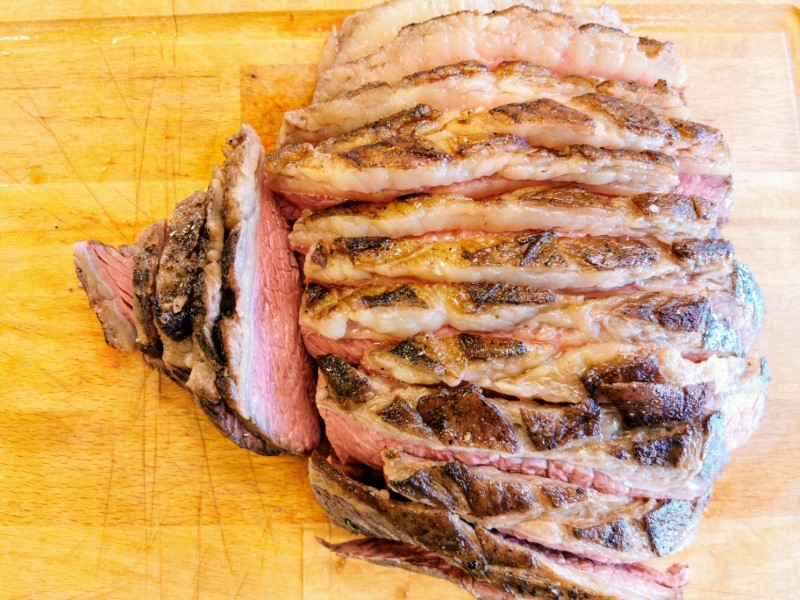
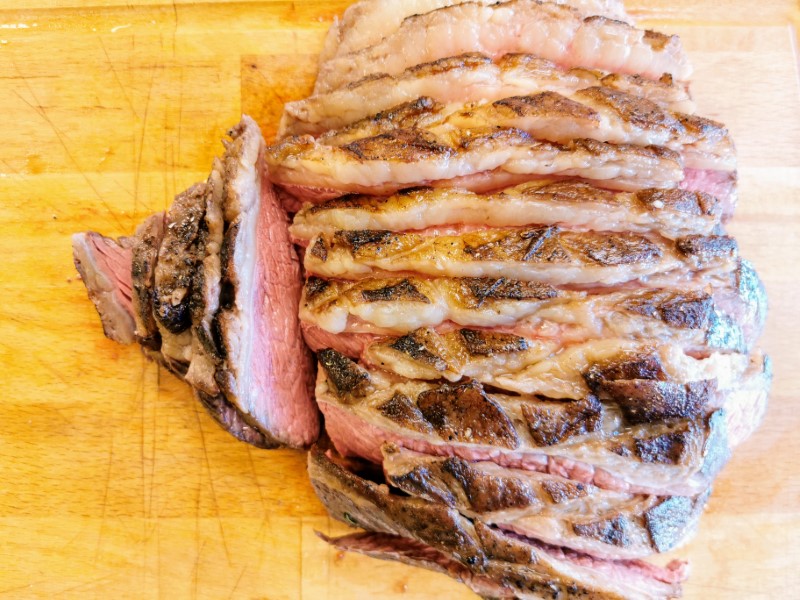
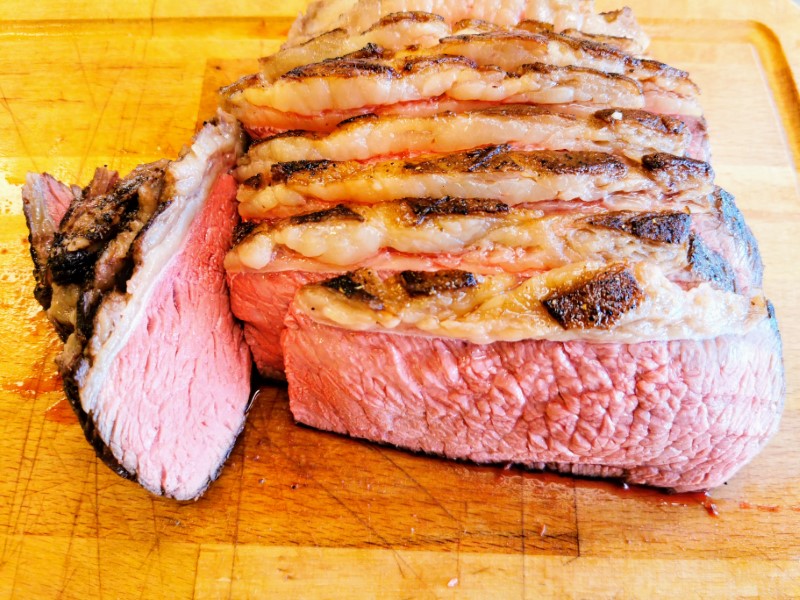
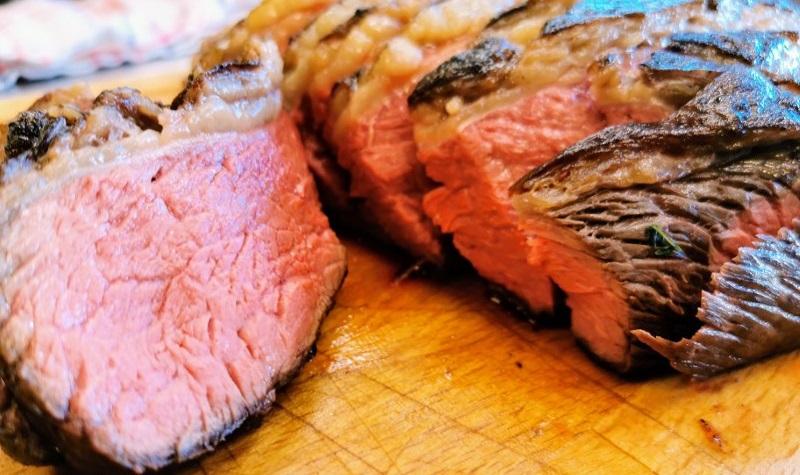
As you see here, you first cut slices from the “pointed” end of the culotte roast. Then you turn the roast 90 degrees and cut the rest of the culotte across the other direction.
However, it should also be noted that the above is the traditional, overall way to cut the culotte.
The fibers can lie a bit differently from culotte to culotte. So first, cut a slice and look at it: if the fibers run along the cutting surface, turn the roast 90 degrees and try the other direction.
Side dishes for culotte
Culotte has a powerful flavor that is nicely balanced with, for example, creamy potatoes and vegetables cooked al dente.
Culotte Sous Vide
Equipment
- Sous Vide
Ingredients
- 1500 gram Beef Coulotte
- Salt and Pepper from grinder
- Ghee for frying. Can be replaced with oil/butter
- fresh rosemary for frying. Can be omitted.
- Flake Salt
Instructions
- Place the culotte on a cutting board with the fat side up.
- Score the fat side in a crosshatch pattern with a knife.
- Season both sides of the culotte with salt and pepper.
- Put the meat in a vacuum bag.
- Vacuum seal the bag. Set your sous vide to 56 degrees Celsius (133 degrees Fahrenheit).
- Cook the meat for 4 hours if you are dealing with high-quality meat. If not, or if you are unsure about the quality, cook the meat for 6 hours.
- Remove the finished meat from your sous vide.
- Unpack it from the vacuum bag and pat it dry with a clean kitchen towel.
- Place your frying pan on the stove and turn the heat to its highest setting.
- Add ghee or a 1:1 mix of oil and butter when the pan is scorching hot.
- Place the culotte in the frying pan with the fat side down. Press the culotte slightly into the pan with your fingers so the entire fat side gets a crust. Let it sit for about 20 seconds while you hold the roast down. Immediately flip the culotte with the meat side down. Here, you no longer need to press the roast down into the pan. Let it sear again for about 20 seconds.
- Remove the culotte from the pan. Carve it as shown earlier.
- Sprinkle flakes of salt and optionally fresh rosemary over the slices. Serve your perfectly cooked culotte steak now!