
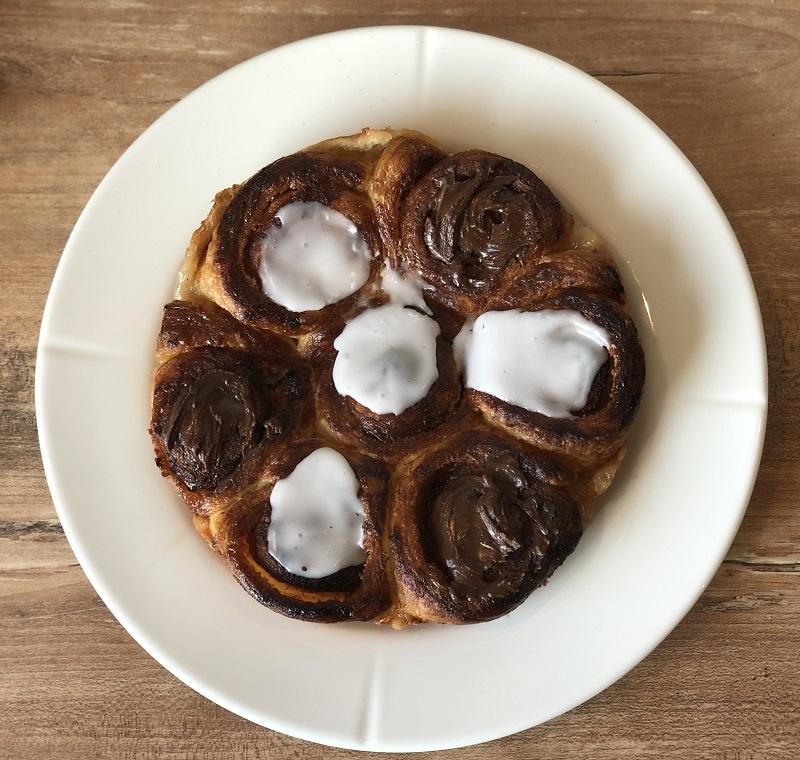

Recipe for dagmartarte (butter cake)
A Dagmar tart, also known as a butter tart, is officially a cake made from pure Danish pastry dough according to Danish law. Or at least it should be.
Many mistakenly make it from a classic soft dough. This also tastes delightful, but unfortunately, it cannot be called a Dagmar tart. One thing you should always remember, but many do not know, is that a recipe is always only a guideline. So, it may be that I only need 250 grams of flour, whereas you might need 300 grams. As flour and its quality can vary from year to year, from harvest to harvest, and from country to country, don’t feel disheartened if your dough becomes runny; you haven’t done anything wrong, you might just need to use a little more flour.
When we are about to make a Dagmar tart from authentic Danish pastry dough, we need to prepare three things before we can put it in the oven:
- Danish pastry dough
- Almond filling
- Cream
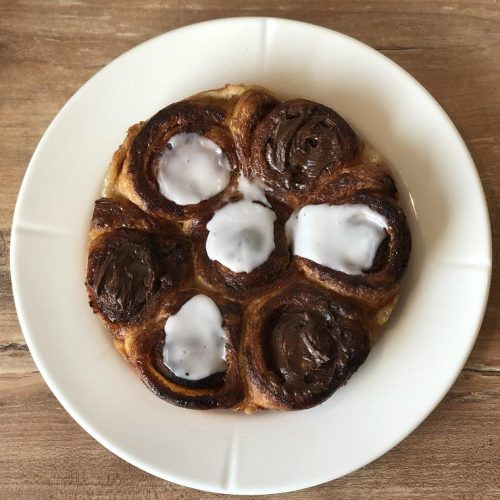
Dagmartarte (Butter Cake)
Ingredients
Creme til Remonce
- 260 gram Milk whole milk preferred
- 20 gram Cornstarch
- 30 gram Sugar sugar
- 30 gram Egg Yolk
- Vanilla Sugar season to taste
Viennese Pastry
- 20 gram Yeast
- 12 gram Sugar
- 1 gram Salt
- 6 gram Milk
- 60 gram Egg must be cold - one egg is about 60 grams
- 250 gram Wheat Flour straight from the freezer - put the flour in the freezer a few hours before making the dough
- 80 gram Water Ice cold - put water in the fridge or freezer a few hours before use
- 250 gram Butter For rolling in - real butter, Lurpak or other. But you can also use margarine
Remonce
- 60 gram Bitter can often be found at the grocer, or buy marzipan
- 170 gram Sugar sugar
- 170 gram Margarine
Instructions
Custard for Remonce
- We need to make a custard, which we use to mix into our remonce, to get a delicious and flavorful remonce for the tart.You can choose to make your own custard; it’s super easy. But of course, you can also use a ready-made custard powder from the store.
- Mix milk, sugar, and vanilla sugar, and bring it to a boil (stirring constantly).
- Mix egg yolk and cornstarch together until smooth.
- When the milk and sugar mixture boils, add the yolk mixture slowly while stirring constantly.
- Set the mixture to cool, preferably in the refrigerator once it stops steaming.
Danish Pastry Dough
- We need to make a real Danish 50% Danish pastry dough. The 50% signifies the amount of butter we fold into the dough. We should end up with a finished pastry dough containing a total of 27 layers of butter. The goal is to keep the dough as cold as possible. Otherwise, you risk it rising too much, and you might ruin the butter layers when rolling if it is too warm.Pour water, egg, and milk into a bowl, then dissolve the yeast in it. Measure out all other ingredients on top of the flour. Many people weigh out the yeast first and then pour sugar and salt over it. Don’t do that! You will kill the yeast. Now knead the dough for as short a time as possible, until all the ingredients have combined into a firm dough. The dough should not be soft, smooth, and supple like any other dough. This will come during the folding in of the butter.
- Take the dough and flatten it on the table into a nice square.
- Flatten the butter into a smaller square.
- Place the butter opposite the dough and fold the four sides in, as if you were wrapping a gift.
- Sprinkle flour on the table and on the dough. Now start rolling the dough out lengthwise. The dough should be rolled until it can be folded three times.
- After the first three-layer fold, turn the dough 90 degrees Celsius (194 degrees Fahrenheit) and roll it out again in the same manner, and fold it into three layers.
- Turn the dough and roll it out in the same way again, and fold it for the third and final time. Place the dough on a cutting board or plate and put it in the fridge to rest while you prepare your remonce.
Remonce
- We need a remonce and custard mixture for the Dagmartarte. But first, we need to make the remonce. TIP: Remonce is also what many call marzipan in pastries and baked goods, although it is NOT marzipan.
- Put the Bittermasse and sugar into the mixer, along with a little of the margarine. Mix everything with a dough scraper until there are no lumps.
- Add the rest of the margarine little by little, making sure it is fully incorporated, without lumps.
- IMPORTANT: Do not mix the mass longer than until it is just combined. If you do, you risk the mixture starting to boil during baking, ruining the pastry.
- When the mixture is combined, take your now cold custard, pour it all into the remonce, and mix it gently until combined.
Dagmartarte
- Now we are ready to make the Dagmartarte.Take your Danish pastry dough from the fridge, sprinkle flour on the table and on the dough. Roll it out to about 3-5mm thickness.
- Take your mold(s) and cut a piece out of the dough to cover the bottom.
- Put a good dollop of remonce on top of the dough in the mold. Some like to add raisins here too, but I have omitted them. Instead, I use a bit of cardamom.
- Spread a good layer of remonce on the rest of the dough; do not skimp on it. If you like and want to, you can sprinkle cinnamon and maybe cardamom on top. Especially cinnamon and a dash of cardamom give a fantastic flavor.
- Roll the dough up neatly into a long sausage and cut about 14 pieces from the sausage, which will become the swirls on top of the Dagmartarte. It doesn’t matter if you get a little less or a little more, just have fun while doing it.
- Place one swirl in the middle and six swirls around it, pressing them slightly with your fingers.
- Now the tart needs to rise*.
- Brush the tart with a mixture of egg and a dash of salt when it has risen, before putting it in the oven, and bake it at 200 degrees Celsius (392 degrees Fahrenheit) fan oven for 25-35 minutes.
- When the tart comes out, put icing on it as you like. Some use white and brown, others only brown. But do whatever your mood desires:)
Notes
*TIP for rising:
Normally, you would let your cake, bread, or other bake rise for 1 hour and then put it in the oven. But 9 out of 10 times, baked goods do not rise sufficiently. So here is a baker's tip to achieve professional rising:Turn on your oven to 200 degrees Celsius (392 degrees Fahrenheit) and let it reach 200 degrees Celsius (392 degrees Fahrenheit).
You can do this while you are preparing your tart.
When we're almost ready, we turn off the oven and use the residual heat for rising.
Do not put the tart in while the oven is still at 200 degrees Celsius (392 degrees Fahrenheit).
Turn off the oven in time, leave the door ajar, and let the temperature drop to about 80 degrees Celsius (176 degrees Fahrenheit).
Open the oven door wide, place your tarts inside, and the oven should now be around 50-60 degrees Celsius (122-140 degrees Fahrenheit).
Close the door and let a dish towel hold the oven door slightly ajar.
The goal is to reach 40 degrees Celsius (104 degrees Fahrenheit), then close the oven door to retain the heat.
Baking rises best at 36-38 degrees Celsius (97-100 degrees Fahrenheit). If you exceed 40 degrees Celsius (104 degrees Fahrenheit), you will kill the yeast, and the butter will also melt.
In record time, you will achieve a perfect rise, like you have never seen before:)