

Recipe for sous vide chicken thighs
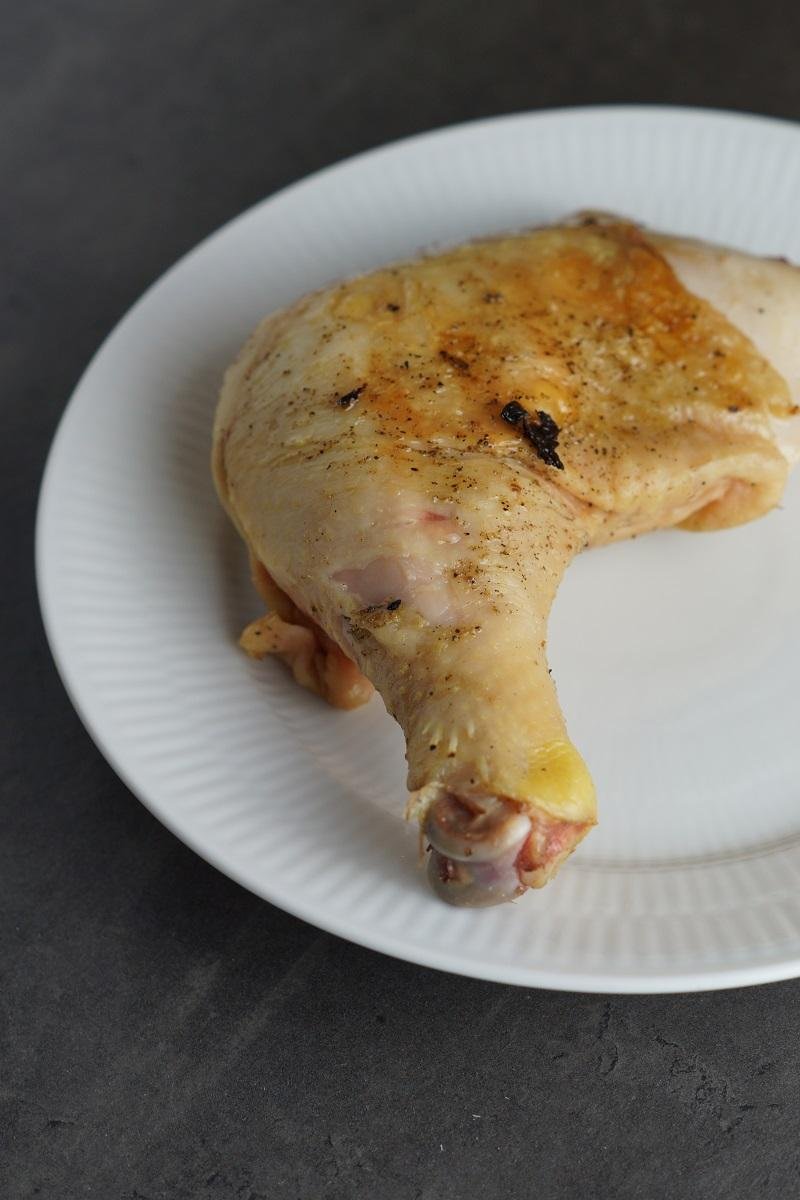
Sous vide chicken thighs. We Danes love chicken and for good reason. It tastes delightful, it’s inexpensive, and low in fat.
I promise you juicy chicken when you prepare it this way. Generally, chicken thighs are juicier than chicken breasts, just think about when you eat half a grilled chicken. The chicken thigh is a bit tougher than the chicken breast, so it requires a slightly higher temperature and longer cooking time. This is often why it is difficult to get both the breast and thigh perfectly cooked when prepared simultaneously. By separating the thigh and breast and using the sous vide method, you are guaranteed a perfectly cooked piece of chicken – every time.
Here I give you the method, and we will also take a closer look at why you should never use water-enhanced chicken breasts when working with sous vide.
The Advantage of Chicken Thighs in Sous Vide
You ensure a perfect result every time. The meat becomes juicy, and if your guests are delayed and the meat cooks for about 30 minutes longer, it doesn’t make much difference. If the meat were roasted 30 minutes too long in the oven or the pan, you would get a dry result instead.
Sous Vide Times and Temperatures for Chicken Thighs
When working with sous vide, it is solely about temperature and cooking time. Regarding time, it doesn’t really matter if the meat gets five, ten, or even twenty minutes “too long,” so it’s perfect if you generally have a bit of difficulty controlling the cooking time.
When we make chicken thighs in sous vide, we deal with significantly lower temperatures than traditional cooking. It might make some people ask: “What about salmonella and the like?”. I completely understand, but fortunately, there is nothing to worry about.
Good Hygiene for Sous Vide Chicken Thighs
Regarding salmonella, the official recommendations state that chicken should have a core temperature of 75 degrees Celsius to eliminate the risk of salmonella poisoning. And that doesn’t sound very sous vide-friendly since we usually use much lower temperatures in sous vide.
There is no need for concern! Here is the reason: Sous vide cooking takes much longer than traditional cooking. You can actually cook the chicken at as low as 57 degrees, and the salmonella bacteria will still not survive – mainly because the bacteria are exposed to heat for much longer than if you were frying or boiling the chicken. However, it is important that you use 100% pure chicken and not water-enhanced chicken.
Water-Enhanced Chicken vs. 100% Pure Chicken
When chicken is to be prepared using the sous vide method, we use only 100% pure chicken. You must avoid anything labeled “brine” or “neutral-marinated.”
Water-enhanced chicken is meat that has been brine-injected. This means there are lots of small holes in the meat. It is not a problem to kill any salmonella bacteria if they are on the surface. The problem arises when these bacteria get the chance to come into the meat. Here it will take longer for the heat to reach the bacteria. What makes sous vide chicken thighs safe is, as mentioned, the longer cooking time.
Sous Vide Chicken Thigh Searing
I could almost talk from here till tomorrow about all the advantages of sous vide, but there is also one disadvantage: Namely that the chicken thigh does not have a sear and the skin is not crispy when they come out of the water bath. We need to add that ourselves afterward. I think we can agree that this small extra step is quite manageable!
You can sear chicken breasts in various ways: You can use a regular frying pan, a grill pan, a gas grill (or any other type of grill), and you can even use a blowtorch. The latter is quite brilliant for more “complicated” cuts with a very uneven surface (e.g., brisket), and I’ve actually also used it quite a bit specifically for chicken thighs.
I usually use ghee for frying, but you can also use a 1:1 mixture of butter and oil. The advantage of ghee (clarified butter) is that the frying temperature becomes higher. Otherwise, duck fat is also good for frying when it comes to chicken. A high temperature is super important since we want to give the meat as short a time as possible. The meat is already cooked and ready to eat, so it’s really just the surface that needs a hot, sizzling kiss!
Side Dishes for Sous Vide Chicken Breast
There are plenty of things that go well with chicken. This is probably one of the reasons why chicken is so popular. If you want something light and fresh, you can make a really delicious salad. I also often prepare rice and potatoes along with chicken thighs.
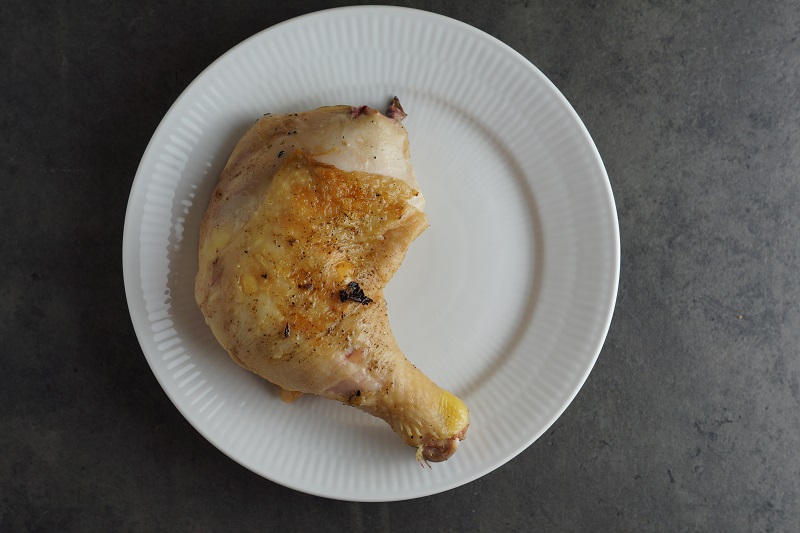
Sous Vide Chicken Thighs
Equipment
- Sous Vide
Ingredients
- 2 pcs. chicken thigh Works with both thighs and drumsticks
- Salt and Pepper
Instructions
- Season the chicken thighs with salt and pepper on both sides.
- Vacuum seal the chicken thighs. Depending on the size of your bags, you can cook several in each bag, just make sure there is space between them.
- I prefer to cook my chicken thighs at 63 degrees Celsius (145 degrees Fahrenheit) in sous vide. You can certainly go down to 61 degrees Celsius (142 degrees Fahrenheit) or up to 65 degrees Celsius (149 degrees Fahrenheit) - it's a matter of taste.
- The cooking time is somewhat determined by the size of your chicken. 4 hours is usually enough if you use a chicken of 1800 grams or less. My chicken here was 2200 grams, I cooked it for 5.5 hours. If I had separated the thighs and drumsticks before cooking, 4.5-5 hours would have been enough.
- Take the chicken out of the bag and pat it as dry as you can with a clean cloth or paper towel.
- Now the meat needs a bit of searing: You can use a pan, grill, or blowtorch. The meat just needs to be seared for about 20-30 seconds on each side.
- If there's skin on, it will be a bit harder. Here I would recommend frying in plenty of ghee, butter/oil, or duck fat. I don't get the skin crispy every time.
- Bon appétit.