
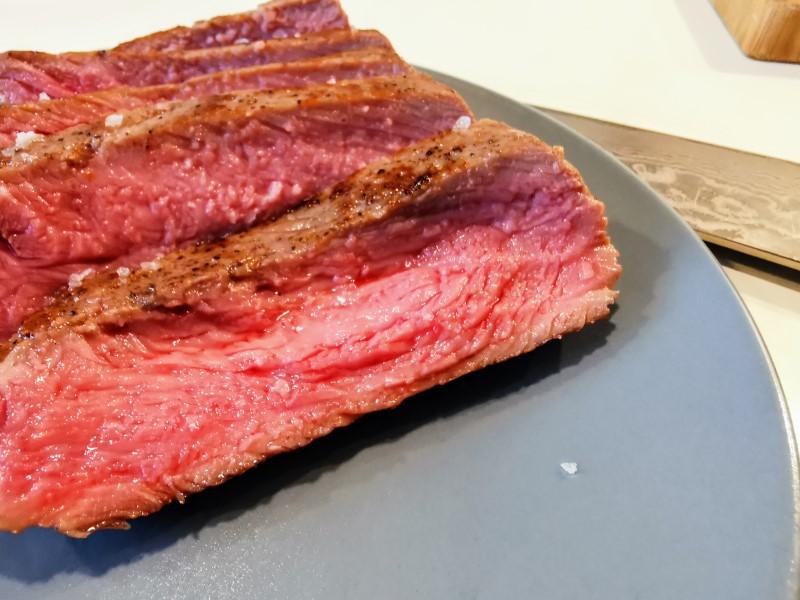

Recipe for dry-aged veal filet sous vide
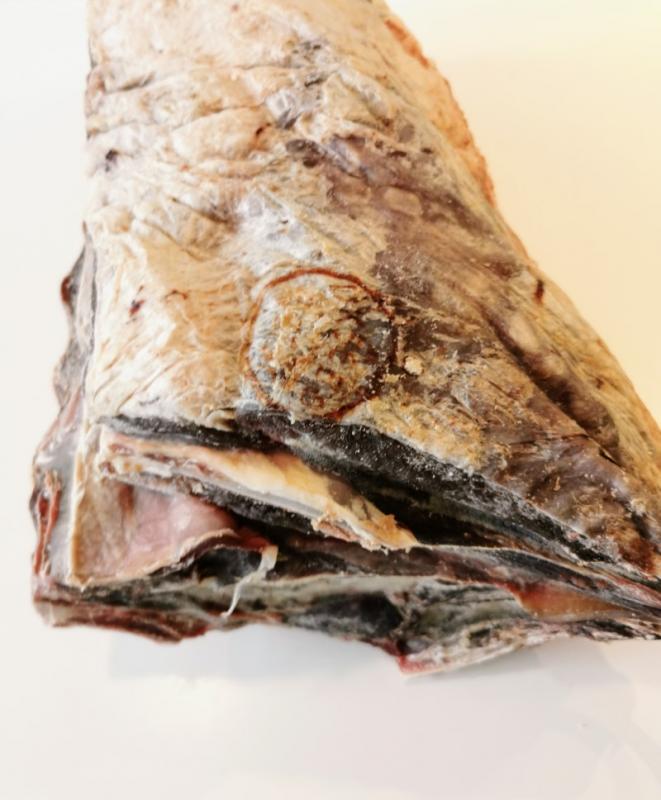
This 60-day aged beauty was purchased at none other than the Treasure Room.
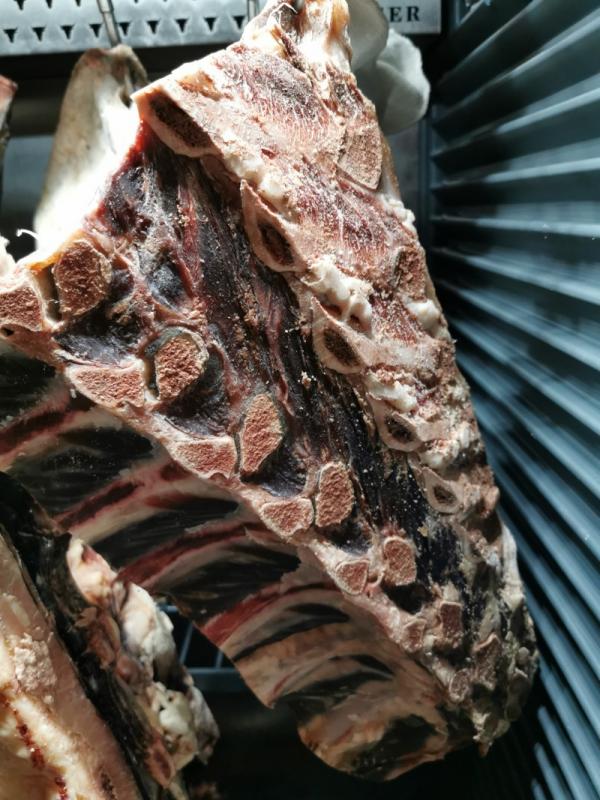
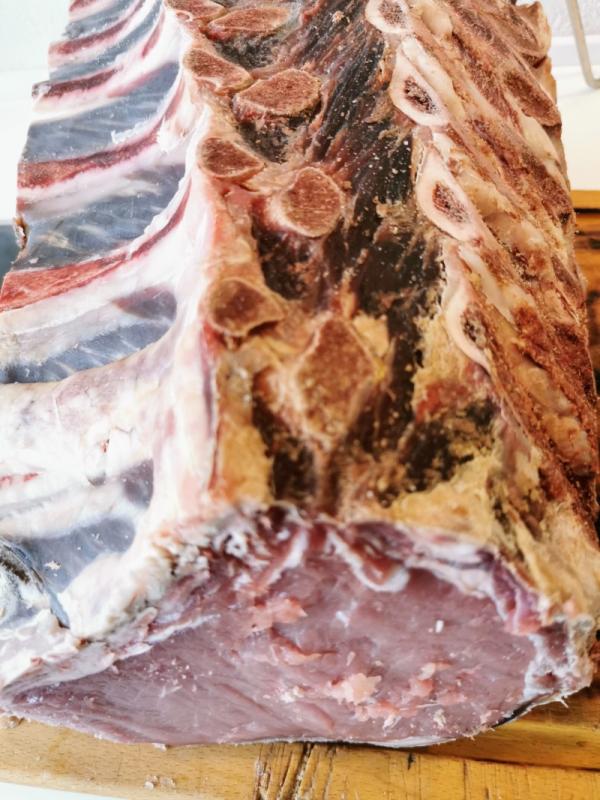
Yes, this is not how you are typically introduced to veal filet in the refrigerated section! This is a veal filet before it has been deboned.
This veal filet had been dry-aged for two months before I got my hands on it, and I couldn’t wait to get home and experiment with the preparation.
I cut it into steaks, among other things, and here I’d like to show you how to use the sous vide method to cook the most tender and juicy veal steaks.
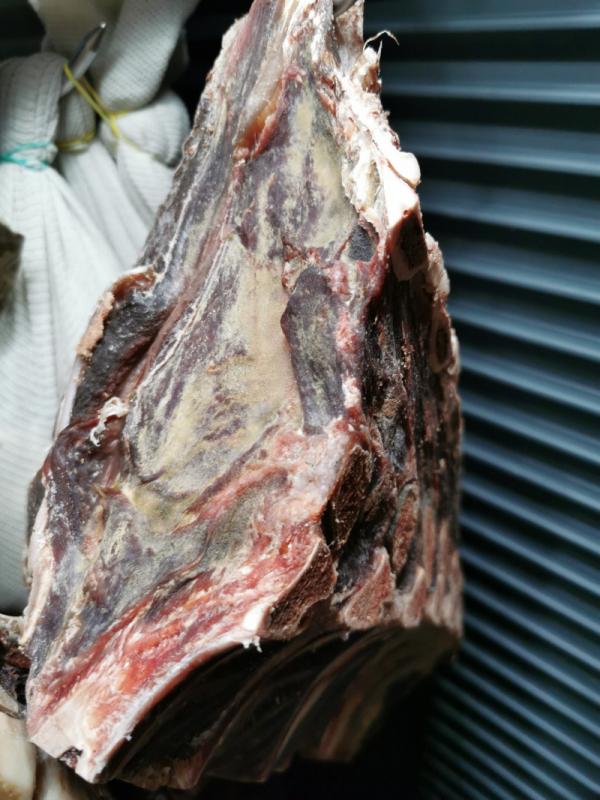
Veal Filet Butchery
Veal filet – and beef filet for that matter – certainly don’t belong to the most unusual cuts on the animal.
But where exactly is the veal filet located?
The veal filet is part of the ribeye – specifically, the posterior part. Briefly, the ribeye is the middle section of the veal’s back, stretching from the end of the chuck to the beginning of the sirloin and tenderloin.
The meat cut from the ribeye is some of the tenderest you will find on the veal. Ribeye, in general, is extremely popular.
Veal filet is thus one of the tenderest veal cuts, but because the muscle is still used, it’s nowhere near as tender as the tenderloin.
The veal filet is well-suited to be cooked as a whole roast (veal roast), and this is how many choose to prepare it.
However, I chose to cut my veal filet into “smaller” steaks. I put “smaller” in quotation marks because these steaks are so large (600 grams) that one could debate whether to call it a very large steak or a small roast 😉
Dry-Aged Veal Filet
Normally, I calculate 200 – 250 grams of steak per person for main courses.
Therefore, 600 grams of meat for four people might not sound like much.
When talking about dry-aged meat, I calculate the quantity somewhat differently.
A significant portion of the meat’s natural water content evaporates during the dry-aging process. Therefore, the flavor in dry-aged meat is so intense and rich that you don’t need to eat nearly as much of it to feel full.
Veal Filet Sous Vide
Regular readers are probably not entirely unfamiliar with my love for sous vide, and this was the top cooking method on my to-do list.
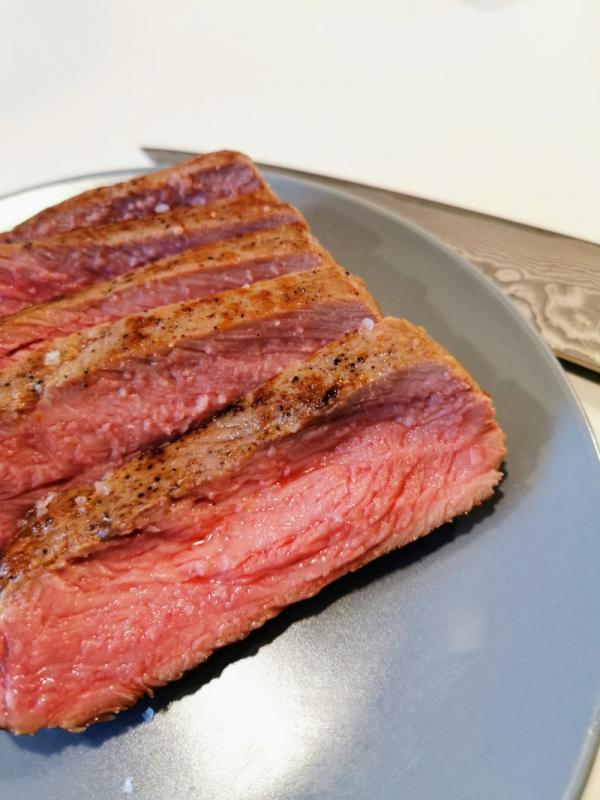
The advantage of sous vide is that I have full control over the cooking and temperature. Thus, I am guaranteed the exact same perfect result every time.
Veal Filet Sous Vide Time and Temperature
Time and temperature are the most important factors when working with sous vide.
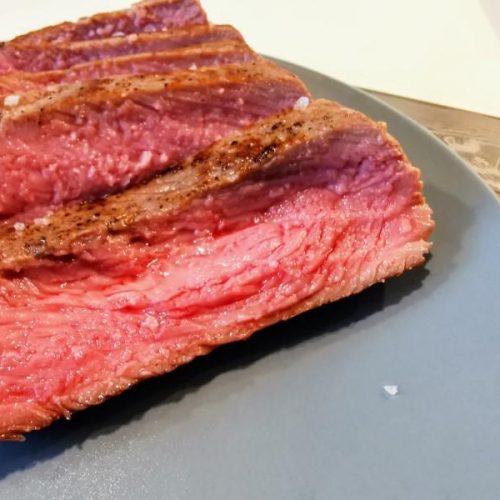
The temperature depends entirely on how you prefer your steak. I am 100% an advocate for medium rare, which means I keep within the range of 55.5 – 58 degrees Celsius.
Whether I settle at one end or the other of this range can vary, but as soon as I find the perfect temperature (after a lot of experiments), I stick with it!
If you want to learn more about the different temperature recommendations for, for example, rare, medium, and well done, you will become much wiser in this article.
The time in the water bath depends on the thickness of the meat, and clearly, the thicker your steak, the longer it needs to be cooked.
Dry-aged meat can also handle a shorter time in the water bath than if it were not dry-aged. If your veal filet is not dry-aged, I would recommend adding approximately 25% to the cooking time.
Veal Filet Sous Vide Recipe
Dry-Aged Veal Filet Sous Vide
Ingredients
- 600 gram Veal Fillet Aged for 60 days
- Salt and Pepper From mill
- Ghee or butter/oil. For frying.
Instructions
- Season your veal steak with salt and pepper on both sides.
- Then, take the veal filet off the pan and place it on the cutting board. When cooking meat with the sous vide method, the meat does not need to rest afterward - it is ready to be sliced immediately. Slice the meat into pieces of appropriate thickness. Make sure to slice the veal filet against the grain. Serve.ghee