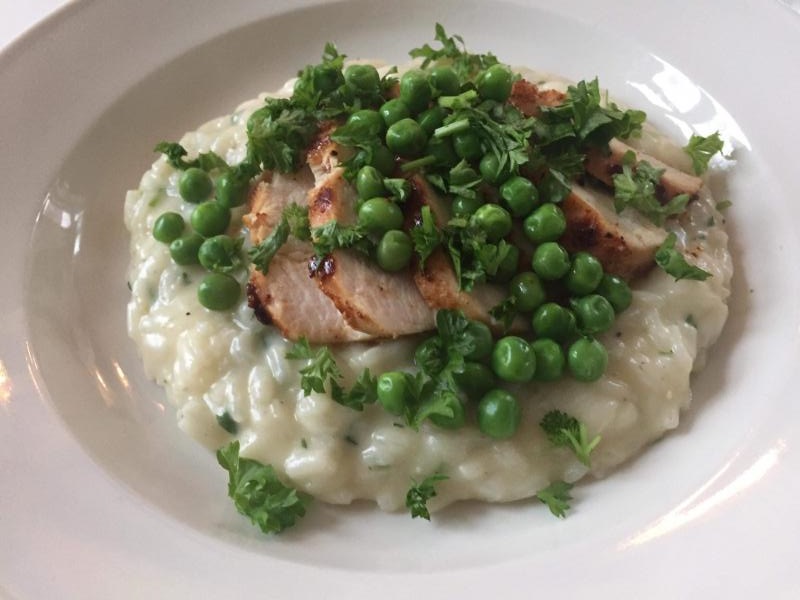
Risotto
Warm half of the butter with a little oil in a thick-bottomed pot and give the rice a bit of heat for 2-3 minutes so they can absorb the fat. Remove them and set aside afterward.
Sauté the onions and garlic in butter and oil over medium-high heat. Once they have taken on a bit of color, add the rice and white wine.
In general, make sure to stir the risotto so it does not burn. When the wine has almost evaporated, add 1/5 of the stock. When it has almost evaporated, add another 1/5 and continue this way for 25 minutes.
When you are out of stock, add the Parmesan, lemon juice, lemon zest, vinegar, and a bit of butter.
Season with salt and pepper to taste.
Shortly before serving, the risotto should be topped with freshly ground pepper and freshly grated Parmesan.
Chicken Breast
There are several factors that play a role in making chicken breast deliciously juicy and not dry:
Make sure the meat is taken out of the fridge 30 minutes before cooking so it is not too cold when it hits the pan. Otherwise, it might end up "boiling" instead. Ensure the meat is well-dried before placing it onto a fairly hot pan.
Sear it for 5 minutes over medium-high heat in a thick-bottomed pan with oil/butter and do not touch or flip the meat. It should develop a crust.
When the meat is flipped, lower the heat to medium and again, do not move the pan while the meat is on it.
Remove the meat from the pan, cover it with a kitchen towel, and let it rest for a couple of minutes. The meat is now ready to serve.
Peas
Put the frozen peas directly from the freezer into a pot.
Add cold water and a pinch of salt, and bring the water to a boil. Once boiling, the peas only need one minute.
Remove the pot from the heat and then pour a large glass of cold water over the peas and cover with a lid.
Let them sit for 2-3 minutes and serve immediately.
Serving
Slice the chicken breast and place it atop the risotto in a deep dish.
Chop the parsley and sprinkle it over the dish along with the peas, and the dish is ready to serve.