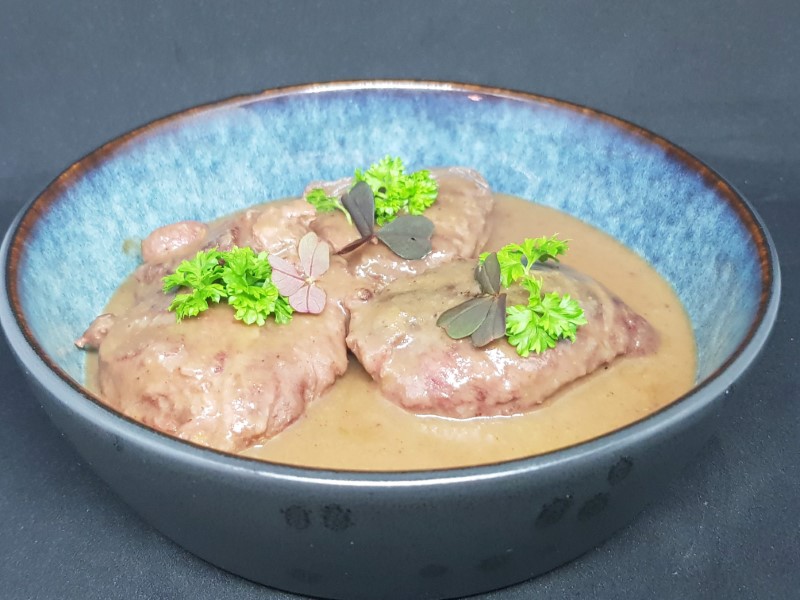
Start by preheating the oven to 125 degrees Celsius (257 degrees Fahrenheit).
Trim the cheeks of tendons and fat. It takes longer than you think, but it’s worth the effort.
Peel the vegetables and root vegetables and cut them into smaller pieces about 2 x 2 cm.
Cut the bacon into small pieces about 1 x 1 cm and fry them over medium-high heat in a large, thick-bottomed sauté pan.
When the bacon has a crust, take it out and place it in a clay pot.
The fat will be used to fry the pork cheeks in.
Turn up the heat and season the cheeks with salt and pepper. It is important that the pan is hot and that not too many cheeks are placed in the pan at once.
It is therefore better to brown them in batches, as too many cheeks in the pan will drop the temperature, and they will be "boiled" instead of fried.
If they absorb too much of the bacon fat, just add oil to the pan.
Place the browned cheeks in the clay pot and add the vegetables/root vegetables to the pan.
They don't need to brown, but they should get a bit of heat, and the onions should become translucent. This typically takes 5-7 minutes.
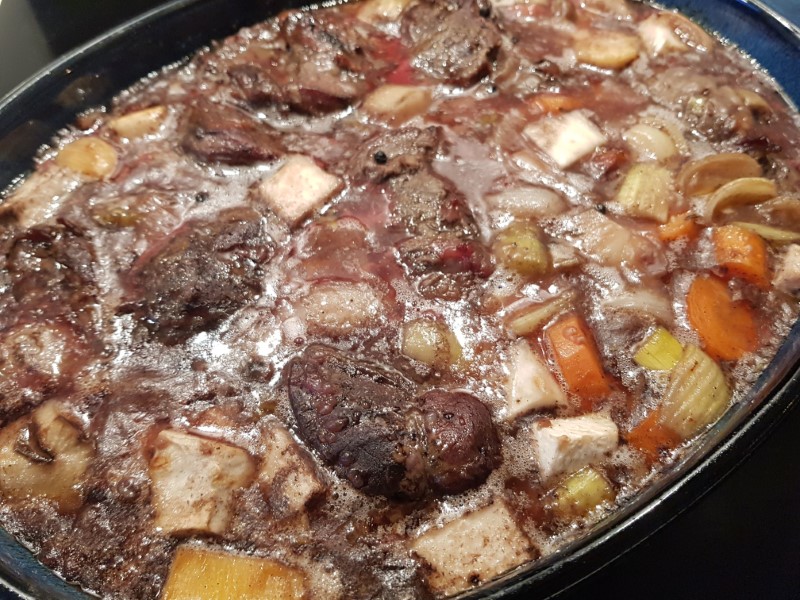
Put everything in the clay pot and add flour, peppercorns, fresh thyme, bay leaves, vinegar, broth, and red wine.
Put the clay pot in the oven and bake for a minimum of 3 hours.
I had the time the day I made the dish, so I gave it 6 hours instead.
After its time in the oven, take the clay pot out and fish out the cheeks from the liquid.
Remove and discard the peppercorns, thyme, and bay leaves.
Pour the liquid into a large pot and reduce it a bit together with cream.
Blend the cooked root vegetables/vegetables finely with a bit of the liquid. This is used to thicken the sauce. Since there is flour in the liquid, only a limited amount is needed for thickening. The rest can be saved and used to add flavor and body to stews/sauces.
Let the sauce reduce for about 10 minutes and season it with salt, pepper, lemon juice, sugar, and vinegar.
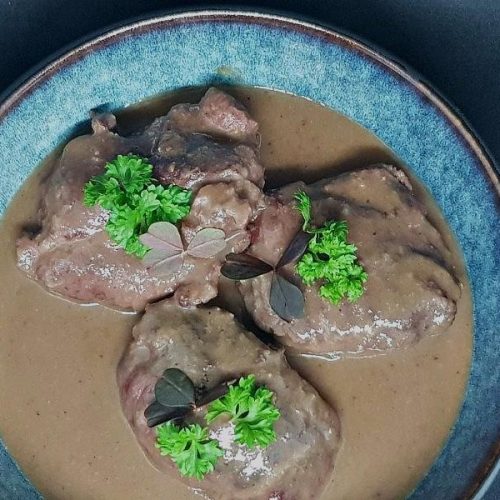
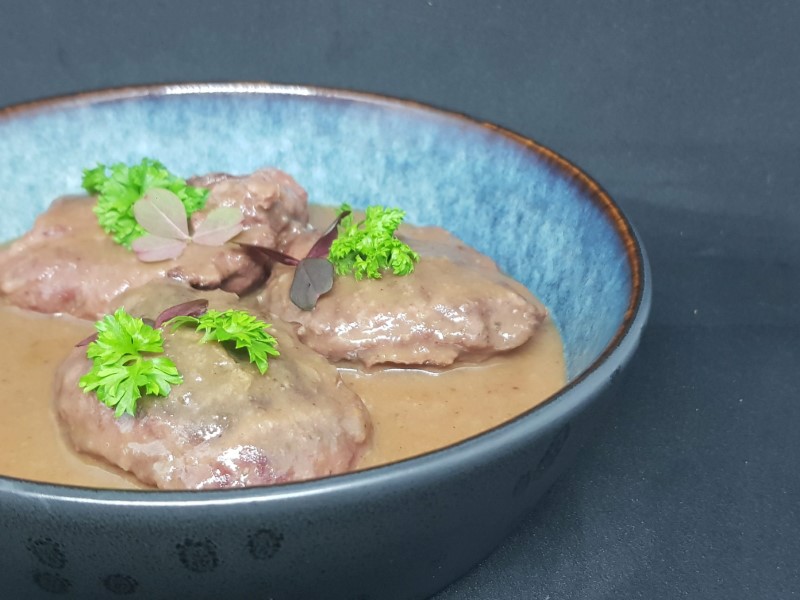
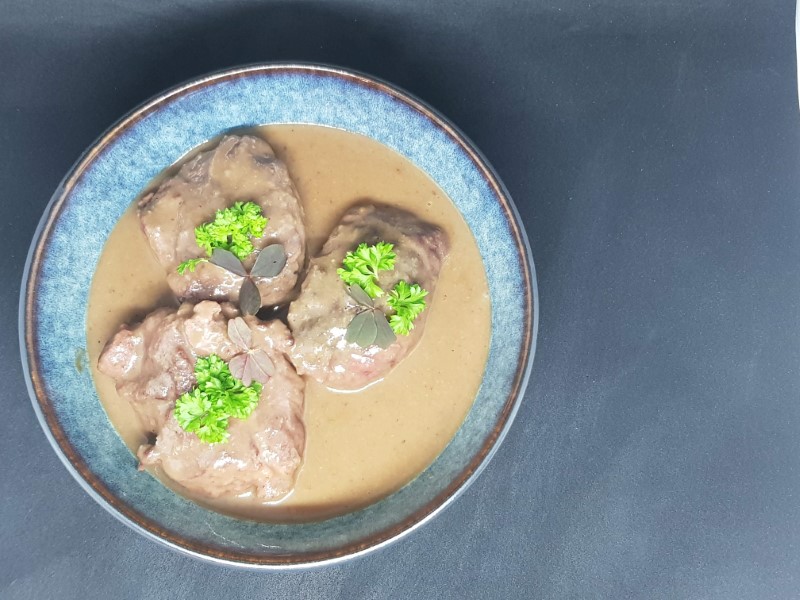
Bon appétit.