Servings:
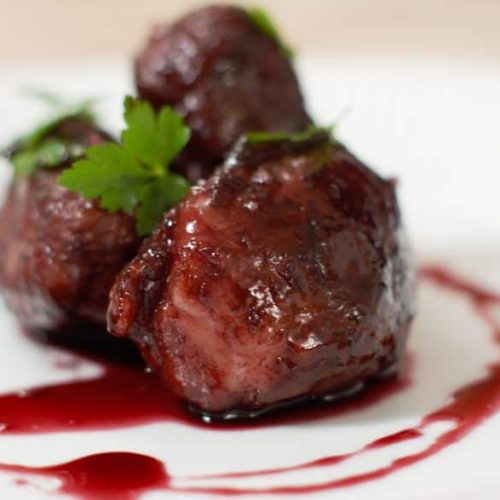
Iberico Pork Cheeks Sous Vide
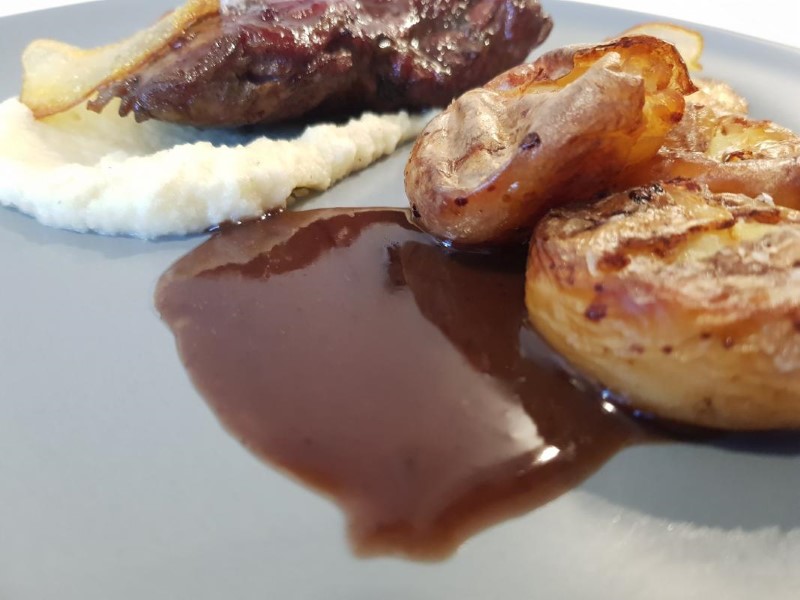
Served with "bashed potatoes," homemade chips, celeriac/cauliflower puree, and red wine glace
Equipment
- Sous Vide
Ingredients
Pork Jaws Sous Vide
- 2 pcs. Prok Cheeks Iberico pork
- Salt
- 28 gram Pork Fat can be substituted with duck fat or butter
- 140 gram Syrup port wine syrup
Red Wine Ice Cream
- 1 pcs. Onion
- 1 clove Garlic
- 4.5 gram Oil
- 300 gram Red Wine
- Fresh thyme a few sprigs
- 400 gram stock
- 5 gram Lemon Juice
- 2.5 gram Vinegar apple cider vinegar
- 30 gram Butter ice cold and cut into tiny pieces
Bashed potatoes
- 300 gram Potato
- 27 gram Oil
- Salt and Pepper
Celery/cauliflower purée
- 100 gram Cauliflower
- 100 gram Celery
- 300 gram Milk
- 300 gram Cream
- Spices salt, pepper, lemon juice, and vinegar
Homemade chips
- 2 pcs. Potato
- 13.5 gram Oil neutral in taste
- Salt
Instructions
Pork Cheeks Sous Vide
- When cooking pork sous vide, you can benefit from browning the meat both before and after the water bath.
- Start by trimming the cheeks of the worst tendons and fat pieces, then season with salt and pepper on both sides.

- Brown the meat on both sides; you can do this in a pan or with the help of a blowtorch (we used the blowtorch).

- Vacuum seal the cheeks with a tablespoon of pork fat and cook them at 62 degrees Celsius (144 degrees Fahrenheit) for 48 hours. We chose to pack the cheeks two by two. It is advantageous to make many at once and freeze the packages you don't need without unpacking them.

- Take out the meat and pat it dry with a kitchen towel/paper towel.

- The juice from the vacuum bag should be used for the sauce/glace.
- Heat a pan over medium-high heat and pour 1 dl of port wine syrup into it. If you don't have such a syrup, you can reduce some alcohol with sugar for 20 minutes before adding the meat to the pan.
- Let it caramelize down by about 1/3, then place the meat in the pan and "fry" it in the liquid for a couple of minutes on each side.


- Sprinkle the meat with a good flake salt, and it is ready to serve.
Red Wine Glace
- Finely chop the onion and garlic and sauté them in a neutral-flavored oil over medium-high heat in a heavy-bottomed pot. It should not brown; after a few minutes, add the red wine, the juice from the pork cheeks, and the thyme sprigs.

- Let it simmer for 20 minutes, then gradually add 4 dl of stock. We use boiled water and a few pieces of meat/trimmings from dry-aged beef tenderloin, which gives a deep and intense meat flavor. Add a bit of lemon juice and vinegar.

- When the sauce has reduced to 1-2 dl, it needs to be mounted. Mounting is thickening the sauce using butter. The key to success is temperature and vigorous whisking. Ensure the sauce is boiling vigorously and the butter is as cold as possible. Cut it into small slices and freeze it for 10 minutes before assembling the sauce.
- Add one piece of butter at a time while whisking vigorously until the sauce reaches the desired thickness. You will need more than you think.

- The sauce becomes thick, elastic, and smooth in appearance, while also being incredibly intense in flavor.

- The hardest part of seasoning a glace is that if you use salted butter (as most Danes do daily) to mount it, you must not add salt – as the salt in the butter changes the flavor significantly. We always use salted butter and have gotten used to it.
Bashed Potatoes
- Wash the potatoes and dry them well. They should ideally keep their skins.
- Toss them in oil and season with salt and pepper.
- Place them in an ovenproof dish and cook them for 30 minutes at 200 degrees Celsius (392 degrees Fahrenheit) (fan).
- Take the potatoes out and flatten them with a ladle, then give them another 30 minutes at 200 degrees Celsius (392 degrees Fahrenheit) (fan).
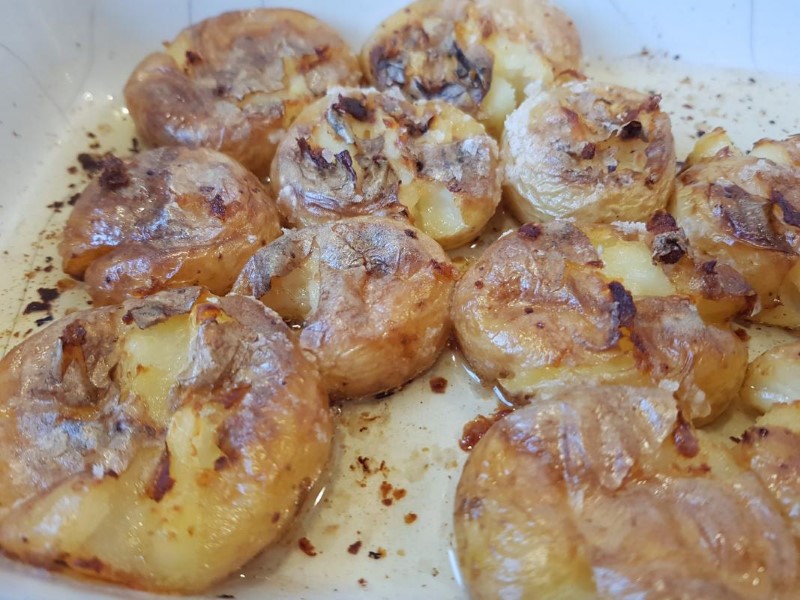
- The reason for flattening them (bashing) is to create more surface area that can get a crispy crust.
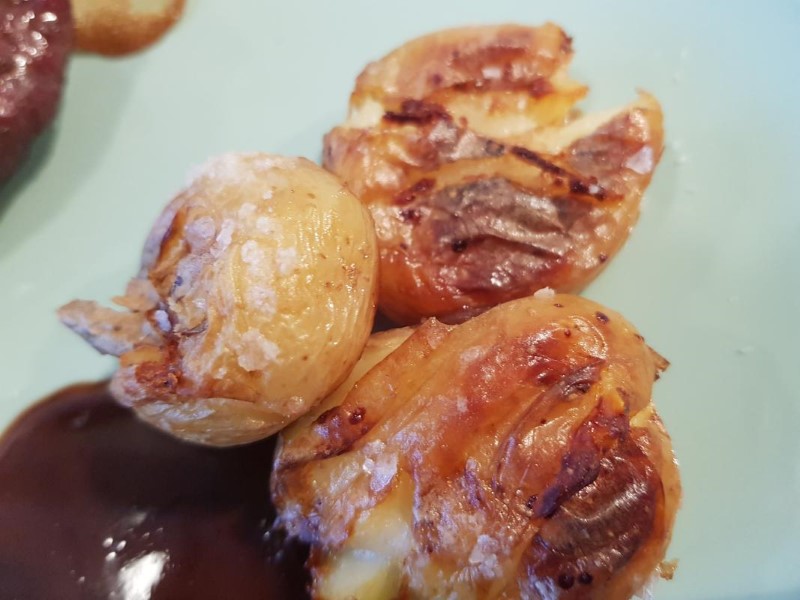
- They are ready to serve afterward.
Celeriac/Cauliflower Puree
- Cut the vegetables into small cubes and boil them in milk and cream until they are tender in a heavy-bottomed pot. This typically takes 15-20 minutes, depending on the size of the cubes.
- Use a slotted spoon to remove the vegetables and place them in your blender/bowl for an immersion blender. Blend them with 1 dl of the liquid from the pot. Slowly add more of the liquid until it is smooth and creamy.
- Put it in a new, heavy-bottomed pot and heat it through over medium heat. Season with salt, pepper, lemon juice, and vinegar.

- The puree is ready to serve.
Homemade Chips
- Peel the potatoes and slice them as thinly as possible. We use a mandoline for this.
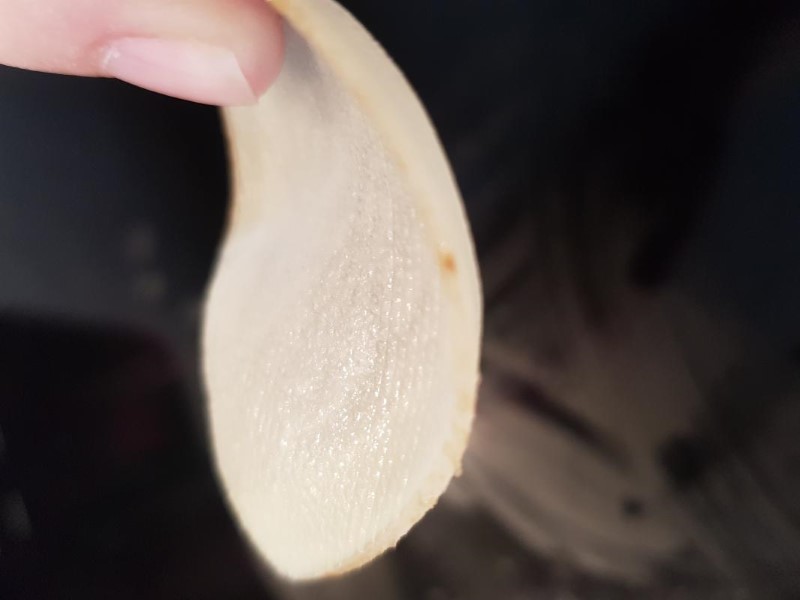
- Soak them in water for an hour and then dry them well with a kitchen towel.
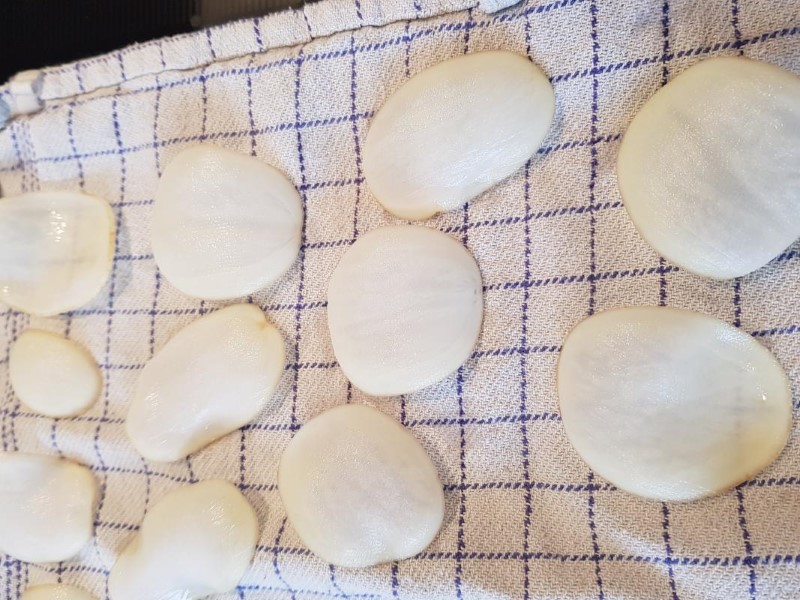
- Pour the oil into a bowl and toss the potato slices in the oil one by one, then place them on a baking sheet lined with parchment paper.
- Bake them at 180 degrees Celsius (356 degrees Fahrenheit) (conventional oven) for 5-10 minutes, depending on the oven and the thickness of the potatoes. They should get a bit of color, but watch the edge colors closely.
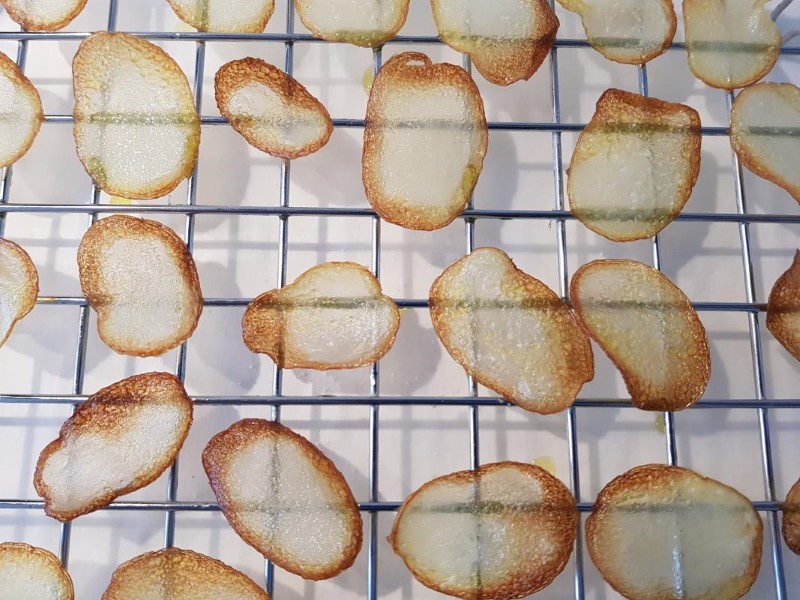
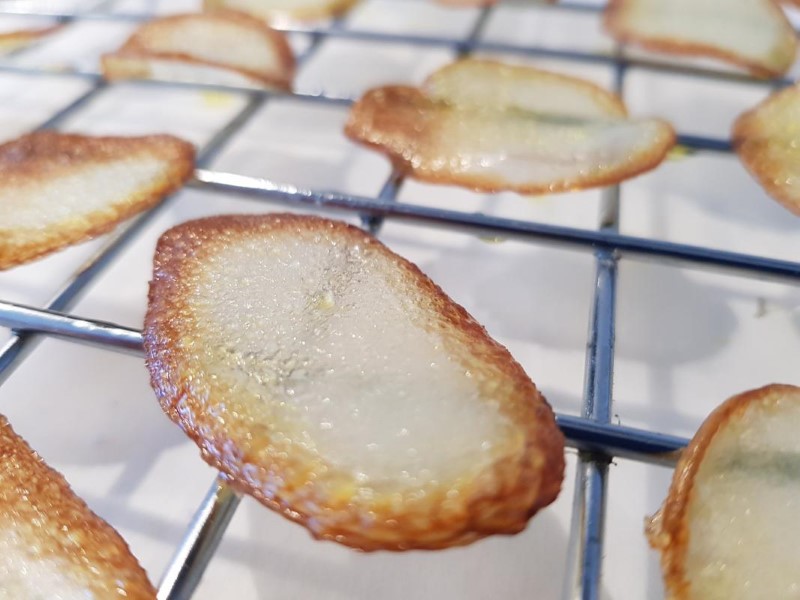
- Pat them dry with a kitchen towel when they come out, and sprinkle salt on them immediately.
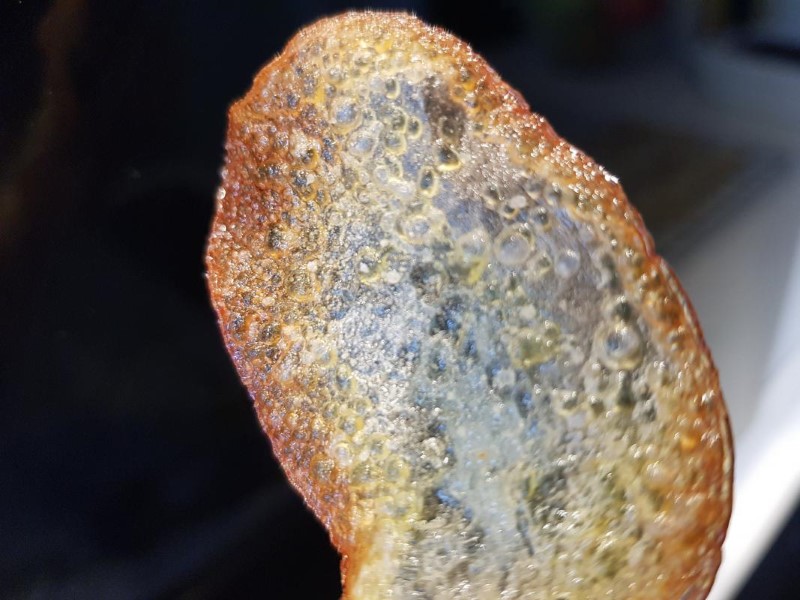
- They are ready to serve.
Serving
- Place the puree at the bottom and lay the cheek over it. The mild puree pairs fantastically with the tender and juicy pork cheek, which has a texture similar to a good steak.

