Servings: persons
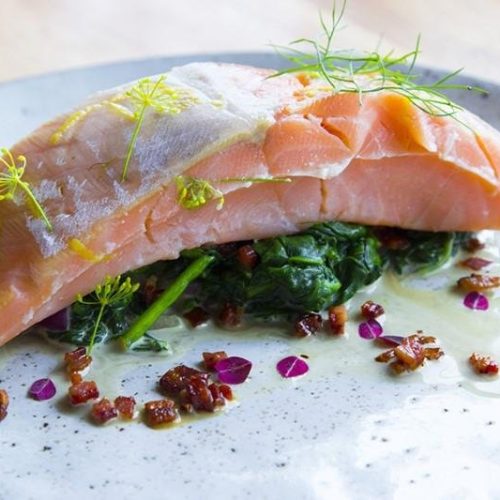
Easy Salmon sous vide
Salmon fillet cooked sous vide. The technique ensures that the flavor is delicious and the fillet is both warm and almost fresh in the center. We are privileged here on the site that some of the country's best food writers publish a recipe with us.
Ingredients
Salmon sous vide
- 2 pcs. Salmon Fillet
- Dill
- 1 pcs. Lemon Organic and unsprayed
- Olive Oil
- 55 gram Salt Fine salt
- 0.5 l Water
Creamed Spinach
- 1 package Fresh spinach Frozen spinach can also be used
- 100 gram Whipping Cream You should use less if you use frozen spinach
- 100 gram Ham It can be Fanø ham or other good ham
- 1 pcs. Shallots
- Nutmeg
- Salt
- Pepper
Instructions
Salmon sous vide
- One of the ways to keep your salmon fillet juicy is a gourmet salting before you start.
- Pour salt and water into a bowl and make sure it is well mixed.
- Start by removing the skin of the salmon fillets and place them in the brine. Let them sit for 30 minutes.
- Rinse them under the cold tap and pat them dry. It's important to rinse them, or they will be very salty.
- Grate the zest of the lemon. Be careful not to get the white part, it's bitter.
- Brush your salmon with the oil and then sprinkle fresh dill and lemon zest over it.
- Vacuum pack the fish and cook them sous vide/water bath for 25 minutes at 48 degrees Celsius (118 degrees Fahrenheit).
- Then take them out of the water bath and cut open the vacuum bag.
- Carefully remove the salmon and place them on the creamed spinach.
Creamed Spinach
- If you use fresh spinach, start by rinsing the leaves under the faucet.
- Then gently heat the cream and spinach in a thick-bottomed pot, making sure to stir often.
- While the cream and spinach are heating, cut the ham into small cubes and fry them until crispy in a pan.
- Meanwhile, cut the onion into rings.
- When the spinach has wilted in the pot, season with freshly ground pepper, salt, and grated nutmeg.
- Finally, fold the onion rings and about two-thirds of the fried ham into the pot.
Serving
- For serving, arrange a portion of creamed spinach in the middle of the plate.
- Carefully place your salmon on top and sprinkle the crispy ham around.
Notes
There is a reason why the salmon is put in brine: It is because the protein in the salmon will come out and form a white film. This does not only happen to salmon; it is a general occurrence when fatty fish are cooked at low temperatures.