


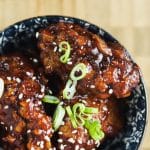
Recipe for yangnyeom wings – korean street food
Yangnyeom wings are a defining example of Korean fried chicken, where texture matters just as much as flavor. The goal is not simply fried wings with sauce, but chicken that stays crisp even after being fully coated in a sticky, sweet-spicy glaze. When it works, the sauce clings to the crust instead of soaking into it.
One of the main differences from many Western-style wings is the coating. Potato starch is used instead of flour, which creates a thin, crackly crust rather than a thick batter. This matters because yangnyeom wings are meant to be sauced generously. A starch-based crust holds its structure longer and gives a cleaner, sharper bite.
The wings are fried twice. The first fry cooks the meat through and renders fat from the skin. After a short rest, the second fry at a higher temperature dries the surface and sets the crust. This method is standard in Korean fried chicken shops and is essential if the wings are meant to stay crisp under sauce.
The yangnyeom sauce is built around gochujang, but it is balanced rather than aggressive. Ketchup adds body and mild sweetness, honey rounds out the heat, soy sauce provides salinity, and rice vinegar brings acidity. The sauce is simmered briefly to mellow the chili paste and pull the flavors together into a glossy glaze. A small amount of sesame oil is added at the end for aroma, not richness.
Yangnyeom wings are traditionally served with pickled daikon (chikin-mu). The radish is crisp, lightly sweet, and acidic, and it serves a clear purpose: cutting through the fat and resetting the palate. Without it, the wings quickly become heavy.
These wings are best served immediately, while the contrast between crisp crust and sticky sauce is at its peak. Yangnyeom wings are not subtle food. They are bold, balanced, and meant to be eaten hot, fast, and with intent.
FAQ
What makes yangnyeom wings different from buffalo wings?
Yangnyeom wings are about balance rather than heat. The sauce is sweet, savory, tangy, and mildly spicy, with gochujang providing depth instead of sharp chili burn.
Why use potato starch instead of flour?
Potato starch creates a thinner, crispier crust that stays crunchy after saucing. Flour absorbs more moisture and softens faster.
Is double frying necessary?
Yes. Double frying is what gives Korean fried chicken its signature texture. Skipping it results in softer skin and less durability under sauce.
Can the sauce be made less sweet?
Yes. The honey can be reduced slightly, but some sweetness is essential for balance.
Can the wings be made ahead of time?
The sauce can be prepared in advance, but the wings should be fried and glazed just before serving.
What can replace pickled daikon?
Quick-pickled radishes or cucumbers work, but daikon has the cleanest texture and most neutral sweetness.
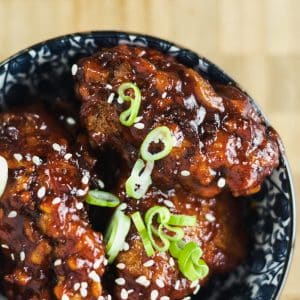
Yangnyeom Wings – Korean Street Food
Equipment
- 1 Large pot for frying
- 1 small saucepan for sauce
- 1 airtight container for pickling daikon
Ingredients
Chicken Wings
- 1 kilogram Raw chicken wings
- 5 grams Fine salt
- 1.5 grams Freshly ground black pepper
- 15 grams Rice wine
- 10 grams Garlic
- 80 grams Potato starch
- Oil for frying
Yangnyeom Sauce
- 30 grams Gochujang
- 30 grams Ketchup
- 30 grams Honey
- 20 grams Soy sauce
- 20 grams Rice vinegar
- 10 grams Garlic
- 5 grams Sesame oil
Topping
- 3 grams Toasted sesame seeds
- 20 grams Scallions
Side Dish
- 200 grams Daikon
- 100 grams Rice vinegar
- 100 grams Water
- 100 grams Sugar
- 3 grams Fine salt
Instructions
Wings and Sauce
- Marinate the wings with salt, pepper, rice wine, and garlic for 15–30 minutes.
- Coat the wings in potato starch and let them rest for 5 minutes.
- Heat the oil to 170 °C (340 °F) and fry the wings in batches for 6–8 minutes. Remove and let rest on a rack.
- Increase the oil temperature to 190 °C (375 °F) and fry the wings again for 2–3 minutes, until golden and very crispy. Return to the rack.
- Combine all sauce ingredients in a small saucepan and simmer for 2–3 minutes, until slightly thickened and glossy.
- Toss the hot wings in the sauce and top with sesame seeds and scallions.
- Serve with chikin-mu.
Chikin-mu
- Rinse and peel the daikon, then cut it into cubes about 1.5 cm (about 0.5 in).
- Combine all ingredients in an airtight container and shake or stir until the sugar and salt are dissolved.
- Refrigerate for at least 2 hours, preferably overnight.