



Recipe for morning pastry
Here in Denmark, we almost always have pastry on the breakfast table. Pastry is the epitome of breakfast cake. It is so Danish that cakes made from Danish pastry dough are called “DANISH” in English! Besides Spandauer, which is probably one of the most well-known, other examples include Butter Stang, Dagmar Tart, Copenhagen Poppy Seed Roll, and of course the French croissant.
There is often disagreement on whether the pastry should be made with butter or margarine. I won’t claim to settle that here, but as I see it, it’s best with butter and easiest with margarine. Most bakeries use a special margarine called roll-in margarine, but you can just use regular baking margarine.
I recommend using margarine when trying Danish pastry dough for the first time or if you are in a bit of a rush. If using butter, ensure to chill your ingredients. For instance, the flour should go into the freezer, and the dough should be placed in the fridge a couple of times during the process. However, it is worth the wait.
In any case, the pastries will definitely be a hit at the breakfast table or with afternoon coffee. Enjoy!
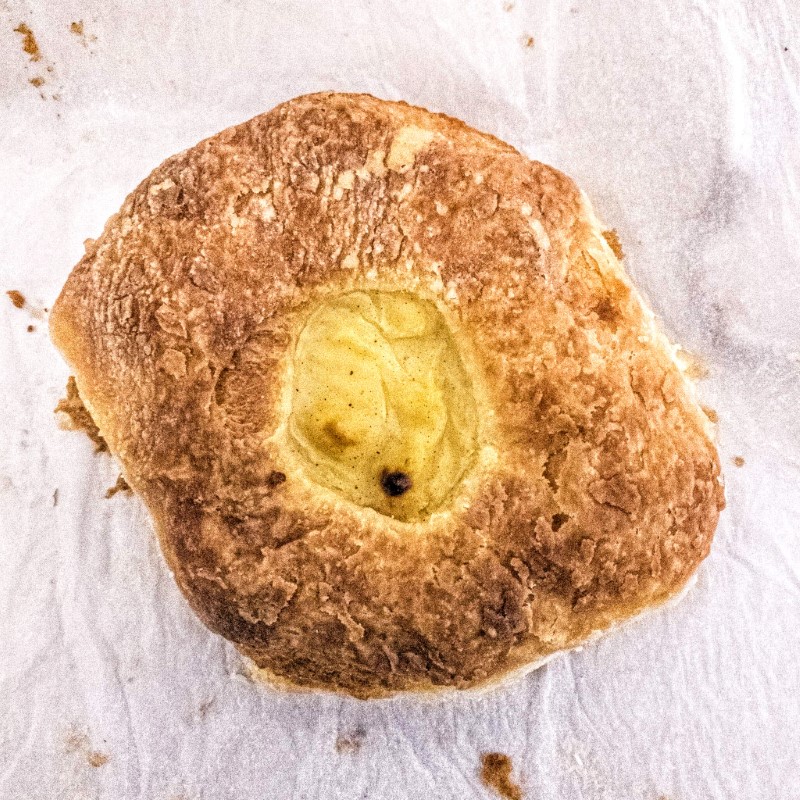

Morning pastry
Ingredients
Basic Dough
- 200 gram Milk
- 25 gram Yeast
- 40 gram Sugar
- 1 pcs. Egg
- 250 gram Flour
- 50 gram Butter
- 125 gram Flour
Folding the pastry
- Dough above-mentioned dough
- 500 gram Margarine
Cake Cream
- 50 gram Sugar
- 20 gram Vanilla Sugar
- 35 gram Cornstarch
- 0.5 pcs. Lemon grated peel
- 2 pcs. Egg
- 500 gram Whole Milk
Mayor’S Paste
- 150 gram Marzipan
- 150 gram Sugar
- 150 gram Margarine
Instructions
Basic dough
- Mix milk, yeast, sugar, and eggs thoroughly
- Add the flour and knead. Use a hand mixer with dough hooks
- Add butter – it should be soft, so give it 10-20 seconds in the microwave
- Knead for 2-3 minutes until it comes together well
- Add the rest of the flour and knead for 2-3 minutes
- Sprinkle the table well with flour
- Pour the dough onto the table and shape it into a ball (stretch it tightly)
- Let the dough rest for 30 minutes
Folding the Danish dough
- Roll the dough into a 30x30 square
- Flatten the margarine into a square slightly smaller than the dough
- Place the margarine in the center of the dough
- Indent a border about 2 cm into the margarine at both ends of the dough
- Fold the corners of the dough into the margarine, like wrapping a gift, and then fold the entire side into the center
- Repeat steps 4 and 5 on the last two sides
- Roll the dough 2 cm thick into a 1:3 rectangle – sprinkle a little flour on the table to prevent sticking
- Fold the dough in thirds and rotate it 90 degrees Celsius (194 degrees Fahrenheit)
- Repeat step 7, fold the dough in thirds, and rotate it 90 degrees Celsius (194 degrees Fahrenheit)
- Repeat step 7, fold the dough in thirds
Make the pastries
- Roll the dough out so it is about 40cm x 40cm
- Cut the dough into 16 pieces (10cm x 10cm)
- Fold the corners into the center of each piece and give the tips a slight press to secure them – if you want to make spandauer, you add the mayor's mixture in the center BEFORE folding the corners in
- Make an indentation in the center by pressing down with a couple of fingers
- Allow the pastries to rise for 30 minutes
- Place a tablespoon of custard in the center
- Bake the pastries at 180°C (355°F) fan-forced for about 20 minutes
- Take them out of the oven and let them cool on the baking sheet, then optionally decorate with icing or powdered sugar
Custard
- Put sugar, vanilla sugar, cornstarch, lemon peel, and eggs in a saucepan and whisk together well
- Heat it up while whisking and add whole milk a little at a time
- When the custard is nearing the boiling point, it will begin to thicken – it is important to keep stirring so it doesn't burn, and to ensure the custard boils for 1-2 minutes
- Remove the saucepan from the heat and let the custard cool. If you need it to cool quickly, pour the custard into a bowl and place it in the refrigerator. Preferably cover with plastic wrap touching the surface to prevent a skin from forming
Mayor's mixture
- Put sugar and marzipan in a bowl and mix with a hand mixer with dough hooks
- Add a bit of margarine at a time and stop mixing when everything is combined – do not overmix
Notes
When working with Danish dough, I often use these videos: