

An Italian bread with a surprisingly modern history
There’s something special about freshly baked bread, especially when it comes straight out of the oven with a beautifully crisp crust and a soft, airy center.
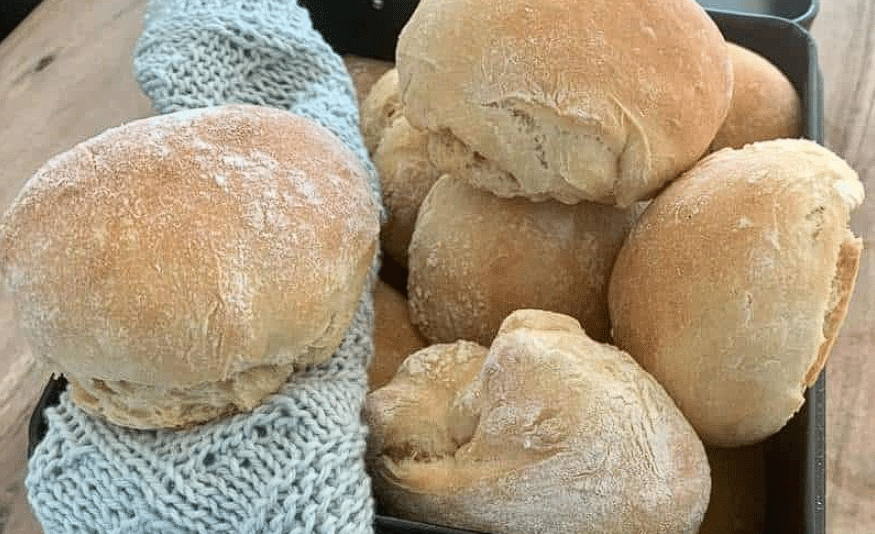
And if you love Italian ciabatta, these homemade ciabatta rolls might become your new favorite.
In Denmark, bread rolls are a big part of everyday life. They’re served for breakfast, brunch, birthday celebrations, and afternoon coffee, and they’re a popular choice for packed lunches.
So when I came across the idea of turning traditional Italian ciabatta into individual bread rolls, it immediately made sense.
But here’s something you might not know about ciabatta.
Although it feels like a traditional Italian bread that’s been around for centuries, it’s actually a relatively modern invention.
The ciabatta we know today was developed in 1982 by Italian miller Arnaldo Cavallari, partly as an Italian response to the growing popularity of French baguettes as sandwich bread.
The name itself comes from the Italian word for “slipper,” inspired by the bread’s long, relatively flat shape.
Within just a few years, ciabatta began spreading beyond Italy, eventually becoming one of the country’s most recognizable breads around the world.
And while the original loaf has its distinctive shape, there’s absolutely no reason you can’t enjoy the same wonderful bread in smaller, more convenient portions.
That’s exactly what makes these ciabatta rolls such a brilliant idea.
Just five ingredients and almost no effort
One of my favorite things about this recipe is how incredibly simple the ingredient list is.
All you need is yeast, water, salt, all-purpose flour, and durum wheat flour.
That’s it.
No complicated techniques, no long list of ingredients, and no need to spend ages kneading dough.
You simply dissolve the yeast in one liter of lukewarm water, add the salt, and stir in the two types of flour.
Everything is mixed together with a wooden spoon until you have a uniform dough.
And here’s where you need to resist one of the most common instincts in bread baking.
The dough is supposed to be wet and sticky.
If you’re used to making traditional bread rolls, you might be tempted to add more flour until the dough becomes easier to handle.
Don’t.
That high moisture content is part of what gives ciabatta its characteristic texture, with an airy interior and a wonderfully crisp crust.
Instead of kneading the dough until it’s smooth and elastic, simply cover the bowl and place it in the refrigerator until the next day.
The long, slow rise does much of the work for you.
And that makes this recipe incredibly convenient.
You can prepare the dough in the evening, leave it overnight, and bake fresh ciabatta rolls the following morning.
Or you can mix everything together in the morning and bake the rolls in time for dinner.
Either way, the actual hands-on work is surprisingly minimal.
The secret is in the sticky dough
When it’s time to shape the rolls, there’s no need to worry about handling that wet dough perfectly.
Cold, wet fingers can make the process easier, but you can also use two ordinary spoons to transfer portions of dough directly onto a baking sheet.
There’s no need to create perfectly round, identical rolls.
In fact, a slightly rustic appearance suits ciabatta beautifully.
The rolls are then baked at 250°C (482°F) for approximately 20 minutes.
That high oven temperature helps create the delicious crust, while the wet dough gives the bread its characteristic ciabatta texture.
And here’s another useful detail.
You don’t necessarily have to make rolls.
The exact same dough can also be shaped into longer loaves or baguette-style breads, giving you several options from one simple recipe.
Personally, though, I’d choose the smaller rolls.
They’re easier to use throughout the day and perfect for everything from breakfast to sandwiches.
Perfect for breakfast, lunch, or dinner
These ciabatta rolls sit somewhere between a classic breakfast roll and a rustic Italian loaf.
Serve them warm with a little butter and cheese, and you’ve got a wonderful breakfast.
Slice them open and fill them with your favorite sandwich ingredients, and they become an easy homemade lunch.
They’re also excellent alongside soups, salads, pasta dishes, or almost any dinner that could benefit from a piece of freshly baked bread.
And because ciabatta was originally developed partly with sandwiches in mind, making it in individual portions feels like a particularly natural evolution.
Of course, there’s nothing wrong with picking up a bag of ready-made ciabatta rolls at the supermarket.
But when the homemade version requires just five ingredients and a dough that practically takes care of itself in the refrigerator, it’s difficult to find a good reason not to give it a try.
You might even discover that these simple homemade rolls become a regular part of your baking routine.
Happy baking, and enjoy!
Homemade ciabatta rolls
I love baking, and there’s nothing quite like the smell of freshly baked bread. These delicious homemade ciabatta rolls are perfect for sandwiches and packed lunches.
Read the full recipe here
Frequently asked questions
Why should ciabatta dough be sticky?
The dough in this recipe is supposed to be wet and sticky. Its high moisture content helps produce the characteristic texture of ciabatta, so avoid adding extra flour simply to make it easier to handle.
Can ciabatta dough rise overnight?
Yes! You can prepare the dough in the evening and leave it covered in the refrigerator overnight. The following morning, simply shape the rolls and bake them.
Can you make longer loaves using the same dough?
Absolutely. This recipe works for both individual ciabatta rolls and longer loaves. Simply shape the dough according to how you plan to serve the bread.