

Boneless, skinless chicken breast is the most expensive way to buy chicken and the easiest to ruin. It has almost no fat, so the window between juicy and dry is about two minutes wide.
The cuts I actually reach for cost less per pound, forgive a distracted cook, and taste more like chicken. The USDA line is the same for all of them: cook poultry to 165°F (74°C), and then let the cut, not the price tag, do the work.
1. Bone-in, skin-on thighs
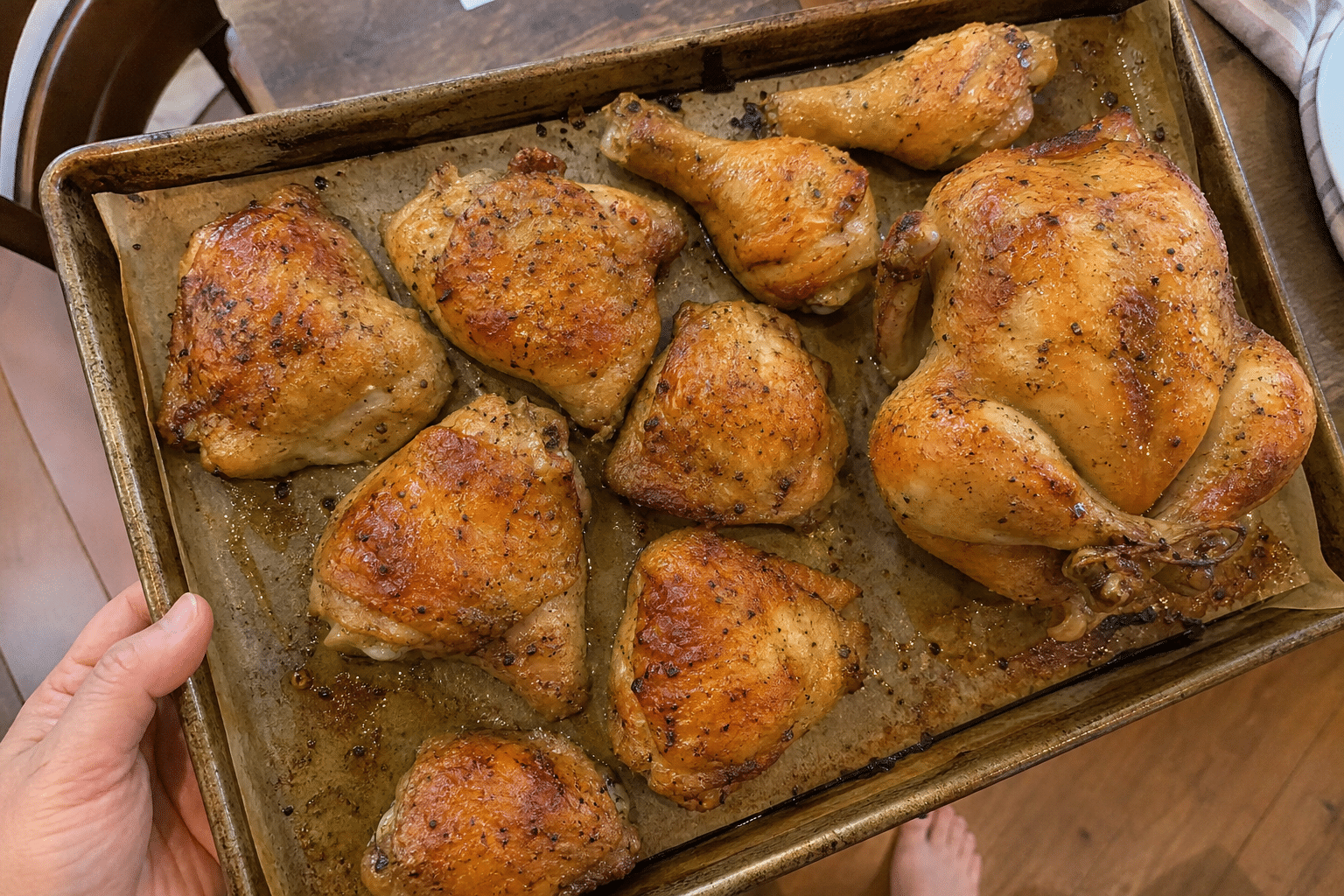
This is my default chicken. The dark meat has enough fat and connective tissue that it stays moist even if you overshoot 165°F, and the skin crisps into the best part of the plate.
Roast them skin-side up at 425°F (220°C) until the skin is deep gold. No brining, no babysitting.
2. Boneless thighs
All the forgiveness of thighs with none of the knife work. They cook fast, take a marinade well, and never seize up the way a breast does.
Sear them hard in a hot pan, or thread them onto skewers. They are my go-to for curries and stir-fries.
Read more: Green bean casserole with mushroom cream sauce and crispy shallots
3. Drumsticks
Often the cheapest piece in the case, and almost impossible to dry out. The meat clings to one easy bone, so they are the piece I hand to kids.
Toss them in a dry rub and roast, or simmer them into a braise. The collagen around the bone keeps them succulent.
4. Whole chicken
Buying the bird whole is cheaper per pound than any single part, and you get a carcass for stock. Spatchcock it, flatten it, and it roasts evenly in about 45 minutes.
One bird gives you two kinds of meat and a free pot of broth. That is three meals from one purchase.
Read more: The chicken tikka masala recipe that finally tastes like the restaurant, made at home
5. Leg quarters
A thigh and a drumstick in one piece, usually sold in bulk bags for next to nothing. All dark meat, all forgiving.
Roast them low until the meat pulls away from the bone, or braise them in a sauce that you want to soak up every drop of.
6. Chicken wings
Not just for game day. Wings are mostly skin and collagen, which is exactly why they turn so crisp and never go chalky.
Roast them hot or confit them slow in their own fat. Either way they cost a fraction of breast meat.
Read more: Festive hot chocolate spiked with Baileys and topped with vanilla cream, the Danish way
7. Bone-in breast
If you genuinely want white meat, buy it on the bone with the skin on. The bone slows the cooking and the skin shields the meat, so it stays far juicier than the boneless version.
Roast it and rest it, then carve it off the bone. Save the bones for stock.
8. Chicken backs and carcasses
The cheapest chicken in the store is the part nobody fights over. Backs, necks, and carcasses are almost free and make the richest stock you will ever taste.
Roast them first for color, then simmer them for a few hours. That stock turns every future dinner better.
How to keep any of them juicy
- Stop cooking to a time, cook to a temperature. Pull poultry at 165°F (74°C) and dark meat will still be moist; guessing is how breasts turn to cardboard.
- Leave the skin on. It renders, bastes the meat, and crisps into the best bite. You can always remove it after.
- Rest it before you cut. Five minutes lets the juices settle back into the meat instead of running onto the board.
- Buy bone-in when you can. The bone moderates the heat and keeps the meat from drying out at the edges.