
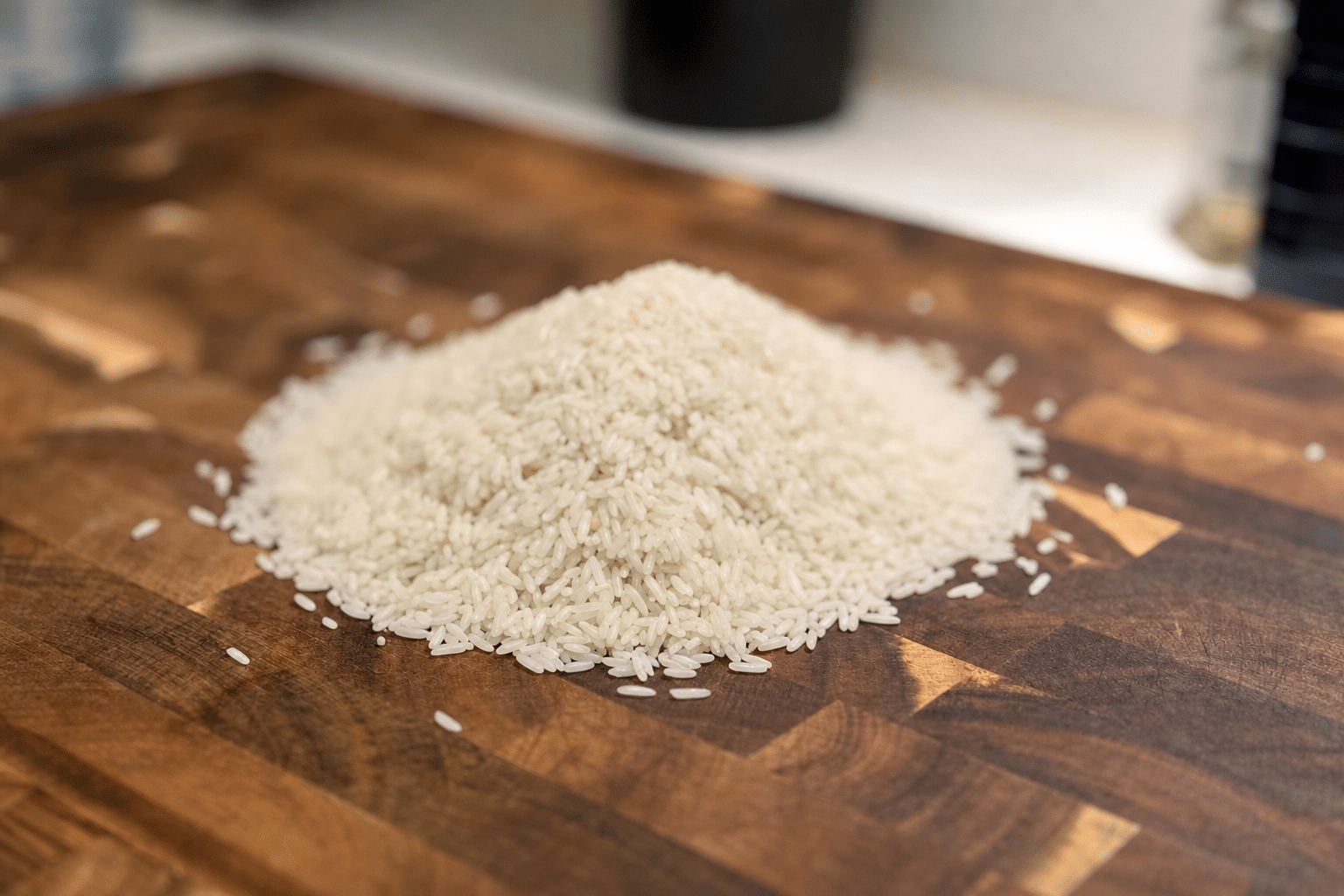

Rice trips up home cooks constantly, even though it is one of the simplest grains to prepare. The grains come out clumped, mushy, or dry, and in almost every case the problem is not the cooking – it is the step immediately after. Most of us lift the lid the moment the timer goes off, give the pot a stir, and serve. That impatience is exactly what ruins it.
The fix has a name: the 12-12 rule.
Why the resting phase matters
When the heat goes off, the rice is not done yet. The steam trapped inside the pot is still doing real work, drawing moisture evenly into every grain. Lift the lid too early and you release that steam before it has finished, leaving you with rice that is wet on the surface and unevenly cooked throughout.
It is the same reason a good rice cooker outperforms a cheap one: a quality machine holds the steam in and lets the rice settle properly before it opens. The good news is you can get the same result with nothing more than a regular pot.
The 12-12 rule
Cook the rice for 12 minutes over gentle heat, then rest it for 12 minutes with the lid on and the heat off.
For best results, fold a clean kitchen towel and lay it over the mouth of the pot before you put the lid back on. The towel absorbs the condensation that would otherwise drip back down onto the rice and turn it soggy. It is a small extra step, and the difference is noticeable.
Read more: The mac and cheese with bacon and mushrooms that finally feels like a grown-up dinner
This method works for rice going into curries, stews, and grain bowls – and the leftover rice, cold from the fridge overnight, makes genuinely excellent fried rice.
A little history
Rice has been cultivated for thousands of years, originating in Asia where warmth and plentiful water made large-scale growing possible. Today it is one of the most consumed grains on earth, valued for being filling, easy to produce in volume, and endlessly adaptable across cuisines.
Which rice for which dish
Not every variety behaves the same way. Here is a quick guide.
Read more: Denmark’s leading sous vide expert shares the 5 beginner mistakes that ruin results
Basmati comes from India and Pakistan. The grains are long, slim, and mildly nutty, and they stay separate rather than clumping together. This is my go-to for curries and stews.
Jasmine is a Thai variety with noticeably more fragrance and a slightly stickier texture than basmati. It works well in stir-fries and vegetable sides where you want the grains to hold together a bit.
Parboiled rice is heat-treated before milling, which locks in more nutrients and makes the grains harder to overcook. The standard supermarket versions do not tend to deliver great results, in my experience.
Read more: The Danish shrimp salad with homemade mayo that makes the best open-faced sandwich you have ever had
Brown rice keeps its outer hull, giving it a chewier texture, nuttier flavor, and more fiber than white rice. It needs a longer cooking time and is worth the effort if you are specifically after those nutritional benefits.
Risotto rice (arborio or carnaroli) is built to release starch as it cooks, which is what creates risotto’s creamy consistency. Keep this one strictly for risotto – it is designed for a completely different technique and does not work for plain boiled rice.
Pudding rice has short, round grains that absorb liquid into a soft, creamy mass. It is the right choice for rice pudding and similar desserts.
Storing leftover rice safely
If you are cooking a bigger batch to use for fried rice the next day, refrigerate the leftovers promptly. Cool the rice within two hours of cooking, transfer it to a shallow, sealed container, and get it into the fridge. The USDA Food Safety and Inspection Service states that leftovers can be kept in the refrigerator for 3 to 4 days.