
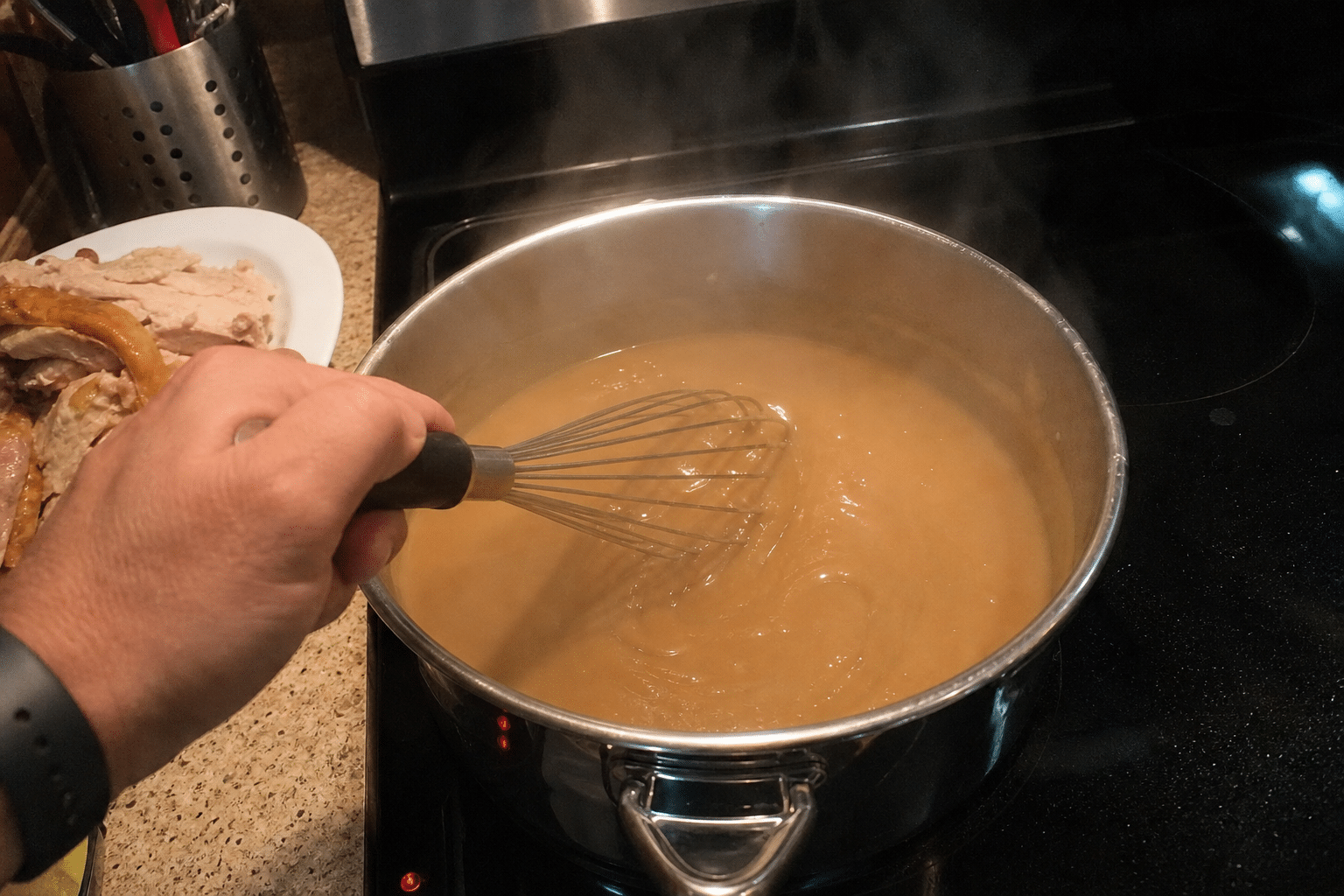

Gravy is the last thing you make and the thing most likely to go wrong, right when everyone is seated and waiting. The two classic disasters are lumps and a thin, watery pour. Both are fixable in a couple of minutes once you know the moves.
Lumps come from flour that did not blend, and thinness comes from not enough thickener or not enough reduction. Neither means starting over. Here is how I rescue a troubled gravy.
Read more: Three-ingredient honey-soy chicken skewers that everyone asks for at the grill
What you need
- Your pan drippings and stock
- A fine-mesh strainer
- Flour or cornstarch for a slurry
- A whisk
- Butter, salt, and pepper
How I make it
- For lumps, whisk the gravy hard off the heat; most small lumps will beat out.
- If stubborn lumps remain, pour the whole thing through a fine strainer and return the smooth gravy to the pan.
- For thin gravy, mix a spoonful of cornstarch with a little cold water into a smooth slurry.
- Whisk the slurry into the simmering gravy and let it bubble for a minute to thicken.
- If it is still thin, let it simmer and reduce, which concentrates both body and flavor.
- Taste and finish with a knob of butter, salt, and pepper before serving.
How to get it right every time
- Strain out lumps. When whisking will not do it, a fine strainer gives you smooth gravy instantly.
- Use a cold slurry. Cornstarch mixed with cold water whisks in without clumping, unlike dry flour.
- Simmer to thicken. A thin gravy reduces and thickens on its own if you give it a few minutes.
- Season at the end. Reducing concentrates the salt, so taste and adjust last, not first.