

Any excuse to talk about sous vide
If there’s one cooking technique we love exploring here at Gastrofun, it’s sous vide. And we’ll take just about any excuse to talk about it.
The concept is brilliant, especially when you want precise control over how your meat is cooked.
With sous vide, the meat is vacuum-sealed in a bag and placed in a temperature-controlled water bath. This eliminates much of the pressure that comes with traditional cooking methods, where just a few extra minutes can make the difference between perfectly cooked and overdone meat.
Chicken breast is a particularly good example.
Most of us have probably experienced being served a piece of chicken that was dry, tough, and rather disappointing.
But with this recipe, things are different.
The chicken breasts are simply seasoned with salt and pepper, vacuum-sealed, and cooked in a water bath at 59°C (138°F) for 1 hour and 15 minutes.
There’s no complicated combination of spices or secret ingredient involved.
The real trick is controlling the time and temperature.
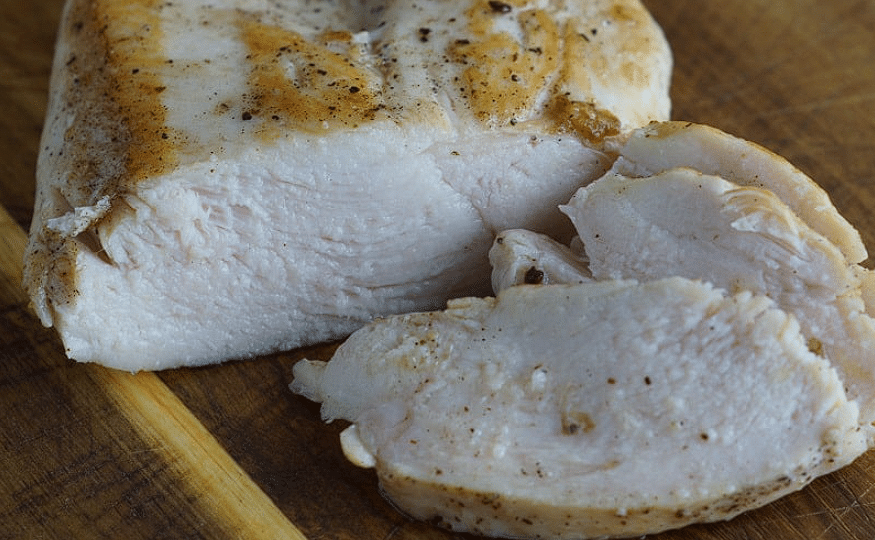
The result is an incredibly juicy chicken breast, with much more room for precision than you’d normally have when frying chicken in a pan.
Sous vide is all about time and temperature
If you’re familiar with conventional chicken cooking recommendations, the idea of preparing chicken at just 59°C (138°F) might sound surprising.
After all, many people associate safely cooked chicken with a considerably higher internal temperature.
But sous vide works differently from quickly frying or roasting meat.
Food safety isn’t simply about reaching one specific temperature. It’s about the combination of temperature and how long the food remains at that temperature.
With sous vide, lower temperatures are maintained for longer periods, allowing the meat to cook gently while reducing harmful bacteria when a validated time-and-temperature combination is used.
That distinction is important.
You should always follow a properly tested sous vide recipe and pay attention to the specific type and thickness of meat you’re using. The time required for safe cooking depends on how long the center of the meat takes to reach the target temperature, as well as the necessary holding time.
This particular recipe specifies 100% pure chicken breast, rather than chicken that has been injected with brine or sold pre-marinated.
It’s an important detail for this preparation method.
And when everything is done correctly, one of the biggest advantages becomes clear: You can achieve remarkably consistent results every single time.
Even small adjustments to the temperature can make a noticeable difference to the final texture of the meat.
That’s exactly why sous vide is such a fascinating technique to experiment with.
The chicken just needs one final blast of heat
When the chicken comes out of the vacuum bag, the sous vide cooking process is complete.
But there’s still one thing missing.
That beautiful golden-brown crust.
And this is where the approach needs to be almost the exact opposite of what you’ve just been doing.
While sous vide cooking is slow and precise, the final searing should be extremely hot and very quick.
Start by thoroughly patting the chicken dry with paper towels. This is essential because moisture on the surface makes it much harder to achieve a proper sear.
Once dry, you can finish the chicken on a very hot grill, in a frying pan, on a grill pan, or even with a kitchen blowtorch.
Ghee is particularly suitable for pan-searing because it tolerates high temperatures well.
Alternatively, you can use a combination of neutral cooking oil and butter.
The goal is simple: Get plenty of color on the outside as quickly as possible without allowing too much additional heat to penetrate the already-cooked chicken.
Think of it as giving the meat one very quick, very hot kiss.
That’s all it needs.
Afterward, you’ll have beautifully juicy chicken breast with a delicious seared exterior.
Serve it with anything from fresh salad and vegetables to roasted potatoes or tzatziki.
Once you’ve got the equipment in your kitchen, it’s easy to understand why sous vide becomes one of those techniques you’ll keep finding excuses to use.
Happy cooking, and enjoy!
Frequently asked questions
Why does sous vide make chicken breast so juicy?
Sous vide allows you to control the cooking temperature very precisely. This helps prevent the chicken from becoming overcooked, which is a common problem when using high heat in a frying pan or oven.
Why should you pat the chicken dry before searing?
A dry surface makes it much easier to develop a beautiful golden-brown crust quickly. That’s why it’s important to thoroughly dry the chicken breast after removing it from the vacuum bag.
Why should you sear chicken quickly after sous vide cooking?
The chicken has already been cooked in the water bath. The final searing is only intended to create a flavorful crust, so it should be done over very high heat for a short time to avoid unnecessarily cooking the inside further.