
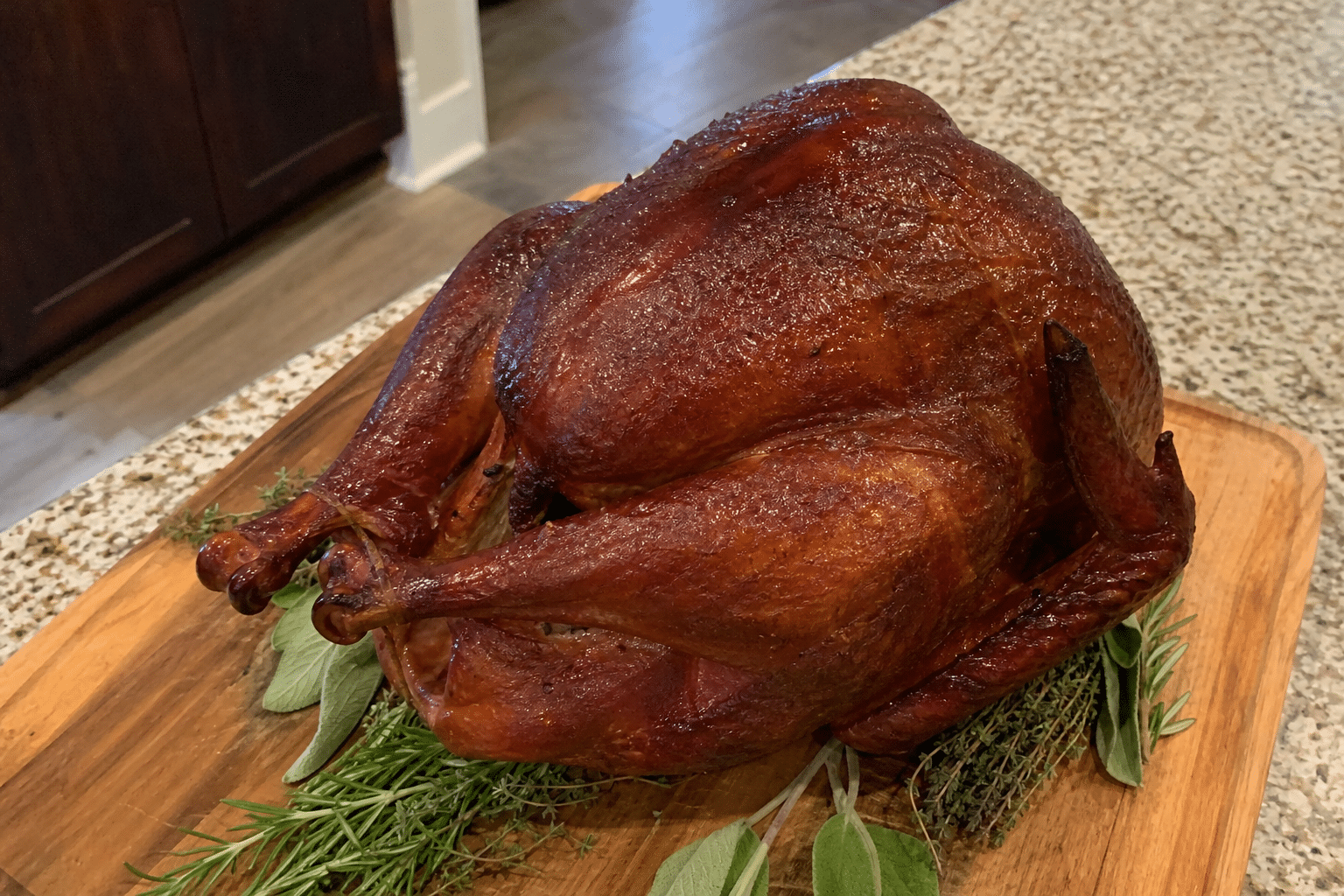

A smoked turkey is a revelation if you have only ever had it roasted. Low heat and wood smoke give the meat a rosy edge and a deep, savory flavor you cannot get from an oven, and it frees up that oven for everything else on the big day.
It is less work than it sounds. The smoker does the heavy lifting; your job is to keep the temperature steady and pull the bird at the right internal reading. Here is how I do it.
Read more: Klejner: the crispy cardamom-spiced twists Danes fry every Christmas
What you need
- 1 whole turkey, about 12 to 14 lb (5.4 to 6.4 kg)
- A smoker and your wood of choice, such as apple or hickory
- A dry rub of salt, pepper, paprika, and garlic
- 4 tablespoons (55 g) softened butter
- A little oil
- A reliable meat thermometer
How I make it
- Salt and rub the turkey a day ahead, and push butter under the skin.
- Bring the smoker to a steady 275 to 300°F (135 to 150°C).
- Set the turkey in the smoker and keep the temperature steady, adding wood as needed for smoke.
- Smoke the bird until the thickest part of the breast and thigh reaches 165°F (74°C); smoked or roasted, turkey has to hit that safe mark.
- Spritz or baste now and then to keep the skin from drying out.
- Rest it for 20 minutes before carving.
How to get it right every time
- Keep the heat steady. A stable 275 to 300°F (135 to 150°C) cooks the bird evenly and takes on smoke slowly.
- Use a thermometer. 165°F (74°C) is the safe point; smoke color is not a doneness cue.
- Choose a milder wood. Apple or cherry flatters turkey; heavy woods can overpower it.
- Expect a pink ring. A rosy smoke ring under the skin is normal and safe, not undercooked meat.