
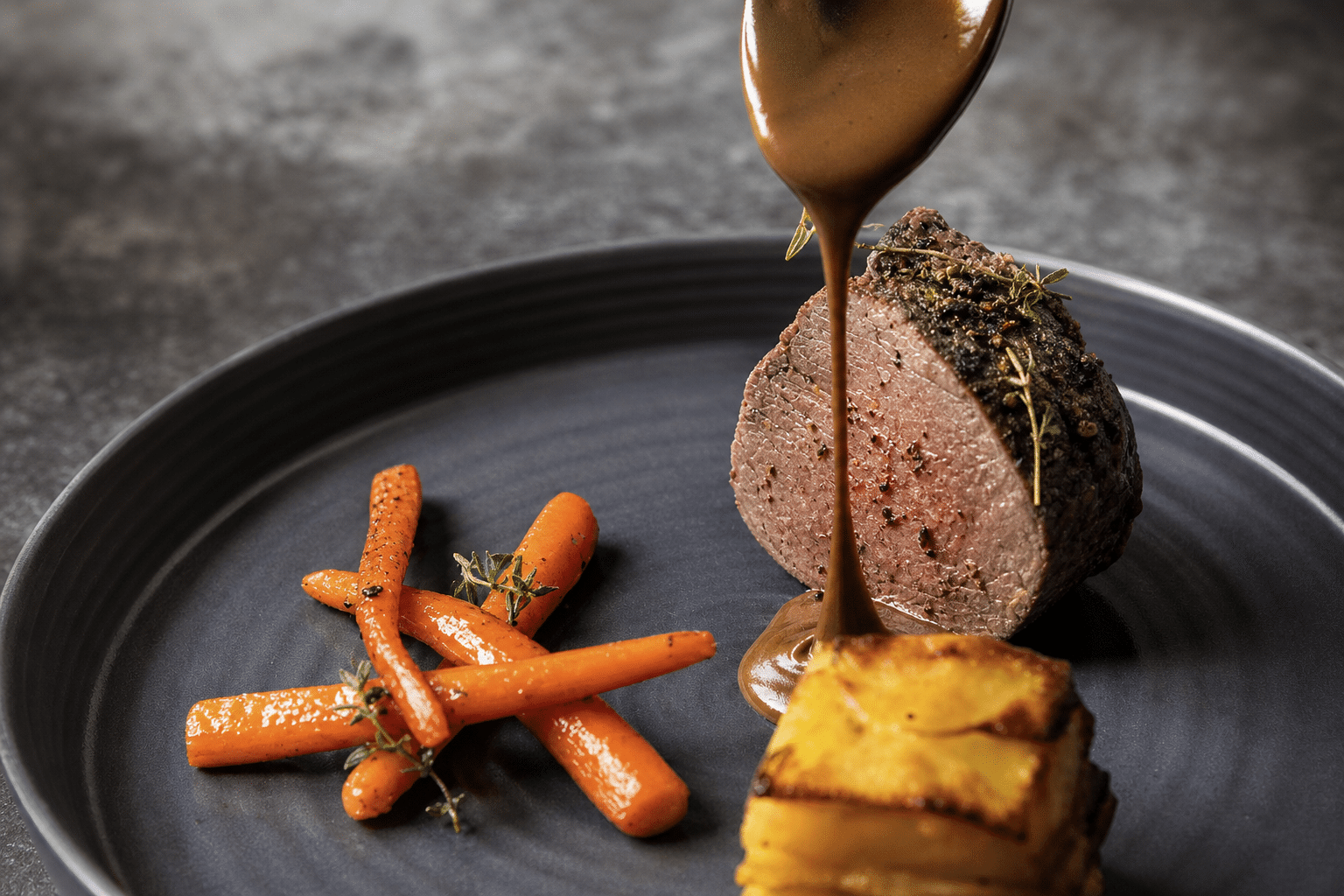

French cuisine runs on a system of building blocks. At the base of that system sit five “mother sauces” – each one a distinct preparation with its own base ingredient and thickening method.
Master the five mothers and you unlock an entire extended family of derivatives: bearnaise, mornay, demi-glace, and many more are each just a mother sauce with one or two things added.
These sauces show up everywhere in professional kitchens – and once you understand their logic, they are well within reach at home too.
Hollandaise
Hollandaise is an emulsion sauce made from butter and egg yolks. The emulsion is what defines it: fat is held suspended in liquid, giving the sauce its dense, velvety body. It is seasoned with black pepper, cayenne, and lemon juice or vinegar.
Read more: Classic pavlova with whipped cream and berries: crispy outside, marshmallow-soft inside
It pairs with eggs, vegetables, and poultry, and is best known in the United States as the sauce over eggs Benedict.
Child sauces:
- Bearnaise – hollandaise with tarragon and shallots, and the sauce most home cooks end up making most often
- Maltaise – hollandaise finished with blood orange juice
- Mousseline – hollandaise folded with whipped cream for a lighter, airier texture
- Choron – hollandaise with tomato purée added
Tomato sauce
The French tomato sauce goes deeper than a simple reduction. It is thickened by purée, reduction, or roux, and is built on a base of mirepoix (diced onion, carrot, and celery) together with meat or salted bacon for body and depth.
The result is a versatile sauce that works across pasta, vegetables, fish, beef, veal, poultry, and polenta.
Read more: The pulled pork burger recipe that actually works in a regular home oven
Child sauces:
- Puttanesca
- Creole sauce
Espagnole
Espagnole is a rich brown sauce built from veal or beef stock with carrots and tomato, thickened with a brown roux. The roux is cooked longer than a white one, which gives it its dark color and a subtle nutty undertone.
It is the natural companion for roasted meats – beef, veal, lamb, and duck. Its most famous derivative is demi-glace, a concentrated reduction of espagnole and red wine that you will find behind most restaurant brown sauces.
Child sauces:
- Demi-glace – espagnole reduced with red wine
- Mushroom sauce
- Madeira sauce
- Bordelaise
Bechamel
Bechamel is the most familiar of the five for most home cooks. It is a white sauce: butter and flour are cooked together into a white roux, then milk is added and cooked until the sauce thickens.
Read more: The one folding step that finally makes homemade white bread rise properly
Simple and reliable, it forms the base for lasagne, pasta bakes, vegetable gratins, and dishes built on eggs or poultry.
Child sauces:
- Mornay – bechamel with cheese, the sauce behind a good mac and cheese or croque monsieur
- Parsley sauce
- Onion sauce
Veloute
Veloute is the lighter counterpart to bechamel. Instead of milk, it uses a pale stock – chicken, veal, or fish – thickened with a light roux. The result is a delicate, silky sauce suited to lighter dishes: vegetables, fish, pasta, and poultry.
Child sauces:
- Curry sauce
- Horseradish sauce
- Lobster sauce