
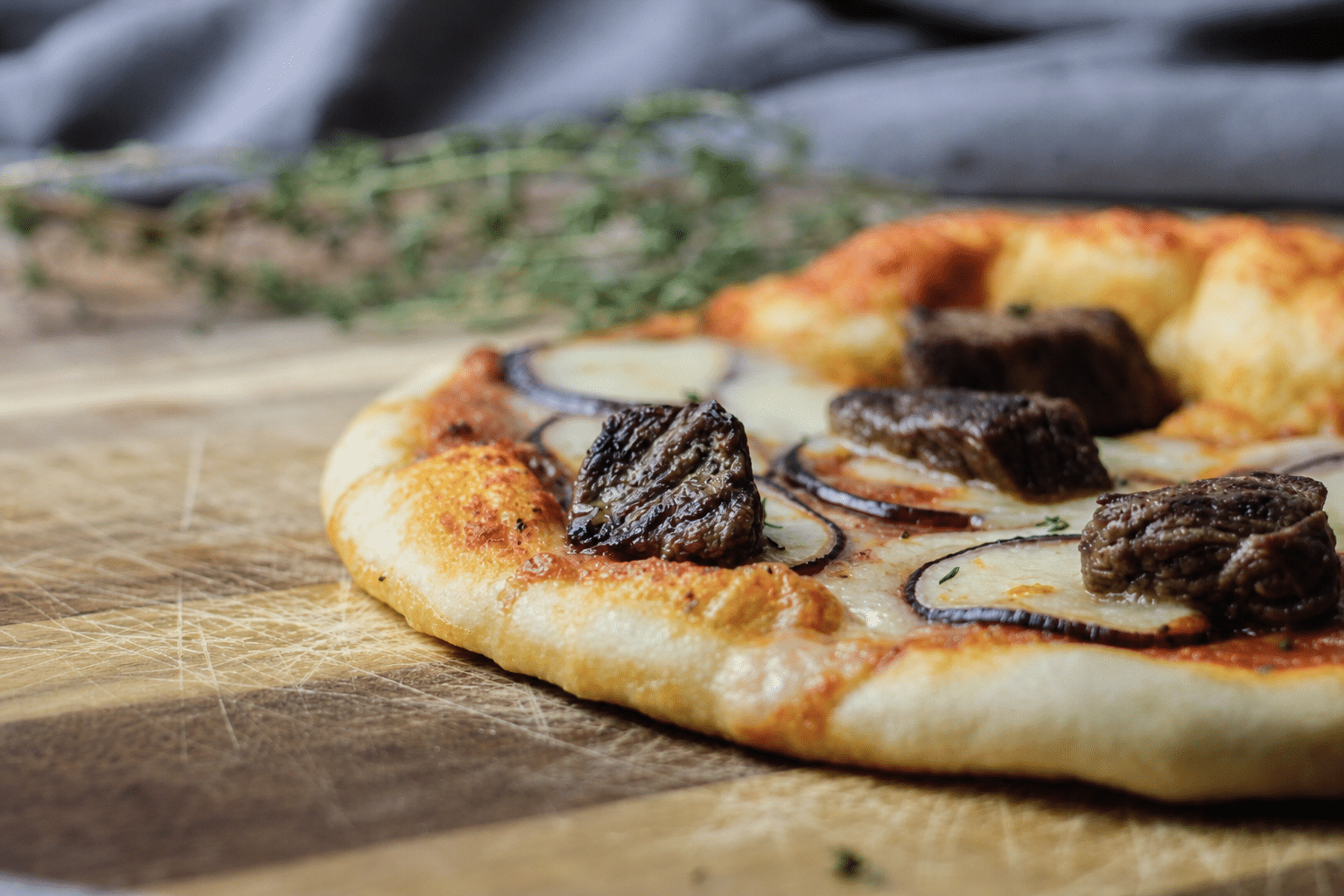

I used to believe great pizza was a restaurant thing. The kind where the crust blisters at the edge and the toppings have been actually thought through. Turns out, most of what separates that pizza from homemade is not a wood-fired oven or imported flour. It is the quality of a few ingredients and how you treat them before they hit the dough.
This pizza is my proof. Beef tenderloin on pizza sounds expensive and complicated, but 7 oz (200 g) of it covers four full pizzas, and the technique is nothing more than a quick sear in a hot pan. Pair that with a homemade dough made with durum flour, fresh mozzarella, red onion, and fresh thyme scattered over right at the end, and you have something that feels like it came from a kitchen with a wood-fired oven – even though it came from yours.
Why this recipe works
The dough has durum flour in it. That blend of all-purpose and durum flour gives the crust a chewiness and a slightly golden color that plain white flour just cannot match. Durum is the same flour used in dried pasta, and it brings a nuttier, more complex flavor to the base.
The oven runs at 510°F (265°C). This is the temperature where the Maillard reaction really kicks in. At that heat, the sugars and proteins in the dough brown together and produce the deep, slightly caramelized flavor and crisp-tender texture that makes a crust worth eating. Bake a pizza at 375°F and you get something pale and bready. Crank the oven to 510°F and the edges blister and char in under 10 minutes.
The beef is seared first. A quick, hard sear in sunflower oil over the highest heat you have gives the tenderloin a crust and concentrates its flavor before it ever touches the pizza. It goes on half-cooked and finishes in the oven, so you get browned, flavorful meat on each slice rather than gray, steamed beef.
Ingredients
Makes 4 pizzas | Total time: about 1 hour 45 minutes (includes 1 hour 15 minutes rising time)
For the dough:
- 2 cups (250 g) all-purpose flour, plus more for kneading
- 1 cup (150 g) durum flour (semolina flour works as a substitute)
- 1 cup (250 ml) cold water
- 4½ tablespoons (70 ml) olive oil, plus a little extra for the bowl
- about 1 oz (25 g) fresh yeast, or 2¼ teaspoons active dry yeast
- 1 teaspoon salt
For the toppings:
- 7 oz (200 g) beef tenderloin, cut into roughly 1½-inch (4 cm) cubes
- 2 tablespoons sunflower oil
- 3½ oz (100 g) fresh mozzarella
- 1 red onion, thinly sliced into rings
- 1⅔ cups (400 ml) tomato sauce
- 4 sprigs fresh thyme
- Salt and pepper
Instructions
1. Dissolve the yeast. If using fresh yeast, crumble it into the cold water and stir until dissolved. If using active dry yeast, use lukewarm water (about 105°F / 40°C) instead, dissolve the yeast, and let it sit for 5 minutes until foamy.
2. Mix the dough. Add the salt and olive oil to the yeast mixture and stir. Add a few spoonfuls of all-purpose flour and mix to combine. Add the durum flour and stir it in. Then add the remaining all-purpose flour a little at a time, stirring and then kneading on a floured counter until the dough is smooth and just barely stops sticking to your hands.
3. Let it rise. Rub a large bowl with a little olive oil, place the dough in it, and turn it so the whole surface is coated. Cover with a clean kitchen towel and let rise at room temperature for 1 hour 15 minutes.
4. Preheat the oven. Set it to 510°F (265°C) on conventional (non-convection) heat. Place your pizza stone, or the upside-down flat bottom of a cast-iron skillet, on the top rack and let it heat for at least 30 minutes.
5. Sear the beef. Pat the tenderloin pieces dry with paper towels and season with salt and pepper. Heat 2 tablespoons of sunflower oil in a heavy skillet over the highest heat you have until it shimmers. Add the beef and sear for about 1 minute per side until well browned all over. The pieces do not need to be cooked through at this stage – they finish in the oven. Set them aside.
Read more: How to make homemade chocolate eggs with a surprise inside, using real tempered chocolate
6. Shape the pizzas. Divide the risen dough into four equal pieces. On a lightly floured surface, roll each piece out to about ⅛ inch (3 mm) thick.
7. Top each pizza. Spread a thin, even layer of tomato sauce over each base. Scatter mozzarella, red onion rings, and the seared beef pieces over the top.
8. Bake. Slide each pizza onto the hot stone or cast-iron surface and bake for 7 to 10 minutes until the crust is deep golden brown and the cheese is bubbling. The beef pieces should reach an internal temperature of 145°F (63°C).
9. Add thyme and serve. Strip the leaves from the thyme sprigs and scatter them over the finished pizzas right out of the oven. The residual heat is plenty to release the herb’s fragrance without cooking it flat.
Read more: The Thanksgiving turkey breast that stays juicy without the hassle of roasting a whole bird
Tips and variations
No pizza stone? Use cast-iron. A cast-iron skillet or griddle flipped upside down on the oven rack works beautifully. The mass of the iron holds heat the same way a stone does. I have made these on the flat bottom of a cast-iron grill pan and they came out exactly as crisp and blistered as on a stone. Give it at least 30 minutes to preheat.
Take the oven temperature seriously. Many home ovens lose significant heat when you open the door. Preheat for a full 45 minutes if you can and work quickly when loading the pizza.
Put the thyme on after, not before. Fresh thyme has nothing left to offer after 10 minutes at 510°F. Strip the leaves and scatter them over the finished pizza – you get the herbal brightness, not cooked-out bitterness.
Active dry yeast note. Fresh yeast, sold in small refrigerated blocks, is common in Europe but harder to find in many parts of the US. Active dry yeast is a straightforward substitute at a 3-to-1 ratio: 25 g fresh yeast equals about 2¼ teaspoons active dry yeast. The one difference is water temperature – active dry yeast needs lukewarm water to activate, not the cold water the original recipe calls for.
Make-ahead dough. You can do the rise overnight in the refrigerator right after kneading. Take the dough out 30 to 45 minutes before you want to shape it.