

This article is translated from English and deals with meat brining.
In English, it’s referred to as brine, which in Danish can be called both lagesaltning, vådsaltning, and sprængning. In this article, lagesaltning is used, as it contrasts with tørsaltning, which the article also discusses.
Many recipes for pork loin or tenderloin suggest brining the meat to make it more tender and juicy. Many people continue brining during cooking, even though sous vide as a method already does just that. Therefore, I decided to try it again. Compared to a test I did four years ago, this time I used a more common cut (pork tenderloin), I was more precise with the amount of salt, and I used less of it. Overall, I can now confidently say:
- Salt the meat right before you cook it sous vide. However, you can salt it earlier if, for example, you vacuum pack it and put it in the freezer, so it’s ready to go into the sous vide. It will have a slightly different taste, though
- Brining unnecessarily dilutes the flavor of the meat
- If you salt the meat after sous vide cooking, the meat loses juice, and the salt stays only on the outside instead of being evenly distributed
Read on to find out how I more precisely arrived at the above conclusions.
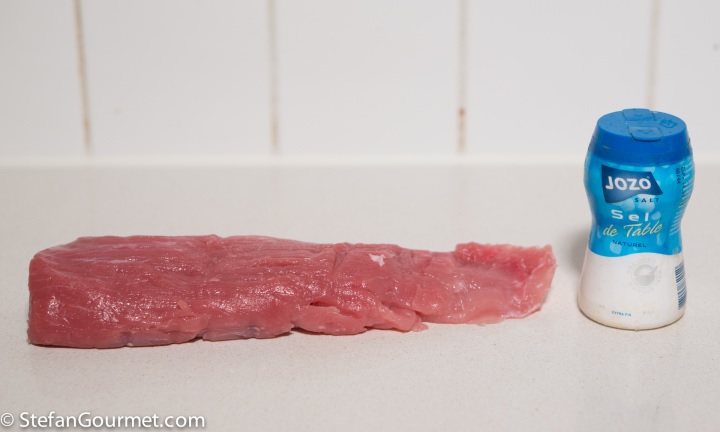
I started with tenderloin and salt.
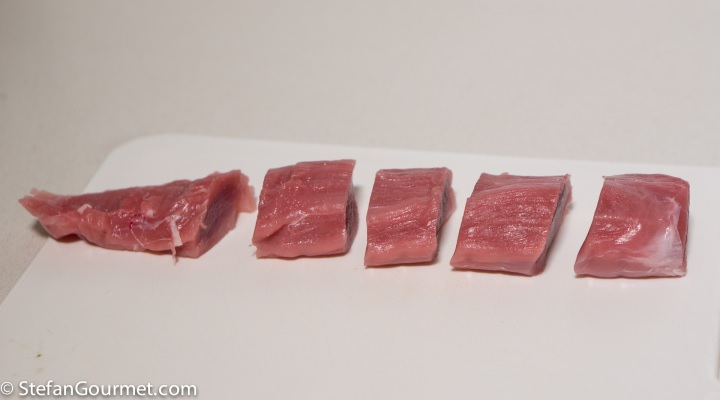
I cut it into four nice medallions (and saved the tail for another purpose).
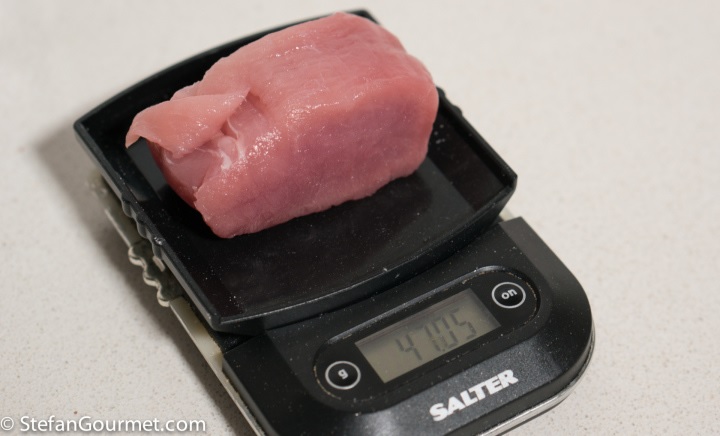
I weighed each piece with a scale that is accurate to 0.05 g.
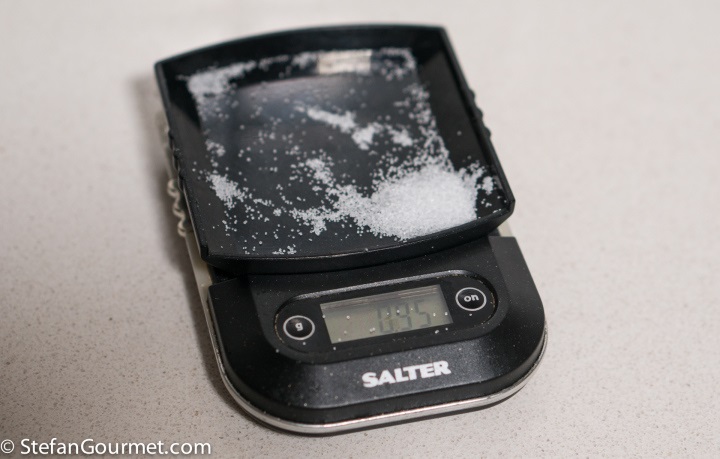
For each piece, I used salt equivalent to 1.5% of the meat’s weight.
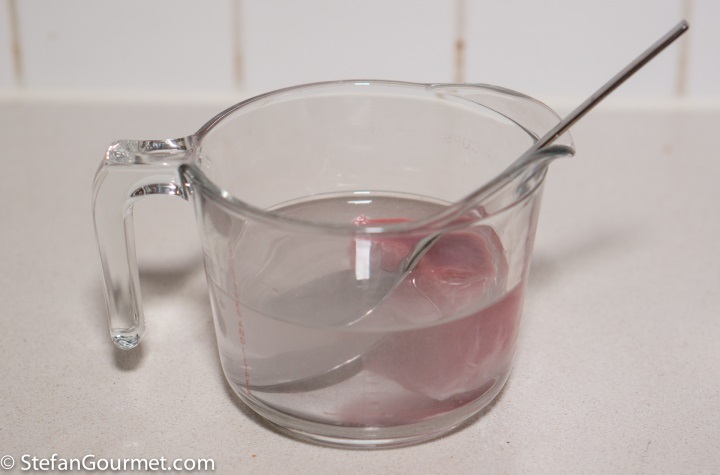
The first piece of meat was brined according to the equilibrium principle: I added salt equivalent to 1.5% of the total weight of both meat and water. The water starts at more than 1.5%, while the meat starts at less…
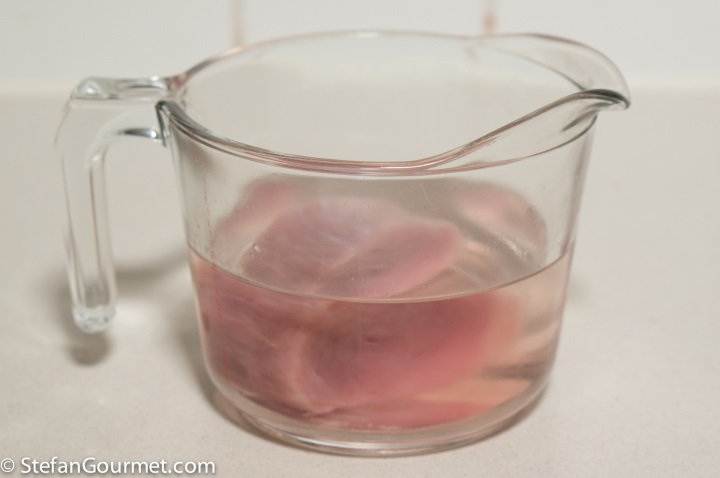
…and after 24 hours (that’s how long I waited – maybe less could do it) it reaches an equilibrium, where both water and meat contain 1.5% salt. Notice that the water has turned pink as the meat has released some of its juices.
The second piece of meat was salted with 1.5% salt, vacuum packed, and refrigerated for 24 hours.
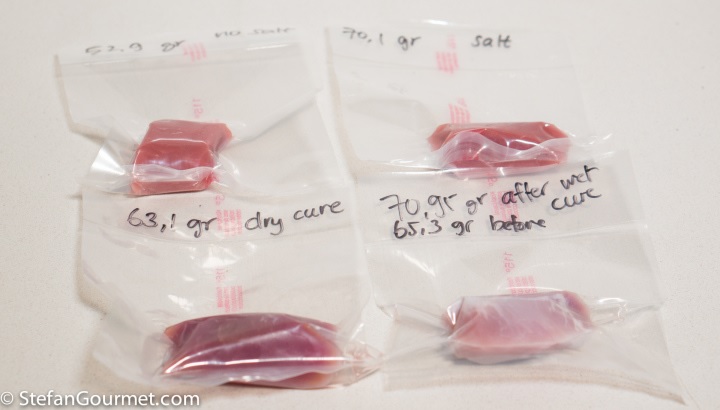
The next day, I dried the brined meat with kitchen paper and vacuum packed it. I salted the third piece of meat with 1.5% salt and vacuum packed it, and vacuum packed the last one without salt.
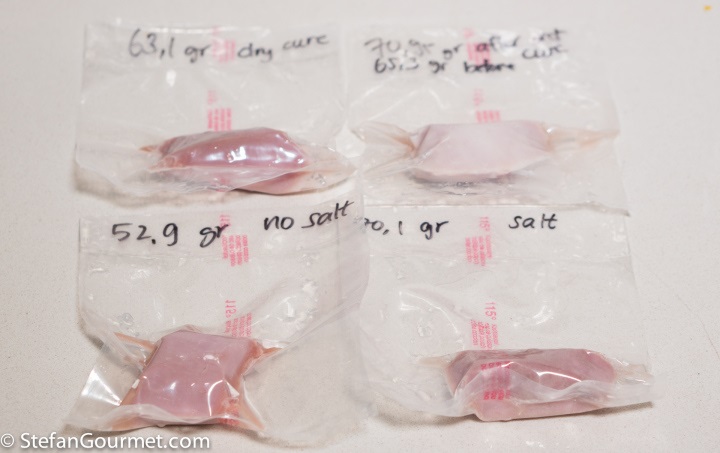
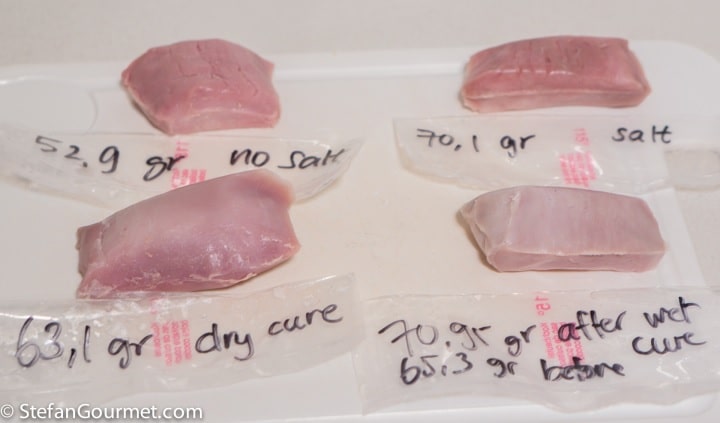
Then I cooked all the pieces for 1 hour in sous vide at 57C. Note that I wrote the wrong weight on the third piece – the actual weight was 47.05 g and not 70.1 g.
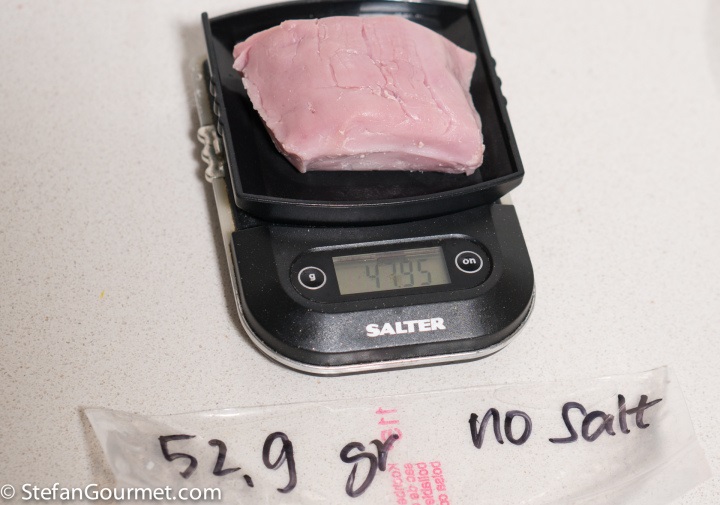
I dried all the pieces with kitchen paper and weighed them again. The result is shown in the table below.
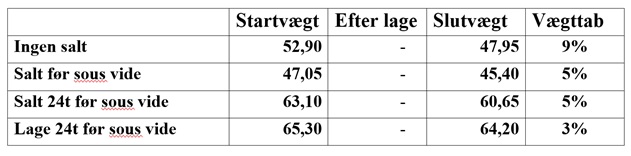
The piece without salt lost more juice than the others. Apparently, the salt helps the meat retain its juice (this is the same result as in the previous experiment). There’s no significant difference between the two dry-salted pieces, which were salted either right before or 24 hours before sous vide cooking. The piece that was brined for 24 hours first absorbed water and ultimately lost less juice than the others (When buying meat, remember to check the label, as much of the meat in the refrigerator section has increased weight due to brining – supermarkets get you to pay for a shot of saltwater this way). I adjusted the weight of the salted meat pieces so that the salt wasn’t accounted for.
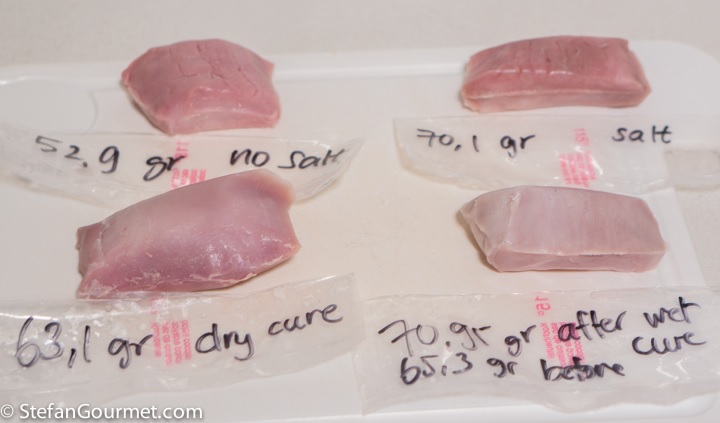
And what about the taste? The one that didn’t get salt before cooking was salted before tasting. They all tasted good. The difference in juiciness between the different pieces was not as noticeable as the 4% weight difference might suggest. Mainly, the difference was that the salt was only on the outside, whereas it was evenly distributed in the other pieces. The one salted 24 hours before cooking tasted different – somewhat like ham. The brined one was very different from the other three. It was slightly juicier, but the flavor was somewhat diluted. It was also heavier, but since it also had a somewhat bland flavor, the 24-hour dry-salted was clearly preferable. One could, of course, compensate for the bland flavor by adding more salt, but I prefer more pork over more salt.
When cooking pork loin or tenderloin the usual way (in the oven, on the grill, or stove), brining might be a good idea. On one hand, it slightly dilutes the meat, just like it does in the sous vide, but it will also make the meat more tender and juicy.
The article is written by the Dutch blogger Stefan.
Thanks to the author Stefan for this amazing blog post. You can read the original post in English here.