
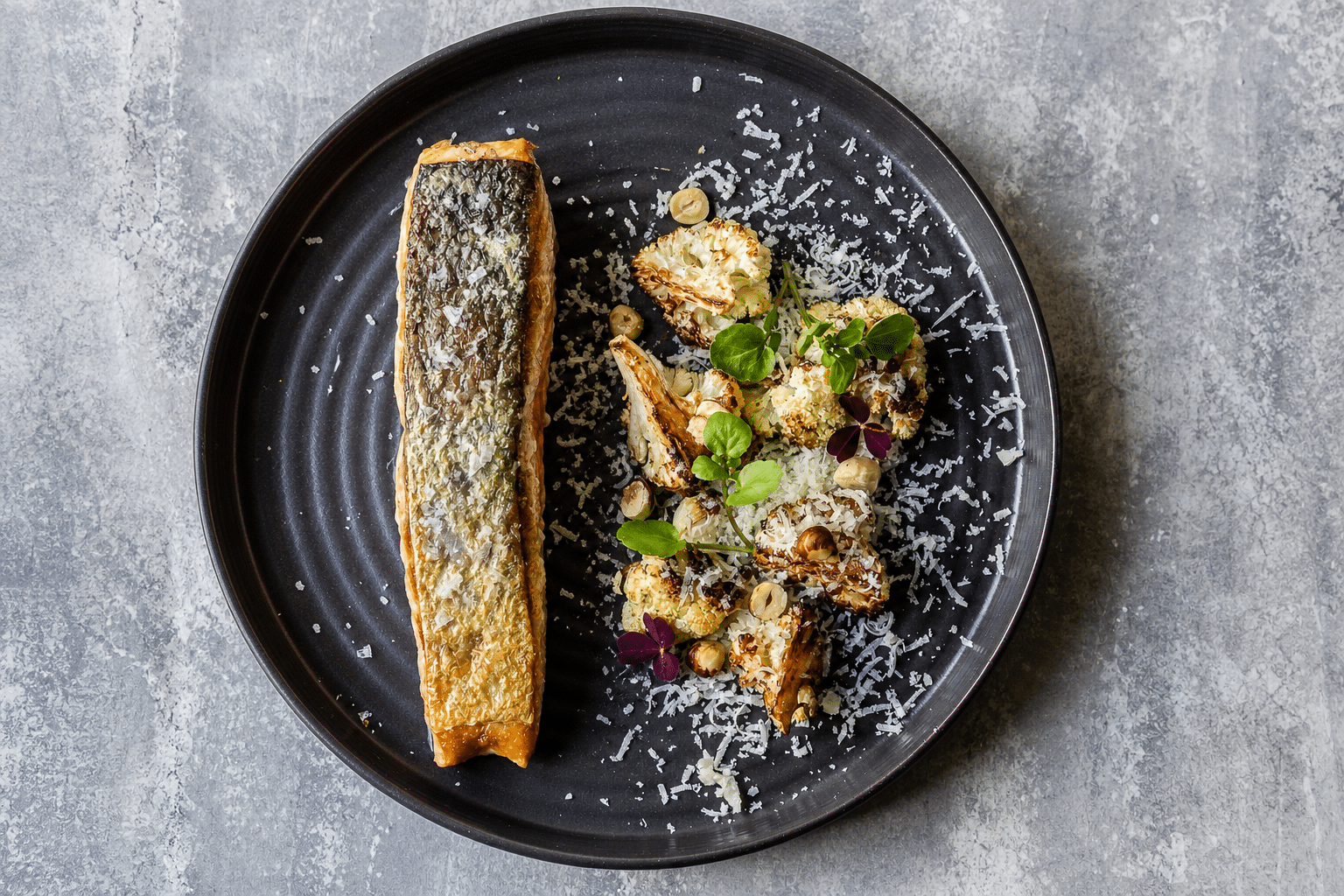

Crispy-skinned salmon, basted continuously in foaming hazelnut-brown butter, alongside sweet butter-roasted cauliflower with a sharp, nutty cheese grated over the top. The recipe comes from my Gaestemad (guest food) cookbook series, my collection of go-to dishes for entertaining without stress.
The ingredients are simple and well-chosen. The technique is what makes it sing.
Why this recipe works
Two steps separate this from a generic pan-seared salmon, and both are worth understanding before you start.
The first is a quick dry-brine. After patting the fish dry, I season both sides generously with coarse salt and let it sit at room temperature for 15 minutes before it goes anywhere near the pan. The salt draws out surface moisture and then reabsorbs it, seasoning the flesh through while leaving the skin better set for crisping. It costs you nothing but time you’d spend prepping anyway.
The second is continuous basting. Once the butter hits the pan and starts to brown, I tilt the pan and spoon that hot, hazelnut-flecked butter over the fish constantly for about a minute. This is what gives the dish its restaurant quality – the fish cooks on top from reflected heat and bastes itself in toasted fat without drying out.
The rest is composition. Cauliflower provides sweetness and enough structure to hold its own against the richness of the salmon. Lemon keeps everything fresh. The brown butter ties it all together – without it, the dish would be pleasant; with it, it has real depth.
Ingredients
Serves 4
For the butter-roasted cauliflower
- 14 oz (400 g) cauliflower, cut into small florets (about 1 small head)
- 1 tablespoon (15 g) neutral oil
- 2 tablespoons (30 g) butter
- 1/2 lemon, for zest and juice
- 1/2 teaspoon fleur de sel
- 1/4 teaspoon black pepper
For the salmon
- 14 oz (400 g) skin-on salmon fillet
- 2 teaspoons coarse salt
- 1 tablespoon (15 g) neutral oil
- 3 1/2 tablespoons (50 g) butter
- 1/3 cup (50 g) hazelnuts
For serving
- 2 oz (50 g) Vesterhavsost or Gruyere, for grating (see Tips)
- Lemon wedges
Instructions
1. Pull the salmon from the fridge 30 minutes before you plan to cook. Pat both sides completely dry with paper towels and season generously with coarse salt. Leave it uncovered at room temperature for 15 minutes. This is the dry-brine – it matters.
2. Rinse the cauliflower and cut it into small florets.
3. Heat a wide skillet over high heat. Add the oil and butter. When the butter foams and starts to color, add the cauliflower in a single layer. Let it sit without stirring until you see golden caramelization on the flat sides, about 2 to 3 minutes. Cover the pan and cook for 2 more minutes until tender but still with a little bite.
4. Transfer the cauliflower to a bowl. Zest the lemon half finely over the top, then squeeze over the juice. Season with fleur de sel and black pepper. Set aside.
5. Pat the salmon dry one more time. The dry-brine will have drawn out surface liquid, and removing it now is essential for a good crust. Cut the fillet into 4 equal portions if you haven’t already.
Read more: Rhubarb tart with condensed milk filling: the easiest way to make rhubarb taste like dessert
6. Heat a heavy-bottomed pan over high heat and add the oil. When it shimmers, place the salmon skin-side down. Press each piece gently with a spatula for the first few seconds so the skin makes full contact with the pan. Sear for 2 minutes, until the skin is deeply golden and releases cleanly.
7. Add the butter and let it foam. Cook for another 3 minutes, still skin-side down. The salmon is cooking almost entirely on the skin side throughout – that’s intentional, and it’s why you get a moist interior under a genuinely crisp skin.
8. Flip the salmon and scatter the hazelnuts into the butter. Now tilt the pan toward you and start basting: spoon the hot, foamy butter over the top of each fillet continuously for about 1 minute. The butter should turn a deep golden-brown and smell nutty. Salmon is done when it reaches an internal temperature of 145°F (63°C) at the thickest point and the flesh flakes easily.
9. Remove the salmon and set it aside. Keep cooking the hazelnuts in the brown butter for 2 more minutes until they smell deeply roasted. Remove them and chop coarsely.
10. To plate: arrange the cauliflower on each plate and lay the salmon alongside it. Spoon the chopped hazelnuts and brown butter over the cauliflower. Grate or finely crumble the cheese over the cauliflower. Squeeze a lemon wedge over the salmon and serve immediately.
Read more: One-pan creamy chicken pasta with tomatoes, spinach, and melted mozzarella: 30 minutes
Tips and variations
The cheese: Vesterhavsost is a Danish semi-hard cheese made along the North Sea coast, sharper and more savory than a mild cheddar and with a pronounced nuttiness. It’s not widely available in the US, so I’d substitute Gruyere as the closest match in terms of that sharp-nutty balance. An aged Gouda works beautifully too.
Allergens: This dish contains dairy (butter and cheese), tree nuts (hazelnuts), and fish.
Timing: Start with the cauliflower. It cooks in about 5 minutes and is happy to wait at room temperature while you give your full attention to the salmon. Once the fish is off the pan, go straight to the plate.
Grill option: Both salmon and cauliflower work well over a hot grill. If your grill has a side burner, brown the butter and toast the hazelnuts in a small saucepan there.
Variations: The core of the dish adapts easily. Swap the lemon for orange, add a pinch of dried chili, or use lime for a warmer, slightly southern direction.