
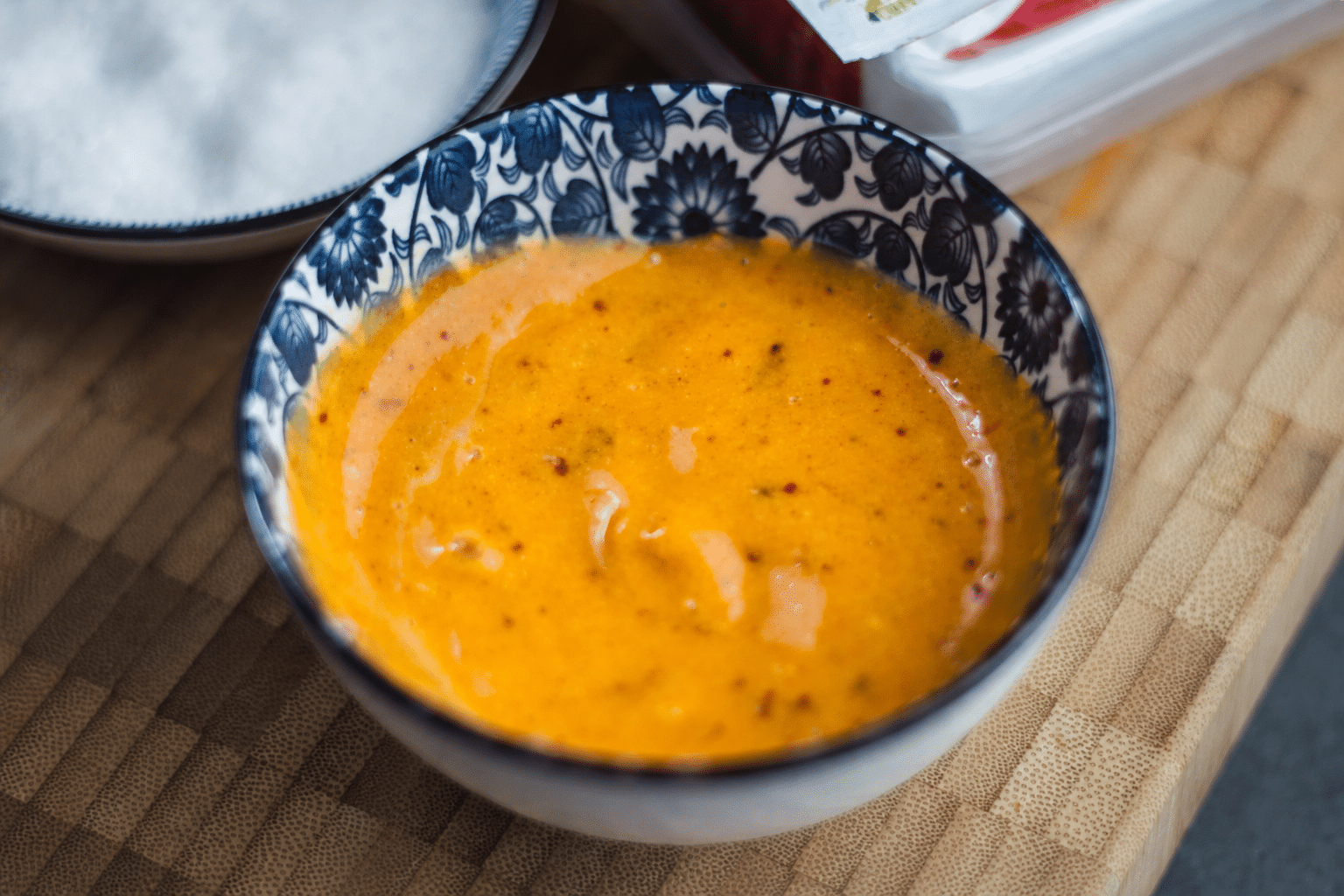

Gochujang mayo sounds like it might just be a jar of Kewpie with a spoonful of red paste stirred in. It is not. When you build the mayo from scratch and fold the gochujang in properly, you get something genuinely different: a thick, glossy, deeply savory sauce with heat that builds slowly and a fermented richness that store-bought shortcuts simply cannot match.
This recipe is from Thomas Tranegaard Nielsen, and it has become my go-to condiment for chicken, fries, burgers, and grain bowls. The technique is the real lesson here, and once you have it down, you will make it on repeat.
Why this recipe works
The emulsification is everything. If you dump all the oil in at once, the sauce breaks into a greasy, separated mess. The fix is patience: you start with just 10 to 15 grams of oil whisked into the yolk, repeat that once more, and only then pour in the rest in a thin, steady stream. Those first two small additions build the stable framework that holds the full batch together.
The other move worth noting is how the gochujang goes in. Rather than stirring it straight into the full bowl of mayo (which risks streaks and uneven heat), you first mix the paste with a few spoonfuls of finished mayo in a separate bowl until completely smooth, then fold that back into the rest. The result is an evenly colored, evenly spiced sauce from the first spoonful to the last.
Ingredients
- 1 egg yolk
- 2/3 cup (150 g) neutral oil (sunflower, canola, or light vegetable oil)
- 2 teaspoons (10 g) Japanese rice vinegar
- Scant 1/2 teaspoon (2 g) sugar
- Scant 1/2 teaspoon (2 g) salt
- A pinch of MSG
- 2.5 tablespoons (35 g) gochujang (Korean fermented chili paste)
- 1 teaspoon (5 g) fresh lime juice
Instructions
1. Add the egg yolk, rice vinegar, sugar, salt, and MSG to a medium bowl. Whisk together until fully combined and the sugar and salt have dissolved.
2. Measure out your oil. Add about 1 tablespoon (10 to 15 g) to the yolk mixture and whisk vigorously until completely absorbed and the mixture looks slightly thickened. Repeat with another tablespoon.
3. Now pour the remaining oil in a thin, steady stream while whisking constantly. Take your time – rushing this is what causes the emulsion to break. Keep whisking until the mayo is thick, glossy, and creamy.
4. In a small separate bowl, combine the gochujang with 2 to 3 tablespoons of your finished mayo. Stir until the paste is completely smooth with no lumps or streaks.
5. Scrape the gochujang mixture back into the main bowl of mayo and fold gently until the color is even throughout.
Read more: The 3-ingredient Turkish chili butter that turns a poached egg into something extraordinary
6. Taste and add lime juice a little at a time, adjusting until the brightness feels right to you.
7. Cover and refrigerate for at least 30 minutes before serving. The flavors knit together noticeably during that rest.
The mayo keeps in the fridge for up to one week.
Tips and variations
If the emulsion breaks: It usually means the oil went in too fast. To rescue it, start fresh with a new egg yolk in a clean bowl and very slowly whisk your broken mayo into it, treating it the same way you treated the oil.
Read more: Homemade ranch dressing: better than the bottle and ready in 10 minutes
On the MSG: It is listed in the original recipe and it earns its place. MSG deepens the savory quality of the sauce without adding any distinct flavor of its own. If you would rather leave it out, the mayo will still be excellent, just slightly less rounded.
Gochujang brands vary: Some are noticeably sweeter, some much saltier. Taste your paste before you start. If yours is on the salty side, hold back on the salt in the base and adjust at the end.
Oil choice matters: Neutral oil keeps the focus on the gochujang. Extra-virgin olive oil will overpower it.
Serving: Works as a dipping sauce for fried chicken or fries, as a spread on burgers, or spooned over a grain bowl with cucumber and sesame.