
We all have a relationship with the book Frøken Jensens Kogebog, from which we have this entry.
The book was first published in 1901 and has been continuously updated.
We have this entry about good habits in the kitchen from the latest edition of the book from 2016:
It is a pleasure to go into the kitchen and cook good food for others and oneself.
In fact, cooking is one of the most meaningful activities one can think of. To ensure that the ingredients also turn into the healthy and delightful meals we strive to prepare, there are certain rules and good habits regarding hygiene and bacteria that should be followed along the way.
Before you begin and along the way
Wash your hands thoroughly before you start and several times during the process. For example, every time you switch between handling meat, fish, vegetables, and eggs.
At the kitchen counter
Ensure to keep the kitchen counter clean and tidy throughout.
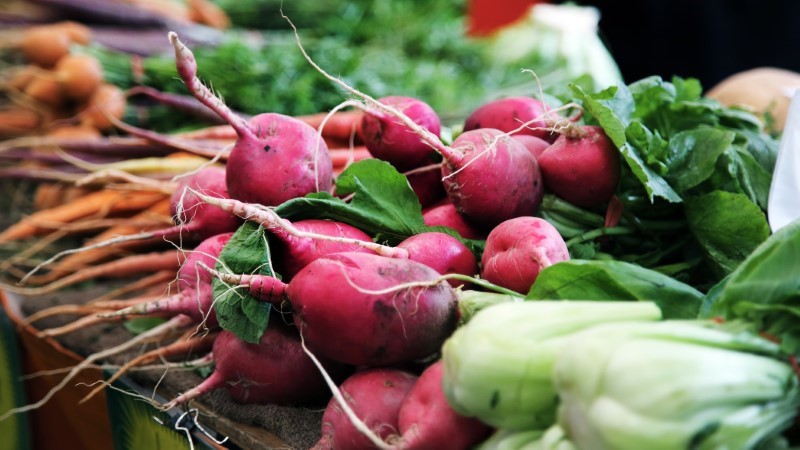
Always keep raw and cooked foods strictly separate. Also, keep raw vegetables and herbs strictly separate from meat, fish, and dairy products. Vegetable and other plant parts may contain soil bacteria, even if they are cleaned, and soil bacteria can, in unfortunate cases, become health hazards when combined with meat, fish, and dairy products.
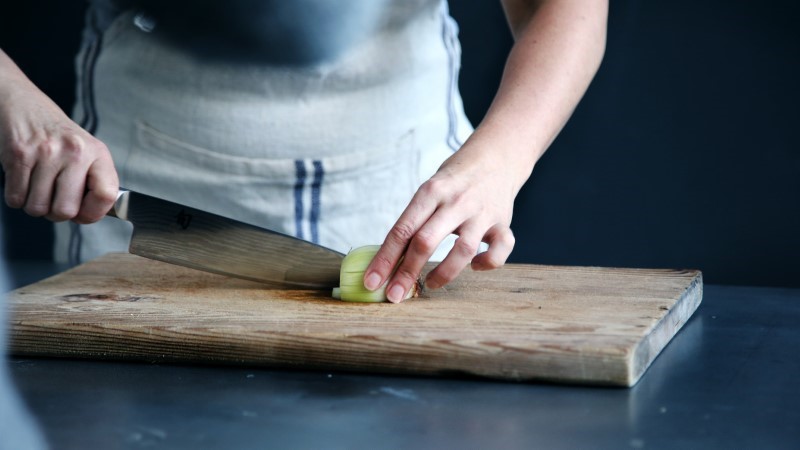
Therefore, change the cutting board every time you switch between vegetables, meat, and other ingredients. Instead of switching the cutting board with another, you can also choose to clean it thoroughly between each ingredient group (see cleaning of utensils).
Change to a clean dishcloth at least once a day. Also, change if you have wiped the counter after soil vegetables or juice from meat or fish. Dishcloths should never be used to wipe the floor.
If something spills on the floor, use paper towels/or a floor cloth (which should also be changed often).
Dishcloths that are not changed daily or more frequently are one of the kitchen’s worst bacteria bombs.
Tea towels should also be changed daily. Wash dishcloths and tea towels on a hot wash (75-80° is fine).
Make sure that hot, prepared food that needs to be stored is quickly cooled to below 5°. Let the food cool for a moment until it is not burning hot, and then put it in the refrigerator.
Do not wait until it is lukewarm, i.e., 20°-50°, because most bacteria thrive best at these temperatures.
The fridge can easily handle having a container with hot food placed in it, and the cooling process happens much faster there.
Cleaning of utensils
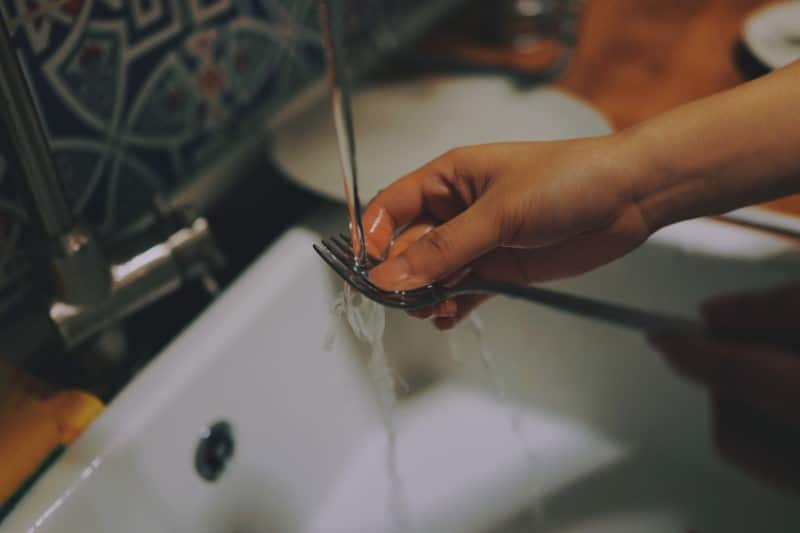
Wash containers, knives, cutting boards, etc., that have been in contact with soil vegetables, raw eggs, raw meat, raw fish, and dairy products thoroughly. Use a dishwasher, or wash the items by hand:
First, rinse thoroughly, then wash carefully with dish soap and a brush, rinse with water from the tap, and then with boiling water. This ensures it is clean.
Clean and scald the dish brush at the same time. Cutting boards should always be cleaned before they can be put away.
In the refrigerator
Ensure that perishable foods get refrigerated quickly after they are purchased.
Keep the refrigerator temperature below 5°. Also, in the refrigerator, raw and cooked foods should be kept strictly separate.
Let meat and poultry thaw in the refrigerator, and always in a bowl so that thawed blood and water do not drip on anything.
Unwanted bacteria and common sense
Bacteria are not necessarily harmful; many bacteria are actually essential for us.
But certain types of bacteria can be harmful and, in the worst case, life-threatening.
They include salmonella, campylobacter, listeria, and yersinia and unfortunately, they sometimes appear on the foods we bring into the kitchen.
We know them from the media and unfortunate real-life stories, and there are certainly plenty of reasons to take them seriously.
But there is no reason to become ‘afraid’ of ingredients and food. Fresh ingredients that are responsibly grown and produced and subsequently handled sensibly and correctly in the kitchen do not pose a danger in themselves.
Of course, one can never be completely safeguarded. But one can use common sense and remember that most unwanted bacteria – if present – are not located inside the ingredient but are found on the outside of it.
The bacteria die when cooked or boiled.
Always use your eyes, sense of smell, and taste buds diligently while preparing and eating the food.
Keep track of expiration dates and discard food if there is any doubt about its freshness.
Moldy food should always be discarded.