


In sous vide forums and Facebook groups, there is often discussion about whether to add different things to the bag along with the meat when cooking it sous vide. Some post a picture of a piece of meat vacuum-sealed with various items, and others comment that the person is silly because the flavors can’t penetrate the meat. And sometimes a theoretical explanation follows, which in some cases doesn’t make sense to me at all. I prefer tangible evidence over theoretical assumptions, so I decided to test it out.
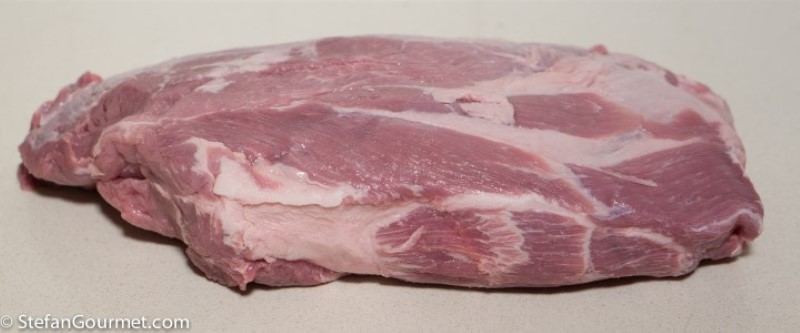
I started with a good pork neck fillet, which I cut into 6 fairly equal pieces.
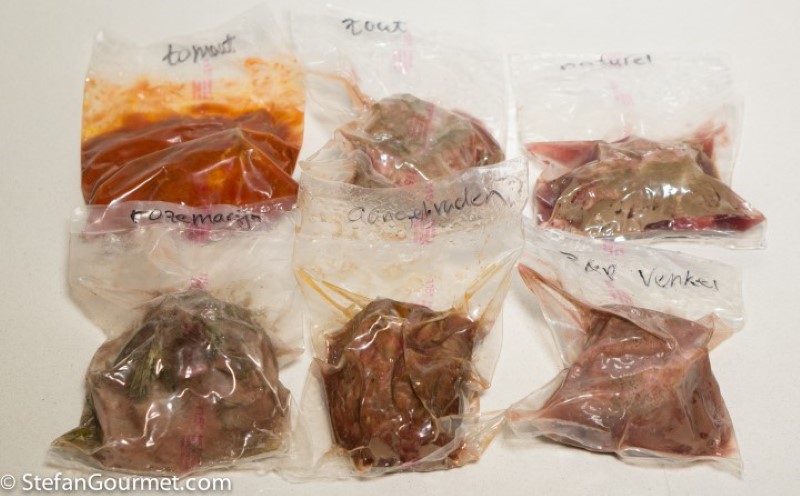
I treated each of the six pieces differently and cooked them all for 48 hours at 57 degrees Celsius. I chose a cut that requires a long cooking time, so time wouldn’t be an issue (since it can take a long time for flavors to penetrate the meat, one could risk that with a quick cooking nothing would happen!).
The six pieces of meat were:
– browned and with tomato sauce
– nothing, just salt
– rosemary and salt
– salted and browned
– salt, pepper, ground fennel seeds
I didn’t make any with butter or oil, as I’m writing another article focusing on that.
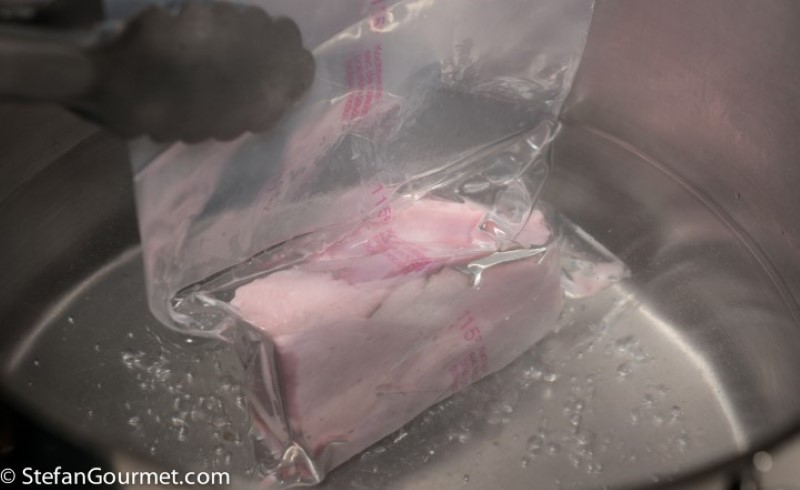
With long cooking times below 60 degrees Celsius, the meat can develop an unpleasant odor. To avoid this, I blanched each of the bags after vacuum-sealing.
The experiments were also tasted by my husband, who didn’t know what I had (or hadn’t) put in the bags.
Rosemary
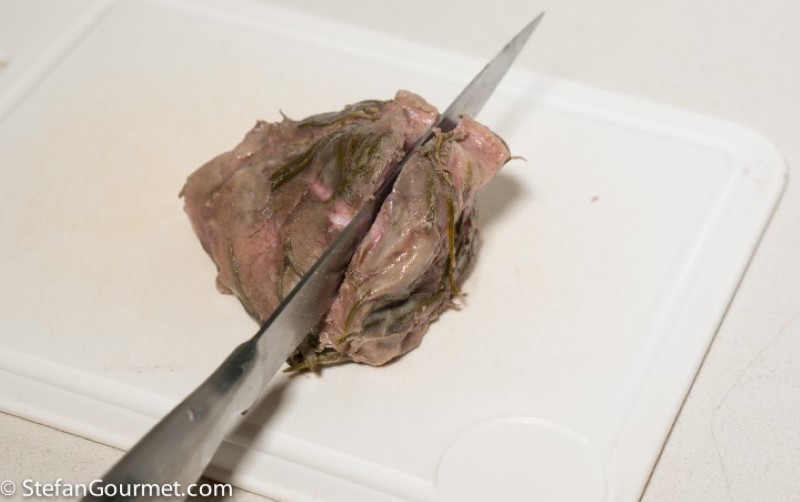
To see if the rosemary had penetrated the meat, I cut off the outer centimeter of the pork…
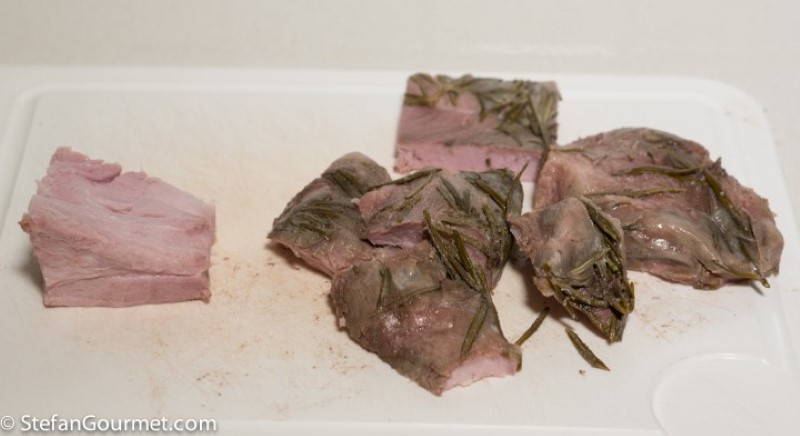
…on all sides. I ended up with the innermost piece of meat. And guess what! Neither of us could taste the rosemary at all. However, we could taste the salt.
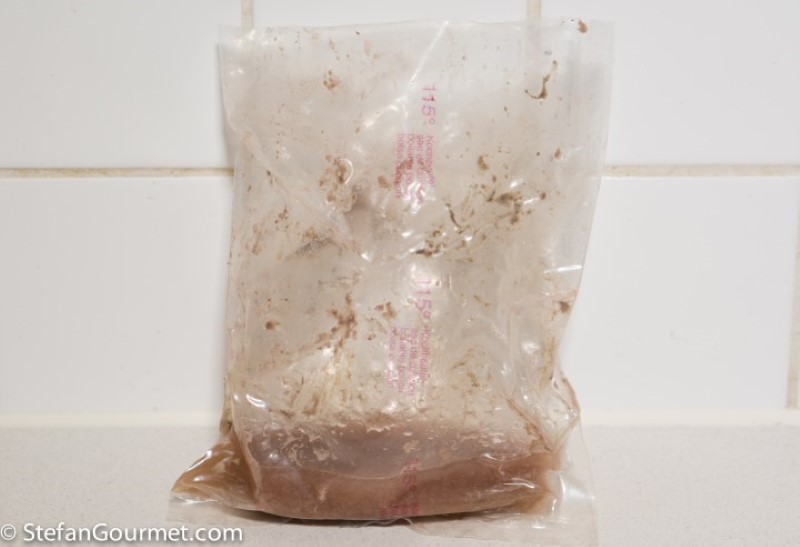
Even though the rosemary flavor didn’t penetrate the meat, my conclusion is that it still makes sense to add it when cooking sous vide.
The meat juice left in the bag gets a lot of delicious rosemary flavor.
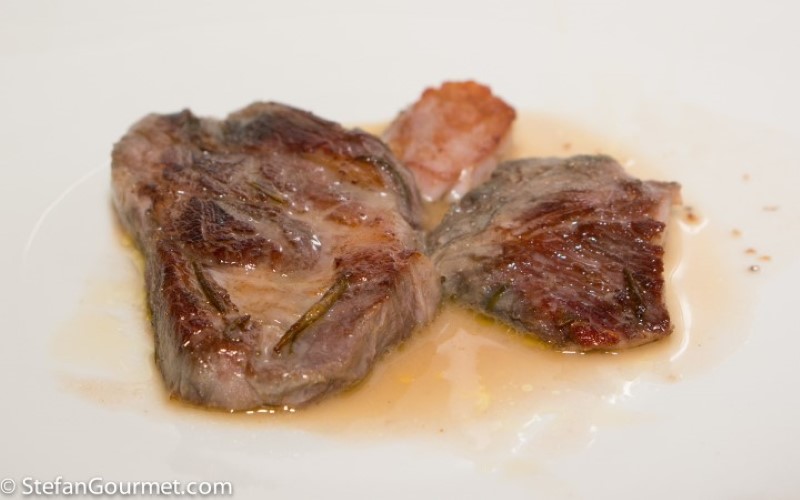
I briefly browned the outer pieces of the meat with rosemary on them and then deglazed the pan with the juice from the bag.
I then strained it (since juice from meat cooked at 57 degrees Celsius clumps when you heat it up) and served it with the meat.
It was super delicious. So yes, the rosemary flavor was only on the outside, but does it matter?
As long as you get the outer part with every bite, it tastes of rosemary, and you can’t achieve that if I only add rosemary when frying.
Ground fennel, salt, and pepper
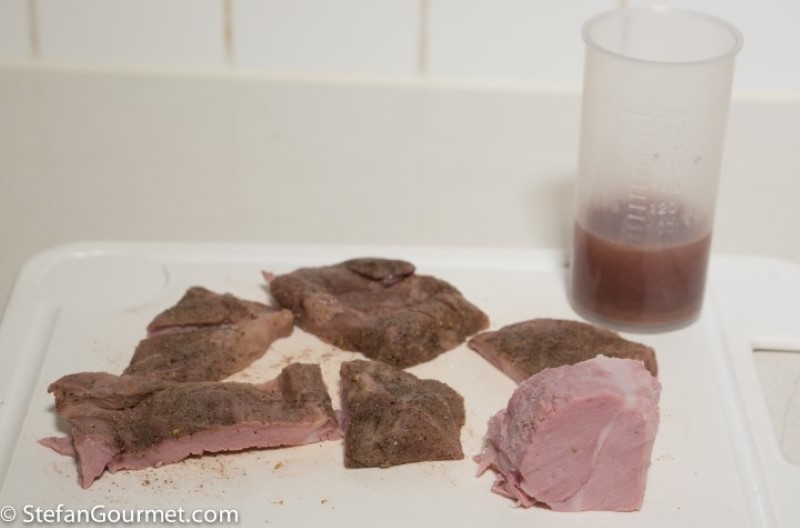
We established that herbs don’t penetrate deeply into the meat.
But what about spices?
The ground fennel didn’t penetrate into the meat, nor did the pepper.
But as with the rosemary, there was plenty of wonderful flavor on the outside and in the juice.
Tomato
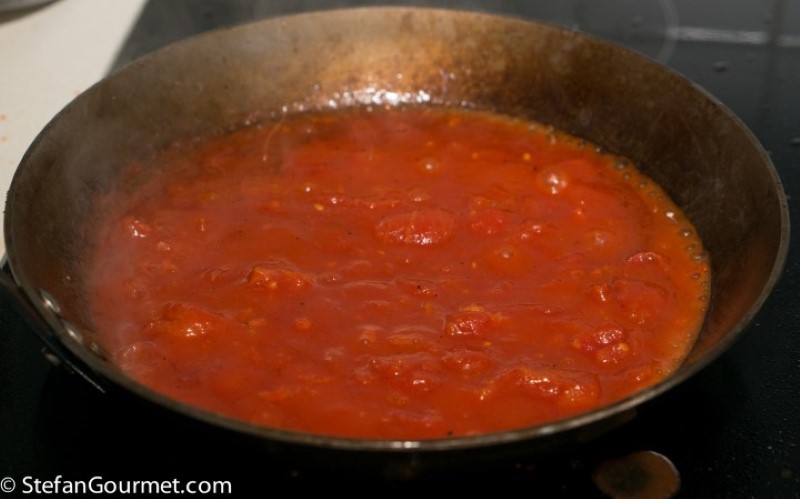
In the next experiment, I made a tomato sauce by browning the meat and deglazing the pan with chopped tomatoes…
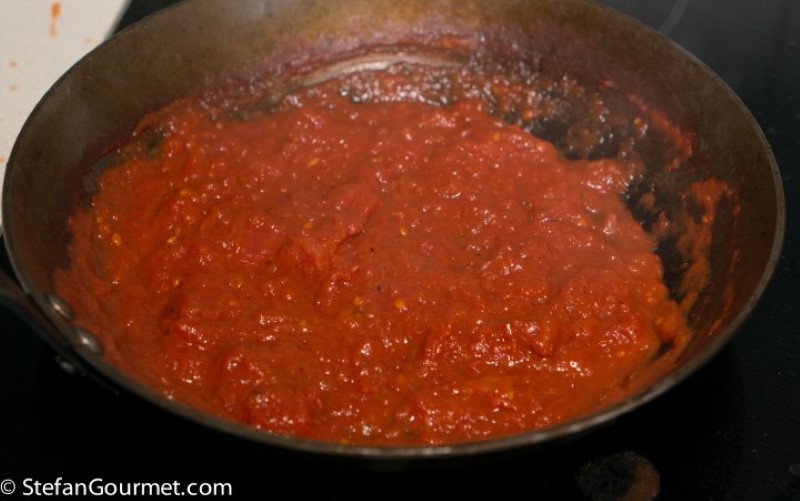
…which I then reduced into a tomato sauce.
Once it had cooled down, I vacuum-sealed the meat with the sauce and cooked them together.
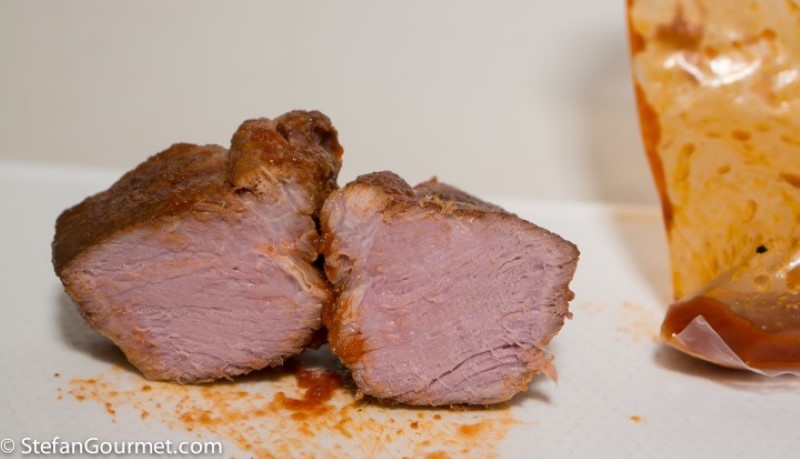
Although we couldn’t taste tomato inside the meat (and from the color, you can see it hasn’t penetrated very far into the meat), we still got the impression that it had affected the texture of the meat. Maybe it’s the acidity from the tomatoes? It’s hard to say since pork neck fillet isn’t a uniform cut. Hence, the difference might also lie in precisely that piece of the fillet.
I used the tomato sauce from the bag, which got a wonderfully meaty flavor, to pour over pasta. Traditionally in Italy, you eat the sauce with pasta first as primo piatto, and then the meat follows with some of the sauce as secondo piatto (so you never eat pasta and meat together.)
I was surprised that the tomato hadn’t penetrated deeper into the meat; I got a different result when I tried it with oxtail. The oxtail was cooked at 60 degrees Celsius instead of 57 degrees Celsius and for 100 hours instead of 48, but I doubt that made such a big difference to the result.
It’s a very small temperature difference, and we should have seen a deeper penetration of the red color after 48 hours if it were the time difference that made it. The best explanation I can come up with is that oxtail has a different structure, allowing the tomato to penetrate between the fibers instead of into the fibers? I will need to do a new experiment to find out!
Salt or no salt
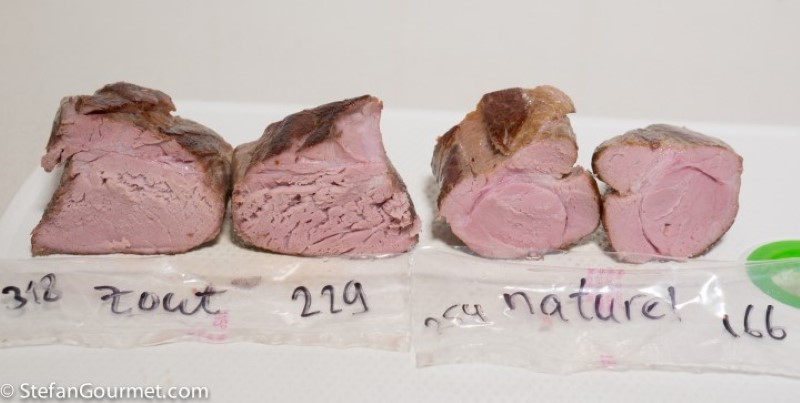
In a previous experiment, I already compared meat that was salted and not salted before being sous vide.
This time it was confirmed that salting before sous vide leaves more juice inside the meat. The salted piece of pork neck lost 28% of its weight (from 318 g to 229 g) during the 48 hours of cooking, while the unsalted piece lost 35% (from 254 g to 166 g). But you can see in the picture, and we could taste it ourselves, that the unsalted piece seemed less dry and with a more compact texture. Again, it seemed to be related to the fact that pork neck fillet isn’t as uniform a cut as tenderloin, which is remarkable. The salted piece was delicious because it was salted throughout and not just on the outside.
Browned
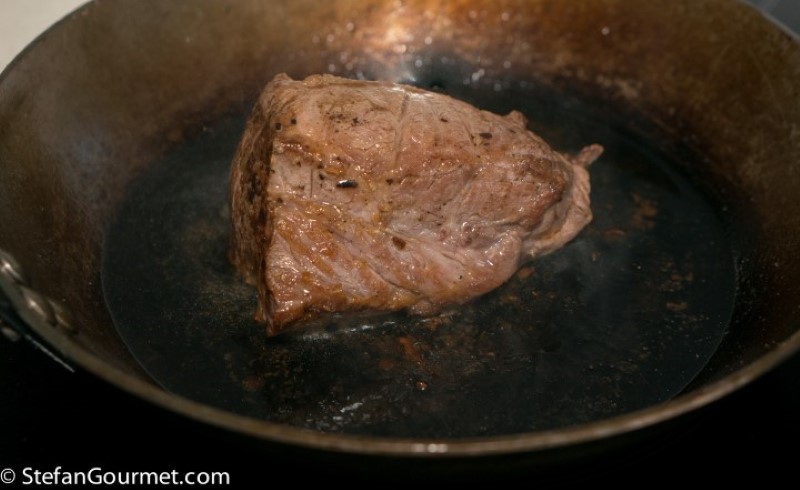
Okay, this can’t really be called adding something to the bag, but I also tried browning a piece of meat before cooking it sous vide.
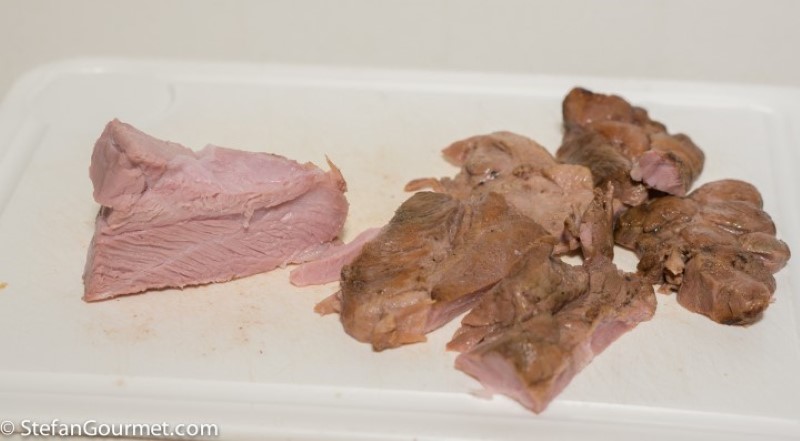
It’s no surprise after the other results that none of the browned flavor ended up inside the meat, but raw meat browns more easily than meat that has been sous vide first, and the browned flavor from the crust is really good. Of course, the crunchiness of the crust disappears when you sous vide the meat, but that can easily be remedied by browning it afterward.
Unfortunately, I didn’t make a comparison with meat that was only browned after sous vide to taste the difference (I do this for fun, and all the pork you see here ended up on the dinner table on different nights. There’s a limit to how much pork you can eat at one time!)
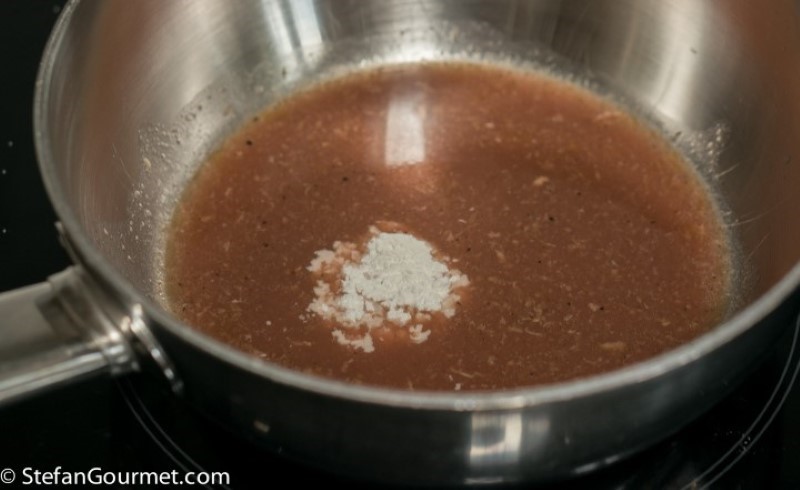
Another advantage of browning the meat first is that the juice in the bag tastes much more.
I added a teaspoon of cornstarch to the juice…
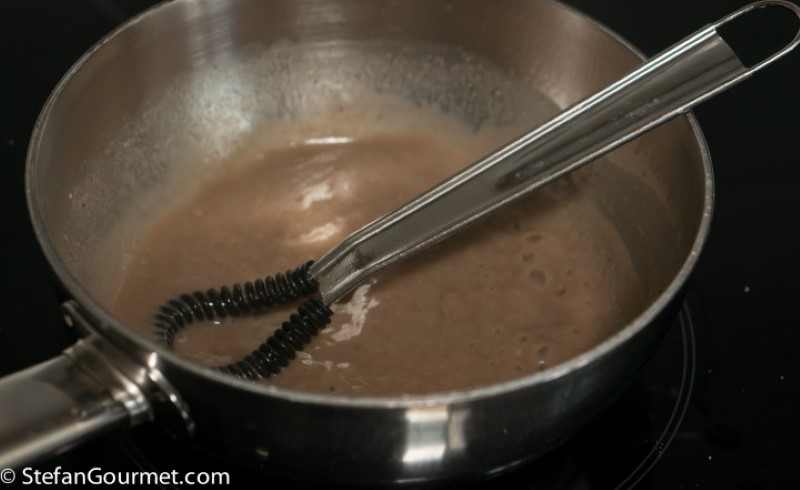
…whisked thoroughly, and brought it to a boil while whisking. By using this technique, the juice turns into sauce without the juice clumping, and you retain all the good flavor (If the juice clumps and you strain them out, you lose much of the flavor).
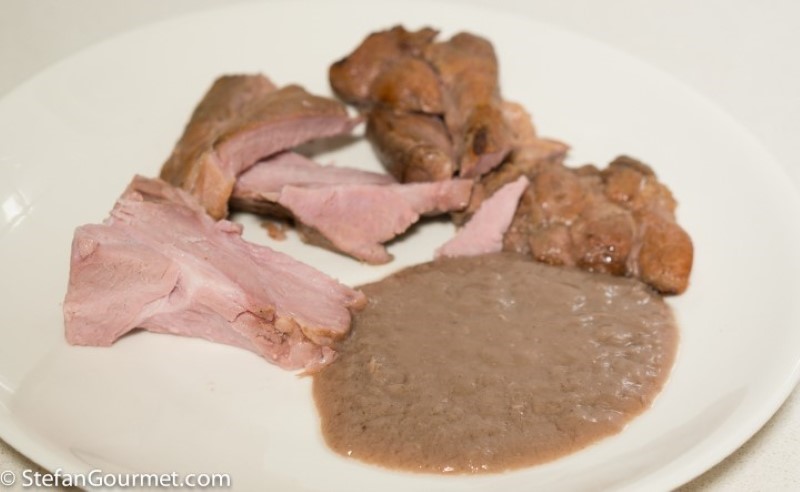
The color of the sauce wasn’t the prettiest, but it tasted good.
Conclusion
And what can we learn from these experiments?
I think there are two important things:
1. Aside from salt, none of what you add to the bag penetrates the meat.
2. That doesn’t mean it doesn’t make sense to add something to the bag. Adding something to the bag gives a good flavor on the outside of the meat, and it gives a good flavor to the juice. It especially makes sense if you plan to make a sauce.
We have had the talented Dutch blogger Stefan write this fantastic article about cooking meat with sous vide.
Thanks to the author Stefan for this amazing blog post. You can read the original post in English here.